
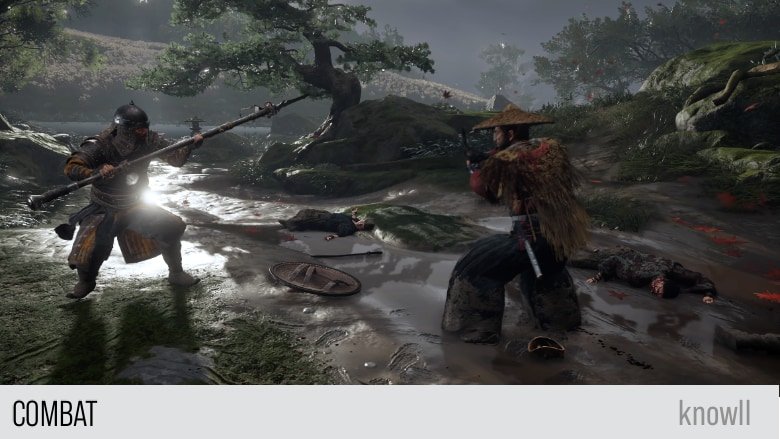
No, Ghost of Tsushima is not a Souls game.
Is Ghost of Tsushima a Souls game? That question pops up quite a bit amongst players. It’s easy to see why with the challenging combat and focus on skill. Some similarities definitely exist, but the core structure differs significantly.
While both games require precise timing and awareness, Ghost of Tsushima doesn’t share the level of punishing difficulty and interconnected world found in typical Souls games. It’s a distinct experience focused more on cinematic samurai action than hardcore role playing.

Is Ghost of Tsushima a Souls Game?
The question of whether Ghost of Tsushima is a Souls game is a common one among gamers. Both games have demanding combat and beautiful open worlds, but they differ significantly in their core design. Let’s explore what makes each type of game unique and see where Ghost of Tsushima fits in.
Understanding the Souls-like Genre
Before diving into Ghost of Tsushima, it’s important to understand what makes a game a “Souls-like.” This genre, popularized by FromSoftware’s Dark Souls series, has several distinct characteristics. These games are known for their high difficulty, intricate level designs, and a specific type of combat.
Key Characteristics of Souls-like Games
- Brutal Combat: Souls games are famous for their tough combat. Every enemy can be a threat, and you need to learn enemy patterns and attack timings to survive.
- Punishing Difficulty: Death is a frequent occurrence in these games. When you die, you lose progress and are often sent back to a checkpoint.
- Stamina-Based Combat: Actions like attacking, dodging, and blocking consume stamina. You must manage your stamina carefully to avoid being caught off-guard.
- Indirect Storytelling: The story in Souls games is often told through environmental details, item descriptions, and brief character interactions rather than explicit cutscenes.
- Interconnected World Design: Levels are often interconnected, with shortcuts and hidden paths that make exploration rewarding.
- Limited Healing: Healing items are often limited and not easily replenished, adding to the challenge.
- Boss Fights: These games have challenging boss battles that often require multiple attempts to learn the patterns of attacks.
These elements combine to make Souls games a unique and often difficult experience. They require patience, strategic thinking, and the willingness to learn from mistakes.
Ghost of Tsushima: A Samurai Epic
Now, let’s turn our attention to Ghost of Tsushima. This game puts you in the role of Jin Sakai, a samurai warrior on a quest to protect his homeland from Mongol invaders. While it shares some similarities with Souls games, it has some key differences.
Ghost of Tsushima’s Combat System
Ghost of Tsushima’s combat is demanding, requiring players to be precise with their attacks and defenses. Here are the combat elements:
- Stance-Based Combat: Jin can switch between different fighting stances, each effective against certain enemy types. For instance, Stone Stance is great against swordsmen, while Water Stance is more suited for shield users.
- Parrying and Dodging: Like Souls games, timing is crucial for successful parries and dodges. A perfectly timed parry can leave an enemy open for a counterattack.
- Ghost Weapons: Jin can use various “ghost weapons” like kunai, smoke bombs, and sticky bombs to gain an advantage in combat. These items allow for a more versatile combat approach than traditional samurai fighting.
- Health System: You regain health using resolve points, which are earned by performing successful attacks or parries. Health also regenerates slowly after combat, which provides a different feel than Souls games.
- Stealth: Stealth is a vital part of the game. You can sneak past enemies, perform assassinations, and use the environment to your advantage.
- One-Shot Kills: In some cases, your enemy can defeat you with one hit if you make a major mistake.
Exploration and Open World
Ghost of Tsushima features a large open world map with many locations to explore. There are towns to liberate, shrines to discover, and collectibles scattered throughout the island. Here are some notable points about the open world.
- Navigation: There is no mini-map, Instead, you use wind to guide you to your next objective. This makes exploration more immersive.
- World Activities: The game is filled with side quests, story arcs, and activities, such as bamboo strikes, hot springs, and haiku spots. These activities add depth to the gameplay.
- Storytelling: The main story of Ghost of Tsushima is straightforward. The plot is told through well-directed cutscenes, unlike the more subtle narrative approach of Souls games.
Similarities and Differences
To better understand where the two types of games overlap and diverge, let’s compare them side-by-side.
Combat Difficulty
Both Ghost of Tsushima and Souls games are known for their tough combat, but they are difficult in different ways. Souls games often feature deliberate attacks, limited resources, and unforgiving environments. Ghost of Tsushima allows for greater flexibility in combat, with more options for strategy and player expression. Souls games heavily rely on memorization and execution of specific moves, making them more tactical. Ghost of Tsushima, while still demanding, provides more tools to survive, making it somewhat less unforgiving than the Souls games.
Let’s break this down:
| Feature | Ghost of Tsushima | Souls Games |
|---|---|---|
| Combat Style | Stance-based combat, parrying, dodging, ghost weapons | Stamina-based, deliberate moves, limited resources. |
| Difficulty | Challenging but fair, with room for error | Very high, unforgiving, heavy on memorization and execution. |
| Stealth | Important and useful element | Not a core component |
| Health Recovery | Slow health regeneration, use resolve to recover health | Limited healing, use flasks/items |
| Enemy Variety | Various enemy types, with specific weaknesses and strengths | Wide range of enemies, often with complex attack patterns. |
Story and World
The approach to storytelling and world design also differs significantly. Here’s a comparison:
| Feature | Ghost of Tsushima | Souls Games |
|---|---|---|
| Storytelling | Direct, clear narrative, with main and side missions. | Indirect, told through environment, items, and character interactions |
| World Design | Open world, plenty of exploration opportunities | Interconnected level design, with hidden paths and shortcuts |
| Navigation | Wind-based navigation, large map | Limited map, must memorize paths |
Why Ghost of Tsushima Is Not a Souls Game
While Ghost of Tsushima shares elements of difficulty with Souls games, it is not a Souls-like title. The differences in combat design, storytelling, and world structure place it in a distinct category of open-world action-adventure games. Here’s a summary:
- Clear Narrative: The game’s story is presented directly, through cutscenes and character interactions. This contrasts heavily with the fragmented stories of Souls games.
- Open World Structure: The map is large and open for exploration, while the Souls games typically feature more contained, interconnected environments.
- Combat Flexibility: Players can use diverse combat skills and ghost weapons. The combat is challenging, but also allows more options and creativity. In souls game, your moves are limited by stamina.
- Less Punishing Death: While death carries a penalty, it is not as harsh as in Souls games. In Ghost, you typically restart near the same spot in combat.
These differences highlight that the game, while drawing inspiration from many sources, creates its own unique identity. The experience of playing Ghost of Tsushima is different from playing a Souls game, and it offers a more accessible but still very engaging combat system.
Inspirations and Influences
It’s worth noting that both Ghost of Tsushima and Souls games have influences from similar sources, mainly the Japanese cinema.
Similar Influences
- Samurai Films: Both series use the imagery and themes of old samurai films. Ghost of Tsushima more directly captures the feel of classic samurai stories, while Souls games often hint at these themes with the warrior code, the struggle against impossible odds, and the general sense of melancholy.
- Japanese Culture: Both the game’s art style and thematic elements of the game have elements taken from Japanese culture. Ghost of Tsushima creates a historically informed landscape, while Souls games borrow the spirit of Japanese fantasy in character designs and mythology.
These common elements contribute to the games having some similarities in style, but they don’t make them fundamentally alike.
Ghost of Tsushima is an outstanding action game that provides a unique experience. While its combat has elements that will challenge players, its story and world make it feel different from the Souls game. It’s a game you should play if you love samurai movies, beautiful scenery, and a good action adventure.
Ghost of Tsushima vs Dark souls 3 #shorts
Final Thoughts
Ghost of Tsushima features challenging combat, but it prioritizes cinematic action over punishing difficulty. The game offers exploration and a narrative focus distinct from Soulslike titles. It has a parry system, which you must learn to survive.
Ghost of Tsushima doesn’t primarily focus on death as a learning mechanic. While challenging, it isn’t designed to frustrate players repeatedly. The game emphasizes character progression and upgrades. Therefore, is ghost of tsushima a souls game is definitively answered with ‘no’.

