
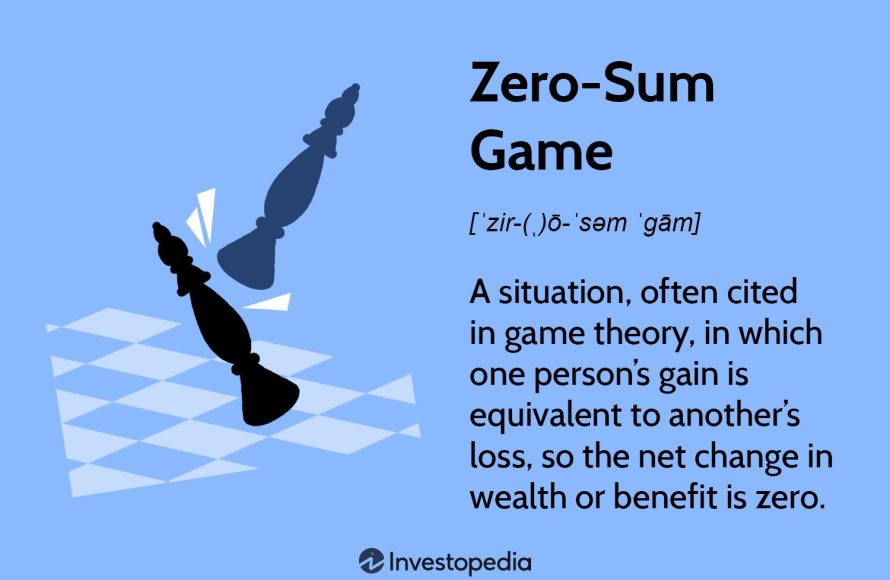
The stock market is not a zero sum game because companies can grow and create value, benefiting all shareholders.
Many people wonder, is the stock market a zero sum game? The idea that one person’s gain is automatically another’s loss is common, but that’s not how the market typically works. Companies generate profits, introduce innovations, and expand, all adding to the collective wealth.
This growth benefits shareholders, demonstrating that the market can create wealth. It’s more dynamic than a simple zero-sum scenario. It reflects overall economic conditions rather than simply one person winning and another losing.

Is the Stock Market a Zero Sum Game?
Okay, let’s dive into something that might sound a little complicated but is actually pretty interesting: Is the stock market a zero-sum game? You might have heard people use this phrase, especially when talking about money and trading. In simple terms, a zero-sum game means that for every winner, there must be a loser. Think of a seesaw – if one side goes up, the other side has to go down. So, if someone makes a bunch of money in a zero-sum game, someone else must lose the exact same amount. But is the stock market really like that? Let’s explore this in detail.
What Does “Zero Sum” Really Mean?
Before we get into the stock market, let’s make sure we understand the concept of “zero sum” clearly. Imagine a group of kids playing a game where they are swapping stickers. If one kid gets 5 extra stickers, it means another kid gave up 5 of their stickers. The total number of stickers in the group doesn’t change; they just move around. The gain of one kid is exactly balanced by the loss of another. In these scenarios, the total at the end always equals zero if you add up all the gains and losses.
- Zero-sum games have winners and losers: For one person to win, someone else must lose.
- The total net change is always zero: If you add up everyone’s gains and losses, the total will always be zero.
- Examples: Poker games, some kinds of bets, and specific derivative trades are often considered zero-sum.
The Stock Market: More Than Just Trading
Now, let’s get to the heart of the matter: the stock market. It’s not quite as simple as kids swapping stickers. When we talk about the stock market, we’re usually talking about places where you can buy and sell shares of companies. These shares represent a small piece of ownership in a particular company. When you buy a stock, you’re hoping that the company will do well, which will make your share value increase.
Why It’s Not Always Zero-Sum
Here’s why the stock market isn’t always a zero-sum game:
- Company Growth: When a company does well (like Apple or Microsoft), it can earn more profit. That profit often increases the value of the company’s stock, so the stock price goes up, making all shareholders wealthier. If the total value of the company goes up, it is not because someone else lost the equivalent amount. It’s new value being created.
- Dividends: Companies that make profit sometimes pay part of that profit out to their shareholders in the form of dividends. This is like getting a small bonus just for owning the stock, which has nothing to do with someone losing money.
- Innovation: The stock market can help fuel innovation by providing companies with funds to grow. When companies innovate, they improve the lives of people, create new jobs, and the total amount of wealth in the world expands.
Because of these factors, the stock market can actually create wealth. This means that over time, most investors could potentially make money, it is not the case that one makes money at the expense of the loss of another. It’s a situation where everyone can potentially benefit if the companies they invest in do well.
When the Stock Market Can Feel Zero-Sum
Even though the stock market isn’t always zero-sum, there are certain situations where it can feel that way. These usually happen during very short-term trading or with specific trading strategies.
Short-Term Trading
When someone day trades they are trying to make profits from very quick fluctuations in stock price, which can feel more like a zero-sum situation. If one day trader sells a stock to another day trader for a higher price, that second day trader has to hope the price goes up again so they can sell for a profit. These transactions often happen very quickly, based on speculation and market sentiment, not the underlying value of the company. In these cases, one trader’s gain is often another trader’s loss.
Derivatives Trading
Derivatives are financial contracts whose value is based on another asset or security. These can include options and futures contracts. These types of investments can behave more like a zero-sum game. If one trader gains money from a futures contract, that gain is tied to someone on the other side losing money.
The Role of Speculation
Speculation is when traders try to guess which way the prices will move. If a lot of traders think a stock will go up, they buy it, which can drive the price up even if the company’s value hasn’t actually changed. If someone buys the stock at the high price, they will have to hope that the stock goes up higher so that someone buys it from them at a still higher price. This can lead to a lot of short term price swings where gains and losses are happening between the traders without any real value being created in the economy. While the overall long term growth of the market might not be zero sum, these types of speculative short term trading behavior do have more characteristics of zero-sum interactions.
The Difference Between Investing and Trading
It’s important to understand the difference between investing and trading in order to understand if the market is zero sum. Investing is when you buy stocks with the intention of holding them for a long period, believing that those companies will continue to grow in value. The hope is that the value of the company will increase and produce income over a long time period. Trading is when you buy and sell stocks with the intention of holding them for only a short time in order to take advantage of short term price moves.
Investing: A Positive-Sum Game
Long-term investing is usually more of a positive-sum game. If the companies that we invest in grow and become more profitable, their stock price will usually go up. This creates value for the investors and is a source of wealth creation. When most people talk about investing, they are referring to a longer term strategy that aims to grow and create value, which is why the stock market is usually not a zero sum game in that sense.
Trading: More Like Zero-Sum
Short-term trading, like day trading or swing trading, tends to be much closer to a zero-sum game because those traders are trying to capitalize on the small ups and downs of the market. When one trader makes a profit it is frequently because another trader had a loss when the trade happened. Because no value is being created, these types of trades are often closer to a zero sum arrangement.
Market Efficiency and Information
Another thing that affects how we see the stock market is market efficiency, which is how quickly prices adjust to new information. If the market is very efficient, the current stock prices should reflect all available information about a company. This means it’s harder to find deals where you can profit from information that other investors don’t know yet. It means that if someone has an advantage and makes a profit, they often have to get that advantage by taking a loss from another trader who has less information.
How Information Affects Trading
The stock market is constantly changing as new information becomes available. If a company releases a great earnings report, the stock might go up because more people want to buy it. Conversely, if the news is bad, people might sell and the stock price could go down. If a trader can get ahold of information and take advantage of this news before the rest of the market, they will have an advantage. But since this information comes from outside the market, it makes the stock market less like a zero sum game because overall new value is being created.
Market Efficiency: A Spectrum
Some people believe the market is highly efficient which means that it is almost impossible to make gains without another trader losing money. But others would say that there are imperfections in the market. If the market is not perfectly efficient, some people with more information or the ability to analyze information faster will be able to profit by identifying opportunities before the rest of the market. But this does not make the market a zero sum game. The market being efficient makes it more difficult to make profits without other people losing money, but because the total wealth in the economy can grow, it is still not zero-sum.
The Impact of Fees and Taxes
It is also important to consider fees and taxes. Every time you trade, your broker will usually charge a fee. Every time you sell an investment at a profit, you may have to pay capital gains taxes. These fees and taxes can cut into profits and add an extra layer to our discussion of whether the stock market is zero sum.
Fees
Fees are the costs you pay to trade stock or maintain your investment accounts. These fees go to the brokers and therefore do not represent a loss from one investor to another. Therefore, this money isn’t being transferred from one player to another and the existence of fees doesn’t make the market more like a zero sum game.
Taxes
Taxes are money you have to pay to the government when you make a profit by selling stock. Taxes aren’t directly related to gains and losses of investors. Taxes are a part of the broader economy and go towards funding social programs, rather than being transferred between investors. Therefore, the existence of taxes does not make the market a zero-sum game.
Stock Market Growth and the Economy
The stock market is closely connected to the overall economy. If the economy is growing, companies make more money, so their stock prices tend to go up. This benefits investors, and it leads to more investment in those companies. More investment means more jobs are created and more goods and services can be provided. When the stock market is functioning well, it often leads to more wealth creation overall and therefore it is not zero sum.
How Growth Benefits Everyone
- More Jobs: Successful companies often hire more people.
- Innovation: Companies use their profits to develop new products and services.
- Better Goods and Services: A growing economy produces more things that people need and want.
These things help make life better for everyone. So, when the stock market does well, it can help the entire economy become more prosperous. Therefore, the stock market is a mechanism for value creation and it is not, in general, zero sum.
Behavioral Aspects
We also need to consider how people act when thinking about whether the stock market is zero-sum. Human psychology influences market movement because people react to news and events in different ways, and those reactions can drive prices up and down.
Fear and Greed
Fear and greed are strong emotions that can influence investors. When people are afraid, they might sell their stocks, even if there’s no good reason. When people are greedy, they may buy stocks hoping they will continue to go up even if they have already reached their true value. These types of reactions do not make the market zero sum, but they can cause short term volatility. Those who trade during these periods of volatility are more likely to be in a zero-sum game situation.
Herding Behavior
Sometimes investors engage in “herding” behavior which means that they all start buying and selling at the same time, based on the same assumptions. These types of behaviors can push prices away from the true value of the company, creating opportunities for some traders to profit at the expense of others. However, even these situations are not zero sum because, in the long term, the price is likely to revert back to the true value of the company.
The Stock Market: A Complex System
In the end, the stock market is a complex system, not a simple game of winners and losers. It includes a mix of long-term investments in growing companies, short-term speculation, and the psychology of individual investors. While some parts of the market can feel closer to a zero-sum environment, the overall market has the capacity to create wealth and benefits for the entire economy and the vast majority of participants.
While certain aspects of the stock market, especially short-term trading, may resemble a zero-sum game, the broader market is not. Long-term investing, coupled with the growth of companies and the overall economy, contributes to wealth creation for everyone, so it’s definitely not a “game” where someone wins only if someone else loses. The stock market is a dynamic space that interacts with the entire economy and provides opportunities for growth. The better we understand the complex interactions, the better we can all make informed decisions about participating in the market.
Is Stock Market a Zero Sum Game?
Final Thoughts
The stock market is not a zero sum game. Both buyers and sellers can gain value over time. Companies grow, innovate, and generate profit; this shared growth benefits everyone involved. A participant’s gains do not directly cause someone else’s equal loss.
‘Is the stock market a zero sum game’ is a common misconception. The market facilitates value creation, rather than just redistribution. Therefore, the idea of it being zero sum is not a must.

