
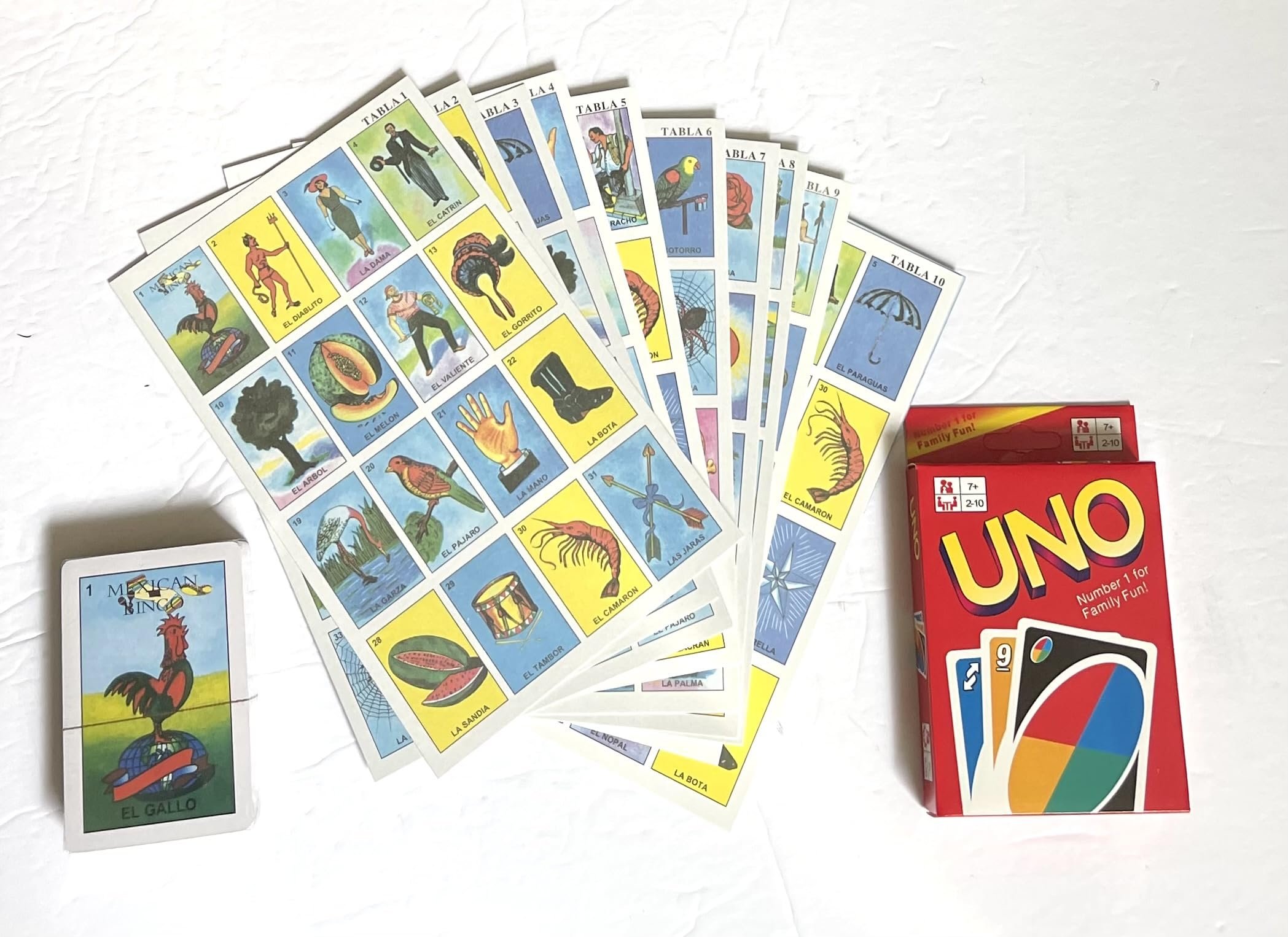
No, Uno is not a Mexican game; it is an American card game created by Merle Robbins in 1971.
Have you ever wondered where your favorite card game originated? The colorful cards and simple rules of Uno make it a go-to for many. But, is Uno a Mexican game? This is a common question, since its vibrant colors and lively gameplay might suggest a Latin American connection. We often associate games with particular cultures, and the name “Uno,” meaning “one” in Spanish, can mislead some people.

Is Uno a Mexican Game? Unraveling the Card Game’s Origins
The question “Is Uno a Mexican game?” often pops up when people are gathered around a table ready for some card-playing fun. It’s a natural question, especially since the game is incredibly popular in Mexico and many other parts of Latin America. But is it actually from Mexico? Let’s dive into the fascinating history of Uno and explore where this beloved game truly came from, because the answer is a little more complex than you might think. We’ll look at the game’s true origin, how it spread, and why it’s become so popular in different cultures.
The Birthplace of Uno: Where Did it All Begin?
Contrary to popular belief, Uno is not a Mexican game. Its roots are firmly planted in the United States. The game was created in 1971 by a man named Merle Robbins in Reading, Ohio. He wasn’t some big game designer; he was actually a barber! The story goes that Merle was frustrated with the traditional card game Crazy Eights and wanted a simpler, more engaging experience. So, he took matters into his own hands and created a new game.
How the Game Came to Be
Merle, along with his family, initially made the first 5,000 sets of Uno themselves at their kitchen table. Can you imagine that? They used a card printing service, and then, each card was hand-sorted, boxed, and distributed. It was truly a family affair. The rules were straightforward, using many of the concepts from Crazy Eights but with a faster pace and a special deck of cards. Merle’s creation wasn’t just a random idea, it was driven by a desire for a game that was both fun and easy to learn.
Uno’s Journey From Ohio to the World
So, if Uno was made in Ohio, how did it travel all the way to Mexico and other countries? The answer lies in the game’s sale and subsequent expansion. Merle Robbins wasn’t in the business of large-scale game distribution, and his initial efforts were relatively small. However, the appeal of Uno was undeniable. It was simple to learn, quick to play, and involved a good amount of strategy that made it enjoyable for families and groups of friends alike. This inherent playability became key to Uno’s eventual popularity.
The Sale to International Games, Inc.
In 1972, just a year after its creation, Merle Robbins sold the rights to Uno to a company called International Games, Inc. This marked a major turning point in Uno’s history. International Games had the resources and experience to promote the game on a much wider scale. They began marketing and distributing Uno across the U.S., making it a staple in toy stores and department stores. This company’s influence and marketing power helped Uno gain national recognition, and from there it started to grow internationally.
Uno’s Popularity in Mexico
While Uno’s origins are in the USA, its popularity in Mexico is undeniable. It has become a deeply loved pastime, often played at family gatherings, during school breaks, and at parties. But what explains this strong connection? Several factors have contributed to the game’s success in Mexico.
Cultural Fit: Family and Social Gatherings
Mexican culture places a strong emphasis on family, community, and social interaction. Uno, with its simple rules and engaging gameplay, is a perfect fit for these values. It’s a game that can be played by people of all ages, encouraging everyone to participate together. Unlike some complex games, Uno’s quick rounds make it suitable for both short and extended playing sessions. The focus on quick thinking and strategy also means everyone is engaged, providing ample opportunities for fun banter and laughter. The competitive but light-hearted nature of Uno makes it an ideal choice for bringing people together.
Accessibility and Adaptability
Another reason for Uno’s success in Mexico is its accessibility. You don’t need any fancy equipment, just a deck of cards. The rules, while specific, are easy to grasp and quick to learn. This means that people can easily teach the game to others, spreading its popularity by word of mouth. Furthermore, there are plenty of house rules that have developed over time in different communities, and this adaptability makes it a game that can be customized to any group. These house rules often add an extra layer of fun and strategy. Whether you’re playing a casual game or a tournament-style setup, Uno can fit many playing situations.
The Spread of Uno Globally
Uno’s journey didn’t stop in Mexico. The game has continued to grow, finding fans across the globe, from Europe to Asia and South America. This universal appeal is a testament to the simplicity and clever design of the game.
Ubiquitous Fun: A Game for Everyone
The game’s fundamental design is what makes it a global hit. The concept of matching numbers, colors, and actions is easy for people of all cultures to understand. There aren’t any difficult, language-dependent rules that would make the game hard to translate. While some small rule variations may appear in different regions, the core mechanics of the game remain the same across the world. The game transcends cultural barriers and remains enjoyable for most, regardless of age or background. Uno is now a truly global pastime.
The Modernization of Uno: From Card to Digital
The rise of digital gaming has also played a part in the global expansion of Uno. The game is now available on multiple platforms, including smartphones, gaming consoles, and online through websites. This makes the game even more accessible to everyone, letting you play Uno anytime and anywhere. Many online versions also feature modes for playing with random people worldwide, adding another social and competitive aspect to the game. In short, from physical card game to the digital realm, Uno continues to adapt and maintain its place as a leading card game.
Comparing Uno to Other Card Games
To understand Uno’s unique appeal, it’s helpful to compare it to other similar card games. While many card games rely on intricate strategies or complex scoring systems, Uno shines with its simplicity and fast-paced nature. Let’s take a look at how it differs from games like Crazy Eights and others.
Uno vs. Crazy Eights
As previously mentioned, Uno’s roots can be traced back to Crazy Eights. Both games revolve around discarding cards by matching the top card on a discard pile, either by rank or suit. However, Uno introduces special action cards that make the gameplay more dynamic and unpredictable. In Crazy Eights, the strategy usually focuses on trying to get rid of cards and is mostly based on basic matching. In Uno, a player will find themselves using action cards to hinder opponents and change the pace of the game, making it a more engaging experience for a larger number of players. Uno is generally seen as more fast-paced and enjoyable, which makes it a better game for large groups of different skill levels.
Other Card Games: Comparing Complexity
Compared to games like Bridge or Poker, Uno is a much easier game to learn and play. Games like Poker have complicated rules and strategies, often requiring more time and practice to understand. These complex games are often better for experienced gamers or for people who want to study and perfect their skills. Uno, by contrast, is made to be a more casual experience. You can learn the game quickly and start having fun in minutes. This makes Uno a perfect fit for groups of friends or family, especially if they are not looking for long, mentally intense sessions. The charm of Uno is in its accessibility and universal appeal.
The enduring appeal of uno
So, is Uno a Mexican game? No, it’s not. It’s an American invention that has managed to transcend its place of origin to become a global phenomenon. Its simplicity, combined with its social appeal, made it a beloved game across cultures and continents. Its widespread popularity in Mexico is not because of the game’s origin, but because of the cultural fit and easy gameplay mechanics. Uno has truly become a game for everyone.
Its impact on our lives, from family game nights to digital play sessions, shows that simple ideas can often be the most powerful. It continues to bring people together, fostering laughter, fun, and friendly competition, and that is truly a testament to the brilliance of Merle Robbins’ creation. The popularity of Uno is also a great reminder that we can all create or make something fun that can spread throughout the world, just like the game has.
Is Uno a Mexican game???
Final Thoughts
Uno’s origins trace back to a family card game, but it does not have roots in Mexico. The game’s creator, Merle Robbins, designed it in Ohio, USA. It became popular, gaining global appeal.
Therefore, is uno a mexican game? The answer is a clear no; it’s an American creation. The confusion may stem from its wide play across many cultures including Mexican. It is still a fun and widely played card game.

