
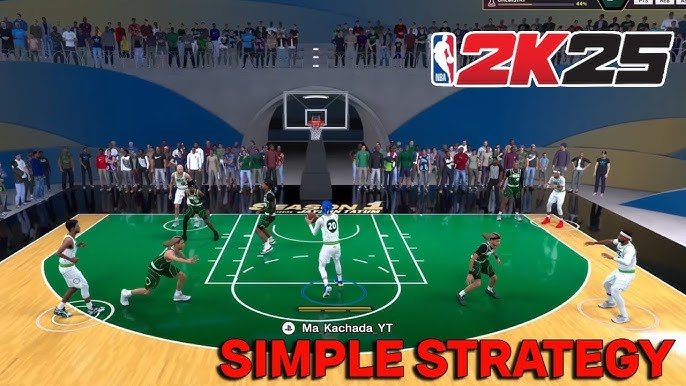
The NBA 2K25 offensive approach emphasizes strategic play calling, utilizing player strengths, and executing precise timing for scoring opportunities.
Are you ready to dominate the virtual court? Figuring out the best way to score in the game can be tricky. This guide will give you some ideas to get the upper hand when playing on the offense.
Understanding the different options available to you is key to success with the NBA 2K25 offensive approach. You will need to consider your player’s skills and the defense you face. This will help you make the best plan for scoring on each possession.

NBA 2K25 Offensive Approach
Okay, let’s dive deep into how you can become an offensive powerhouse in NBA 2K25. We’re not just talking about scoring more points; we’re talking about a smart, strategic, and, most importantly, fun way to play. Whether you’re a seasoned vet or just starting, understanding these concepts will have you feeling like an NBA coach in no time. We’ll break down everything from simple plays to advanced techniques, so you’ll find something useful no matter your skill level.
Understanding the Fundamentals
Before we get fancy, let’s solidify the basics. Like building a house, you need a strong foundation to work from. In NBA 2K25, this foundation is made up of a few key elements: spacing, ball movement, and player movement. Think of it like this: you wouldn’t want everyone clumped together in one corner of the court. You need space to make plays happen.
Spacing: Creating Room to Operate
Spacing is all about positioning your players effectively. Imagine the court is a giant puzzle. You want to spread your pieces out, creating gaps and lanes. This gives your ball handler room to drive to the basket, opens up passing lanes, and allows shooters to get open looks. Here are a few things to think about when working on your spacing:
- The Three-Point Line: This is your friend. Having shooters on the perimeter forces defenders to stay out, opening up the paint for your drivers.
- Corner Spacing: Don’t clump up in the corners. Keep one shooter in each corner to force defenders to respect that area.
- The Paint: Keep your big man near the basket but not too crowded. Let them have room to get a good position and be ready for a pass.
- Avoid the Clog: Players bunched together make it easy for the defense to smother you.
Think about the court in thirds. Ideally, you should have players spaced across all three zones (left, middle, right) to keep defenses stretched thin. If defenders collapse into the paint because all your players are near the basket, it is going to make it very hard to score.
Ball Movement: Sharing is Caring
Good offense isn’t just about one player dribbling a lot. It’s about moving the ball efficiently. Think about a team like the Golden State Warriors; they pass the ball so well, it is amazing. That is what you want to aim for in NBA 2K25. Moving the ball creates opportunities. Here’s why:
- Shifting the Defense: When the ball moves, the defense has to move. This can create mismatches and open up passing lanes.
- Finding the Open Man: Quick passes will make it much harder for the defense to keep up. If you keep the ball moving, you will find the open man and score more often.
- Creating Better Shots: A good pass can lead to an easy basket. A defender is less likely to stop a wide open shot.
Don’t be afraid to pass! A good sequence might be a drive and kick, followed by a swing pass to an open shooter on the perimeter. Think of your players as cogs in a machine; each pass helps the whole thing work. Try to get a certain number of passes each possession so the defense has to work. The more the defense has to work, the more tired they will get.
Player Movement: Staying Active
It’s not enough to just have players stand still; they need to be active. Constant movement makes the defense work harder and provides you with more opportunities to score. Here are some movements you should focus on:
- Cutting to the Basket: A quick cut to the basket can surprise the defense and lead to an easy layup.
- Setting Screens: Screens free up players for open shots. These could be back screens or even pick-and-rolls.
- Moving Without the Ball: Players that are not holding the ball should always be moving. They need to create opportunities for themselves.
The key is to make it difficult for the defense to predict what you’re going to do. Just standing around makes your team easy to guard. Keep moving and make the defense play catch-up. Remember, basketball is a dynamic sport, and your player movement should reflect that.
Strategic Playcalling
Now that we understand the fundamentals, let’s talk about playcalling. In NBA 2K25, you have a whole playbook at your fingertips, but knowing which play to run when is key. Don’t just pick plays randomly, understand what each does and when to use them.
Understanding Different Play Types
There are tons of play types in NBA 2K25, each designed for a specific purpose. Here are some you should be familiar with:
- Pick and Roll: One of the most effective plays in basketball. A big man sets a screen, and the ball handler uses it to either drive to the basket or pass to the big man when he rolls to the hoop.
- Isolation: Great for getting your star player in a one-on-one situation. Isolate a player on one side and let them go to work.
- Post Up: Good for using your big men to get easy shots near the basket. If you have a very strong big man, get him the ball close to the hoop.
- Motion Offense: A free-flowing offensive system designed to create movement and open shots. This is one of the best playbooks in the game for a reason.
Experiment with different plays and see what works best for you. Knowing your team’s strengths is important, too. You might not want to run isolation with a player that is bad at dribbling. Take time to learn each play in your playbook. Knowing what they do before you call them is important.
When to Call a Play
The key to playcalling is knowing when to run certain actions. Calling a play at the wrong time can mess up your spacing and waste your shot clock. Let’s look at some different situations and what to do when facing them.
Against a Zone Defense
Zone defenses are designed to pack the paint and force outside shots. So, you should try some of these things:
- Move the ball quickly: The more the ball moves, the more the defense will have to move. Pass, pass, pass.
- Look for openings at the corners or top of the key: Zones will make it easier for you to get open looks if you move the ball.
- Be patient: Don’t rush shots. A zone is designed to make you take bad shots. Instead, look for the best available shot.
Against Man-to-Man Defense
Man-to-man defenses are more direct. Each defender is guarding a specific person. When playing against man-to-man, try these things:
- Use Screens: Pick-and-rolls or off-ball screens can get you open shots.
- Isolate your best scorer: Let them go to work in a one-on-one situation.
- Use backdoor cuts: Quick cuts to the basket can get you easy layups.
Adjusting Your Playcalling
The best coaches can adjust. You need to do the same thing. If a certain play isn’t working, switch things up. Pay attention to what the defense is doing. If they are playing tight man-to-man defense, pick-and-rolls might be a good idea. Or if they are playing a soft zone, attack the gaps. Don’t be afraid to experiment. The more you adjust during the game, the more difficult it is for the defense to know what you are going to do.
Advanced Offensive Tactics
Okay, now we’re moving into some of the more advanced areas of offense. These concepts require a bit more practice, but they can make your offense unstoppable. We are going beyond the basics now. We will talk about off-ball movement and setting up complex plays.
Off-Ball Movement Mastery
We talked about off-ball movement before, but now let’s go deeper. It’s not just about running around; it’s about making intentional, strategic moves that create scoring opportunities. Here’s how you do it:
- V-Cuts: A V-cut is a sharp change in direction that helps get your player open. If a defender is not playing close enough, use this cut to get free and open for a pass.
- L-Cuts: An L-cut is similar to a V-cut but takes your player a little further from the defender. It is useful for a player that is running around a screen.
- Setting Off-Ball Screens: Screen for your teammates without the ball to create opportunities for them. If the defense switches, you might get an open shot as well.
- Constant Movement: Never stand still. Always be looking for an opening.
The best players are always moving. They know how to cut, when to screen, and how to get themselves open. Pay attention to the defenders to see what spaces are open.
Utilizing Team Strengths
Every team is different. Some teams have great shooters; others have great post players. It’s your job to identify your team’s strengths and build your offense around them. Here’s how:
- Shooter-Heavy Teams: If you have a lot of shooters, spread them out and give them open looks. Make sure the ball is moving so the defense doesn’t stay on the shooters.
- Post Player Teams: If you have a strong big man, get him the ball in the post and let him go to work. Run a play that sets him up.
- Balanced Teams: If your team has a mix of players, use a balanced offense. Mix up your play calls to keep the defense off balance.
Don’t try to force your team to play in a way that doesn’t fit. Work with the players you have and build an offense around their strengths.
The Art of the Pick-and-Roll
The pick-and-roll is a staple of NBA offense. This play is super effective. It is simple, but it still gets the job done. Let’s see the different parts of a pick-and-roll:
- Setting the Screen: Set a solid screen that lets your teammate free. The screener needs to be strong in order to slow the defender down.
- Rolling to the Basket: The player setting the screen rolls to the basket while the ball handler moves toward the basket.
- Popping Out: Instead of rolling, the screener can pop out for a three-point shot.
- Passing: The player with the ball can either drive to the hoop, pass to the rolling big man, or pass out to the perimeter if the defense over commits.
The pick-and-roll is not a one-trick play. There are many different ways to play this play. There is also the pick-and-pop, which is a slight variation on it. Keep practicing the pick-and-roll, and you will see improvements in your game.
Practice Makes Perfect
Finally, and this might be the most important part of the offensive game, practice. There is no way to be good at anything without practice. Basketball is the same. You have to put the time and effort in. Here are some things you can do to practice in NBA 2k25:
- Practice Mode: This is your best friend for learning the fundamentals. Use this mode to practice all sorts of offensive things.
- Playbooks: Use the practice mode to practice running specific plays. Keep trying out different plays until you know them inside and out.
- Quick Play: Play against the AI or friends to see how your new skills hold up in game situations. This will help you in a lot of different ways.
- Repetition is Key: The more you practice, the better you will get. Don’t get discouraged if you lose.
The more you practice and try new things, the better you will get. Don’t give up, and you will soon be a better offensive player. Just like any other skill, offensive prowess takes time to develop. The more you focus on these things the better your offense will be.
By consistently applying these strategies and practicing, you’ll see a major improvement in your offensive game in NBA 2K25. It’s about more than just scoring; it’s about playing smart, playing together, and having fun while doing it. With some time and effort, you can become an offensive threat on the court.
23 Tips And Tricks You NEED To Know In NBA 2K25!
Final Thoughts
In summary, effective offense in NBA 2K25 requires understanding player tendencies and using strategic play calling. Players should focus on spacing the floor and executing pick-and-roll actions.
Adapting to the defense and exploiting mismatches remains crucial for scoring. Ultimately, a diverse skillset is key to maximizing your NBA 2K25 offensive approach and achieving success on the virtual court. This is a must.

