
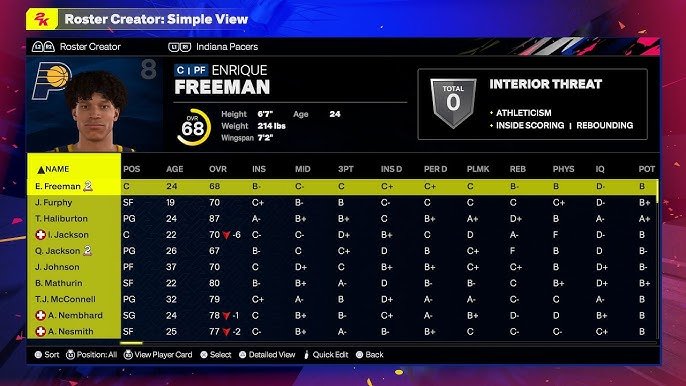
NBA 2K25 player likeness aims to achieve highly realistic digital representations of athletes, focusing on facial details, body structure, and animations.
Have you ever wondered how real those NBA stars look in video games? The incredible detail in the game world makes you question how they create those realistic players. Let’s dive into the subject of NBA 2K25 player likeness and explore how developers achieve this level of accuracy. It is a fascinating blend of art and technology.
The process is quite involved, from scanning the athletes to rendering them on-screen. Developers are constantly working to refine their methods to better capture the nuances of each player. This results in an improved gaming experience.

NBA 2K25 Player Likeness: A Deep Dive
Alright, everyone! Let’s talk about something super cool in the world of video games: how real NBA players look in NBA 2K25. When you’re playing, it’s awesome when your favorite players look just like they do in real life, right? Well, making that happen is a big job, and we’re going to explore how 2K does it. It’s not just slapping a picture on a character; it’s a process that includes many talented artists and a lot of tech magic. We’ll look at the details, the challenges, and what makes player likeness so important for making the game feel authentic.
The Evolution of Player Likeness
It wasn’t always this amazing. In older video games, players looked kind of…blocky. Think of games from a long time ago – the characters were simple shapes and not very detailed. As technology got better, game developers could make players look more realistic. This means more detailed faces, better hairstyles, and even things like tattoos looking just right. Let’s see how this transformation happened.
Early Days: Simple Shapes and Basic Features
The early games had to work with what they had – limited computer power. So, you saw players with simple shapes, like rectangles for bodies and circles for heads. They looked okay, but there wasn’t much detail. Maybe you could tell who they were based on their jersey number or their skin color, but they definitely didn’t look like their real-life counterparts. Imagine Michael Jordan with a square head – funny, right?
The Shift to Polygon Models: Building More Detail
Then came polygon modeling. This was a big leap! Instead of just simple shapes, developers started using many tiny triangles to make up a character’s body. This allowed for more curves, more edges, and more realistic-looking people. It was like going from a simple drawing to a 3D model. Players started getting faces that looked closer to their real versions, but it was still a challenge to capture the exact look and unique features.
The Rise of High-Resolution Textures and Facial Scanning
Now, this is where things really got interesting. High-resolution textures meant that the “skin” of the players could have much more detail. You could see wrinkles, pores, and even different types of hair. And with facial scanning technology, developers could take 3D pictures of real players and use that as a starting point for their in-game characters. This helped to make the in-game players look like their counterparts more than ever before.
The Process of Creating Realistic Player Likeness
Creating a player’s look in NBA 2K is not a simple task. It’s like making a sculpture but in the digital world. It involves multiple steps and a lot of work. Let’s check out what exactly goes into it.
Facial Scanning: Getting the Foundation Right
The first step often involves facial scanning. 2K brings the players in and uses special cameras to take hundreds of pictures of their faces from all different angles. These pictures are then put together to make a 3D model of the player’s head. Think of it like making a super detailed map of their face. This 3D model is the starting point for the rest of the work. The 3D scan ensures they get accurate shape and size.
Digital Sculpting: Refining the Details
The 3D model from the scan isn’t perfect, it needs more work. That’s where digital artists come in. They use specialized software to “sculpt” the face, just like an artist working with clay, but on a computer. They adjust the shape of the nose, the eyes, the mouth, and everything else until it looks exactly like the real person. This step is super important, because it’s where the character starts to really look like the actual NBA player. This process takes a lot of skill and a good eye for detail.
Texturing: Adding Skin, Hair, and More
After sculpting comes texturing. Artists use the 3D model to paint on details like skin color, wrinkles, and facial hair. They use high-resolution pictures and reference images to make sure everything is just right. Getting the textures to look realistic is difficult, and it takes many hours to make it perfect. Even the way the skin reflects light needs to look correct. This process includes adding hair, which can be very tricky. Each hair strand needs to look real so it doesn’t look like they are wearing a helmet.
Motion Capture: Making Movements Realistic
Player likeness isn’t just about how someone looks. It also includes how they move. That’s where motion capture comes in. 2K uses special suits with sensors on them. Players wear these suits, and their every movement is recorded by cameras. The data then turns into the way their in-game characters dribble, shoot, and run. Capturing the movements of players adds another layer of realism and makes the game feel much more like real basketball. The way a player moves is often a part of their personality, and motion capture helps get that into the game too.
Challenges in Achieving Perfect Player Likeness
Even with all that technology, making perfect player likeness in NBA 2K is tough. There are many things that can get in the way. Let’s check some of the big challenges.
Changes in Appearance: Hairstyle and Facial Hair
Players change their looks all the time! They might get a new haircut, grow a beard, or get a new tattoo. 2K has to keep up with these changes, and it’s not always easy. Keeping the game updated to reflect these changes requires a lot of work and constant monitoring of the players’ appearances.
Different Lighting and Camera Angles
The lighting and camera angles in the game are different from the real world. What might look great in real life might not translate well into the game. Artists need to work on making sure the player still looks like themselves under different lighting conditions. This often involves making small adjustments to the textures and models.
Keeping Up With The Tech: New Tech New Challenges
Technology is always changing. New scanning methods, new computer programs, and better tools can help make player likeness more realistic. However, learning to use new technology can take time and effort. 2K’s developers have to stay on top of it all and continually look for ways to improve. This ensures that their game is always at the forefront of visual quality.
The Importance of Player Likeness in NBA 2K25
So why is all this effort important? Why does it matter that the players look so real in NBA 2K25? It’s not just for show; it does a lot for the game.
Immersion: Feeling Like You’re in the Game
When the players look real, the game feels much more realistic. It’s like watching a real basketball game on TV. The detailed faces, realistic movements, and accurate player looks make you feel like you’re right there on the court with your favorite NBA stars. This feeling of immersion is a big part of what makes the game so fun. It connects you more deeply to the game and the players.
Connection with Real Players
When the in-game characters look just like the real-life players, it makes fans feel more connected to them. It’s like you’re really controlling your favorite players and seeing them do their thing on the court. This connection is what fans are looking for. It makes the experience more personal. When you can recognize a player’s unique details, it enhances your enjoyment of the game.
Pride and Representation
For players themselves, accurate likeness is very important. It’s a way of representing their brand and how they want to be seen. It’s a point of pride for them to be accurately recreated in the game, and it adds another layer of connection with fans. Knowing that they are well-represented in the game helps build their brand and visibility. It’s also important for fans to see their favorite players portrayed with respect and attention to detail.
Future of Player Likeness
Where do we go from here? What will player likeness look like in the future? It’s exciting to think about the possibilities. Let’s look at some new tech that might improve the player likeness in games.
Advanced Facial Scanning Technology
Facial scanning is already good, but it’s going to get better. Future scans could capture even more details, like individual pores or the way a player’s skin moves when they talk. This will make faces look even more realistic. We could even see scanners that are so precise that they capture the smallest of details that aren’t even seen with the human eye.
More Realistic Textures and Materials
Game graphics will continue to improve and textures will look even more detailed. We could see more realistic skin textures, better hair detail, and even different fabric types that feel like real clothes. As computer graphics improve, we’ll probably see skin that reacts realistically to different lighting situations, sweat that looks wet, and even tiny hairs on a player’s arm. All of this adds another layer to realism.
AI and Machine Learning
Artificial Intelligence and Machine Learning could play a part in creating player likeness. Imagine a system that learns to make players look real based on thousands of pictures and videos of them. It might be able to predict how their appearance will change over time. This can help developers keep the game updated with each players’ appearance changes. AI could be used to automatically make changes to character models based on real-time data. It could also help speed up the process of creating new players for the game.
Creating realistic player likeness in NBA 2K25 is a complicated process that requires a lot of work, artistic skill, and technical know-how. It’s a journey that started with simple shapes and has changed into the very detailed and real-looking players we see today. As technology continues to change and improve, we will likely see even more improvements. It’s an amazing thing to think about how far video games have come, and what the future might hold for player likeness. It’s a big deal to the people who play the game, and it will continue to be a crucial part of the game’s development for many years to come.
NBA 2K25 – Huge Player Likeness Update – Many Players added with official face scans + more info
Final Thoughts
Ultimately, the success of NBA 2K25 will largely depend on how accurately the game portrays its athletes. Fans deeply value player likeness, and significant improvements in this area are crucial.
Therefore, refined details and realistic animations are absolutely necessary for a truly immersive experience. ‘NBA 2K25 player likeness’ needs to showcase visual fidelity that impresses players and honors the real-life counterparts. This is key for the next installment.

