
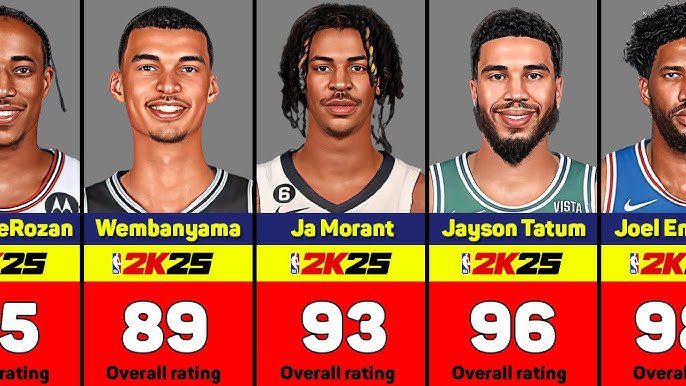
NBA 2K25 player statistics determine player performance, impacting gameplay and team building strategies.
The latest NBA 2K25 is almost here, and everyone wants to know how their favorite players are rated. The buzz around NBA 2K25 player statistics has already begun and many gamers are keen to understand the intricate details of these ratings. Understanding these numbers is key to improving your game and forming winning teams.
The specific player data shows their strengths and weaknesses. This information will impact how each player is used on the virtual court. Knowing these ratings gives a strategic advantage in online and offline game modes.

NBA 2K25 Player Statistics: A Deep Dive
So, you’re pumped for NBA 2K25, right? We all are! One of the coolest things about the game is how it tries to make players feel like their real-life counterparts. That’s all thanks to player statistics. These aren’t just random numbers; they’re the heart of the game, showing how good each player is at different things. Let’s explore how these stats work and why they matter so much in NBA 2K25.
Understanding Core Attributes
Every player in NBA 2K25 has a bunch of different attributes. Think of these as skills that tell you what each player is good at. It’s like a superhero having different powers! These attributes are the foundation of a player’s overall rating and affect how they perform on the virtual court. We can break them down into a few key categories:
Shooting Attributes
Shooting is a huge part of basketball. In NBA 2K25, shooting attributes show how accurate a player is at making baskets. Let’s look at some of the main ones:
- Close Shot: This stat determines how well a player can score when they’re right next to the hoop. Think of layups and easy baskets close to the basket.
- Mid-Range Shot: This tells you how good a player is at shooting from that area that’s not too close but also not a three-pointer, like free throws or shots from the elbow.
- Three-Point Shot: You guessed it! This stat shows how accurate a player is when shooting from beyond the three-point line.
- Free Throw: How often can they score from the free throw line? A high score in this means they’re reliable at the line.
- Shot IQ: This is about making good choices, when to shoot or not to shoot.
Finishing Attributes
Finishing is all about how a player scores at the rim. It’s not just about jumping high but also about finesse and how they handle the ball near the basket:
- Driving Layup: This stat is how skilled a player is at making a layup while driving to the basket.
- Driving Dunk: How likely are they to finish with a powerful dunk when driving towards the basket?
- Standing Dunk: This determines how well a player can dunk when they’re already close to the basket, without a run-up.
- Post Control: When a player is close to the basket, how effective can they be using post moves.
- Draw Foul: Can a player get the refs to call a foul on their opponents when they drive towards the basket?
Playmaking Attributes
Playmaking isn’t just about scoring, it’s about helping others score. These attributes show how well a player can create opportunities for their teammates:
- Ball Handle: This is how skilled a player is at controlling the ball while dribbling. Good ball handling means fewer turnovers and more ways to get open.
- Passing Accuracy: How precise are they at passing the ball to their teammates? Accurate passes are key to a good offense.
- Passing IQ: Does a player make smart decisions while passing, can they find the open teammate?
- Speed with Ball: How fast a player can move while dribbling.
Rebounding Attributes
Rebounding is grabbing the ball after a missed shot. A player’s ability to do this well is often the difference between a possession and a turnover:
- Offensive Rebound: How good a player is at grabbing rebounds when they are on the offensive side of the court.
- Defensive Rebound: How good a player is at grabbing rebounds when they are on the defensive side of the court.
Defensive Attributes
Defense is about stopping the other team from scoring. Good defenders are super important in basketball. These attributes show how a player does in that part of the game:
- Interior Defense: How good they are at defending near the basket.
- Perimeter Defense: How good they are at defending players on the outside of the court, like guarding three-point shooters.
- Steal: How good a player is at taking the ball from the other team.
- Block: How good they are at stopping the other team’s shots by blocking them.
- Lateral Quickness: How quickly they can move from side to side to keep up with the offense.
- Help Defense IQ: Does a player know when to leave their man and go help a teammate when they are beat by the other team?
Physical Attributes
Physical attributes are the raw abilities a player has, like their speed, strength, and jumping ability. These stats can affect all other attributes:
- Speed: How fast a player can run on the court.
- Acceleration: How quickly a player can reach their top speed.
- Strength: How strong a player is physically. This can be important for rebounding and defending.
- Vertical: How high a player can jump. This helps with rebounding, dunking and blocking shots.
- Stamina: How long can they play at their top potential, without getting tired.
How Stats Affect Gameplay
These attributes aren’t just numbers you see on a screen. They directly influence how a player performs in the game. For example:
- A player with a high three-point rating is more likely to make three-point shots.
- A player with high ball handling and speed is harder to guard while dribbling.
- A player with high strength and rebounding attributes will grab more rebounds and box out their opponents more easily.
- A player with higher defensive stats will be better at locking up their opponents.
It is important to understand these attributes because it helps you use your players correctly. You wouldn’t try to make a point guard who is very bad at scoring, a star scorer right? Or you would not try to make a center player dribble the ball up and down the court. You would use each player based on their strengths in order to win the game.
Overall Ratings: Putting It All Together
Each player also has an overall rating, which is a single number that tries to summarize how good they are in general. This rating is calculated using all of their individual attributes. It’s a quick way to compare players and get a general sense of their strengths and weaknesses. A player with an 88 overall rating would likely be better than a player with a 75 rating. But, remember, the overall rating doesn’t tell the whole story. Two players with the same overall rating may have different strengths. For example, one might be a great scorer but a poor defender, while another might be a great defender but a poor scorer.
Badges: Giving Players Special Abilities
Now, let’s talk about badges. These aren’t exactly statistics, but they are still super important in the game. Badges are special abilities that give players an extra edge in certain areas. These badges are really helpful as they increase the effectiveness of a player in specific situations.
Types of Badges
There are many different types of badges, covering almost every aspect of the game. Here are some common categories:
- Finishing Badges: Help players score at the rim, like “Giant Slayer” to make it easier for smaller players to score against taller defenders or “Posterizer” to make dunking more effective.
- Shooting Badges: Improve a player’s shooting ability, like “Dead Eye” for better shooting even when closely guarded or “Limitless Range” for making three-pointers from further away.
- Playmaking Badges: Help players create scoring opportunities for their teammates, like “Ankle Breaker” to make it easier to break down opponents with dribbling moves or “Dimer” to make better passes.
- Defensive Badges: Help players defend better, like “Interceptor” for stealing passes better or “Rim Protector” for blocking shots better.
- Rebounding Badges: Help players grab more rebounds like “Boxout Beast” to help a player box out better while going for rebounds or “Rebound Chaser” which will give a player extra range and jumping ability while trying to rebound.
How Badges Work
Each badge has different levels, like Bronze, Silver, Gold, and Hall of Fame. The higher the badge level, the more impact it will have on the player’s abilities. For example, a Gold “Catch and Shoot” badge will give you a better boost to your shooting ability than a Bronze one when taking a shot right after catching the ball. Players can earn or upgrade badges by playing the game and completing different tasks. So, the more you play with a player, the better their abilities can become. Also, when you start the career mode, you get to choose the badge you want to start with and how you want your player to play.
Player Tendencies
Tendencies aren’t exactly stats either, but they are closely related and really impact how players behave in the game. Player tendencies show what a player is likely to do in different situations. This makes players feel more lifelike and also can give them an edge when the player knows what an opponent will do. Let’s look at what tendencies are and why they are so important.
Types of Tendencies
There are many different tendencies that are used in the game, here are some of the most important ones:
- Shot Tendencies: How often a player will try to shoot the ball. Some players like to shoot at every chance they get, while other players prefer to pass the ball around. These tendencies also indicate what kind of shot a player will look for. For example, some players are always looking to drive to the basket and some players always look for a three-point shot.
- Passing Tendencies: How often a player is likely to pass the ball, and what kind of pass they usually go for. Some players like to pass the ball for an easy score, while other players prefer to make the play themselves.
- Dribbling Tendencies: What kind of dribbling moves a player is likely to make and how often. Some players like to dribble between the legs, while others like to just make basic dribble moves and pass to a teammate.
- Post Up Tendencies: How often a player will try to go into the post and use post moves. Certain centers will always want to make their move in the post and score, while other centers will prefer to play on the outside and shoot more three-pointers.
- Defensive Tendencies: How often a player will try to steal the ball, block a shot, or play help defense. A good defensive player is always looking for the perfect moment to steal the ball, while a player who isn’t as good at defense will probably play less aggressive.
Why Tendencies Matter
Tendencies add a lot of variety to the game. They help the players in the game behave like their real-life counterparts. If you are playing against a real person they might play different every time, because real life players make different choices. But, when playing against a computer player, tendencies will give you a better understanding of how a player is going to play and you can use that to your advantage. For example, if you know a player always tries to drive to the basket, you can have another player move over and help defend them. If a player likes to pass the ball all the time, you know to not put so much defensive focus on them and just focus on the other players. Tendencies make a big difference in the game, especially in career mode where you play against many of the same players over and over. You can learn their tendencies and use it to get better!
Staying Up-to-Date
Player statistics are not set in stone. They can change over time as the developers update the game to reflect player performance in the real NBA. These updates, known as roster updates, adjust the statistics and overall ratings of players throughout the season. You should keep your game up to date, in order to have the most realistic stats for each player.
Using Stats to Your Advantage
Knowing about player stats can improve your game. Here are some tips:
- Build a balanced team: Don’t just focus on having the highest-rated players. Try to have players with different skills in order to cover all the aspects of the game, from scoring, passing, to rebounding and defense.
- Play to each player’s strengths: If you have a player with a high three-point rating, try to get them open for three-point shots. If you have a player with high speed and dribbling stats, use them to drive to the basket.
- Pay attention to the tendencies: If you know what players are likely to do, it will be easier to know how to defend them or how to score against them.
- Use badges wisely: Badges can make a big difference in a player’s ability. Know what badges are good for each player and try to earn the badges that they need.
Using all this information you can really get an edge over the competition, because you understand what each of your players is good at and how you can use them the best way. This knowledge is going to make a big difference in the way that you play NBA 2K25!
Understanding NBA 2K25 player statistics is more than just memorizing numbers. It’s about knowing what makes each player unique and how to use their abilities to win games. By exploring these details, you’ll not only get better at the game but you will also have more fun! So, dive in, experiment with different players, and most importantly, have fun!
Can you guess these 2K25 ratings? 👀 #nba #nbabasketball
Final Thoughts
Analyzing NBA 2K25 player statistics reveals crucial insights. These figures directly impact gameplay strategies. Players should carefully examine attributes before making roster decisions.
Accurate evaluation of the data allows for competitive edge. Understanding each player’s strengths will improve your chances of victory. So, pay close attention to the NBA 2K25 player statistics.

