
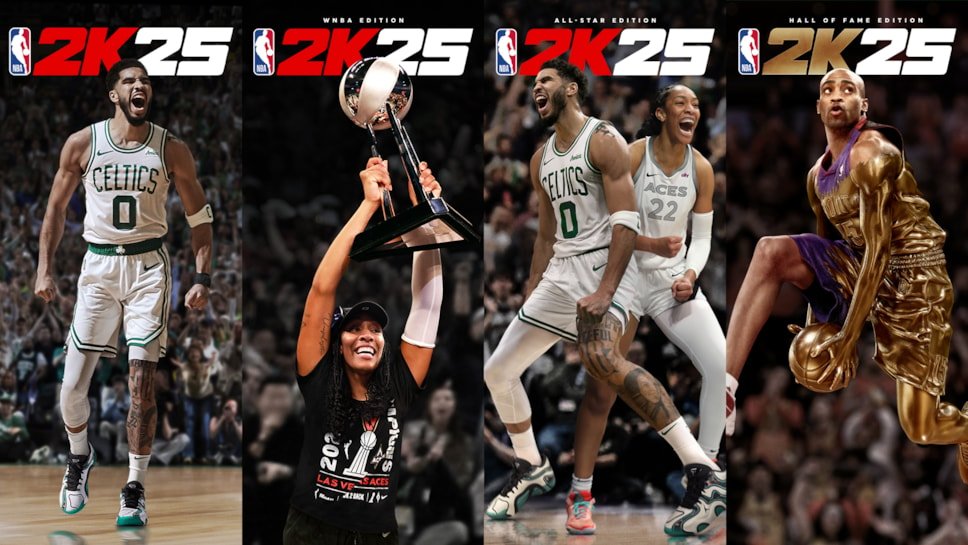
NBA 2K25 technical limitations likely stem from console hardware capabilities, impacting graphics fidelity, AI complexity, and overall simulation depth.
The hype surrounding NBA 2K25 is palpable, but even the most anticipated games have boundaries. We must consider the impact of existing console technology when expecting improvements. Deep diving into NBA 2K25 technical limitation analysis reveals potential constraints.
These limitations affect various aspects of gameplay. Players might notice that crowd detail or even animations have some issues due to technical boundaries. The development team works within these restrictions, balancing ambition with hardware reality.

NBA 2K25 Technical Limitation Analysis
Okay, let’s dive deep into the nuts and bolts of NBA 2K25. We all love sinking three-pointers and pulling off crazy crossovers, but sometimes it feels like the game is holding us back. This isn’t just about complaining; it’s about understanding the technical ceilings – the things that make the game challenging to make even better. We’re going to explore the areas where the game struggles and what might be causing those issues. Think of it as peeking under the hood of your favorite car to see what makes it tick (and sometimes sputter).
Graphics and Visual Fidelity
First up, let’s talk about how the game looks. NBA 2K is famous for its pretty graphics, but even they aren’t perfect. We’re talking player models, court details, and the whole visual package.
Player Likeness and Animation
Sometimes, players in NBA 2K look just like their real-life counterparts. Other times, it’s like looking at a slightly melted wax figure! Getting the details right – from the way Steph Curry shoots to how Lebron James walks – is seriously tough. Animating these complex moves and facial expressions is like trying to film a live action movie with hundreds of actors, all at the same time! The amount of data required is enormous. This is a key area that pushes the limits of what current gaming technology can do. Things like:
- Facial capture: Getting those tiny wrinkles and expressions is difficult. While they make big improvements, it’s not quite there for every player, every time.
- Body proportions: Everyone is different. Some players are tall and thin, others are short and bulky. Translating that into a digital model that moves naturally and doesn’t look weird, takes a lot of work.
- Animation variety: Think of all the different ways players dribble, shoot, and pass. Creating each and every variation and ensuring they flow smoothly is a massive undertaking. The limitations here can be because of storage space, processing power, or both.
The Game Environments
It’s not only the players, the stadiums and courts themselves also bring some technical issues. It is great to play in a packed arena that really looks like a real NBA game. But recreating that kind of detail for all 30 NBA courts is a big task. The more detail, the more demanding the game becomes. For example:
- Crowd Detail: Have you ever looked closely at the people in the stands? Sometimes, they move in a bit of a repetitive way, and don’t look completely natural. Creating hundreds, or thousands of individual looking and reacting fans would be extremely processing heavy for console and PC.
- Lighting and Reflections: The way light bounces off the court and the players adds a ton to the visual appeal. But it also requires significant resources from the graphics processing unit (GPU).
- Court Textures: The texture of the court, the shine, all those small details require a lot of processing power. The better the details, the heavier it is on the game’s performance.
Gameplay Mechanics and Responsiveness
Okay, graphics are cool, but a game also has to feel good to play, right? Responsiveness is the king of gameplay. We have to look at areas where the game might struggle in making us feel like we are really in control.
Input Delay and Latency
Ever hit the jump button, only for your player to jump a half-second later? That’s input delay, and it’s a killer. It happens when there’s a lag between when you press a button and when the game responds. A bunch of different things can cause this:
- Controller latency: It’s how long it takes for the game to register your controller input.
- Processing times: The time it takes for the game to process information and then to display it on your screen.
- Online connections: If you are playing online, a slow connection can cause even more delay.
Reducing this input delay is really important to make the game feel fluid and fair. The game always looks to minimize delay, but there are limitations due to the complexity of calculations the game does in the background.
AI Behavior and Realism
Playing against the computer can sometimes feel like playing against a robot. The AI, while improved, still struggles in some areas. Consider these points:
- Predictable Patterns: Sometimes, the AI does the same thing over and over, making it easy to take advantage.
- Unrealistic Plays: It is common to see AI players make illogical moves or passes, which could never happen in a real NBA game.
- Adapting to the Game: The AI players struggle sometimes to adapt to our strategies. Making every opponent a truly unique challenge would take tons of processing power, creating a huge challenge.
Making AI players more human-like is a very hard task, especially when you think how many things the AI has to process at the same time. Creating a truly intelligent AI is a huge challenge.
Online Play and Networking
Online play is a huge part of NBA 2K. Everyone wants to test their skills against other players. But this brings a whole new set of technical challenges.
Server Performance and Stability
Have you ever been in the middle of a crucial game, and then BAM, the game disconnects? That’s server instability at work. Maintaining a server for thousands of players playing at the same time requires a ton of resources and good planning.
- Connection drops: When servers overload, or have issues, it will often cause dropped connections and game crashes.
- Lagging players: Lag makes it nearly impossible to have a smooth online experience.
- Matchmaking problems: Finding good matches that are fair and lag-free is very tough. It requires the game to analyze thousands of players in seconds.
Improving server quality is really expensive. It needs a lot of investment in equipment and experienced personnel. It’s a real balancing act between keeping costs down and having a good gaming experience.
Online Game Modes Limitations
Some game modes that are possible offline just aren’t possible in online. This is mainly because of the challenge to coordinate different players simultaneously with consistent performances:
- Limited number of players: It can be hard to keep all players in an online game in sync and playing smoothly, so there is often a limit to how many players can participate.
- Performance restrictions: In some online modes, the game has to cut down on some of the detailed graphics and physics to keep the game running. This is done so that the game doesn’t start lagging.
- Game feature differences: Some game modes could have different game play rules, compared to the offline version, just because of server limitations.
Hardware Limitations
Okay, let’s talk about the real physical stuff – the hardware. NBA 2K is a demanding game. It puts a lot of stress on our computers and consoles. It’s like asking a small car to tow a huge trailer; sometimes it just can’t keep up.
Console Differences (PS5 vs. Xbox Series X/S)
The PlayStation 5 and Xbox Series X are powerful consoles, but they are not created equal. And even with these high-end consoles, the game pushes the limits. The Xbox Series S, which is less powerful, often struggles even more.
- Resolution Differences: The most powerful consoles can render the game in a high resolution, which makes everything look sharper. But on the less powerful consoles, the game has to run at a lower resolution.
- Frame rate limitations: The frame rate is how smooth the game looks. Higher frame rates make the game look fluid and responsive, but less powerful consoles often have to lower the frame rate to keep the game running.
- Graphical options: Some game options might not be available on less powerful consoles. Like complex shadows, reflections, and other graphical things, or they may need to be reduced to keep the performance stable.
PC Performance and Optimization
On PC, there are so many different combinations of hardware. It is nearly impossible to make the game run perfectly on all of them. This can result in a lot of technical problems:
- Variety of hardware: Different PCs have different processors, graphics cards, and RAM. Getting the game to work perfectly on all of them is a huge challenge for the developers.
- Optimization issues: Sometimes, even good PCs can struggle with NBA 2K. This usually means that the game isn’t optimized well for all kinds of PC setups.
- Driver Compatibility: Outdated graphics drivers on PC can cause many types of problems, from visual bugs to performance issues.
Future Considerations
Okay, we’ve talked about the challenges of NBA 2K25. What does the future hold? Here are some interesting future topics:
Technological Advancements
Technology never sits still! New consoles and better PC parts are always on the horizon. We can expect some big improvements in the future:
- More powerful hardware: Faster processors and better graphics cards will make higher resolution and frame rates possible.
- Better AI: Better AI processing and machine learning could make games more immersive, and human-like.
- Cloud gaming: Cloud gaming, which streams the games from powerful servers, may allow better gaming for everyone without having high-end hardware.
Game Development Challenges
The people who create the game face their own challenges. This means balancing cost with performance.
- Time and resources: Developing complex games like NBA 2K is really expensive and time-consuming. There are always restrictions, from both money and time.
- Balancing realism and fun: Sometimes, going for 100% realism might reduce the fun. The developers have to balance these two ideas.
- Meeting player expectations: Gamers always want more. The developers are always trying to keep everyone happy, which is a really tough job.
In conclusion, the technical limitations of NBA 2K25 are a complex mix of current hardware limits, software demands, and the pure challenge of creating a huge, detailed, and realistic basketball experience. As technology evolves, we can expect improvements in these areas, pushing the boundaries of what’s possible in video game sports simulations. Understanding these limits helps us appreciate the work that goes into making these games and perhaps temper our expectations a bit, while still looking forward to future improvements.
HOW CAP BREAKERS WORK IN NBA 2K25
Final Thoughts
In conclusion, NBA 2K25 technical limitation analysis reveals the constraints faced by the game’s current engine. The developers likely need to innovate significantly for future titles to meet rising player expectations for visual fidelity and performance. Achieving true photorealism and smoother gameplay requires overcoming these technical hurdles. These identified limitations impact the overall experience.

