
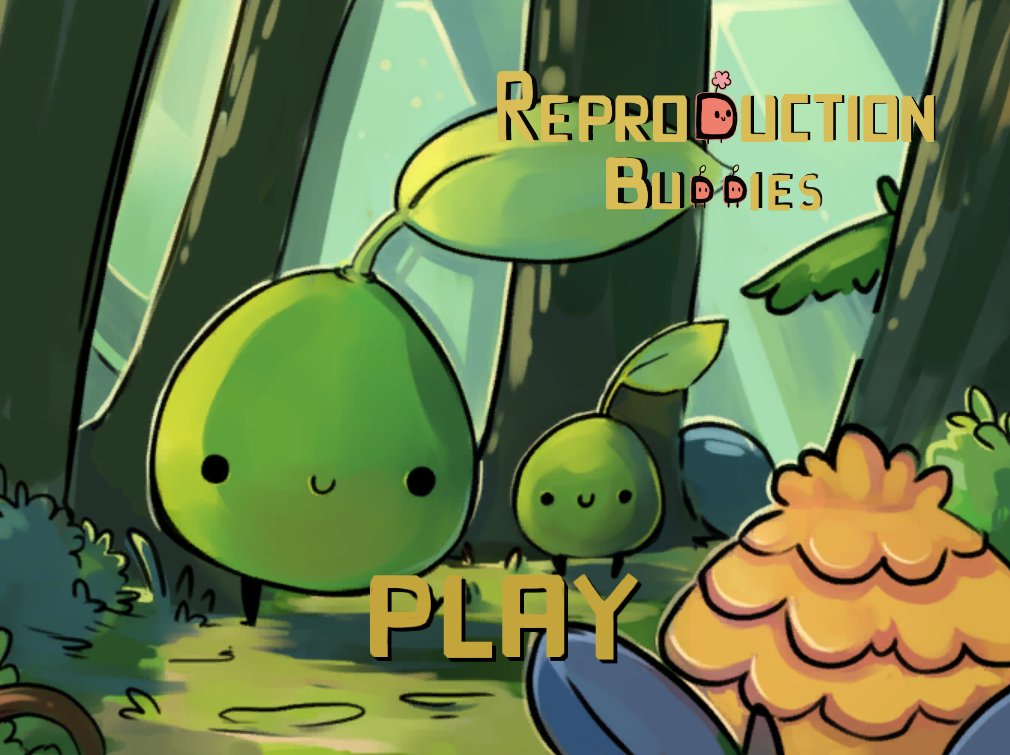
A reproduction game usually involves creating offspring or new generations within a simulated environment, often based on genetic principles and evolution.
Ever wondered how different species pass on their traits? What if you could simulate the evolutionary process right on your computer?
That’s the core idea behind a reproduction game. These games allow you to experiment with genetics, mutations, and natural selection, all in a controlled, digital world. Prepare to delve into the fascinating world of virtual evolution.

Reproduction Game: Exploring Simulation and Strategy
The term “reproduction game” can encompass various types of games, each centering on the core concept of reproduction, whether biological, social, or even algorithmic.
These games explore themes of survival, resource management, and the propagation of a species or system.
They can range from realistic simulations to abstract strategy games.
Types of Reproduction Games
There are different ways to categorize reproduction games. The nature of reproduction itself helps define the game mechanics.
Let’s explore some prominent categories.
Biological Reproduction Simulations
These games focus on simulating the reproduction of living organisms.
They often involve genetics, environmental factors, and the struggle for survival.
Players might control individual organisms or entire populations, making choices that affect their reproductive success.
Social Reproduction Games
This category explores how societies reproduce themselves over time.
This involves cultural transmission, education, and the perpetuation of social structures.
These games often model complex social dynamics and the impact of different policies.
Algorithmic Reproduction Games
In this context, “reproduction” refers to the creation of new algorithms or code through processes like genetic algorithms.
These games involve evolving populations of algorithms to solve specific problems.
Players might design the initial algorithms and then guide the evolutionary process.
Key Mechanics in Reproduction Games
Several common mechanics are employed in reproduction games to simulate the process effectively.
These mechanics often overlap and interact in complex ways.
Genetic Inheritance: This mechanic simulates the passing of traits from parents to offspring.
It often involves concepts like dominant and recessive genes, mutations, and genetic diversity.
Environmental Factors: These factors represent the impact of the environment on reproduction and survival.
This can include things like food availability, climate, predation, and disease.
Resource Management: Many reproduction games require players to manage resources to ensure the survival and reproduction of their population.
This can include food, water, shelter, and energy.
Mutation and Evolution: Mutations introduce random changes in the genetic code, leading to new traits.
Evolutionary pressure, driven by environmental factors, favors traits that increase survival and reproduction.
Social Structures: In social reproduction games, players might need to manage social hierarchies, cultural norms, and institutions.
These structures can influence reproductive success and the stability of the society.
Examples of Reproduction Games
Numerous games, across various genres, incorporate reproduction as a central mechanic or theme.
Let’s look at a few examples.
Species: Artificial Life, Real Evolution
This game simulates the evolution of artificial lifeforms in a virtual ecosystem.
Players can influence the environment and observe how their creatures adapt and evolve over time.
Evolutionary Simulation: The game’s core mechanic revolves around simulating evolution through natural selection.
Genetic Diversity: The game emphasizes the importance of genetic diversity for long-term survival.
Complex Ecosystems: Players can create and manage complex ecosystems with diverse species.
Evo: Search for Eden
This game puts you in control of a creature that evolves over millions of years.
You compete with other species for survival and adapt to changing environments.
Adaptive Evolution: The game allows players to evolve their creature’s physical attributes to suit different environments.
Competitive Ecosystem: The game features a dynamic ecosystem where species compete for resources.
Historical Accuracy: The game attempts to accurately portray the evolutionary history of life on Earth.
The Sims Series
While not explicitly about biological reproduction alone, The Sims games heavily feature social reproduction.
Sims can reproduce, raise families, and pass on their traits and values to their children.
Social Simulation: The Sims series is known for its realistic simulation of social interactions and relationships.
Generational Gameplay: Players can play through multiple generations of Sims, shaping their family history.
Cultural Transmission: Sims can teach their children skills and values, perpetuating their family culture.
The Educational Value of Reproduction Games
Reproduction games can be valuable educational tools.
They can help players understand complex biological and social processes.
They can also promote critical thinking and problem-solving skills.
Understanding Evolutionary Biology
These games can illustrate the principles of natural selection, genetic inheritance, and adaptation.
They can make complex concepts more accessible and engaging for students.
Players can experiment with different scenarios and observe the consequences of their actions.
Exploring Social Dynamics
Social reproduction games can help players understand how societies function and evolve.
They can explore issues like inequality, cultural transmission, and the impact of policy decisions.
Players can experiment with different social structures and observe their effects on society.
Developing Problem-Solving Skills
Many reproduction games require players to manage resources, adapt to changing environments, and solve complex problems.
These skills are valuable in many real-world contexts.
Players can learn to think critically and make informed decisions.
The Future of Reproduction Games
The future of reproduction games is bright. As technology advances, these games will become more realistic and immersive.
New types of reproduction games will also emerge, exploring new themes and mechanics.
Increased Realism
Advances in computer graphics and simulation technology will allow for more realistic and detailed reproduction games.
Players will be able to observe the intricate details of biological and social processes.
This will enhance the educational value and entertainment value of these games.
New Game Mechanics
Developers will continue to innovate and create new game mechanics that capture the complexity of reproduction.
This could include things like more sophisticated genetic models, more realistic social simulations, and new ways to manage resources.
These innovations will make reproduction games more challenging and engaging.
Virtual Reality Integration
Virtual reality (VR) technology has the potential to revolutionize reproduction games.
Players could experience the world through the eyes of an organism or interact with a virtual society in a more immersive way.
This could lead to a deeper understanding of reproduction and its impact on the world.
Ethical Considerations in Reproduction Games
As reproduction games become more realistic and immersive, ethical considerations become increasingly important.
It is important to consider the potential impact of these games on players’ perceptions of reproduction and related issues.
Responsible Representation
Developers have a responsibility to represent reproduction in a responsible and accurate way.
This means avoiding harmful stereotypes and promoting respect for diversity.
Games should also avoid glorifying violence or exploitation.
Privacy Concerns
Some reproduction games may collect data about players’ reproductive behavior or preferences.
It is important to protect this data and ensure that it is not used in a harmful way.
Players should be informed about how their data is being collected and used.
Potential for Misinterpretation
It is important to remember that reproduction games are simulations, not reality.
Players should be aware of the limitations of these games and avoid drawing overly simplistic conclusions about real-world reproduction.
Games should be designed in a way that promotes critical thinking and avoids misinterpretations.
The Appeal of Reproduction Games
What makes reproduction games so appealing? There are several factors.
They tap into our natural curiosity about life, evolution, and society.
They offer a unique opportunity to experiment and learn in a safe and engaging environment.
Sense of Control: Players enjoy the sense of control over the fate of their organisms or societies.
They can make choices that have a significant impact on the outcome of the game.
Discovery and Learning: Reproduction games can be a fun and engaging way to learn about complex biological and social processes.
Players can discover new things about the world and themselves.
Creative Expression: Some reproduction games allow players to express their creativity by designing their own creatures, societies, or algorithms.
This can be a very rewarding experience.
Reproduction Games: A Summary
“Reproduction game” describes a varied category of games focused on replicating systems.
They span biology, social structures, and even algorithms.
Key mechanics involve genetics, environment, and resource management.
Examples include Species, Evo, and elements within The Sims.
They offer educational value and present some ethical considerations.
The future promises increased realism and new technologies such as VR.
(Discussion) Are Reproduction Games Bad and Should You Buy Them? – Retro Bird
Final Thoughts
Ultimately, simulating population dynamics provides a valuable learning experience. We see how factors like resource availability and predation impact survival rates. This makes comprehending ecological balance much easier.
Understanding key concepts becomes accessible through interactive models. Students readily grasp complex relationships when presented visually.
Therefore, playing a reproduction game offers a simplified yet effective tool. It aids in understanding essential biological principles related to species propagation and survival. This approach makes learning about populations fun and engaging.

