
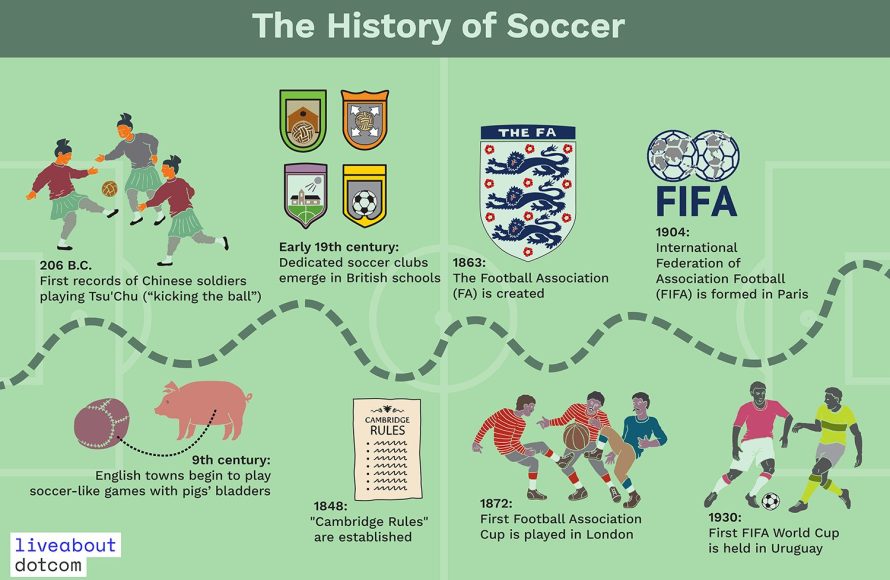
No single person invented the soccer game; it evolved from various forms of football over time.
Have you ever pondered who invented soccer game? It’s a question that sparks curiosity, isn’t it? The sport we know and love today didn’t just spring up overnight.
Instead, soccer’s origins are rooted in a rich tapestry of different ball games, played across various cultures throughout history. These ancient forms gradually morphed into the beautiful game we now watch with passion.

Who Invented Soccer Game?
The question of who invented soccer is a fun one, but it’s also a bit tricky! It’s not like someone woke up one day and said, “Let’s invent soccer!” Instead, soccer developed over a long, long time, with different versions of the game being played in various places around the world. So, while we can’t point to one single inventor, we can explore the different stages and cultures that shaped the game we know and love today.
Ancient Roots of Ball Games
Before we get to modern soccer, let’s travel way back in time! People have been kicking balls around for a very, very long time. Many ancient civilizations had their own versions of ball games, and some of these bear a resemblance to soccer. Though they weren’t exactly the same, these early games played a vital role in shaping the future of soccer. Understanding these ancient roots provides context and depth to the history of the soccer game.
Early Ball Games Around the World
Several different cultures across the world developed games that involved kicking a ball or an object. Let’s explore some of them:
- Tsu Chu (China): Around 200 BC, the Chinese played a game called Tsu Chu. Players kicked a leather ball filled with feathers or hair into a small net fixed on bamboo sticks. Tsu Chu was not just for fun; it was used to train the Chinese military. It is often cited as one of the earliest forms of football-like games and certainly a precursor to the modern soccer game.
- Episkyros (Greece): In ancient Greece, people enjoyed a game called Episkyros. Two teams tried to throw a ball over a line and also use their feet to move the ball. Though not quite soccer, it showcases the widespread enjoyment of ball-based team sports and gives some light on who invented soccer game.
- Harpastum (Rome): The Romans took Episkyros and created their version, Harpastum. This game was much more physical and involved a lot of running and tackling. It was a popular game among Roman soldiers. It shows how ancient games were not only for entertainment but also to enhance physical fitness and strength, and its influence on the development of sports, including soccer is considerable.
These are only a few examples, there were many other types of ball games played around the world. These early forms of the game give us clues as to how the modern soccer game developed over time and give a clear idea of the origins of soccer.
Medieval Football: A Chaotic Beginning
As we move forward in history, we find that in the Middle Ages, especially in Britain, a form of “folk football” gained popularity. This wasn’t like the soccer we know today. It was more like a huge, chaotic mob of people trying to move a ball across town using any means necessary!
The Rough and Tumble of Folk Football
Medieval football was far from organized. It had very few rules, and matches often involved hundreds of players. Here are some things that characterized these early forms of football:
- Town vs. Town: Games were often between neighboring towns or villages.
- No Rules (Almost): There were very few rules, and players could kick, punch, carry, or whatever they needed to move the ball forward.
- Very Physical: These games were very rough, often involving pushing, tackling, and even some fighting. There were numerous reports of injuries and even deaths due to the rough nature of these games.
- Massive Affairs: Games could last all day, sometimes even multiple days.
These medieval games show that people clearly enjoyed the idea of kicking a ball around, but they also showed the need for some rules and organization. The chaotic nature of folk football prompted people to think more about how to regulate the game for a safer and more organized competition, which brings us closer to understanding who invented soccer game.
The Emergence of Modern Soccer
The 19th century was a very important time for soccer. It is when the game began to evolve into the sport we recognize today. It’s a time of significant rules and regulations, leading to the structured game that we know and love. So, if you have been looking for that “inventor” of soccer, here’s where the story starts to gain some clarity.
The Football Association and the Codification of Rules
In 1863, a pivotal event happened in England – the formation of the Football Association (FA). Representatives from various football clubs came together to create a uniform set of rules for the game. Before this, each club had its own way of playing, which made it difficult to have inter-club matches. The FA’s rules were important in the journey of figuring out who invented soccer game.
Key decisions made by the FA included:
- Banning Hand Carrying: The most significant rule change was banning the use of hands to carry the ball. This rule separated “football” into two distinct sports: Association Football (soccer) and Rugby Football.
- Standardizing the Rules: The FA created a set of 13 rules that provided the foundation for modern soccer, which are similar to the rules we follow today.
- Promoting Fair Play: The new rules emphasized fair play and discouraged the rough play that had been common in previous games.
The formation of the FA and these rule changes were very important in the development of soccer and helped make it the widely played game we see in today’s world. The standardization of rules helped the game become more accessible and understandable to players from diverse backgrounds, which contributed to its growing international popularity.
The Spread of Soccer Around the Globe
After the Football Association set the standard rules for soccer, it began to spread rapidly around the world. British sailors, soldiers, and merchants often brought the game with them to their international travels. The popularity of soccer game grew quickly as people saw it was easy to play with just a ball and a field.
Soccer’s International Expansion
The game expanded rapidly across several countries through the influence of British expatriates and international trade:
- South America: The game became especially popular in South American countries, such as Brazil, Argentina, and Uruguay. These nations are now known for producing some of the world’s best players and have passionate soccer fans.
- Europe: Soccer quickly spread across the rest of Europe, and many of the famous clubs and leagues were formed during this time. National teams were also created, and international competitions began to take place.
- Africa and Asia: Soccer also became widely played in many countries in Africa and Asia. Local teams and leagues were set up, and many countries have national teams that compete at the highest levels of the game.
- North America: Soccer has grown increasingly popular in North America over the last few decades and has developed a devoted following in the USA and Canada.
The globalization of soccer can be seen in the huge popularity of global tournaments like the FIFA World Cup. These international competitions help to increase the game’s global appeal and bring fans together from all around the globe. Through the gradual spread, soccer game became not just a sport, but a part of the culture in many nations.
Key Figures in Soccer’s Development
While there isn’t a single “inventor” of soccer, there were some key people who contributed to the game as we know it today. Although we can’t give one name for who invented soccer game, we can explore some influential figures:
Influential Figures in the Game’s Evolution
Here are some of the key people who helped to make soccer what it is today:
- Ebenezer Cobb Morley: He was the first Secretary of the Football Association and was instrumental in drafting the original rules of the game. His role was incredibly important in organizing the sport and moving away from the chaotic, unstructured version of the game.
- Charles Alcock: As secretary of the Football Association for 25 years, he is very well-known for his dedication and help in establishing soccer leagues and competitions. His efforts contributed considerably to the organization and expansion of the game.
- Jules Rimet: He was the President of FIFA, the international soccer organization, and he played a big role in starting the FIFA World Cup. His vision for international competition helped soccer become a truly global sport.
These individuals, among many others, helped shape the structure, rules, and global outreach of soccer. They all had an important role in moving the sport forward and ensuring its place in history. They didn’t invent the sport, but they did help to craft the game we now know and cherish.
The Legacy of Soccer
Soccer has a long and varied history that shows the way the sport has evolved over the years. From ancient ball games to the modern game, soccer has come a long way. Even though we can’t point to just one person and say “they invented soccer,” it’s clear that many different cultures and people have contributed to the game over a long period. The game today is a huge part of our world, known as a global sport.
Here are some of the key things that the game is known for:
- Global Popularity: Soccer is the most popular sport in the world, with billions of fans across the globe. Its simple rules and minimal equipment make it accessible to everyone.
- Community and Culture: Soccer is more than just a sport. It’s something that many people connect with and is important in different cultures. It is used to bring people together, build community spirit, and celebrate unity and collaboration.
- Inspiration: Soccer inspires people young and old all over the world. It brings excitement, entertainment, and opportunities for achievement for everyone who plays or watches the game.
- Continued Evolution: The game continues to evolve with new rules, strategies, and advancements in player development and equipment. This constant change shows that soccer is alive and active and always moving forward.
The history of soccer is a reminder of how sports can develop over a long period of time by many different people and cultures. The game is much more than just what we see on the field, and it connects us to the past, present, and future. As we watch and play, it shows that the story of soccer will continue on.
So, the answer to the question “who invented soccer game?” is complex. It wasn’t one person; it was a long process with many influences and contributions from around the world. From ancient ball games to the formation of the Football Association, soccer has changed and developed over time. It is this rich and varied history that has made the game what it is today: a beloved sport for people across the world.
Who Invented Soccer? | COLOSSAL QUESTIONS
Final Thoughts
The simple truth is, pinpointing one inventor of soccer is impossible. Multiple forms of the game existed in different places, evolving over time. Various cultures played early ball games with feet. These games gradually developed into what we now know as modern soccer.
Therefore, we can’t give credit to a single person for the invention. It was a collective, historical process. So, when considering who invented soccer game, remember its gradual development and numerous contributors.

