
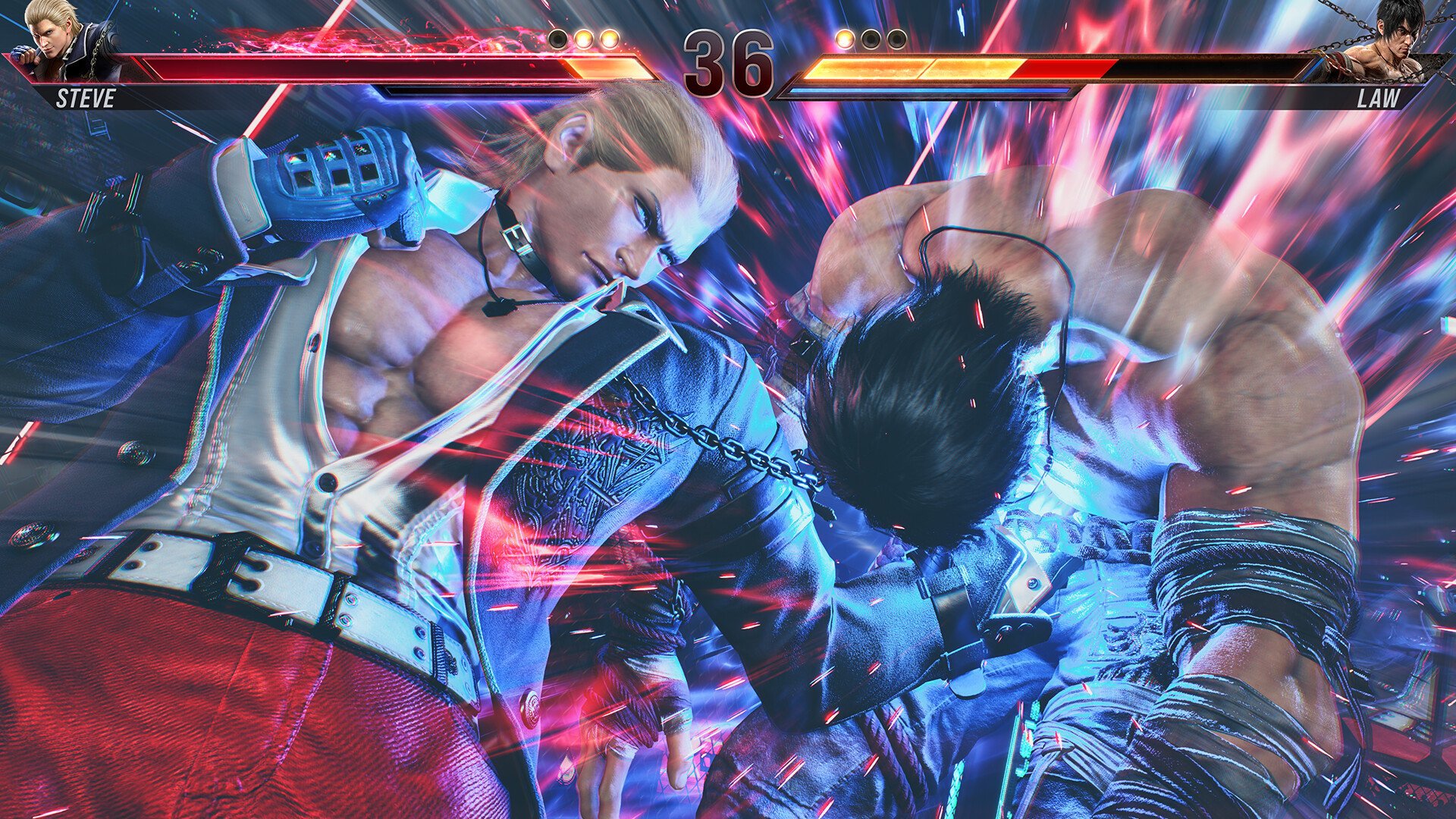
Tekken 8 advanced mechanic guides cover techniques like heat engagers, rage arts, and utilizing the recovery system effectively for competitive play.
Tekken 8’s depth goes beyond simple button mashing. You’ve probably felt the frustration of losing to seemingly impossible combos, and that’s where understanding advanced mechanics becomes crucial. This article will explain what separates casual players from pros, diving into those less obvious techniques.
We’ll explore the heat system, its impact on gameplay, and how to best use it to your advantage. Furthermore, we’ll break down the intricacies of rage arts and the recovery options available in Tekken 8. These are all important for anyone aiming for victory. This article serves as your starting point to fully utilize what Tekken 8 advanced mechanic guides have to offer.

Tekken 8 Advanced Mechanic Guides
Okay, so you’ve been playing Tekken 8, and you’re getting the hang of it. You know the basic moves, you can land a few combos, and you’re starting to feel pretty good. But what if I told you there’s a whole other level to this game? A level where tiny adjustments and smart decisions can turn a close fight into a dominating victory? That’s where advanced mechanics come in. They’re the secrets that separate the good players from the great ones. Let’s dive into some of these more complex systems, breaking them down so you can add them to your arsenal and seriously up your Tekken 8 game.
Heat System Deep Dive
The Heat System is one of the biggest changes in Tekken 8. It’s not just a temporary power boost; it’s a fundamental mechanic that completely alters how you approach matches. Think of it like a super mode, but with extra layers. You enter Heat Mode by pressing the R1/RB button (or equivalent) when your Heat Gauge is full, initiating a unique burst of energy around your character. Let’s see what you get during heat mode.
Heat Engagers
Activating Heat isn’t the only way to access its benefits. Certain moves called Heat Engagers, when landed, will immediately launch your character into Heat. This allows for some extremely aggressive plays, since you are immediately getting the benefits of heat. This can be the perfect opportunity to begin your onslaught of offense. Learning which moves are Heat Engagers for your main character is crucial.
Heat Dash
During Heat, you can perform a Heat Dash by tapping forward twice, which propels your character with a quick burst of speed and closes the distance. This makes applying pressure very easy, since the heat dash is quick and covers a lot of space. You also get some extra frame advantage and are in a position to continue your attacks.
Heat Smash
Each character has their own unique Heat Smash, a powerful move executable during Heat. These attacks often have great range, deal massive damage and can turn the tide of a match. Knowing when to use your Heat Smash, and not wasting it, is part of being a smart player.
Heat Attack
While Heat is active, you can use a Heat Attack. This special move hits with significant power, but it also ends your Heat state. So you need to think of it as the ultimate move, to be used carefully when the opening is just right.
Heat Properties
- Enhanced Move Properties: During Heat, many of your moves have enhanced properties, meaning increased damage, better frame advantage, or even altered hit properties.
- Chip Damage on Block: While in Heat, your attacks can deal chip damage even when blocked. This encourages aggressive gameplay and makes blocking less safe.
- Increased Pressure: The combination of Heat Dash, enhanced moves, and chip damage allows for relentless pressure on your opponent.
Knowing these properties of Heat is key to becoming a better player. You have to master Heat if you want to win. It’s more than just a damage boost, it’s an entire system that you have to plan around. Experiment with your characters and figure out the perfect time to enter heat. When is it best to use the heat dash? When should you use your heat smash? All these are questions you should ask yourself to play the game at a higher level.
Rage System
The Rage system is a returning mechanic from past Tekken games, but it still plays a crucial role in Tekken 8. When your character’s health bar drops to a low level, they enter a ‘Rage’ state. This comes with a visual effect, and it boosts your damage output as well as enables the use of Rage Arts. Here’s what you should know:
Rage Art
The most important part of the rage system is the Rage Art. When in rage, you can unleash a Rage Art, a powerful cinematic attack that can deal huge damage and turn a losing battle. Rage Art is done by pressing R2/RT button. However, use these moves carefully, as they leave you open to attacks if they miss or are blocked.
Rage Properties
- Damage Increase: When enraged, your normal attacks become stronger. It gives you the extra damage you need to get a victory in the face of defeat.
- Comeback potential: The Rage System provides a comeback potential for players who are low on health.
Rage Arts are not to be used without consideration. Don’t blindly fire your Rage Art just because it’s available. Look for a moment where your opponent is committing to an attack or is recovering from a missed move. They also work well at the end of certain combos. If you use it smart, it can give you an opening that your opponent didn’t see coming.
Recoveries and Wake-Ups
Getting knocked down is part of Tekken. But just lying there is not an option for advanced play. Understanding recovery options, called wake-ups, can help you get back into the fight without being punished.
Quick Recovery (Back Roll)
Press back as you hit the ground to perform a quick back roll. This is a good defensive option to create distance. You should do this when your opponent is going to be offensive to create space.
Forward Roll
Press forward as you hit the ground to do a forward roll. This can be risky but helps put you into an offensive position. It works well when you think your opponent is backing off.
Side Roll
Press left or right as you hit the ground to perform a side roll. This can help you avoid attacks and can set up mix-ups. It can make your opponent struggle if they were expecting you to roll back or forward.
Get-Up Kick
Press any attack button to do a get-up kick. It’s quick and can hit opponents close by, but be wary, because it leaves you open if it’s blocked.
Staying Down
Sometimes it’s best to not wake up immediately and remain on the ground. This could bait an opponent into an attack that you can counter with a rising attack. You have to decide what is the right move based on the position and habits of your opponent.
Understanding the different wake-up options can be the difference between being repeatedly punished and taking back control of the fight. Practice these options and see how they can help in your gameplay.
Movement Techniques
Tekken is not just about mashing buttons. Fluid movement is very important for playing at a high level. Moving around and manipulating space is key to victory. Let’s look at some movement techniques:
Korean Back Dash (KBD)
The KBD is a fundamental technique that allows you to quickly move backward while maintaining a guard. It involves quickly tapping back then down-back, followed by quickly pressing back again. It takes practice but is invaluable for creating space and evading attacks.
Sidestep and Sidewalk
Sidestepping is a key movement in Tekken. Tapping up or down will move your character in those directions. It can help you evade linear attacks and reposition for counter attacks. Sidewalking, or holding up or down allows you to move to the side with slower but smoother movement, this is good for circle-strafing.
Forward Dash Cancels
You can cancel the end of a forward dash by quickly blocking. This can be used to make your movement unpredictable and is great for closing distances and applying pressure.
Movement Properties
- Positioning: Good movement allows you to control the distance between you and your opponent, allowing you to execute your game plan.
- Evasion: Smart use of sidesteps, back dashes, and forward dash cancels allows you to evade enemy attacks and avoid getting caught in combos.
- Pressure: Effective movement can close the gap and let you pressure your opponent, making it hard for them to use their moves.
Movement isn’t just about running around; it’s about positioning yourself to have advantages and avoiding bad situations. Put time in the training mode to master these movement techniques so you can improve your movement. Movement mastery is key to being a strong Tekken player.
Frame Data and Punishing
Frame data may seem complicated but it is vital to understand. Frame data is a measure of how long each move takes to start up, how long it is active, and how long it takes to recover after the move. Understanding this lets you know when it is your turn to attack, and how you can punish opponent’s moves.
Startup Frames
Startup frames refer to the time a move takes to actually become active and hit your opponent. Moves with quicker startup are good for fast attacks and interrupting, while slower startup moves are stronger but more punishable.
Active Frames
Active frames are the duration of time a move will hit your opponent. Some moves may have a lot of active frames while others may have little. This is useful to know when your move may be hitting your opponent.
Recovery Frames
Recovery frames refer to the time it takes to go back to neutral after using a move. Moves with longer recovery frames leave you open to being punished by your opponent.
Punishment
Punishment is when you take advantage of an opponent’s missed or unsafe attack and hit them while they are recovering. Knowing the frames of moves allows you to react to your opponent’s move with an attack with a faster startup and/or lower recovery frames. This is key to turning defense into offense.
Frame Data Charts
There are plenty of resources, such as frame data charts, available online that help you know the frame properties of each move. You can even find videos on YouTube, or look up on websites what are the good punishes. It takes time to learn all this information. So, spend time studying these charts and learning how to punish unsafe moves. Using this can be the difference between winning and losing.
Mix-Ups
Mix-ups are a critical part of offense in Tekken. They involve mixing up your attacks to make your opponent guess which type of attack is coming next. A good mix-up game can make it difficult for an opponent to know how to block and punish. This is crucial to be able to open up opponents, which can let you win matches.
High/Low Mix-Ups
One of the basic forms of mix-ups is between high and low attacks. Some low attacks must be blocked low, and some high attacks must be blocked standing. Mixing up between low and high attacks can open up your opponent if they can’t react to the difference.
Left/Right Mix-Ups
Some moves hit to the left of your opponent and some to the right. Mixing these attacks up can help get you past your opponent’s guard and allow you to apply pressure. It’s harder to deal with left/right mix-ups than high/low, since you have to use movement or sidesteps to avoid them.
Throw Mix-Ups
Throws are a powerful tool to break down your opponent’s defense. Use throws when your opponent is turtleing and not attacking. Throws also can be mixed in with strikes, which makes it hard for the opponent to deal with.
Timing Mix-Ups
Instead of using different types of attacks you can also use timing mix-ups. Delaying moves can make your attacks difficult to predict. Pausing before attacking, or using slight delays, can make your offense more unpredictable.
Reading your opponent’s Habits
To do good mix-ups, you have to pay attention to how your opponent plays. If they tend to block low, use high attacks more frequently. If they’re using a lot of throws, you should try breaking them more. Every match has its own flow, so make sure you play based on your current opponent.
Mix-ups are not about random attacks. They are about calculated attacks that make your opponent think and be unsure of what’s coming. This is why it’s so important to study your opponent to figure out their weaknesses. The better you are at mix-ups, the harder you are to beat.
Wall Carry and Wall Combos
The wall in Tekken 8 is not just an obstacle. It’s a key part of combo possibilities, and it can lead to devastating damage. Understanding how to use the wall effectively is very important to becoming a strong player.
Wall Carry
Wall Carry refers to the ability to push an opponent against the wall using a combo. This can be done by using specific combo starters that propel the opponent across the stage towards the wall. This allows you to follow up with a wall combo.
Wall Splat
When you hit an opponent into a wall, they enter a ‘Wall Splat’ state. In this state, they are stunned and you can use this opening to use specific combo techniques.
Wall Combos
After a Wall Splat, you can follow up with a variety of moves that deal extra damage. Different moves will do more or less damage to a wall splatted opponent, so it’s key to figure out what is optimal for your character.
Wall Properties
- Damage: Wall combos deal more damage than normal ground combos.
- Advantage: Hitting someone into the wall allows you a big advantage since they are stunned.
- Stage Positioning: Knowing where the wall is located on each stage allows you to utilize it to your advantage.
Walls in Tekken can be scary and advantageous. Practicing wall combos in training mode can make you confident when using the wall. It’s a very good tool that allows you to deal extra damage, and take the win.
Character-Specific Techniques
Tekken 8 has a very large roster of fighters. Each character has their own unique moves, strengths, and weaknesses. There is no character in Tekken that plays exactly the same as another character. Learning character specific techniques is key for using a specific fighter to their fullest potential.
Unique Moves
Every character has a unique set of moves that are specific to them, and are their own strengths. You can take advantage of these moves to make your gameplay unique. Studying and learning these character specific moves are key for excelling.
Combo Routes
Characters have different combo paths due to their different move sets. What may work for one character will not work for another. Figuring out each character’s optimal combos will help you squeeze out the maximum damage.
Game Plan
Each character should be played with a different mindset and game plan. Certain characters will be aggressive and others will be passive. Some characters may focus on ranged moves while others use close ranged moves. Learning how a character works, and the game plan that you must use, is vital.
Character Properties
- Strengths: Different characters will excel in different scenarios, which requires you to change your approach with each character.
- Weaknesses: Knowing your characters weakness will allow you to prepare for their weak moments.
- Match-ups: Learning match ups is very important, because certain characters may be strong and weak against other characters.
Finding a character you like is important, but taking the time to learn their individual techniques, combos and gameplan is even more vital. Learning your character is one of the most important steps to becoming a better Tekken player.
Tekken 8 is a game that has a lot to learn. But learning the advanced mechanics in this guide will provide you with the tools to excel in your matches. Keep practicing and experimenting and soon you will be using these techniques to improve your win rate. Remember, every great Tekken player started with the basics, and with practice you can also be a great player. So keep playing, keep learning, and most of all, keep having fun.
TEKKEN 8 – Advanced Guide with TheMainManSWE
Final Thoughts
These Tekken 8 advanced mechanic guides provide crucial insight. Players should practice movement options, Rage Arts, and Heat system interactions. These skills greatly impact match outcomes.
Understanding these advanced mechanics separates casual play from competitive excellence. Tekken 8 advanced mechanic guides are vital for improvement. We encourage experimentation to refine individual strategies.

