
Tekken 8 advanced movement techniques involve using Korean Backdash Cancel (KBD), wavedashing, and precise sidesteps to create space, evade attacks, and pressure opponents effectively.
Stepping into the arena of Tekken 8, you’ll quickly find that simply walking around isn’t enough. True mastery demands more than basic movement. The subtle dances across the stage, the swift dashes, and evasive side steps define a player’s skill.
These are Tekken 8 advanced movement techniques and they are key to outmaneuvering your rivals. Learning these, like Korean Backdash Cancel and wave dashing, gives a significant competitive advantage. This is where a good Tekken player becomes a great one.

Tekken 8 Advanced Movement Techniques
Okay, so you’ve got the basics down in Tekken 8. You can punch, kick, and maybe even throw a few cool combos. That’s fantastic! But now you’re looking to really step up your game, right? You’re thinking about those players that seem to glide across the screen, perfectly dodging attacks and setting up amazing opportunities. Well, that’s where advanced movement comes in. It’s not just about mashing buttons; it’s about controlling your character with precision and strategy. Let’s explore how you can become a movement master in Tekken 8.
The Importance of Movement in Tekken 8
Think of movement as your foundation in Tekken 8. It’s not just about getting from point A to point B. It’s about creating space, controlling distance, evading attacks, and setting up powerful counters. Good movement makes you harder to predict, harder to hit, and allows you to dictate the flow of the fight. If you’re only standing still and trading blows, you’re missing a huge piece of the puzzle. Movement lets you exploit your opponent’s mistakes while minimizing your own risks. It’s the difference between a solid player and a true competitor.
Basic Movement Review
Before we get too deep into the fancy stuff, let’s make sure we’re all on the same page with basic movement. This includes things like:
- Walking: Moving slowly forward or backward. It sounds simple, but it’s fundamental for positioning.
- Dashing: Quickly moving forward or backward. This helps close the gap or create distance, quickly.
- Side Stepping: Tapping up or down allows you to move slightly to the side, which is great for avoiding linear attacks.
- Backdash: Quickly moving backward twice which creates space quickly.
If you’re not comfortable with these basics, take some time in practice mode to get them down. These movements are the building blocks of everything we’re going to discuss.
Advanced Movement Concepts
Now that we’ve touched on the basics, it’s time to dig into the real meat of advanced movement. These techniques require more practice and understanding, but they are absolutely vital to playing at a high level. They are all about manipulating your character’s momentum to your advantage. Let’s begin with:
Korean Backdash (KBD)
The Korean Backdash, often shortened to KBD, is a staple in Tekken and a skill you absolutely need to learn. It’s a series of backdashes canceled by crouching, that allows you to move backward at a much faster rate compared to normal backdashing. This makes your character very evasive and opens opportunities for counter-attacks. When done correctly, the KBD will make you slippery and hard to approach. The secret is getting the rhythm and timing down. Here’s a simplified breakdown:
- Tap back, then tap down and back quickly (the input looks like this: b, db).
- Immediately tap back to initiate another backdash.
- Repeat these steps rhythmically.
It’s difficult at first, but with practice you’ll develop the muscle memory. The speed comes from cancelling the recovery frames of the backdash by the crouch, and then the crouch by the next backdash. Watch videos of players using the KBD and try to mimic the timing they are using. Start slow and focus on rhythm, not speed. Once you are smooth, you will increase the speed gradually.
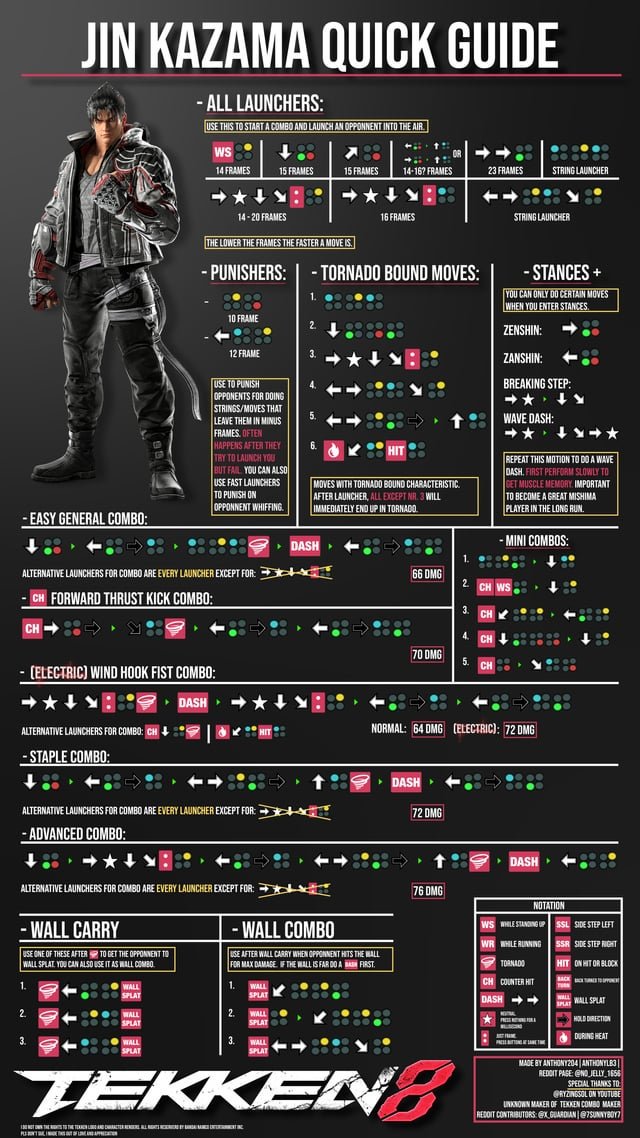
Wave Dash
The Wave Dash is another powerful movement option that combines crouching and forward dashes, allowing for quick advances and pressure. It’s a faster and more aggressive approach than simply running forward. It is also another difficult technique to execute consistently. This is especially useful for characters with strong close-range attacks. The inputs can be a bit tricky, but here’s the basic idea:
- Input a forward dash ( f, f).
- Immediately after the forward dash, input down forward ( df) and then go quickly into the forward dash again ( f, f).
- Repeat these inputs rhythmically to perform the wave dash.
You might be doing many crouching motions with this move so this is good for characters with good options from crouch. Like the Korean Backdash, it will take practice to get down. Start slowly, focus on the correct inputs and then gradually increase the speed when you feel comfortable.
Sidestep Canceling
Sidestepping is a fantastic way to evade linear attacks, but it can also leave you vulnerable if you are locked in the sidestep animation for too long. Sidestep canceling solves that problem by allowing you to quickly transition out of the sidestep animation and into another action like blocking or backdash. The main goal is to add another layer to your movement and not just let your character be in sidestep for too long. Here is how you do it:
- Tap either up or down to sidestep.
- Immediately after tapping to sidestep, input back to cancel the sidestep and to go into block or backdash.
This might take a little bit of getting used to because it is not a normal sidestep which is just one single tap. You’re using the sidestep as a way to get in a better position. This means you are not in sidestep too long making you a hard target to hit.
Using Movement to Create Whiff Punishes
One of the most important concepts in Tekken is whiff punishing, which involves making your opponent miss their attacks so you can land your attack. This is not only about knowing your opponent’s moves but also baiting your opponents. Movement is essential for creating those whiff opportunities. If you are standing still, it makes it easier for your opponent to hit you, so by moving you are making them miss. Here are a few things you can do:
- Backdash to Evade: If your opponent throws out a move with long range, a quick backdash can make them miss, allowing you to follow up with an attack.
- Sidestep to Avoid: Many attacks are linear, so sidestepping can help you to avoid them.
- Using a Mix of Movement: By changing up the way you move with these different movement tools, you make it unpredictable for the opponent to land their attacks.
It’s not enough to just move around. You have to move with a purpose. Try baiting your opponent into throwing out a slow, predictable attack, and then quickly moving in to punish them when they whiff.
Practical Application and Practice Methods
Now that you are learning the movement techniques, it’s time to get to the most important part, which is getting this into your muscle memory. Let’s talk about how you can make these techniques part of your game plan.
Practice Mode Drills
Practice mode is your best friend when working on advanced movement. Here are some drills you can use:
- KBD Drill: Practice doing the Korean Backdash repeatedly across the screen. Start slow and focus on the input, gradually increasing the speed and consistency.
- Wave Dash Drill: Practice wave dashing forward and backward, focusing on maintaining a smooth rhythm. Try wave dashing into a specific move so that you can execute the move immediately as you are in range.
- Sidestep Cancel Drill: Practice sidestepping and then quickly canceling it into block or a backdash. This will help you get a hang of the input and then you can start using it in matches.
Set small goals like getting 10 perfect KBDs in a row, then increase it. The goal is to do it with precision and consistency. Once you start to feel more confident with your movements, you can start implementing it into a real match.
Applying Movement in Matches
Movement is not just about practicing in practice mode. The other half of the learning experience comes from implementing these techniques into a real match. It is important to make a note on how your opponents react to your movement, and if something is working or not. Here are a few tips:
- Observe your Opponent: Do they tend to throw out linear attacks? Are they impatient and rush in? Use this info to make them miss, so that you can have a counter opportunity.
- Don’t Overthink: Don’t start a match by thinking too hard on doing a KBD or a wavedash, instead focus on spacing and making your opponent whiff, which is the ultimate goal.
- Mix it Up: Don’t always use the same movement pattern. A mix of backdashes, sidesteps, and dashes makes you unpredictable.
The more you play, the better you will be at understanding the timing for your movement and how to incorporate it into your matches. The more experience you gain, the better you will be in reading and adapting to your opponent’s movement.
Character-Specific Movement
It’s crucial to remember that some characters benefit more from certain movement techniques than others. Some characters may have a smoother KBD or wave dash, while others have attacks that work better after sidestepping. For example, a character with fast, close-range attacks might excel at wave dashing, while a character that relies on spacing might benefit more from the Korean Backdash. Experiment with different techniques to see what works for your chosen fighter. Don’t be afraid to adjust your play style based on how well you can move with that character.
Analyzing Top Player Movement
One of the best ways to learn is to study the pros. Watch videos of top Tekken players and pay close attention to how they move. See how they incorporate Korean Backdashes, sidestep cancels, and wave dashes into their gameplay. Notice how they position themselves relative to their opponents, and try to imitate their movements in your own game. This gives you a starting point on how to use the advanced movement techniques, and then you can tweak the movements for your own playstyle and characters. It is also important to try to notice how they use the movements to bait out attacks and then punish those whiffs. Keep in mind that it takes a lot of practice to get to that level, but you can learn a lot just by watching.
Common Mistakes to Avoid
As you practice advanced movement, it’s easy to fall into bad habits. Here are a few common mistakes to avoid:
- Overusing a Specific Technique: Don’t rely too much on one type of movement. Mix it up to keep your opponent guessing. This is a very common mistake that many players do where they keep on repeating the same movement, which makes you predictable.
- Focusing on Complex Movement Without Good Spacing: Spacing is more important than complex movement. Focus on spacing first, and then slowly implement movement techniques when you feel confident in your spacing.
- Ignoring the Basics: Don’t forget your basics while you’re learning all the advanced stuff. Basic movement is still very important, so make sure that you have good spacing before you do more complex movements.
- Trying to Run Before You Can Walk: Don’t try to learn advanced movement before getting down the basics. If your execution is not good, work on that before attempting KBDs and wave dashes.
Be patient, keep practicing, and don’t be afraid to make mistakes. Learning advanced movement takes time, and the most important thing is that you are making progress.
Incorporating advanced movement techniques into your Tekken 8 gameplay will significantly improve your performance. It’s about more than just knowing the inputs; it’s about understanding how to use these techniques to control the fight and make your opponent struggle. Practice these movements consistently, be patient, and soon you will begin to see the benefits in your matches. Remember to stay focused, and try to implement these movements to your own characters so that you can begin seeing the fruits of your work!
Becoming Unhittable: Advanced Tekken Movement
Final Thoughts
In short, learning Tekken 8 advanced movement techniques is key for high-level play. Utilize wavedashing, backdash cancels and Korean backdashes to gain an edge. These skills offer increased mobility and create offensive opportunities. Practice these inputs diligently to improve your game.
Tekken 8 advanced movement techniques such as movement mixups can significantly confuse opponents. Integrating these concepts allows for dynamic approaches. Knowing when and how to apply each movement is important. Players can adapt and enhance their strategies by learning this aspect.

