
Tekken 8 game terminologies explained covers a variety of terms like “heat,” “rage art,” and “sidestep,” which are fundamental for understanding gameplay mechanics.
Ever felt lost in the flurry of action when playing Tekken 8? The game throws around many specific terms that can be confusing for newcomers and even seasoned players. We’re here to help. This article will cover many of the important concepts in the game, and you will learn all the basic terms.
Understanding these terms is crucial for getting better at Tekken 8. We’ll go over common actions, techniques, and unique mechanics found within this exciting fighting game. Now let’s dive in so you can start playing smarter.

Tekken 8 Game Terminologies Explained
Welcome, fighters! Diving into Tekken 8 can feel like stepping into a new world, filled with unique words and phrases. Don’t worry if you’re feeling lost; we’re here to break down all the important Tekken 8 terminology. Whether you’re a seasoned veteran or a brand new beginner, understanding these terms is the first step to becoming a Tekken master. Let’s get started and get you fighting like a pro!
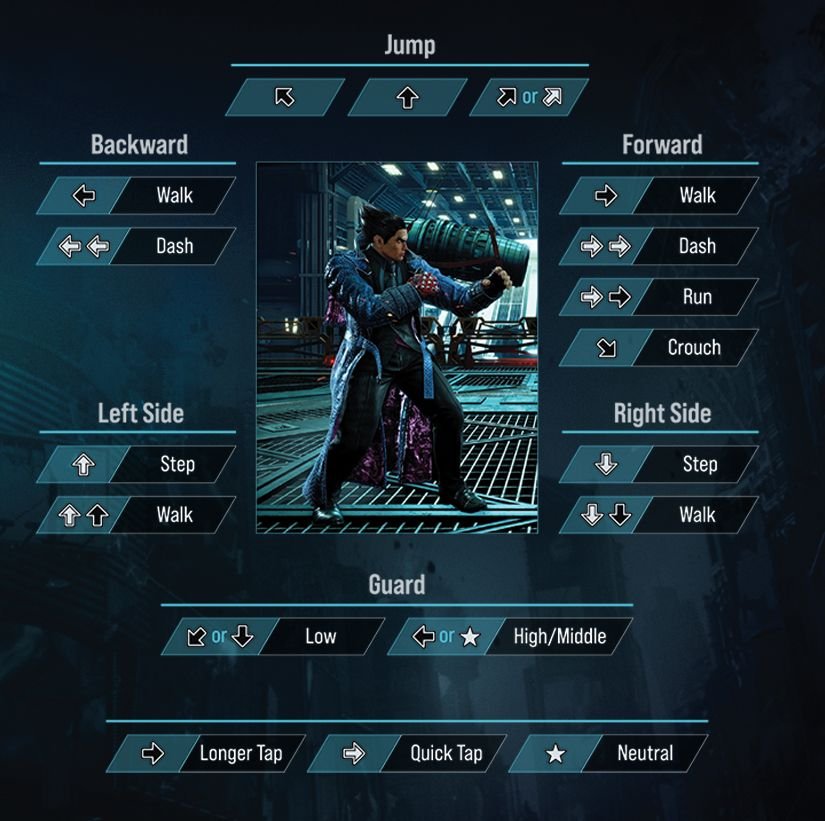
Basic Movement and Stance Terms
Before you start throwing punches and kicks, let’s go over how your character moves around the stage. These terms are the foundation of Tekken gameplay.
Forward and Back Dash
Forward Dash: This is how your character moves quickly toward your opponent. It’s done by quickly tapping the forward direction on your controller twice. You’ll see your fighter take a short run forward.
Back Dash: This is how you quickly move away from your opponent, great for creating distance. To do this, tap the back direction on your controller twice. Think of it like taking a quick step backward.
Sidestep and Sidewalk
Sidestep: This is a quick lateral movement to the left or right. It helps you to evade some attacks. Tap either up or down quickly to make your character take a small step to the side.
Sidewalk: This involves holding the up or down direction on your controller to walk around in the background. It’s like a longer sidestep. Sidewalking helps to position yourself for better attacks or to avoid certain techniques.
Crouching and Standing
Crouching: Hold the down direction on your controller to make your character crouch. Crouching helps you evade high attacks and set up low attacks of your own.
Standing: This is the normal upright position. Simply release the down input to have your character stand back up.
Neutral Stance
Neutral Stance: This is how your character appears when you are not actively pressing a direction on your controller. It’s the basic posture, the starting point for all moves.
Attack Types and Properties
Knowing the different types of attacks and their properties is essential to both offense and defense. Each type has different characteristics that you must keep in mind.
High Attacks
High Attacks: These attacks target your opponent’s upper body or head. They are easy to block by a standing opponent but can be dangerous when used as a mix up. Opponents can easily evade high attacks by crouching.
Mid Attacks
Mid Attacks: These attacks are aimed at the middle part of the opponent’s body. These are blockable when standing but not when crouching. Mid attacks tend to be a good go-to option as they provide a good mix-up.
Low Attacks
Low Attacks: These attacks target your opponent’s legs or feet. Low attacks cannot be blocked while standing. You will have to crouch block or use a low parry to evade low attacks. Low attacks are a bit slower than mid or high attacks.
Unblockable Attacks
Unblockable Attacks: As the name implies, you cannot block these attacks. You can only evade them using movement options. These are powerful attacks that can turn the tide of a fight.
Throws and Grabs
Throws and Grabs: These close-range attacks ignore blocking. To do them, you need to be very close to your opponent. Throws can be evaded by pressing the throw break button, often a punch, just as your opponent executes their throw.
Jabs, Straights and Power Blows
Jabs: Quick, short-range punches used for interrupting opponents or starting combos. Jabs are generally less powerful but have faster start-up times.
Straights: Forward-moving punches, slightly more range and power compared to jabs.
Power Blows: Unique powerful attacks for each character. These are usually slower but do high damage. Power blows can sometimes break guards or cause big knockback.
Offensive Techniques
Let’s delve into the techniques that help you get an edge over your opponents. These moves are designed to help you press the offense and control the fight.
Combos
Combos: A sequence of attacks that, when executed correctly, connect one after the other without your opponent having a chance to block in between. Combos are the bread and butter of Tekken and can be very satisfying when performed.
Launchers
Launchers: These attacks are designed to send your opponent flying in the air. They often set up combos. They are some of the most sought-after moves in the game.
Mix-ups
Mix-ups: The act of using different types of attacks (high, mid, low, throw) to make it hard for your opponent to predict what you will do next. This keeps them guessing and prevents them from blocking everything.
Punishes
Punishes: Counter-attacks you perform after your opponent uses a move that leaves them vulnerable. Punishes often involve launching attacks that are designed to exploit your opponent’s mistakes.
Okizeme
Okizeme: Refers to the act of applying offensive pressure to your opponent as they are getting up from a knockdown. This is a great way to keep them on the back foot.
Wall Carry
Wall Carry: Certain moves can push your opponent towards the wall. If the opponent hits the wall during these moves, they will take more damage, and it will set up further combo possibilities.
Defensive Techniques
A good defense is just as important as a good offense. Let’s take a look at terms associated with defense.
Blocking
Blocking: This is the basic method of defense where you hold the back input on your controller to block high or mid attacks.
Low Parry
Low Parry: A special defensive action where you input forward and down simultaneously to parry low attacks. It stops them in their tracks.
Reversal
Reversal: Some characters have special reversals where they counter some moves with an offensive move of their own. They require precise timing.
Guard Break
Guard Break: A technique that allows you to make an opponent more vulnerable by breaking through their guard. It is used to open opponents up for more offense.
Evasion
Evasion: Refers to movement options that allow you to avoid incoming attacks, including sidesteps, back dashes, and even crouching.
Frame Data and Advanced Concepts
These terms deal with the more technical side of Tekken, but understanding them will greatly improve your gameplay.
Frames
Frames: Tekken, like many fighting games, runs on frames. Each action takes a certain number of frames to execute. Frame data refers to the number of frames it takes for an attack to come out and the number of frames it takes for you to recover. Learning about frames will help you understand why some moves are better than others.
Start-Up Frames
Start-Up Frames: Refers to the time it takes for an attack animation to begin before it hits the opponent. The quicker the start-up frames, the harder the move is to react to.
Recovery Frames
Recovery Frames: Refers to the time it takes for a character to return to a neutral state after doing a move. Moves with long recovery times can be punished if they don’t connect with the opponent.
Plus on Block
Plus on Block: When you execute an attack and the opponent blocks, plus on block means that you recover faster than them. This will let you continue your offense. It is a great advantage to hold.
Minus on Block
Minus on Block: When you execute an attack and the opponent blocks, minus on block means that you recover slower than them. This leaves you vulnerable to a punish attack. Try not to get put in these scenarios.
Spacing
Spacing: Refers to the distance between you and your opponent. Proper spacing allows you to maximize the effectiveness of your attacks and minimize your opponent’s attacks.
Whiffing
Whiffing: When you use a move but it does not make contact with your opponent. This leaves you wide open to a punish.
Input Lag
Input Lag: The delay between when you press a button and when the action is performed in the game. This delay exists because of controllers and monitors. Having low input lag is crucial for a smooth experience.
Character-Specific Terms
Tekken has a huge cast, and each character has their own quirks and special terms.
Stance Characters
Stance Characters: Some characters have special stances that they can go into that allow them access to unique moves or techniques. This adds a whole new layer of complexity to fighting with them.
Rage Art
Rage Art: A very powerful attack that each character can perform when they are at very low health. It can change the outcome of the match.
Heat
Heat: A new mechanic introduced in Tekken 8, Heat is a temporary power-up each character can use to increase their offensive capabilities. It is an excellent mechanic that adds to the intensity of the fight.
Character Archetypes
Character Archetypes: Tekken characters often fall into archetypes like rush-down, grappler, or zoner. Each archetype has different strengths, weaknesses and playstyles. Understanding these archetypes will help you understand your opponent better.
General Fighting Game Terms
These are not specific to Tekken but are general terms used in fighting game communities.
Zoning
Zoning: This refers to using moves to keep your opponent at a distance. Zoning is commonly used by characters that are not that good in close range.
Rush-Down
Rush-Down: The act of constantly pressuring the opponent with a flurry of attacks in close range. Rush-down is a great way to push your opponent in the corner.
Wake-Up Game
Wake-Up Game: Refers to the strategies and moves used by a player after getting knocked down. This is an area where players can apply pressure or make a comeback.
Frame Traps
Frame Traps: Set-ups designed to bait the opponent to attack so they get hit during their attack animation. These are quite common in fighting games.
And there you have it! A comprehensive rundown of Tekken 8 terminologies. We hope this guide has been helpful, and you can get in the ring with confidence. Remember, practice makes perfect, and understanding these concepts will take your Tekken game to the next level. Now go out there and fight!
Learning the Language | Tekken 8 Beginners Guide to Notation & Terminology
Final Thoughts
So, we’ve covered key concepts like Heat, Rage Arts, and generic movement terms. Understanding these phrases is crucial for success. Familiarizing yourself with common Tekken 8 notations will improve your game immensely.
These terminologies are vital for communicating and learning effectively in the community. Remember, practicing with these new terms enhances your Tekken experience. This knowledge empowers players with a stronger grasp of Tekken 8 game terminologies explained.

