
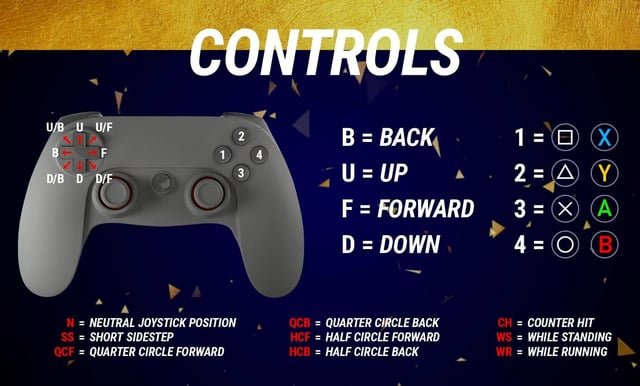
Controlling the neutral game in Tekken 8 involves using movement, pokes, and whiff punishment to create openings and dictate the pace of the match.
Getting good at Tekken 8? You’re probably wondering how to control the neutral game. This crucial phase dictates the flow of matches. Many players struggle here, but it’s where real skill shines.
Knowing when to move forward, when to back off, and when to throw out a quick jab can dramatically shift the advantage. Mastering movement is a key part of Tekken 8 how to control the neutral game effectively. Punishing your opponent’s misses and creating openings to attack will help you dominate.

Tekken 8 How to Control the Neutral Game
Alright, let’s talk about the heart of any Tekken match: the neutral game. It’s that dance before the big combos, the back-and-forth where you’re trying to get the upper hand. Think of it like a chess match, but with punches and kicks instead of pawns and rooks. If you want to win consistently in Tekken 8, getting a good handle on the neutral game is super important. It’s about making smart choices, reading your opponent, and setting up your attacks so they connect instead of getting punished. It’s a process, and it’s something that every player works on, no matter how good they are. This section will break down key aspects of the neutral game in Tekken 8.
Understanding the Neutral Position
Before we dive into strategies, it’s crucial to understand what we mean by “neutral.” In Tekken 8, the neutral position is when both players are neither attacking nor being pressured, meaning nobody has a clear advantage. You’re typically at a mid-range distance, and both players are trying to figure out what the other will do. Think of it as a waiting game, where patience is key. A lot of factors play into the neutral like spacing, movement and the characters individual tools. Recognizing when you’re in neutral is the first step in learning how to control it.
Spacing and Movement
Spacing is everything in Tekken. It’s not just about being far away; it’s about being at the right distance for your character to do their thing. Some characters excel at close range, while others are better at keeping you away. Movement is how you manage spacing. Walking, dashing, backdashing, and sidestepping are your best friends. Don’t just stand there like a statue! Practice moving around the arena and getting a feel for how far your character can move with a dash or a backdash.
Here’s a breakdown of the basic movement tools:
- Walking: Slow, but precise. Good for small adjustments.
- Dashing: Quickly closes the distance. Be careful; you’re more vulnerable while dashing.
- Backdashing: Creates space and can evade some attacks.
- Sidestepping: Moves you in a circle around your opponent. Helps avoid linear attacks (and to create angles for your own attacks).
Experiment with these different movement options. Figure out which spacing distances feel good with your character’s moves. Some moves have really good range, so you don’t always have to get too close, where some have amazing close-range pressure but weak reach.
Character Awareness
Knowing your character’s strengths and weaknesses is paramount, but you also need to understand the other characters too. Knowing their common moves and what distances their attacks will connect are key to knowing what kind of actions you should take. When playing against a new opponent, it helps to spend some time in the neutral feeling out what they tend to use, what gaps they might leave or what kind of movement they are comfortable with. With that information, you can find effective ways to punish or counter their gameplan.
Think about this when you play:
- What are my character’s best pokes? Some characters have long-range jabs, others have tricky lows.
- What is my character’s range? Do I need to be right in their face, or can I win from afar?
- What are common moves that can hurt my character? Knowing what to expect will help you be prepared.
- How can I punish my opponents options? Can i use my movement to avoid attacks, then punish when they whiff, or are there gaps in their offense you can take advantage of?
Poking: The Art of Subtle Offense
Pokes are fast, relatively safe moves that help you chip away at your opponent’s health and check their reactions. They’re like little tests – you’re trying to see if they’ll react or just eat the attack. If they let pokes hit them, you can keep using them. If they react by trying to attack you, you can be prepared to punish their attempt. Don’t think of pokes as moves that will take a lot of health, think of them as tools to make your opponent work for you.
Safe Pokes
A safe poke is a move that has very little recovery on block, meaning your opponent won’t have a chance to punish you if they block it. These moves are the backbone of the neutral game. Use them to see how your opponent reacts.
- Fast Jabs: Quick, light hits that are very hard to punish on block.
- Low Pokes: Low attacks that can make your opponent crouch or jump. Some are safe, some aren’t.
- Mid-Pokes: Medium speed hits, that might also track your sidesteps.
Effective Poke Usage
Don’t just throw out pokes randomly. Be smart with their use. Mix them up. Vary the type of poke and their spacing. Use them as tools to force a reaction from your opponent. For example, if they keep ducking to avoid your mid pokes, throw a low poke. If they start backdashing, use a forward dashing poke or a homing move to punish.
- Test the Waters: See if your opponent is comfortable eating pokes. If they don’t react, keep poking them.
- Mix it Up: Don’t always use the same poke. Variety is key.
- Condition the Opponent: Use the poke to condition your opponent to react to one thing, and then do something else when they try to counter it.
Whiff Punishing: Capitalizing on Mistakes
A “whiff” is when an attack misses completely. When your opponent whiffs a big attack, it’s an open invitation for you to punish them. Whiff punishing is a cornerstone of a controlled neutral game. You wait for your opponent to make a mistake, then you capitalize.
You have to be aware of your character, and the timing of when they are in position for an attack, and if you have attacks that travel very far, even more so.
Recognizing Whiffs
The first step is to see the whiff coming. This is just a matter of knowing what a move looks like and where the characters hitbox is. With experience, you’ll get better at seeing the animations of their attacks and predicting when they are about to miss.
- Know their Range: If they’re using a big attack with short range at a distance, they will miss.
- Observe Patterns: Some players repeat the same moves over and over. If they whiff a move, they are likely to do it again.
- Movement: Don’t just stand still. You will be harder to read, and be in a better position to get a whiff punish.
Punishing with a Launch
When your opponent whiffs, go for a big punish like a launch attack. A launch attack makes the opponent go airborne and gives you a chance to do a combo. This can be a fast launching move that hits from the distance, or something that you have to close distance to do, depending on the move.
- Use quick, long-range moves: Use attacks that have long reach to punish from a safe distance.
- Close the Distance: If they whiff a move right in front of you, you can close the distance with a quick dash and get a good punish.
- Practice the timing: You have to be on point and fast to react to the whiff and get the punish.
Reading your Opponent: The Mental Game
Tekken is not just about knowing the move lists, it’s also about reading your opponent. Figuring out what they like to do, and then figuring out how to get a step ahead of them. This is the hardest part, but it’s also what makes Tekken so interesting. It is important to note that your opponent is also trying to read you, and that also makes this such an engaging mental game. What can you do to mix up how they approach you?
Identifying Patterns
Everyone has their habits. Some people like to rush in, some people like to back away. Figure out what your opponent’s go-to strategies are. Do they always jab after a certain move? Do they often do a low sweep? Once you figure them out, you can predict their next move.
- Watch their tendencies: Do they always duck after a few hits? Do they always throw a high attack if you block low?
- Be patient: Don’t rush. Watch carefully. This will also make you harder to read.
- Don’t get flustered: If you get hit, don’t freak out. Analyze what they did and plan a counter.
Adapting and Adjusting
Once you understand what your opponent likes to do, change how you play. If they love to rush you, play defensively, and look for opportunities to whiff punish. If they love to backdash, close the distance and put the pressure on. The ability to adapt is crucial. If you do the same thing every time, your opponent is going to take advantage of it.
- Don’t be predictable: Change your timing, your spacing, and your moves.
- Mix up your attacks: Don’t just poke, throw in some lows, some mids and high attacks.
- Change your movement: If they know you’re going to dash in, throw them off by walking up, or using backdashes.
Using Heat to Control the Neutral
Tekken 8’s Heat system offers a new layer of strategy to the neutral game. Activating Heat changes your move list and character properties. You can use it to create pressure, extend combos, or force your opponent to change their approach. It can also be used to punish whiffs, or create mixups.
Heat Burst
The activation of Heat can make your next attack a lot harder to deal with. It gives the attack guard break properties, and makes it do more damage. With this, you can punish someone who is too reliant on blocking.
Heat Engagers
The heat engagers are typically attacks that have great range or great speed. With these attacks, you can get your opponent to respect you, and close the distance when your opponent is not expecting it.
Heat Dash
Once in Heat, you have access to the Heat dash. This lets you close the distance even quicker than usual. You can use this to punish your opponent, or put them in a situation where they must defend. Use heat to become an even harder character to predict, and you will be in control.
Dealing with Pressure
Sometimes you might find yourself on the back foot in the neutral game, constantly facing pressure. Knowing how to defend effectively is also key to controlling the neutral. It is inevitable that you will find yourself in a disadvantage at one time or another. The question is, how will you get out of it?
Blocking and Guarding
The basic of defensive options is of course blocking. Don’t just hold back all the time. You must be ready to switch from blocking to low blocking.
- Be Patient: Blocking is a key part of the defense. You’re looking for an opening.
- Low Block: Sometimes, the only thing that you can do is crouch block. Try to be aware of what attacks are being used.
- Mixups: If they are constantly doing a low, don’t crouch, try standing and blocking.
Evading Pressure
Blocking is not always the answer. Sometimes you need to move out of the way of an attack. Sidestepping and backdashing will allow you to change your spacing, and create a situation where your opponent is vulnerable.
- Sidestep: Move around linear attacks. Some sidesteps can evade more than others, and sometimes stepping to the right is different than stepping left.
- Backdash: Create space between you and your opponent, giving you time to punish their whiffed attack.
- Don’t overuse: If you rely on the same move, you will become very predictable.
Counter Attacks
Once you have evaded an attack, you should always be looking for a way to counter attack. If someone is constantly hitting you with a long range attack, you can use your movement to punish them.
- Punish: Once they are done with their attack, punish the whiff with a launch or a big move.
- Don’t be predictable: If you are always counter attacking, they will be ready for you.
- Change your counter: Mix up your counter attacks for a more unpredictable gameplay.
Controlling the neutral game is a constant learning process. By understanding the core concepts like spacing, movement, poking, whiff punishing, reading your opponent, and using Heat to your advantage, you will be better equipped to handle different types of players and different game scenarios. Keep practicing, keep adapting, and you’ll start seeing better results.
Understanding and controlling the neutral game is a vital part of getting better at Tekken 8. It’s the foundation upon which victories are built. It takes time and practice, but once you start putting these strategies into practice, your game will get that much better. Remember to stay patient, observant, and always be adapting to your opponent’s tactics. Good luck, and have fun climbing the Tekken ladder!
LEARN NEUTRAL FAST – Tekken 8 Beginner's Guide
Final Thoughts
Effectively managing space and movement becomes crucial for winning neutral situations in Tekken 8. Players who properly utilize movement options and understand whiff punishing will gain a clear advantage.
Patience and defensive awareness are key. Punish unsafe approaches and maintain your spacing. The concept of ‘Tekken 8 how to control the neutral game’ involves understanding these concepts deeply.

