
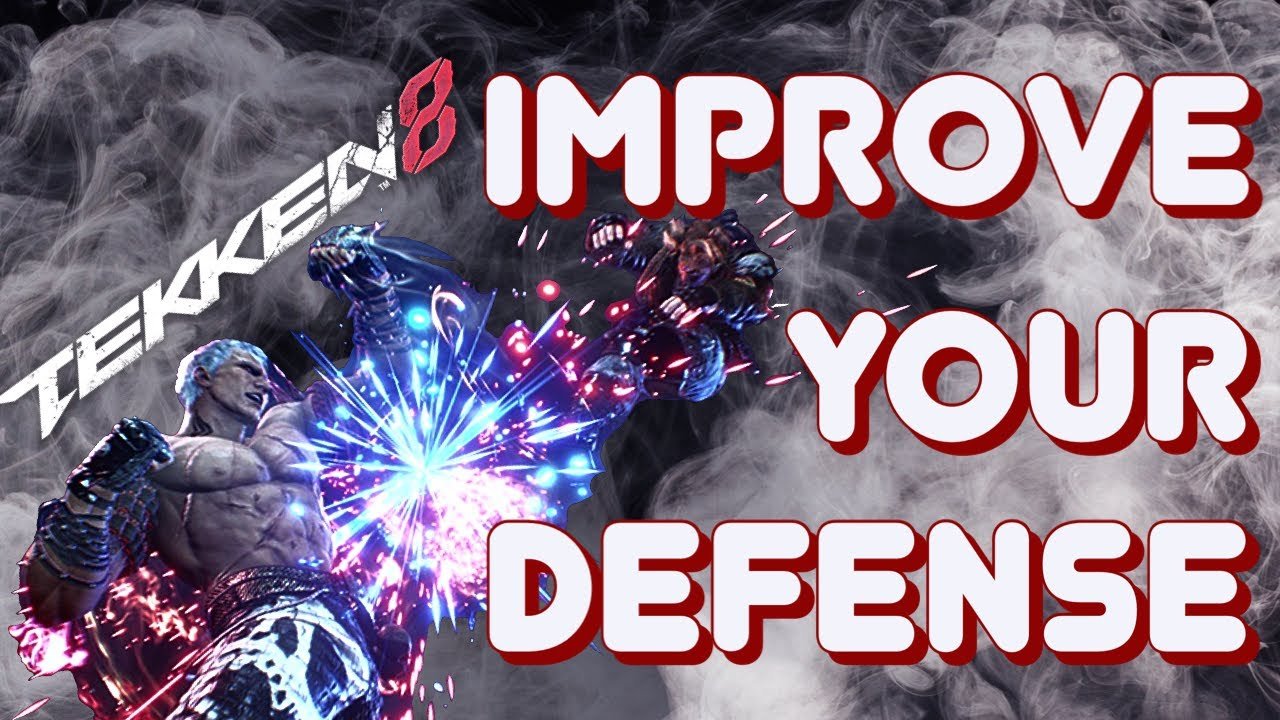
The best way to improve your defense in Tekken 8 is to learn to block low attacks, practice sidestepping, and use movement to create space.
Struggling against aggressive opponents in Tekken 8? Many players find themselves overwhelmed by relentless offense, but improving your defense is crucial for victory. Knowing when to block, sidestep, or backdash can make a huge difference. This guide focuses on concrete actions that will help you in your journey to improve your defense in Tekken 8. These simple but crucial steps will help you go from being on the back foot to taking charge of the match.

Tekken 8 How to Improve Your Defense
Alright, let’s talk defense in Tekken 8! It’s not just about hitting hard; it’s also about being a tough cookie to crack. A solid defense is like having a superpower in this game. You can have the flashiest combos, but if you’re always getting hit, you won’t win many matches. This part of the game is just as important as offense, maybe even more so! In Tekken 8, with all the new heat mechanics and aggressive playstyles, it’s super important to know how to protect yourself. So, let’s dive deep into the details and turn you into a defensive titan. We’ll go from basic guarding to predicting your opponent’s every move. Get ready to block, sidestep, and parry your way to victory!
Understanding the Basics of Defense
Before we get into the fancy stuff, let’s make sure we have the basics down. Think of this as learning to walk before you try to run.
Guarding: Your First Line of Defense
Guarding is the simplest, yet most important, defensive tool. When you press back on the joystick (or the D-pad), your character blocks attacks. There are three types of guards:
- High Guard: This blocks most high and mid-level attacks.
- Low Guard (Crouch Guard): This blocks low attacks. You do this by pressing down and back on the joystick/D-pad.
- Standing Guard: This blocks mid attacks.
When you are blocking, you will take chip damage, and sometimes blocking a string of attacks can lead to a guard break but generally, it will help you mitigate attacks. Learning to switch between guards is absolutely crucial. If your opponent is going low, crouch guard. If they go high, stand and block. It’s like playing a game of rock-paper-scissors!
The Importance of Timing
Blocking is not just about holding back; it’s about timing. Some attacks have start-up animations or are predictable. You need to learn to anticipate what is coming and block at the correct moment. This is where practice comes in. Play against a variety of opponents and focus on their attack patterns. You will start seeing what they try to throw at you.
Here’s a quick table to help visualize this:
| Attack Type | Effective Guard |
|---|---|
| High Attack | High Guard (Back) |
| Mid Attack | High Guard (Back) or Standing |
| Low Attack | Low Guard (Down+Back) |
Moving Beyond Basic Guards
Now that you understand the simple guards, let’s level up your defense. These next steps will help you handle more complex situations.
Sidestepping and Movement
Blocking is not your only option. Sidestepping is a powerful tool to avoid attacks, especially linear ones. Linear attacks are those that travel in a straight line. By tapping up or down, you can move your character to the side, making your opponent miss completely. But remember, some attacks have tracking, meaning they will follow you when you sidestep, so you have to be careful using them all the time. Learning when to block and when to sidestep will make your defence way better.
Movement is also about spacing. Don’t just stand there in the middle. Move in and out. Use backdashing to create space between you and your opponent. This can bait out attacks, which you can then punish. Use movement to your advantage. A good player always moves around the stage and makes it very difficult for the opponents to find an opening to attack.
Punishing Whiffs: Capitalizing on Mistakes
A “whiff” is when an attack misses. It is a golden opportunity for you to counter attack. When an opponent whiffs an attack, they are usually wide open for a moment. You need to be quick and take advantage of these moments. Learn which moves are safe to punish after a whiff, and you can turn defense into offense quickly. Practice punishing common whiffs in training mode; you will see huge improvements over time.
Low Parrying: Defying Low Attacks
Low parrying is an advanced technique where you can deflect low attacks and gain a significant advantage. It’s a bit risky since if you mistime the input, you will be hit instead. But the rewards are high since the opponent is completely open for a follow up after a successful low parry. Pressing forward and low on the joystick at the same time, just as the low attack is about to hit, will activate low parry. Timing is critical, so train for it. The timing window for low parry is small so you will need practice to use it correctly.
Advanced Defensive Strategies
Let’s delve into some advanced strategies. These are techniques that you will learn over time as you gain experience in the game. This part is what separates the good players from the great players.
Understanding Frame Data
Frame data is the foundation of advanced Tekken play. In simple terms, every move has a certain number of frames that it takes to start up (hit your opponent) and recover (become ready to attack again or block). If you know how many frames a certain move has, you will be able to tell if you can counter attack. Some moves are “plus on block”, meaning you have to respect the opponent’s offense. And some are “minus on block”, meaning you can punish them if you are fast enough. When you know these things, it can change your defence completely.
- Startup Frames: How fast a move comes out.
- Recovery Frames: How long it takes after the move for your character to be ready.
- On Block Advantage: The difference in frames between you and your opponent after an attack is blocked.
You don’t need to memorize every single frame, but you should understand the key moves and their frame data. This will help you know when to interrupt, punish, or simply get ready to block.
Recognizing and Adapting to Patterns
Humans tend to repeat the same things if they are having success with it. If an opponent is always doing the same attack, you can start anticipating it and countering it. Keep a close eye on what your opponent is doing. Are they always doing a particular combo or sequence? Are they going for low attacks? Once you recognize a pattern, you can counter it easily by setting up a counter plan. This means you are not just reacting; you are playing proactively.
The more you practice, the better you become at reading and anticipating opponents’ attacks. You can train yourself for this, by playing a set of matches and just focus on their patterns. Do not go for the win. Just try to find their patterns. You will see that you will get better at it over time.
Using Movement to Create Opportunities
Effective movement isn’t just about dodging; it’s about creating opportunities. By backdashing, side stepping, and walking, you can bait out attacks and then punish. Sometimes, you might want to move in and make your opponent think you will attack, but then you back off to make them whiff and punish their mistakes. Use these things to your advantage to gain a slight edge against the opponent. Use your feet to your advantage. You can move around and control the space between you and your opponent.
Specific Tips and Tricks for Defense
Now, let’s get down to some specific tips that will be helpful in your journey in Tekken 8.
Dealing with Pressure
When your opponent is attacking aggressively, it can be hard to defend. But instead of panic, you need to stay cool. If your opponent is attacking a lot, they are more than likely going to make mistakes. Wait for those mistakes to happen and punish them. Don’t try to retaliate immediately because your opponent is still in an offensive mode. Sometimes, the best thing you can do is to block and wait for a good moment to counter attack.
When you are blocking the attacks, wait for gaps. If they are doing strings, there are likely to be small gaps in between the moves, which are called “frames”. You can use those gaps to counter attacks.
Using Reversal Moves
Some characters have special reversal moves that can be used to counter attacks. These can be risky, but the rewards are high. Learning your character’s reversal moves is a good thing to do. You have to understand when to use them to be successful. These reversals are different from parries. Parries happen automatically when the move lands on your hands whereas reversals are activated by a certain button command. If you get the timing correct, you can completely nullify your opponent’s offense.
The Importance of Training Mode
Training mode is your best friend in Tekken 8. Spend time in this mode working on all the things we have talked about in this article. Block different sequences from the opponents, sidestep, and practice your movement. Training mode is also where you can practice punishing certain moves, especially whiff punishes. The more time you spend here, the better player you will become.
Character Specific Defenses
Every character has different strengths and weaknesses. Certain characters are better in defence. Some have many parry moves, others have great backdash and movement options. You need to understand your character’s defensive capabilities. When you know your character’s abilities, you can use them to your advantage in the game.
Improving your defense in Tekken 8 is a journey, not a destination. It will take time and practice, but by focusing on the basics, learning advanced techniques, and being smart with your movement, you will become a defensive wall! Good luck, have fun, and keep blocking those attacks.
Defense Basics: Step In Guard (Tekken 8 Beginner Defense Guide)
Final Thoughts
Improving your defense in Tekken 8 requires consistent practice. Focus on movement, learn backdash cancel, and study frame data. Blocking is key, and knowing when to duck or sidestep will create openings.
Don’t forget to practice against a variety of opponents, and adapt to their tendencies. Reacting to lows and grabs takes time but is a must for success. Tekken 8 how to improve your defense centers around active learning and consistent effort.

