
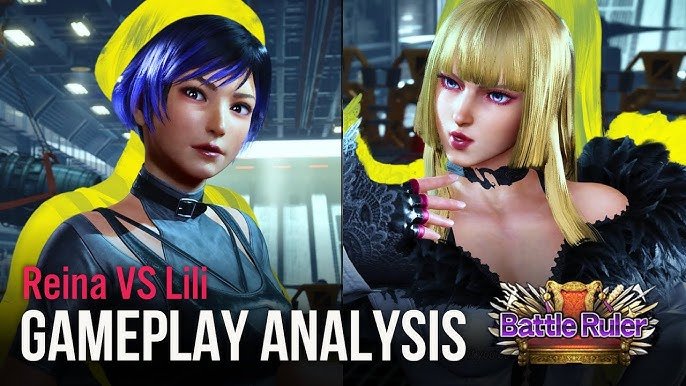
Understanding opponent tendencies, move patterns, and punish opportunities allows for effective Tekken 8 learning opponent weaknesses.
Getting better at Tekken 8 involves more than just button mashing. You’ll face many different playstyles. Therefore, Tekken 8 learning opponent weaknesses is crucial. It is the key to consistently winning matches.
By observing how your rival acts and reacts, you can adjust your strategies. This allows you to counter their most common attacks. You can exploit their predictable behavior.

Tekken 8 Learning Opponent Weaknesses
Alright, let’s dive deep into the exciting world of Tekken 8 and figure out how to become a better player by understanding our opponents! It’s not just about button mashing; it’s about being a smart fighter. In Tekken 8, every character has their own special moves and fighting style. Knowing how your opponent likes to fight is a key part of winning. This isn’t a cheat code; it’s about learning, watching, and adapting. Let’s break down the strategies for figuring out those all-important weaknesses. This article will give you useful tools to improve your Tekken 8 gameplay.
Understanding Character Archetypes
Before we get into specific moves and strategies, it’s helpful to understand the different types of characters in Tekken 8. Knowing the basic type of character your opponent is using can give you a head start in predicting their behavior and finding their vulnerabilities. Think of them like different kinds of animals – some are fast and sneaky, others are big and powerful. Here are the main types:
Rushdown Characters
These characters are all about speed and getting in your face. They want to be close and keep the pressure on. Characters like Xiaoyu and Law fit into this group. They often have quick moves and can be tricky to handle if you let them control the pace of the match.
Typical Tactics: Using quick jabs and combos to overwhelm you. They like to stay close and never give you room to breathe.
Weaknesses: They can be predictable if they always rush in. They can be vulnerable to being pushed back, and they might get punished by slower, more powerful moves when their rush is anticipated.
How to Handle Them: Use moves that create space and slow down their momentum. Try to interrupt their rushdown with a well-timed block or a quick low attack. You will also want to learn to parry or sidestep their most common rush-in moves.
Zoning Characters
These characters like to keep their distance and use long-range attacks. They want to control the space and keep you at arm’s length. Characters like Feng and Leo can be good examples. They often have moves that keep you away and set up traps.
Typical Tactics: Using projectiles or long-reach kicks and punches to keep you out of their range. They like to use traps or slower but very damaging attacks.
Weaknesses: They are often slow when you get in close and can struggle if you can quickly close the distance. They often don’t have strong up-close moves.
How to Handle Them: Find ways to get inside their range quickly. Use fast movement and sidestepping to avoid their attacks. Once you are close, use your own strong close-range moves.
Grappler Characters
These characters are all about grabs and throws. They want to get in close and take you down. Characters like King and Marduk are well-known grapplers. They use strong throws to inflict a lot of damage and can dominate close combat.
Typical Tactics: They use a lot of grabs and throws. They want to be in your face, ready to take you down with a powerful hold.
Weaknesses: They are often slower and more predictable on their approach. Their grabs can sometimes be avoided or broken. They struggle with zoning characters.
How to Handle Them: Practice breaking their throws. Use moves that can create space and keep them from getting in close. You should try to anticipate their grabs.
Mix-Up Characters
These characters can do many different things. They can switch between close and long-range combat and can be unpredictable. Characters like Devil Jin and Hwoarang fit into this category. They can switch between different attack styles, making it hard to guess what’s coming next.
Typical Tactics: They switch between various attacks, and mix fast, slow, and ranged attacks to keep you guessing.
Weaknesses: They are often complex to play well, meaning they might make errors. Because they can do so much, they may not have the best individual moves in every area.
How to Handle Them: Watch for patterns in their mix-ups. Try to learn when they are likely to use certain moves and use your own moves to counter the situation. Try to exploit the weaknesses of their specific tactics.
Turtle Characters
These characters are defensive and focus on blocking and countering. They like to frustrate their opponents and punish them for being aggressive. Characters like Jack and Heihachi fit here. They are sturdy and wait for you to make a mistake.
Typical Tactics: They wait for you to make a mistake and then punish you with a strong counterattack. They focus on using blocks and parries.
Weaknesses: If they are too defensive, they can be predictable. They are slower and not as good at taking the offensive.
How to Handle Them: Be patient and don’t get frustrated. Use throws or unblockable moves to break their defense. You will need to make them over-extend to be able to punish them.
Analyzing Opponent Behavior
Understanding the character is only part of the battle. The other part is understanding how your opponent plays the character. Some players use rushdown characters defensively, while others might play zoning characters up close and personal. It’s all about observing and adjusting your strategy on the fly.
Identifying Patterns
The first step is watching what your opponent does. Look for patterns in their behavior. Are they always using the same move after a certain action? Do they always go high when you go low? Here are some things to keep an eye on:
Move Repetition: Does your opponent use the same combo over and over? If so, learn how to block or sidestep it. This is one of the easiest tells you can take advantage of.
Spacing Habits: Do they always stay at the same distance? This helps you know if they like to play aggressively or defensively and make plans for your moves.
Reaction to Pressure: How do they react when you attack? Do they block, counter, or try to move away? This will show you how they react under pressure.
Use of Certain Moves: Do they heavily rely on a few specific moves? If so, you need to study that move and work out the best way to avoid or punish it.
Tells in their movement: Can you see a tell in their movements? Do they always sidestep in one direction before a throw? Do they always hop before an attack? Look for these little tells.
Adapting Your Strategy
Once you notice the patterns, it’s time to change your own strategy. If your opponent always uses the same move after a certain action, you can learn to punish it. If they always block when you attack, you can try to use throws to open them up. Here is how to adjust:
Counter Their Habits: If they always rush in, keep them at bay with long-range attacks. If they like to zone, close the gap quickly and fight them up close.
Mix Up Your Own Moves: Don’t become predictable yourself! Try a variety of attacks and keep your opponent guessing. Use high, low, and mid attacks to keep them guessing.
Use Throws and Unblockable Attacks: When a character is turtling, throws and unblockable attacks are good for breaking down defenses.
React to their Moves: Don’t just go into each fight with the same strategy, learn to react to what you are seeing on screen. If they sidestep to the right, try to catch them with an attack that hits on their right.
Analyzing Move Properties
Understanding how moves work is crucial. Not all moves are created equal. Some moves are faster, others are safer, and some are better for certain situations. Let’s go into different move properties:
Frame Data
Frame data can be a little complex, but understanding it can make a huge difference. Frame data is like looking at the behind-the-scenes information about every move in the game.
Startup Frames: These are the frames it takes for a move to start hitting. A move with fewer startup frames is faster.
Active Frames: These are the frames where the move can hit your opponent.
Recovery Frames: These are the frames it takes to recover after a move. Moves with fewer recovery frames are safer.
On-Block Advantage/Disadvantage: This tells you if you’re at an advantage or disadvantage after an attack has been blocked. An advantage means you can move before your opponent. A disadvantage means they get to move first.
Understanding these terms is like learning the secret language of fighting games. Faster moves with low recovery are generally better for pressuring your opponent, while slower moves with more startup can be more powerful but also risky.
Move Types
Moves can also be categorized by their type and the direction they hit, which is very important when blocking or trying to dodge an attack. Here are common move types in Tekken 8.
High: These moves hit high and can be blocked by standing. You can also duck under them. These are useful when you can predict that the opponent is going to duck to avoid lows or to punish.
Mid: These moves hit mid and must be blocked while standing. Most moves in Tekken 8 are mid-hitting.
Low: These moves hit low and must be blocked while crouching. You can also jump over them. Low attacks are very important to open up defensive players.
Unblockable: These moves, as the name implies, cannot be blocked by any normal means. These are often slow but powerful and are mainly used to disrupt turtles.
Using a mix of all of these is essential to winning in Tekken 8. If you only use high attacks they will easily be avoided or punished.
Special Properties
Some moves have special properties that aren’t immediately obvious.
Power Crushes: These moves can go through some regular attacks. Using these can be essential against a very aggressive opponent.
Armor: Some attacks can absorb hits and keep your attack going. These can help you break past the attacks of the enemy.
Tracking: Some moves can track your opponent if they try to move to the side. This is useful against a player who moves a lot in a sidestepping manner.
Homing: Some moves will track your opponent all the way to the end of the range. These are usually slower but very good at catching sidestepping opponents.
Launchers: Some moves can launch your opponent in the air, allowing for additional combo attacks.
By understanding these properties, you can choose the right moves for the right situation and get an edge over your opponent.
Specific Character Matchups
While general strategies work, you also need to think about specific character matchups. Some characters are just naturally stronger or weaker against others. It’s like rock, paper, scissors, but with 30 different characters.
Understanding Strengths and Weaknesses
Each character has strengths and weaknesses. For example, big characters like Jack often have amazing attacks but might be slow, while smaller characters like Xiaoyu might be agile but don’t hit as hard. Knowing these things can help you a lot in each battle.
Size Difference: Big characters will often have higher range and damage, but might have less movement. Smaller characters might have better movement but a harder time landing hits.
Move Sets: Some moves are better against certain types of moves. Knowing the matchups will be essential to your success.
Researching Matchups
You can find lots of information about character matchups online. Look up guides and videos from other players that discuss certain matchups.
Online Guides: There are lots of online resources that detail the most common and important character matchups.
Practice with Friends: The best way to learn is by playing and learning from your mistakes and the mistakes of others.
Community Forums: Join forums to discuss with players who may have found a certain strategy for specific matchups.
Using The Practice Mode
The practice mode in Tekken 8 is your best friend for learning to beat different players. You can use it to improve your ability to read other players, and also improve your timing and strategies.
Setting Up Scenarios
Use the practice mode to practice specific situations. If your opponent always uses a certain move, set up the CPU to repeat that move so you can learn to block or counter it.
Record Actions: You can record the CPU doing different actions, so you can see exactly how to counter or exploit the moves.
Adjust Difficulty: You can adjust the CPU difficulty to make it more challenging, so you can make sure you’re not relying on fighting very bad players.
Study Move Properties: You can look at frame data to study the frame properties of moves.
Practice Movement: You can practice different movement strategies and timings against different moves.
Experimenting with Counters
Try different strategies and see what works best. Practice blocking, sidestepping, and punishing your opponent’s moves. By putting in the time to learn this way, you are preparing yourself to go against real opponents.
Practice Punishment: Learn the exact timings to punish moves that are unsafe.
Create Combos: Practice combos in a controlled environment until you can execute them perfectly in a real battle.
The practice mode is all about making your mistakes in a safe place, so when it’s time to go against real players you’re prepared.
Utilizing Online Resources
You don’t have to go it alone! There are many online resources available to help you become a better player.
Watching Tutorials
Watch videos from skilled players. They often share tips and strategies you might not have thought of.
YouTube Channels: Many Tekken 8 players make videos explaining how to play and how to improve.
Streaming Platforms: You can watch live streams to learn directly from more experienced players.
Joining Online Communities
Get involved in online communities. You can ask for help, share your own tips, and find other players to practice with.
Forums: There are lots of forums that are dedicated to Tekken 8.
Discord Servers: Lots of servers are dedicated to specific games where players can connect and share information.
Analyzing Replays
Save and watch your replays. This allows you to see what you did well and what you could improve.
Study Mistakes: Look for mistakes you keep making and figure out how to avoid them in the future.
See What Worked: See what strategies worked and figure out how to do them more often.
Learning to analyze your gameplay, and learning from others are key in your improvement journey.
By using all of these different strategies and ideas, you will improve over time. Remember that you can’t learn everything in one day, but by studying and learning constantly, you will achieve your goals of becoming a better player in Tekken 8. It’s all about understanding your opponent and your own weaknesses and adapting your style to come out on top. This is a journey, and you will get better over time with practice and dedication.
How to Find Your Opponents Weakness | TEKKEN 8 Reina Ranked Analysis
Final Thoughts
Effective ‘Tekken 8 learning opponent weaknesses’ involves careful observation of patterns. Note their preferred moves, spacing habits, and defensive tendencies. Adapt your gameplan based on this gathered information.
Exploiting predictable behavior is key to gaining an advantage. Punish unsafe moves, and anticipate their go-to strategies. ‘Tekken 8 learning opponent weaknesses’ ultimately dictates success.

