
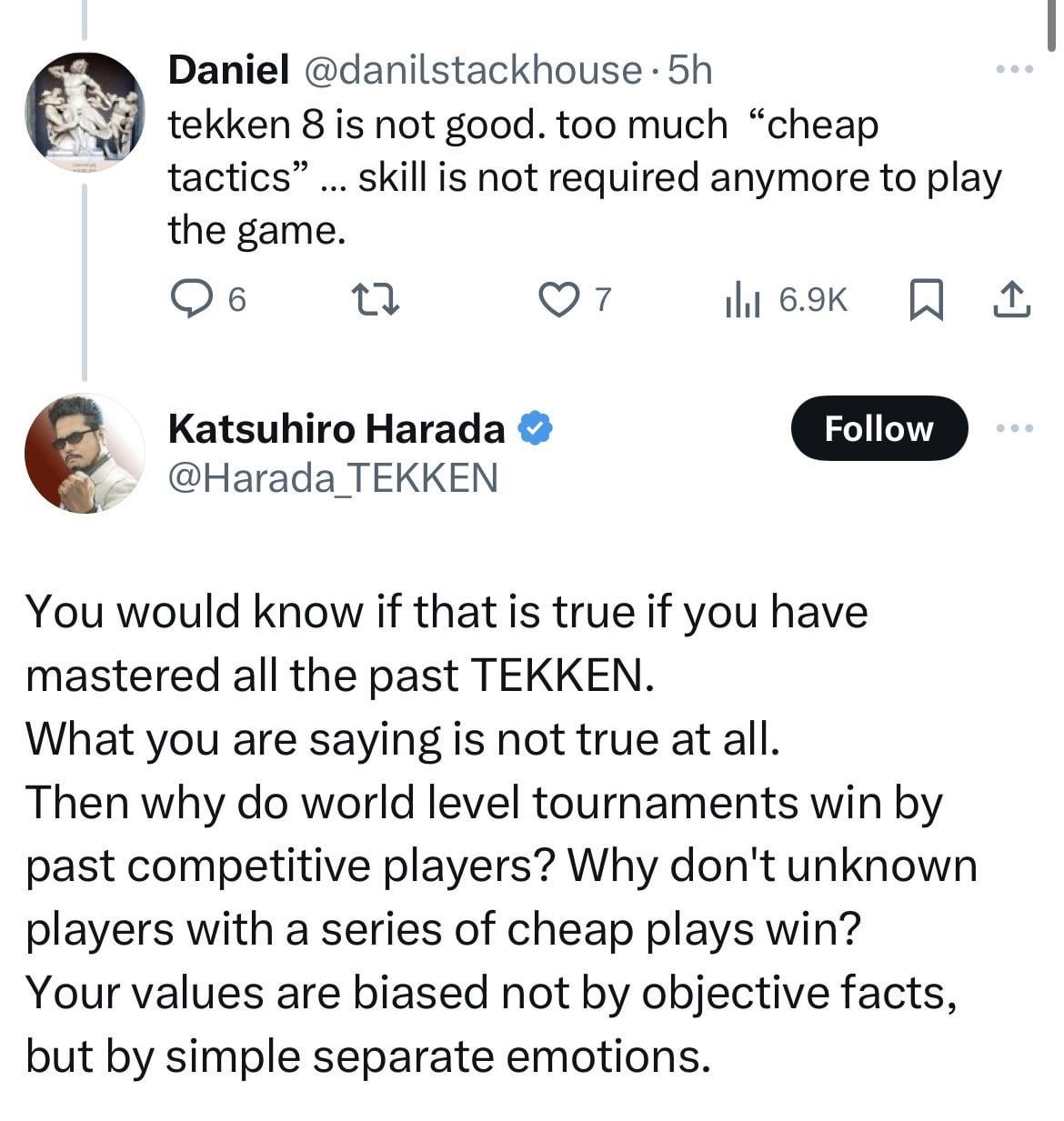
Tekken 8’s AI adapts to your actions by identifying repetitive moves and adjusting its strategy accordingly, forcing you to vary your offense and defense.
Are you finding your usual combos aren’t working anymore in Tekken 8? The reason lies in Tekken 8 responding to enemy patterns. The game’s advanced AI actively learns from your fighting style.
It’s not just about button mashing; it’s a chess match, demanding you mix things up. The AI will punish predictable behavior, so adapt and conquer.

Tekken 8 Responding to Enemy Patterns
In the fast-paced world of Tekken 8, success hinges not just on knowing your own character, but also on understanding and reacting to what your opponent is doing. It’s like a complex dance where you need to anticipate your partner’s next move. This ability to learn and adapt to enemy patterns is essential for climbing the ranks and becoming a formidable fighter. Let’s dive into how you can become a pattern-reading pro in Tekken 8.
Understanding Basic Enemy Behaviors
Before we get into complex strategies, let’s establish some basic enemy behaviors you’ll likely encounter. Think of these as common “habits” players often develop. Recognizing these is the first step in crafting a counter-strategy. These behaviors vary depending on player skill, and game rank. Here are a few common patterns:
Aggressive Rushdown
Some players love to be on the attack. They’ll constantly be in your face, trying to overwhelm you with a barrage of punches and kicks. They might use quick jabs, fast lows, and constant movement. They won’t give you time to think or plan a proper counter-attack. Look out for common moves and string patterns they repeatedly use during the offensive.
- Frequent jabs and punches: They might throw short punches to keep you on the defensive
- Fast low attacks: They might go for sweeps to catch you crouching.
- Forward dashing: Expect them to constantly move towards you
Defensive Turtle
Other players prefer to play a very defensive game. They’ll block a lot, waiting for you to make a mistake. They’ll rarely attack themselves, and will prioritize defense and wait for a good opening from you. These players like to punish any gaps in your attack. They might step back, guard constantly, and use long-range attacks to keep you at bay. They are patient, and like to see what you are going to do before they even think about making a move.
- Frequent guarding: They are always blocking or guarding against your hits
- Backpedalling: They move backward to create distance.
- Long-range attacks: They may use moves that have good reach to keep you out
Predictable Move Sets
Some players get comfortable with specific move sequences. They might have a go-to string of attacks that they rely on heavily. This pattern can be both high-level and low-level, but everyone has their favorites. Once you spot these repetitive actions, you can prepare a good counter.
- Repeating specific button sequences: Watch for the same button presses.
- Using the same string of moves repeatedly: If a player uses the same attack combination several times, it’s likely they’ll use it again.
- Reliance on the same high/low mixup: They may be using the same high/low mixup.
Identifying Specific Attack Patterns
Now, let’s move past basic behavior and take a look at specific attack patterns. Being able to pinpoint these patterns is key to turning the tables. These are how specific enemy attacks might play out, and what they mean for your strategy.
High Attacks
High attacks in Tekken 8 are moves that will usually connect when you’re standing. If your enemy throws out high attacks often, it means that they are expecting you to either stay standing or move in a predictable way. Sometimes, players use high attacks to bait you into ducking. If you always block standing high attacks, they might begin to throw lows to keep you guessing.
- Common examples: Jabs, certain kicks, and some special moves.
- Countering: Block standing, or duck.
- Punishing: Use moves that hit mid to punish after blocking a high attack.
Mid Attacks
Mid attacks are designed to be harder to react to as you must stand to block them, but you also cannot duck them. Mid attacks are dangerous because they force you to be on your toes at all times. Often players use mid attacks to try to mix you up after they have already made you guess with lows or highs. Learning to block and deal with mid attacks will win you rounds.
- Common examples: Many standard punches and kicks, and special moves.
- Countering: Block standing, or move to the side.
- Punishing: You can use mid moves to punish after blocking the enemy’s mid moves, or take advantage of a move that might be a bit slow.
Low Attacks
Low attacks hit low, they are designed to get a quick hit in on your guard. Many players use low attacks constantly to wear down the player’s guard. It’s good to stay on the lookout for predictable low attacks because they are easily punished with faster moves or mid-attacks. This applies to both you and your enemy. Also, many low attacks have slow start-up times, so you can learn to dodge them and punish the player.
- Common examples: Sweeps, low kicks, and some special moves.
- Countering: Block low, or jump.
- Punishing: Use fast low-hitting moves that are difficult to defend against or use mids that can interrupt the enemy.
Special Moves
Each character has their own special moves, and if you are playing against the same character a lot you’ll see the same moves repeated over and over. Special moves can vary wildly from character to character. The pattern to look out for is how often an opponent is using specific special moves, and how they are chaining those moves to create combos. Pay attention to the start-up frames of the moves so that you can determine how best to punish them.
- Variety of moves: Each character has different special move.
- Countering: You need character-specific knowledge to counter.
- Punishing: Punish with moves that are advantageous against certain types of special moves.
How to React and Adapt
Identifying a pattern is only half the battle; the other half is knowing how to react and adapt. Once you’ve seen a pattern, you need to make changes to your own game plan.
Changing Your Guard
If your opponent keeps going high, don’t just keep blocking high. Mix in low blocks, and try to duck if they are consistently being predictable. This will make them consider that you are reading their movements, and cause them to get more creative. Likewise, if they attack low, start to mix in low blocks and jumps to punish the move. If you are always blocking low attacks when they start to spam them, they may get more creative and use a mid or a high instead. This is what is called a ‘mind-game’, when you try to predict what the other player will do.
- React to Highs: Duck or block high.
- React to Mids: Block standing.
- React to Lows: Block low or jump.
Punishing Patterns
Punishing a pattern means using your moves to take advantage of your opponent’s predictable actions. For example, if they constantly use slow high attacks, you can duck and use a fast mid attack to hit them. When they use a predictable low attack, you can jump, or use your own quick low attacks to interrupt their attack. Watch for specific weaknesses that are present in each move.
- If they use slow highs: Duck and use a quick mid attack.
- If they use predictable lows: Jump or use fast low attacks.
- If they repeat the same string of moves: Learn their weakness, and punish with faster moves.
Mixing Up Your Own Attacks
As you learn to respond to enemy patterns, it’s also important to avoid becoming predictable yourself. Use a variety of moves, don’t fall into habits of always using the same button sequences. Be creative with your attacks, and make sure to vary the timing of your attacks as well. This prevents opponents from getting comfortable and allows you to maintain the offensive momentum.
- Change Your Timing: Don’t always attack at the same speed.
- Mix High, Mid, and Lows: Don’t let them know your next move.
- Don’t Repeat Move Sequences: Use different move combinations.
Using Movement to Your Advantage
In Tekken 8, movement is just as important as attack. You need to be aware of the space between you and your enemy. If you get stuck in one corner of the stage, this limits your options. You want to always have a plan of how to move around the stage, to make sure that your strategy is flexible.
- Backdash: Use backdashes to create space.
- Sidestep: Dodge linear attacks by sidestepping.
- Forward Dash: Close the distance quickly.
Advanced Pattern Recognition
As you become more comfortable with the fundamentals, you can start looking at more complex patterns. These require a keen eye and a deeper understanding of Tekken 8’s mechanics.
Frame Data Awareness
Frame data refers to the speed at which moves come out and how many frames a move needs to execute. Understanding this data can help you see gaps in your opponent’s move sequences. If you know that a certain move has a long start-up time, you can use this to your advantage. Likewise, if your opponent has a move that has a slow recovery time, you can use this to punish them.
- Start-up frames: How long it takes a move to execute.
- Recovery frames: How long it takes to return to neutral after using a move.
- Use frame knowledge to punish gaps and take the advantage.
Reading Combos
Good players will string together multiple moves into combos. This is a core mechanic of Tekken 8, and you will see it all the time. Learning to recognize the common strings a player will use is key to making good defense. Sometimes players will use move strings that have gaps in them, where you can interrupt the combo and start one of your own.
- Pay attention to common sequences.
- Watch for predictable combo enders.
- Look for gaps where you can interrupt a string.
Analyzing Specific Character Tendencies
Every character in Tekken 8 has unique strengths, weaknesses and move-sets. Understanding the nuances of each character and how people are playing them is key to mastering the game. Some players might use a character in a predictable way, while others try to play them in a way that exploits the characters best moves. Either way, knowing this helps you understand what’s coming. The more you play, the better you will get at predicting which character moves a player is going to use.
- Study move lists: Learn each characters unique moves.
- Understand common playstyles for each character.
- Adjust your strategy accordingly.
Practicing Pattern Recognition
Becoming good at reading patterns is a skill, and like any skill, it requires consistent practice. You won’t learn to read patterns overnight, so it’s important to dedicate time towards improving your observation skills.
Training Mode Practice
Training mode allows you to test out different moves against a practice dummy. Set the dummy to specific move sequences, then try to block and punish those sequences. This can help you learn common move sequences, and teach you how to recognize when someone is spamming a move.
- Set the dummy to perform common attacks.
- Practice blocking and countering.
- Experiment with different responses.
Playing Against Different Opponents
Playing against different players will expose you to different playstyles and patterns. You can learn to read different strategies by playing with random players online. You won’t get any better if you only play against your friends. Each player you will face will be different, and bring a different strategy to the table. This is great for learning new ways to fight and new counter strategies.
- Play online matches.
- Pay attention to various play styles.
- Adapt and learn from each opponent.
Watching Replays
Reviewing your replays can provide a lot of insight into your own gameplay. You can see where you got caught by the same patterns, and identify places where you could have done better. After every session of Tekken, you should take a look back at some of your matches. This will let you pick out areas that you can improve upon, and make you a better player.
- Analyze your actions.
- Identify mistakes and predictable patterns.
- Find new strategies and ways to improve.
Reacting to enemy patterns in Tekken 8 is a critical skill that separates good players from the best. It’s about more than just knowing the moves; it’s about observing, adapting, and predicting your opponent’s actions. By mastering these techniques, you can move past simply playing the game, and start to play the mind-game. Remember, practice and patience will give you the edge you need to become a pattern-reading master.
The coldest dodge ever in a videogame 🥶
Final Thoughts
Essentially, Tekken 8 responding to enemy patterns requires players to actively observe opponent behaviors. Adaptability is key; you must learn to recognize and punish predictable moves.
This means anticipating attack sequences and adjusting your strategy accordingly. Effective play involves exploiting repetitive actions and exploiting openings.
Tekken 8 responding to enemy patterns is crucial for improving your win rate. Consistent analysis and adaptation prove to be the main path to victory.

