
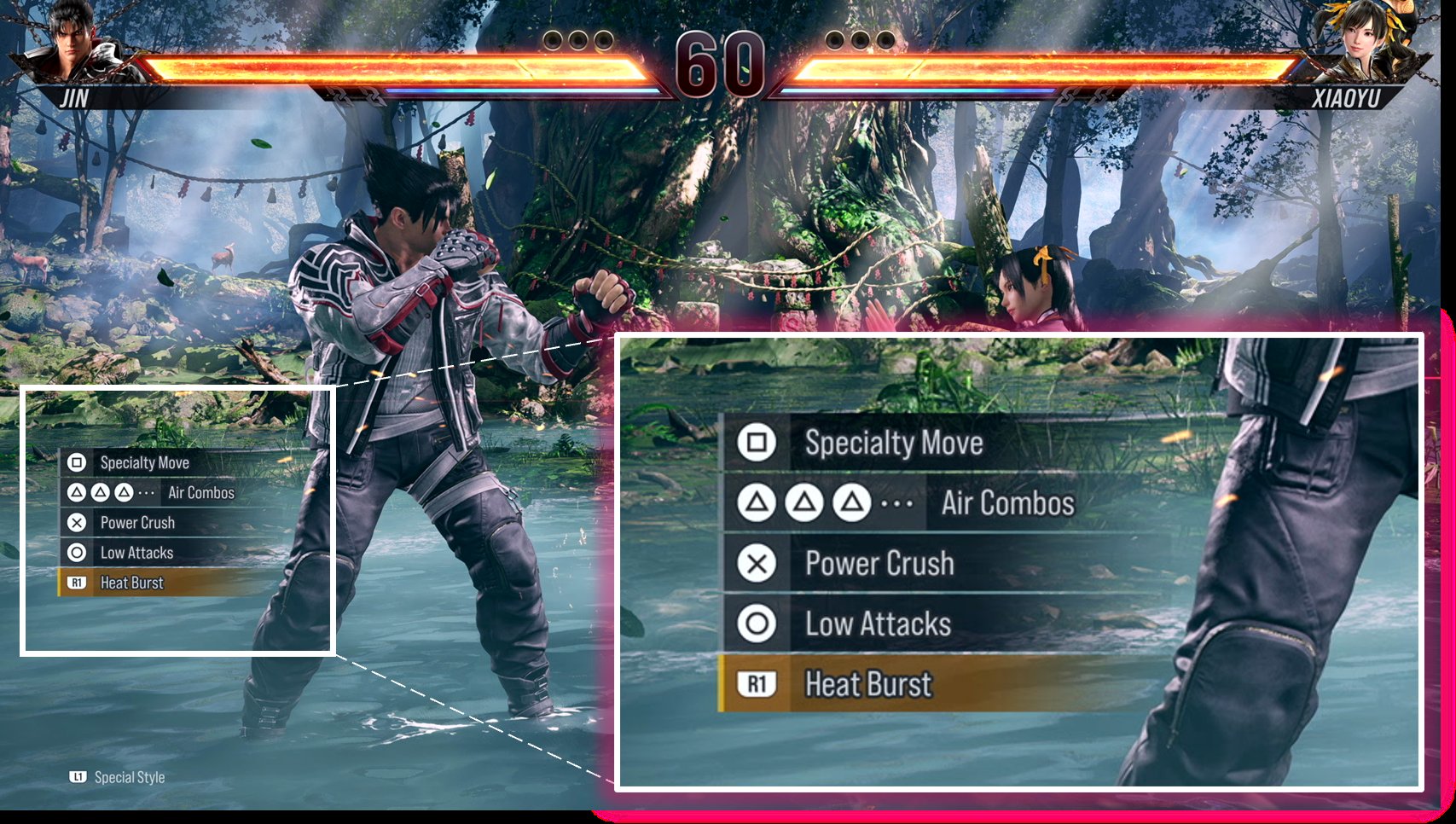
Tekken 8 understanding advanced game mechanics requires studying frame data, practicing movement tech like wavedashing and sidestepping, and learning character-specific combos and punishes.
Stepping into the arena of Tekken 8, you might feel overwhelmed by the sheer depth of its gameplay. Beyond button mashing, there lies a world of intricate systems that separate casual players from true competitors. Gaining true success will depend on your level of commitment.
Tekken 8 understanding advanced game mechanics is key to reaching higher ranks. It’s not just about memorizing strings; it’s about grasping the underlying principles that make the game tick. Learning these aspects drastically impacts the effectiveness of your attacks and movement.

Tekken 8 Understanding Advanced Game Mechanics
Alright, so you’ve been throwing some punches, kicking some legs, and maybe even pulling off a few cool combos in Tekken 8. That’s awesome! But, like any game, there’s a whole other layer of things happening under the surface, things that can take your game from good to “Whoa, how did they do that?” This part of the article is all about taking a deeper dive into the advanced game mechanics of Tekken 8. We are going to explore things like frame data, movement techniques, and how to really mix up your offense and defense. Get ready, because we’re about to turn up the heat!
Understanding Frame Data
Okay, let’s talk about something that sounds super complicated but is really the bread and butter of competitive Tekken: Frame Data. Imagine each move in Tekken 8 like a little movie. This “movie” is broken down into frames. A single frame is like a single picture in that movie. In Tekken, there are 60 frames in one second. Understanding these frames is essential to timing your attacks and defense.
What are Startup, Active, and Recovery Frames?
Every move has three key parts:
- Startup Frames: This is the time it takes for the attack to actually begin. Think of it as the “wind-up” part of the movie. It’s how long it takes before your character actually starts doing damage. During this time, you are vulnerable to being interrupted.
- Active Frames: These are the frames where the attack is actually hitting (or could hit) your opponent. This is where the damage happens, this is when your attack is making contact with your enemy.
- Recovery Frames: This is how long it takes for your character to recover after the attack is done. This is the “cool down” period. You cannot attack, block or perform any action, at this time. After your attack connects, you need to recover. It is important to know how long this process takes.
Knowing this, you can see how some moves might be faster (shorter startup) and some might leave you open (longer recovery). It is important to note, that not all moves have all 3 of these frames. Some moves are instantaneous and thus they have no startup frames. Some moves may not have recovery frames either.
Plus Frames and Minus Frames
Now, let’s go a step further. After an attack is blocked, it will leave both players in a state of recovery. Frame data tells us who can act first. This means understanding the concept of “plus” and “minus” frames on block. These terms describe the frame advantage you have after an attack connects.
- Plus Frames: If you are “plus on block,” it means that you can recover and act faster than your opponent after they block your move. This gives you an advantage, letting you attack first, start pressure and keep up aggression.
- Minus Frames: If you are “minus on block,” it means that your opponent can recover and act faster than you after they block your move. This is a disadvantage because they can interrupt you.
These “plus” and “minus” frames are usually displayed numerically. Like for example +10 or -6 after an attack is blocked. These numbers represent that you are at a +10 advantage or a -6 disadvantage respectively.
For example, if a move is +3 on block, it means you recover three frames faster than your opponent, meaning you can probably get another attack in before they can do anything. On the flip side, if a move is -7 on block, that means your opponent can act seven frames before you can, leaving you open to punishment.
Punishing Opponents
Using frame data to punish your opponent is a cornerstone of Tekken gameplay. If your opponent throws out a risky move that is very minus on block, you can use the data to know that you have time to launch a quick attack that can damage them before they can respond. Recognizing these opportunities is crucial for winning in Tekken.
To fully understand frame data, you may need to use an online database for Tekken 8. It is impossible to understand every move’s frame data just by looking at them in-game. Frame data is one of the most important aspects of gameplay, and to get really good at the game you must know how it works.
Movement Techniques
Tekken 8 isn’t just about pressing buttons; movement is key to getting into an offensive position and staying out of harm’s way. Let’s explore some movement options beyond just walking and dashing.
Sidestepping and Sidewalking
Sidestepping and sidewalking are incredibly important for getting around your opponent’s attacks.
- Sidestepping: This is a quick, short movement to the side. Think of it as a dodge. A quick press of up or down, depending on which way you need to sidestep.
- Sidewalking: A more extended movement to the side by holding the up or down buttons. Useful for moving around your opponent and creating angles.
These movements are great for avoiding attacks that come in a straight line. But beware! Some moves have a “tracking” property and may follow you as you try to sidestep. Practice sidestepping various attacks in practice mode to really get the hang of it. By moving around your opponents instead of blocking you have greater counter attack options.
Backdashing and Wave Dashing
Backdashing is for creating space between you and your opponent, while wavedashing helps you close distances and apply pressure.
- Backdashing: Quickly tapping backward twice allows you to create distance from your opponent. This can give you space to breathe, avoid aggressive attacks, and try to set up a counter attack.
- Wave Dashing: This technique involves inputting a series of forward dashes, down forward movements, and then immediately dashing again forward. It can be tricky to learn, but wavedashing allows you to move aggressively while maintaining pressure and can make your movements unpredictable, but is one of the hardest movements in the game.
Korean Backdash (KBD)
The Korean backdash (KBD) is an advanced technique involving canceling your backdash. It’s much faster than a normal backdash and allows you to move quickly backwards while maintaining a blocking state. This technique can take time and practice to get down correctly but is one of the most important movements for high level Tekken gameplay. It is an improved and faster version of a regular backdash.
Movement Drills
Here’s a way to learn new movement options. Set your CPU opponent to perform a basic jab. Then practice moving to avoid it in various ways, for example, a sidewalk, or backdash, and so on. Once you master your movements, then you can start performing more advanced techniques. Movement can be one of the most important aspects to improving at Tekken.
Offensive Strategies
Once you understand how to move, it’s time to turn that movement into offense! Here are some ways to pressure your opponent effectively in Tekken 8.
Poking and Pressure
- Poking: These are fast, relatively safe moves used to chip away at the opponent’s health, bait a reaction, and get an idea of how they’re going to react to you. A poke is a quick move that does not leave you in a dangerous position.
- Pressure: This is all about keeping your opponent on their toes by constantly throwing out moves and never letting them relax. This can be done with plus frames, frame traps, and utilizing space.
Poking can interrupt aggressive plays, while pressure forces your opponent into making mistakes. The key is using your moves to control the space and force a reaction.
Mix-Ups
Mix-ups are where you use different attack types to keep your opponent guessing. If they do not know what’s coming, they’ll be forced into a guessing game. There are different types of mix ups:
- High/Low Mix-Ups: This refers to attacking a high attack and a low attack one after another to force the opponent to guess whether to block high or low.
- Left/Right Mix-Ups: This involves attacks that force the opponent to block either left or right.
- Throw Mix-Ups: This means using throws and attacks together to make your offense more unpredictable.
- Delay Mix-Ups: Delaying your moves slightly can throw off the timing of your opponent, causing them to misread your attacks.
The more you practice mix ups, the easier they’ll become, this is a great way to keep your opponent guessing and force them into a mistake.
Punishment Tools
As you learned in frame data, some moves are unsafe on block and leave your opponent at a disadvantage. Knowing what moves are unsafe on block and knowing how to punish them, is crucial to being successful in Tekken. The best ways to punish are with quick moves that do good damage and have long reach. Learning and understanding your characters punishment options will significantly improve your game.
Defending in Tekken 8
Now that you know how to attack, it’s equally important to know how to defend against your opponent’s offense. Here’s how to stay alive in Tekken 8.
Blocking
Blocking is the most fundamental defensive skill in Tekken. Holding back will block standing mid and high attacks. To block a low attack you must block by holding down and back at the same time.
- Standing Block: This will block all mid and high attacks.
- Low Block: This will block low attacks.
- Guard Break: Some attacks cannot be blocked and will force the user to block to either side.
Blocking can be the difference between winning and losing a match, it is important to understand and practice. Learning what to block high and low will improve your defense immediately.
Punishing Blocking Opponents
Even though blocking is important, some people become too predictable with it. If your opponent blocks too much, you can utilize throws to open them up, or utilize lows to punish them. Punishing a blocking opponent is an important aspect of offense. If you become to predictable, the opponent will quickly learn how to counter you.
Reversal Techniques
Some characters in Tekken have moves that can reverse or parry attacks. These are special moves that, if timed correctly, can completely negate the incoming attack and often turn the tables on your opponent. Reversals are very difficult to use and often require prediction.
Using Movement Defensively
Don’t forget to use all of your movement techniques to stay safe. Use side steps to avoid linear attacks, back dashes to avoid aggressive plays, and even jumping to avoid lows. Movement will give you the space you need to counter attack and start your own offensive plays.
These are some of the most important things to understand in Tekken 8. Understanding frame data, movement, offense, and defense are necessary to truly be great at Tekken. Make sure you take the time to practice and learn all of the things mentioned in this article, and you’ll be seeing improvements in no time! Good luck!
TEKKEN 8 – Advanced Guide with TheMainManSWE
Final Thoughts
Tekken 8 understanding advanced game mechanics requires time and dedication. Movement, frame data, and character-specific strategies are crucial components. Players must practice these areas to improve.
Analyzing replays will help you identify errors in your gameplay. Pay attention to your opponent’s patterns and try to adapt. This focused approach improves your execution in matches.
Ultimately, consistent effort and deliberate practice are essential for Tekken 8 success. Understanding advanced game mechanics allows you to compete at higher levels.

