
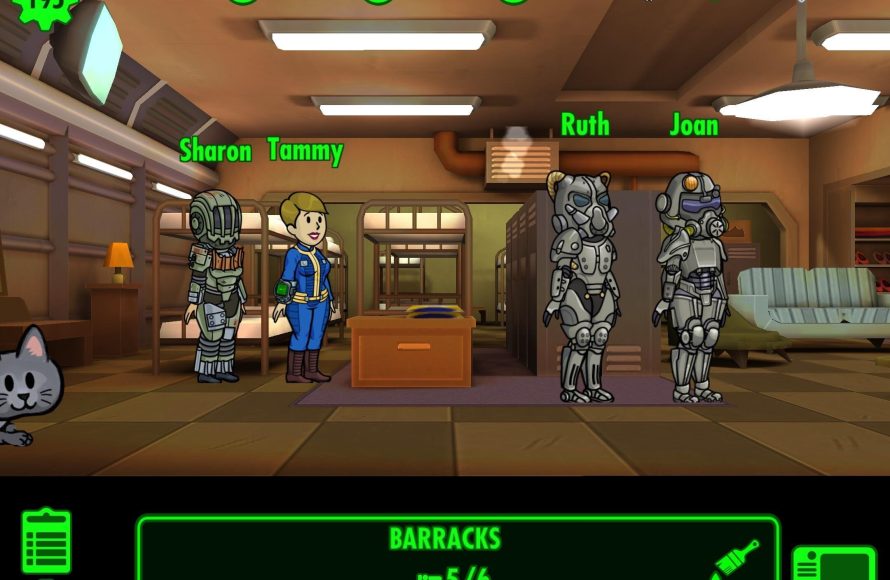
No, vault 33 was not featured in any of the existing Fallout games.
Many fans ponder the question, was vault 33 in the games? It’s a natural question to ask, given the expansive lore of the Fallout universe and its numerous vaults. This particular vault, central to the Fallout TV series, is a new addition, not previously established in the game series.
This means players won’t find vault 33 in Fallout 3, New Vegas, 4, or 76. The series creators developed it solely for the television adaptation. It expands the world in an interesting way but is not related to existing titles.

Was Vault 33 in the Games?
Okay, let’s dive deep into the question everyone’s been asking: “Was Vault 33 ever featured in any of the Fallout video games?” It’s a really interesting question, especially since we’ve spent so much time exploring other vaults in the wasteland. We know there are tons of these underground shelters, each with its own unique story, but what about Vault 33?
Vaults in the Fallout Universe
Before we can answer that burning question, we need to take a quick look at how vaults work in the Fallout world. Vault-Tec, a company with some seriously strange ideas, built these vaults. They told everyone the vaults were for keeping people safe from nuclear bombs. However, many vaults had secret experiments going on, which could range from silly to downright scary! Think of them as giant underground science labs with unsuspecting residents. The games give us a peek into quite a few of these vaults, each with a different theme or study. For instance, some might explore social engineering, while others could be testing out new types of diseases. They are like tiny worlds, sometimes wonderful and sometimes absolutely terrible.
The Purpose of Vaults
Vault-Tec told the world their vaults would help humankind survive a nuclear war. This wasn’t entirely true. Instead, these vaults often served as laboratories for unethical social experiments. They tested how people react to various scenarios. They messed with things like isolation, overpopulation, or forced social structures. The company was very focused on learning how to manipulate and control human behavior. Many vaults were designed to fail in some way. These were not happy places; they were designed for testing human limits. Some of the most memorable moments in Fallout games come from exploring these vaults, uncovering their stories, and learning about the bizarre events that happened within their walls.
Notable Vaults From The Games
Let’s look at a few examples of vaults we’ve explored in the games. You may remember these from your own adventures in the wasteland:
- Vault 11 (Fallout: New Vegas): This vault forces its residents to vote for a yearly sacrifice. It had a very dark and heartbreaking history.
- Vault 87 (Fallout 3): A truly gruesome vault that was used to test Forced Evolutionary Virus (FEV). The result was the creation of super mutants.
- Vault 101 (Fallout 3): This is where the Lone Wanderer, the main character of Fallout 3, started their story. They lived there from birth until they were 19.
- Vault 111 (Fallout 4): The vault where the Sole Survivor, Fallout 4’s protagonist, was cryogenically frozen before waking up many years later.
- Vault 112 (Fallout 3): A simulated paradise where residents lived in a virtual reality controlled by a twisted scientist.
Each of these vaults had a very specific and often disturbing purpose. They really show us how messed up Vault-Tec’s vision was. This is what makes exploring them such a big part of the Fallout experience.
The Truth About Vault 33
So, where does Vault 33 fit into all this? Well, here’s the big reveal: Vault 33 is not in any of the main Fallout games. It’s true. Despite the many vaults we have explored, the number 33 is absent from our adventures in the video games. Vault 33, as many fans know it, was first introduced in the Fallout TV show on Amazon Prime. The television series explores a new part of the Fallout universe, and it needed to establish a new vault to base part of its story around. That’s why the show used this vault. However, many people, even die-hard fans of the games, think that the Vault 33 that we know from the show is the Vault we explore in the games. But in reality, it is not.
Vault 33’s Appearance in the Fallout TV Show
Vault 33 in the TV show is a very different place than many of the vaults we have seen in the games. It has a very polished, almost suburban, aesthetic that is very different from the usual rundown look of the vault we see in the games. This vault is one of three vaults connected to each other. The show gives us a new take on what life was like for the people who took shelter in the vaults. They have a unique culture, following bizarre traditions. They also believe that the world above is still a desolate wasteland. Vault 33 is presented as this innocent, safe haven that exists in contrast to the harsh reality of the outside wasteland.
Why Vault 33 Isn’t in the Games
The fact that Vault 33 isn’t in the games might be a bit confusing for some fans. Here is why it is not included in the games:
- TV Show Specific: Vault 33 was created specifically for the Amazon Prime Video show. The show’s writers wanted to introduce a new vault, different from the well-known ones in the games, to allow the show to explore new themes and stories.
- Different Canon: The Fallout TV show, while staying true to the spirit of the games, is considered a separate canon from the games. This allows the show to be creative without contradicting existing game storylines.
- Room for New Stories: Creating a new vault like Vault 33 allows the show to tell new and unexpected stories. This ensures that the show is exciting and unpredictable, even for seasoned Fallout fans.
So, while Vault 33 feels like it fits perfectly into the Fallout world, it has a specific place in the show. Its non-appearance in the games is mainly because the show created it for a new story, and it is not part of the game’s continuity.
Fan Theories and Misconceptions
With the introduction of Vault 33 in the show, some interesting fan theories have sprung up. Here are some of the most common misconceptions:
“Vault 33 is a retcon of an existing vault”
A very common misconception is that Vault 33 was intended as a replacement or retcon (retroactive continuity change) of one of the vaults we see in the games. Some fans thought it might be connected to one of the numbered vaults we have seen previously. However, this is not the case. Vault 33 is a completely new addition to the Fallout lore. The show’s creators developed it to fit their narrative. It is not a remake of a vault from the game.
“Vault 33 may appear in a future game”
Some fans believe that since Vault 33 is now a part of the wider Fallout universe, it is likely to appear in a future Fallout game. While this is not impossible, nothing has been stated by Bethesda or the game’s developers about this. However, the series’ success might influence the company’s decisions on including this vault in future content. Until then, the vault is specific to the show. We just have to wait and see what the future holds for the gaming world.
“Vault 33 and other show elements will change game lore”
Another popular thought is that the show will change the established lore of the games. Although the show’s creators worked closely with Bethesda, the series stays true to the established lore, while exploring its own narrative and new characters. The show does not change things that have been set in stone in the games. Instead, it adds to the larger Fallout universe. As of now, there are no indication that the show’s elements will directly change the existing Fallout lore of the games.
Exploring the Shared Universe
While Vault 33 isn’t in the games, it still plays a vital role in the Fallout universe. The TV show expands the world. It shows us the many facets of the post-apocalyptic setting, which we have only seen in games. Here is how the show and games fit together:
The Same Setting, Different Stories
Both the Fallout games and the show share the same setting, the post-nuclear wasteland. They also share many of the same factions, characters, and creatures. However, each tells their own story. The games let players write their own stories by exploring the world and choosing their paths. The show follows a specific narrative. It allows the viewers to enjoy Fallout from a different point of view. Both approaches work well, creating a richer and more detailed universe.
Maintaining the Core Themes
Both the games and the show stay true to the series’ core themes. These themes include the dangers of unchecked power, the nature of human survival, and the dark side of corporations. Both explore the effects of the nuclear war on people and society. This commitment to the series’ central ideas ensures that the games and show feel like a true part of the Fallout universe, despite the differences.
Enhancing the Fallout Experience
The TV show enhances the Fallout experience. It allows players to see more of the world they love. The show provides depth to the lore. It makes the Fallout world more detailed. The show might create new fans. They might be encouraged to explore the games. All of these things come together. It makes the Fallout franchise more interesting for everyone.
The Importance of Understanding Lore
Understanding the differences between the Fallout games and the show is very important. They may exist in a same world, but they aren’t the same thing. This helps avoid confusion and allow us to fully enjoy both forms of the Fallout experience. Here is why this understanding matters:
Avoiding Confusion
It’s important to know that the vaults shown in the TV series like Vault 33, are new additions to the canon. They aren’t from the games. By understanding this, it prevents fans from expecting things in the games that are only in the show. This avoids confusion and makes the enjoyment better.
Appreciating Each Story
Both the games and the show offer their own unique stories. The game focuses on player freedom. The show tells its own structured narratives. Knowing the differences lets us appreciate the games for what they are and the show for what it is. This lets us enjoy both without thinking one is supposed to be like the other. They are different, yet amazing in their own way.
Engaging as Fans
Being aware of the difference in lore helps to create interesting conversations. It can create engaging discussions with other fans. It helps us in analyzing the show and games separately. This enhances our knowledge. It deepens our understanding of the Fallout universe. Understanding lore encourages fans to dig deeper into the world. This helps us to be better fans.
In short, while Vault 33 has captivated many new and old fans, it’s essential to remember its roots are firmly planted in the world of the Amazon Prime Video series and not within the previously established canon of the games. That doesn’t make it any less interesting, and perhaps one day we’ll even see it pop up in some form in the games, but for now, it’s something that enriches the Fallout world in a new way.
Every Vault in the Fallout Series Explained | Fallout Lore
Final Thoughts
Vault 33’s prominence exists solely within the Fallout television series. It’s a central location, vital to the show’s narrative, exploring its unique society. The vault’s design and inhabitants greatly differ from what is typically found in the games.
The games never actually featured vault 33 as a playable location or part of the main story. This leads many to wonder, was vault 33 in the games, the answer is a clear, no. Its inclusion is must be considered a new piece of Fallout lore created specifically for the show.

