
The Highland Games are a series of events involving traditional Scottish athletic competitions, such as caber tossing and hammer throwing, often accompanied by bagpipe music and Highland dancing.
Ever wondered about kilts swirling and heavy objects flying through the air? Then you’re probably thinking about what are the Highland Games. These events, deeply rooted in Scottish culture, are more than just athletic contests. They represent a vibrant heritage.
They are a unique combination of sport, music, and dance. Picture strong competitors testing their skills in feats of strength. Bagpipes fill the air creating a festive atmosphere.

What are the Highland Games?
Imagine a day filled with powerful athletes, booming bagpipes, and the vibrant colors of tartan. That’s the magic of the Highland Games! But what exactly are these games? They’re more than just a sporting event; they’re a celebration of Scottish culture, history, and strength. They’re a bit like a super-fun, super-Scottish field day!
A Look Back: The History of the Highland Games
The Highland Games didn’t just pop up overnight. They have deep roots that stretch way back into Scottish history. Originally, these gatherings were a way for clan chiefs to select the strongest and most skilled men for their retinues. Think of it like a big tryout for the toughest warriors! These early games included tests of strength, agility, and courage, skills that were essential for survival in the rugged Scottish Highlands. Over time, they evolved into the organized events we see today, but they still hold onto that spirit of tradition and competition. They are not just events; they’re a living link to Scotland’s past.
The Purpose Behind the Early Games
It’s important to understand that the original Highland Games weren’t just for show. They were serious business! Clan chiefs needed strong, capable men for protection and to maintain their power. The games were a practical way to find these individuals. Someone who could throw a heavy hammer or toss a caber with precision was probably someone who would be pretty good in a fight, too! It was a way to test potential recruits in a fun, competitive, and open environment. This historical function gives today’s games a special depth.
Modern Games: Keeping the Spirit Alive
While the original purpose might be gone, the modern Highland Games are all about keeping that Scottish heritage going strong. They’ve become fantastic events where communities come together to celebrate their culture through music, dance, and, of course, the amazing athletic competitions. They are places where family traditions continue and new memories are made. Even though the world has changed, the heart of the Highland Games remains the same: a celebration of Scottish heritage.
The Core Events: The Heart of the Highland Games
The games are famous for their unique blend of heavy athletic events, often called “heavy events.” These are contests that test not just strength, but also technique and determination. Let’s explore some of the most popular ones:
Heavy Events: Tests of Strength
Here’s where you’ll see some serious muscles in action! These events typically involve throwing or lifting heavy objects.
- Tossing the Caber: This is probably the most iconic Highland Games event. A caber is a large, heavy pole, usually a tree trunk, that athletes try to flip end-over-end. It’s not just about strength; the competitor needs to get the caber to land in a perfect 12 o’clock position for a successful toss. It’s a true test of balance and technique.
- Hammer Throw: Imagine a metal ball attached to a long handle. The athletes whirl it around their heads and then launch it as far as they can. It’s a powerful sight to behold! There are two versions – the light hammer and the heavy hammer, each with different weights. This event combines strength with momentum and a good throw.
- Weight for Distance: There are two types of weight for distance event, 28 or 56 pound weighted metal ball with a chain on the end. The athletes throw the weight using only one hand. Again, this is about getting the perfect swing and release to maximize the distance the weight travels.
- Weight Over Bar: A weight is tossed over a bar, with the bar being raised higher each time. The athlete who can throw the weight the highest wins! It’s a combination of power, timing, and precision. Think of it like a very heavy high jump.
- Stone Put: Similar to the shot put, this event involves throwing a heavy stone. The competitors use different throwing styles, but the goal is always to get the stone as far as possible. There are two common versions of stone put, ‘Braemar Stone’ and ‘Open Stone’. ‘Braemar Stone’ involves the use of a standard stone weight and is taken from a standing position behind the ‘hag’ a small wooden bar. ‘Open Stone’ allows the athletes to utilise any style they wish.
Lighter, Faster Events: More Than Just Strength
While the heavy events get much attention, other exciting competitions happen at the games:
- Highland Dancing: Graceful and intricate dances are an important part of the games. Dancers perform traditional steps to the music of the bagpipes. These dances are not just visually appealing, but they also demonstrate years of practice, fitness and discipline.
- Track and Field Events: Just like in the Olympics, you’ll often see track and field events like races and jumps. Sometimes, these have a Scottish twist, like the Hill Race, where competitors run up a steep hill. This event is particularly testing on endurance.
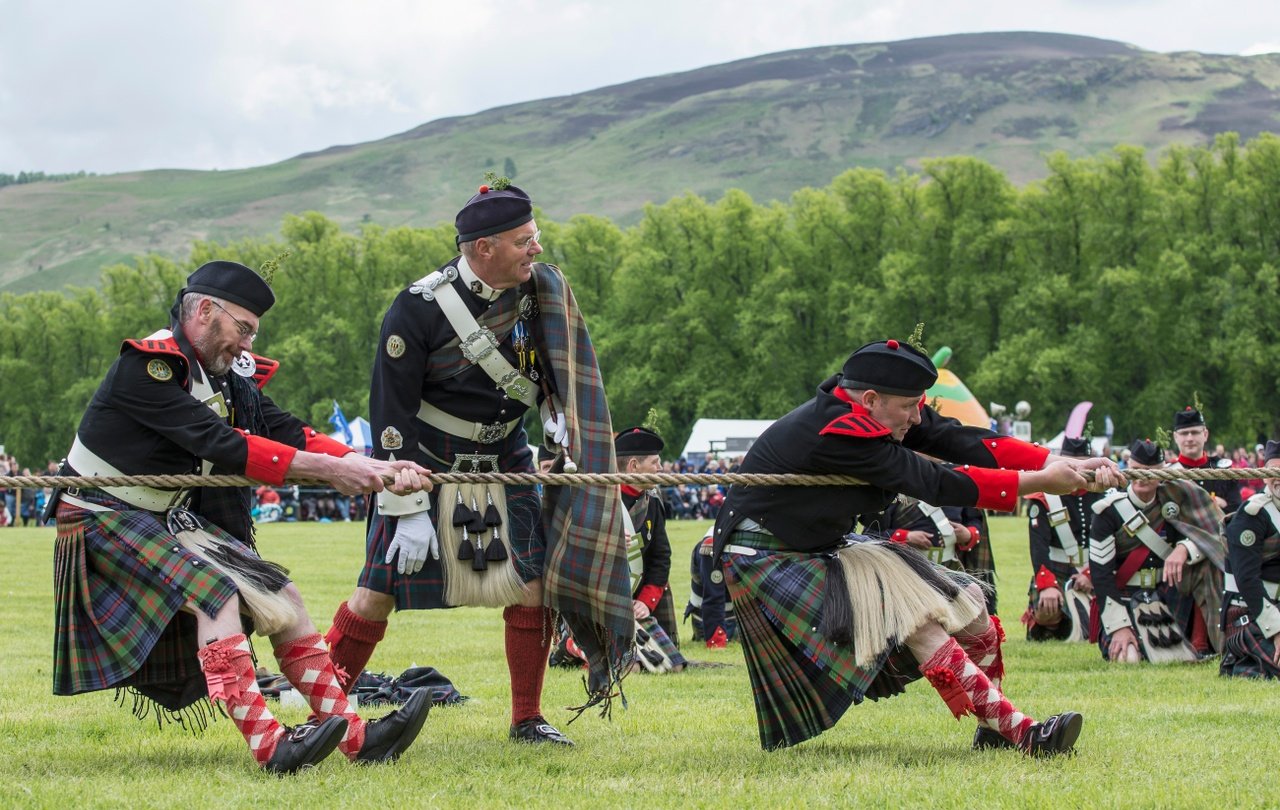
- Tug-of-War: It’s a classic battle of strength. Teams pull on a rope, trying to drag the opposing team across the center line. It’s a very popular event and a great spectacle for viewers.
The Music and the Magic: More Than Just Sport
The Highland Games are so much more than just throwing heavy things. Music and other cultural elements play a big part in the experience.
Bagpipes: The Soul of the Games
You can’t talk about the Highland Games without mentioning the bagpipes. Their distinctive sound fills the air, adding to the atmosphere and energy of the day. Bagpipe bands often march in parades and perform throughout the games. The unique sound of the bagpipes is as important to the Highland Games as the heavy events themselves.
Traditional Dress: Tartan and Kilts
The colorful tartans and kilts are another important part of the spectacle. Each tartan represents a specific clan or family, and wearing it with pride is a sign of heritage and connection. The colorfulness of tartan adds another visual dimension to the games, making them more than just athletic contests; they are a vibrant cultural showcase.
The Social Side: A Community Event
The Highland Games are a fun day out for families, friends and those that are there for the first time. You will see people of all ages enjoying the spectacle. They are a place where people from all backgrounds can come together to appreciate Scottish culture. There are often food stalls and craft markets where you can experience more of what Scotland has to offer. It truly is a community celebration.
Who Participates?
The Athletes: Strength and Skill
The athletes in the heavy events are seriously strong! They often train for years to compete at the top level. They have a dedication to their sport. However, you don’t have to be a professional athlete to participate in some of the games. Many events have categories for all levels, from youth to masters. The shared passion for the games brings people from all levels together.
Dancers, Musicians and other Performers
Highland dancers have years of practice and dedication to their craft. The musicians that take part in the games also have had years of practice in mastering their instruments. All those that participate in the games, whether that be athletic or artistic talent, bring skill and pride to the games. All performances are highly engaging and an important part of what makes the Highland Games so special.
The Spectators: Everyone is Welcome!
One of the best things about the Highland Games is that anyone can enjoy them. You don’t have to be Scottish or a huge sports fan to have a great time. Many of the games are open to the public, making them perfect for a family day out. They offer a way to experience some Scottish culture, be entertained, and to learn more about a fascinating heritage.
Where Can You See Highland Games?
You might be surprised to learn that the Highland Games aren’t just in Scotland anymore! While Scotland is the heartland of the games, you can find them in many other places around the world too.
Scotland: The Home of the Games
Of course, the best place to experience the Highland Games in their purest form is in Scotland. Many villages and towns across Scotland hold their own Highland Games during the summer months. The atmosphere is amazing, and you’ll really get a feel for the tradition and the passion behind the events. You can find games in small villages or larger towns and each one will have its own unique feel.
Games Across the Globe
Thanks to Scottish emigration, the Highland Games have spread to other countries with large Scottish communities, like Canada, the United States, Australia, and New Zealand. These games might have their own local flavor, but they still maintain that unique Scottish spirit and many of the traditional events. Even though the venues might be different, they have the same core traditions and values.
Finding Games Near You
If you want to see if there are games near you, a quick search online should help you find local events. Many websites and organizations keep an up-to-date calendar of games, so you can plan your visit. It’s always a good idea to check the details of an event, such as start times, ticket availability, and parking information. It is also worth bearing in mind that many games are held outdoors so it’s best to be prepared for different types of weather.
Why are the Highland Games so popular?
The Highland Games aren’t just a historical event; they’re a testament to Scottish culture, community, and a great way to have fun. Many different aspects of the games appeal to different people.
A Celebration of Culture
The music, the dances, the traditional clothing – these are all a major part of the cultural history of Scotland. The Highland Games show off the rich history of the country and they give people a way of connecting to that tradition. Through these events, the old traditions are kept going and passed on to future generations.
Community Spirit
The games bring people together. Whether you are a spectator or a participant, the games encourage a sense of belonging and community. They are a great way to meet people and to experience a sense of history and tradition. They are places where everyone feels welcome.
Amazing Spectacle
The sheer power of the heavy athletes, the energy of the dancers, and the sound of the bagpipes all combine to create a unique spectacle. There is something for everyone to enjoy, whatever their background or interest. This is a large part of why the games continue to draw people in year after year. It is a full sensory experience.
The Highland Games offer a blend of history, culture, and sporting prowess that creates a unique and unforgettable experience. They are more than just a competition; they are a celebration of heritage and community. Whether you are close to Scotland or on the other side of the world, you can still take part in the spirit of the games. They offer something for everyone.
Scottish Highland Games: Explained
Final Thoughts
The Highland Games are a celebration of Scottish and Celtic culture. They feature traditional athletic competitions, like caber tossing and hammer throwing. These events showcase impressive strength and skill.
Music and dance are also vital parts of the Games. Bagpipes and Highland dancing bring the festivities to life. ‘what are the highland games’ truly is about a blend of tradition, athleticism, and community spirit.

