
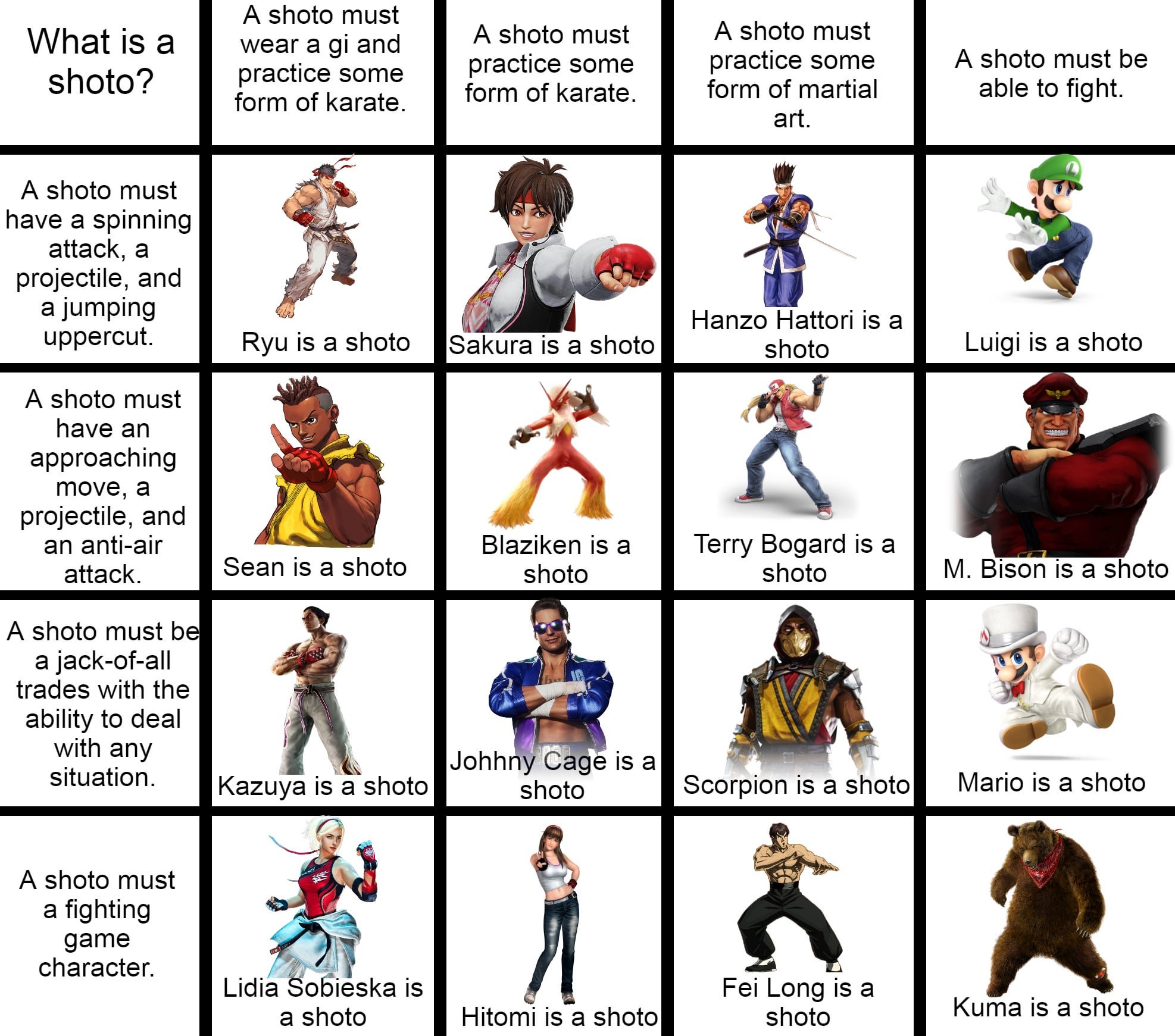
Shotos in fighting games are characters who primarily use a fireball, dragon punch, and a hurricane kick as core special moves.
Ever wondered what characters are shotos in fighting games? These characters are a staple, often the first ones players gravitate towards. They have a familiar move set, making them easy to pick up initially. The common thread is a projectile, anti-air, and a versatile mobility move.
These fundamentals make them great to learn the basics. Players see a lot of these types of characters in different games. This shows their importance and wide appeal.

What Characters Are Shotos in Fighting Games?
Have you ever played a fighting game and wondered why some characters seem so similar? That’s often because they fall into a category called “shoto.” These characters are a staple in the genre, and understanding what makes a shoto a shoto can help you understand fighting games better. Think of shotos as the “classic” fighters, the ones that many other characters are based on. They’re usually the first characters you learn to play as, and they teach you the fundamentals of fighting games.
The Core Characteristics of a Shoto
So, what exactly makes a character a shoto? It’s not about their appearance or backstory. It’s about their moveset. Shotos typically have a specific set of special moves that define them. Let’s take a closer look at these.
The Hadoken: The Iconic Projectile
The first and arguably most important move of a shoto is a projectile attack. You probably know this move, even if you don’t know the name. It’s usually a ball of energy that the character throws at their opponent. This move is called the “Hadoken” or “Fireball” in many games. The Hadoken is not just a way to attack from a distance. It is also a crucial tool for controlling space and forcing your opponent to approach you.
- Key Features of a Shoto Projectile:
- Usually travels in a straight line.
- Can be used to keep opponents at bay.
- Often has different speeds or versions.
The Shoryuken: The Rising Uppercut
The second key move that defines a shoto is a rising uppercut, often called the “Shoryuken” or “Dragon Punch”. This move is a powerful attack that launches the character upward, hitting any opponents that are too close. It is also used as an anti-air, which means, when opponents try to jump at a shoto, the shoryuken can easily knock them out of the air. This move is strong because it has invincibility, which means the opponent cannot hit the shoto with normal attacks while they are doing the move. The Shoryuken requires timing and precision.
- Key Features of a Shoto Uppercut:
- Has some form of invincibility, making it good for defense.
- Is a good anti-air move to punish jumping opponents.
- Can be difficult to use but strong when landed.
The Tatsumaki Senpukyaku: The Spinning Kick
The final staple move of a shoto character is a spinning kick, often called the “Tatsumaki Senpukyaku” or “Hurricane Kick”. It’s a fast, multi-hitting attack that moves the character across the screen. The spinning kick is primarily used for pressure. This move often involves a spinning motion that lets the character cover ground and hit the opponent multiple times quickly. The Tatsumaki is a move that the player can use for attack and to change position.
- Key Features of a Shoto Spinning Kick:
- Lets characters move quickly across the screen.
- Can hit the opponent multiple times.
- Can be used for both offense and movement.
The combination of these three moves—projectile, uppercut, and spinning kick—is what makes a character a shoto. These moves work together to give the shoto a well-rounded fighting style that can deal with opponents at any range.
Why Are Shotos So Popular?
Now that you know what a shoto is, you might be wondering why they are so popular. There are several good reasons.
Easy to Learn, Hard to Master
Shotos are often recommended for new players because their moves are straightforward. It is easy to understand how to use their moves and are very user-friendly. The learning curve is gentle, making them a good starting point for learning the ins and outs of fighting games. The moves are relatively easy to execute, but that doesn’t mean they are simple. Mastering the precise timing and spacing of a shoto’s moves requires a lot of practice. The depth of their movesets also allows a skilled player to be extremely dangerous.
Versatility
Shotos are great because they are able to fight at a close range, and at a distance. The projectile lets them fight from far away. The uppercut and spinning kick work well when they are closer to the opponent. This versatility makes them adaptable to different fighting styles. This also means that beginners learn to adapt to most situations in fighting games.
The Benchmark for Other Characters
Many fighting game characters are designed with the shoto archetype in mind. Shotos provide a basic moveset from which game developers can get creative. Think of it like a template. Once the shoto character is designed, the developers add some unique twists to other characters, such as making them faster, slower, or adding more moves. Shotos are a benchmark or an example for other fighters to follow.
Variations Within the Shoto Archetype
While the classic shotos all have the three key moves we talked about, they can have some subtle differences. These slight variations are often enough to make a shoto feel unique. Here are some ways shotos can differ.
Different Projectiles
Some shotos may have projectile that is a bit faster or slower, that travels a longer or shorter distance. Some can even have a projectile that travels in an arc instead of straight. For example, some can use a projectile move that is stronger and goes across the whole screen. They also have to think about the projectile’s speed and how much damage it does to the opponent, and the opponent can use these differences as an advantage.
Variations in Uppercut Movement
The uppercut might send the character up higher or it might be a bit slower or faster. It can also hit more times or it can do more damage. Some can travel forward a little bit as they rise, making it more of a move for an attack, than defense. This means that an uppercut is not just an uppercut. There are variations of the uppercut, which can make a difference in the overall gameplay.
Spinning Kick Properties
The spinning kick can also vary from shoto to shoto. Some have a version that moves further, some move less distance. Some might cause more damage, and some less damage. Some can hit low and some hit high. There is also some spinning kicks that cause more hits to the opponent. All these differences impact the overall gameplay and strategy that each shotos use.
Other Differences
Shotos can have other differences, too. Some might be faster than others. Some might have more health. Some might have different kinds of normal moves. They might have a unique super move or special ability that sets them apart. These differences make each shoto feel different. It also makes sure that each shoto has their own personality and not a copy of each other. Even though they share the same core moves, they play differently.
Examples of Shoto Characters
Now, let’s look at some of the most well-known shotos in fighting games.
Ryu and Ken from Street Fighter
These two are the original and most iconic shotos. They are the gold standard for how all shoto characters are measured. Ryu is usually seen as the most balanced, the most pure form of the shoto, which makes him a very good character for beginners to start with. Ken is usually a bit more aggressive, with a faster spinning kick and a more offense-based playstyle. He is also a good starter character for players to learn.
Kyo Kusanagi from King of Fighters
Kyo is another example of a shoto character, and while he shares the same basic moves of the shoto, he also has his own unique style and moves. This gives him his own identity and makes him a unique character, even while still being part of the shoto class of characters.
Akuma from Street Fighter
Akuma is a special case because he has all the basic shoto moves, but he is also a lot stronger, with a lot more power, and his moves are faster, than Ryu and Ken. Also, his playstyle is more aggressive and is designed for skilled players only. He can be described as the evil form of a shoto.
Sol Badguy from Guilty Gear
Sol is similar to a shoto, but he has a very different feel and unique gameplay style. He has a move that is like a hadoken and an uppercut, but his are slightly different, with different properties, and different uses. This makes him unique compared to classic shotos.
Why Understanding Shotos is Important
Why does understanding what makes a shoto, a shoto is important? Because the shoto archetype is the foundation of the fighting game genre, learning it can help you get better at many different fighting games. Here are a few reasons why understanding shotos matters.
Understanding the Fundamentals
Because shotos are designed to teach the basic principles of fighting games, learning to play as one helps new players learn the essential concepts of the fighting game. This includes learning how to use projectiles to control space, using uppercuts to counter anti-air attacks, and how to use spinning kicks to move around and attack the opponent. The skills learned from playing as a shoto will always help in other fighting games.
Recognizing Patterns
Once you know what a shoto is, you can recognize these characters in other games. This knowledge will help you understand their moves and how they play, so you can anticipate their attacks and defend against them more easily. When you see a character that has a projectile, an uppercut, and a spinning kick, you will automatically know what they are capable of doing. This can make fighting games easier for you to understand and play.
Appreciating the Depth of Fighting Games
Shotos might seem simple, but the depth of the game comes from mastering the basics. Shotos teach the fundamentals and help you learn how to space, timing, combo and other techniques that fighting games include. Once a player is very good at basic moves, they can slowly learn the advanced skills that fighting games has to offer.
So, next time you play a fighting game, keep an eye out for the shotos. They are the foundation of the genre, and understanding them is key to becoming a better fighter.
Character Archetypes in Fighting Games – The All Arounder/Balance/Shoto (Video Essay)
Final Thoughts
Shotos in fighting games generally feature projectile attacks, dragon punches, and forward-moving kicks. These archetypes are easy to pick up but hard to truly dominate. Therefore, they are popular.
These characters often act as the baseline for learning core fighting game mechanics. Ryu and Ken are prime examples of this popular archetype.
Therefore, what characters are shotos in fighting games? It is a common question with many answers, but their core movesets are what define them. Many games feature shoto characters.

