
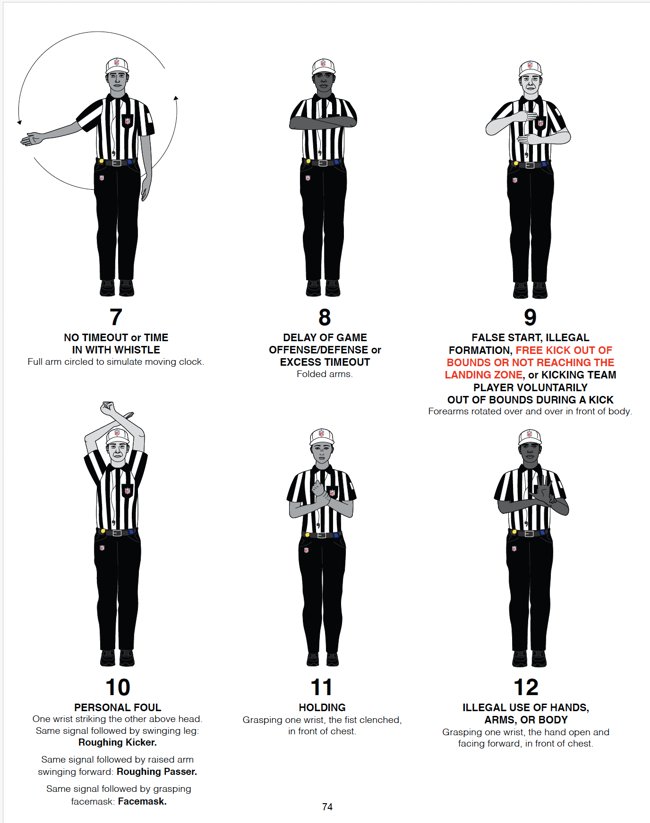
Delay of game in football occurs when the offense or defense fails to begin play within the allotted time after the ball is ready.
Ever wondered what that yellow flag thrown by the referee means? You see it and maybe you ask yourself “what does delay of game mean in football?”. It’s a penalty that can swing the momentum of the entire game, and it’s crucial to know.
Essentially, the clock ticks down, and teams have a set time to start their next play. Failing to do so results in a penalty.
This rule is in place to keep the game moving and ensure fairness. It prevents teams from stalling unnecessarily.

What Does Delay of Game Mean in Football?
Okay, let’s dive into the world of football penalties, specifically, the “delay of game.” It’s a penalty you’ll see quite often, and it’s all about keeping the game moving at a reasonable pace. Simply put, a delay of game penalty happens when a team takes too long to start a new play. Imagine you’re playing tag, and instead of running, you just stand there for a long time. It wouldn’t be much fun, would it? The same is true in football. Teams have a limited amount of time to get ready and snap the ball for the next play. When they take too long, they get penalized.
The 40-Second Clock: The Heart of the Matter
In most cases, the delay of game penalty is directly linked to the 40-second clock. After a play ends, the clock starts ticking. The team on offense has 40 seconds to get their players set and snap the football. This clock is very important, because it ensures that games keep a good tempo and don’t get dragged down by slow preparations. Think of it like a timer on your favorite video game; if you don’t act within the time limit, something bad happens (in this case, a penalty!).
Where the Clock Starts
You might be wondering when exactly the 40-second clock starts. Well, it depends on how the last play ended. Generally, it starts when the official signals the end of the previous play. Here’s a breakdown:
- After a Play Ends Inbounds: If the play ends with the player being tackled inside the field, the clock usually starts right away. The ref will signal, and the clock begins its countdown.
- After a Play Ends Out of Bounds: If a player runs out of bounds or the ball goes out of bounds, the clock stops, then restarts once the ball is put back in play by the referee.
- After an Incomplete Pass: When a pass falls incomplete, the clock also stops, and restarts when the ball is put back in play.
It’s not always the same restart depending on what happened on the field, so the players need to be ready!
Specific Situations That Can Lead to a Delay of Game
Now, let’s look at some common situations where a team might get called for a delay of game:
- Taking Too Long to Line Up: If the players on offense are not in their positions and ready to go before the clock hits zero, they might get a penalty. Imagine them dawdling around, not getting to the line of scrimmage quickly enough.
- Taking Too Long After a Timeout or Other Stoppage: After a timeout, an injury, or another stoppage of play, teams still have to get set quickly. If they don’t, a delay of game penalty might happen. The clock doesn’t just restart after a timeout, the team still has the responsibility of getting to the line.
- Not Snapping the Ball in Time: The most common reason is simply letting the 40-second clock run all the way down without snapping the ball. You know, just running out of time!
Strategic Delays (And Why They Are Risky)
Sometimes, a team might try to use a very slight delay to their advantage, and this is a risky proposition. For example, a team might try to run the clock down as much as possible in the waning seconds of the game to ensure they get the last shot. However, this can backfire and lead to a penalty. Coaches try to push things right to the limit, but sometimes it doesn’t go the way they hope!
The Penalty: What Happens When It’s Called?
When a delay of game penalty is called, the consequences are fairly straightforward: The team gets penalized 5 yards. That means they have to move backward 5 yards from where the ball was previously. Think of it like having to take five steps backward in a game of tag – it puts you at a disadvantage. This makes things a bit harder for the team on offense, as it sets them back in their attempt to score points.
How the Penalty Affects the Game
A 5-yard penalty might not sound like much, but it can have a big impact on the flow of the game. Imagine a team is close to the end zone, trying to score a touchdown. A delay of game penalty could push them back out of a scoring range. It can make it harder to get a first down, and it can change the type of plays a team wants to run. In short, it can affect the game significantly!
The Difference Between Delay of Game and Other Penalties
It’s easy to get penalties mixed up, but delay of game is very different from, say, a false start. Let’s compare:
Delay of Game vs. False Start
- Delay of Game: As we’ve already discussed, it’s when a team takes too long to get ready to start a play. The ball has to be snapped before the clock hits zero.
- False Start: This is when a player on the offensive side moves before the ball is snapped. It’s like jumping the gun in a race. A false start can be an illegal movement, a sudden jerk, or any other move that looks like the start of a play before it should happen.
The key difference is time, it’s not just a player moving before the ball is snapped, it’s about being late in getting the play started.
Delay of Game vs. Encroachment
- Delay of Game: As we know, delay of game is on the offense for being too slow.
- Encroachment: This is when a player on the defense crosses the line of scrimmage before the ball is snapped. They’re too close to the other side before the play starts.
The key difference is which side is causing the penalty. Delay of game is an offensive penalty whereas encroachment is a defensive penalty.
Why the Delay of Game Rule is Important
The delay of game rule is there for a very good reason: to keep the game moving, and to ensure fairness for both teams. Without this rule, offenses could take as long as they wanted to prepare, creating dull games and giving one team an unfair advantage.
Promoting Good Game Flow
The 40-second clock and the delay of game rule encourage teams to get ready quickly and execute their plays. This keeps the game exciting for the players and the viewers at home and in the stands. It prevents teams from just dragging things out. It’s all about creating a more enjoyable experience.
Fairness in the Game
Imagine if a team could take two or three minutes between plays; they could get very rested while the other team sits around and waits. It wouldn’t be a good system! The delay of game rule ensures both teams have the same amount of time to get set up for each play. It makes sure the game is fair to everyone.
How Teams Avoid Delay of Game Penalties
Of course, teams don’t want to get delay of game penalties, so they make sure to keep their eyes on the clock. How do they do it? Well, here are a couple key techniques:
- Communication: Players have to communicate effectively and get themselves in the right position very quickly. They need to listen to the quarterback and get into formation. Coaches and players work on this at practice.
- Practice: Teams practice with the 40-second clock in mind. They run through drills to ensure they are ready when the game clock starts. This involves timing plays and making sure that the players are ready to snap the ball in the given time.
- Play Calling Speed: Coaches need to choose plays and relay them to the players quickly. There’s no time for lengthy decisions. They have to get a play into the quarterback who can then relay it to the team.
- Quarterback Awareness: The quarterback is usually the one watching the clock closely, and he has to know when to speed things up. He has to be aware of how much time is left and ensure that the ball is snapped on time.
These are some simple things that teams can do to stay penalty free, but they need to be consistent!
Coaching Adjustments
Coaches have a crucial role in avoiding delay of game penalties. They need to be smart and quick with their play calling. Sometimes, if the team is having trouble with clock management, the coach might make a substitution to get the team moving faster.
Play Calling Efficiency
Coaches need to pick plays that are easy to understand and set up quickly, they can’t use every second to decide what the team does next, there is not enough time. They also sometimes have to be able to audibilize – that means changing the play at the line of scrimmage, which is a fast process. Efficient play-calling is key to avoiding delay of game penalties.
Adjustments During the Game
Sometimes, during the game, a coach might notice the team is moving too slowly. So, they might make some in-game adjustments. Maybe they will change the plays that they are calling, or they will talk to the team and speed them up. It’s all about making adjustments during the game.
Impact of Delay of Game Penalties in Different Game Situations
The importance of avoiding delay of game penalties can change based on when it is in the game. Let’s look at some scenarios:
Early Game
In the early game, a delay of game penalty isn’t the end of the world. While it does set the team back 5 yards, it is not as harmful as late in the game. At this point, there is still time for the team to recover. It is still important to avoid delay of game penalties, but the game is still young.
Mid-Game
In the middle of the game, the effect of a delay of game penalty increases. If the game is tight, those yards become very important and valuable. You can’t be making mistakes at this point. This is when teams need to be very good with clock management.
Late Game
The late game is where delay of game penalties become very costly, and can change the game. Every yard is precious, and every second matters. If the team is on the verge of scoring, or is in a situation where they need a first down, a delay of game penalty can change a game completely. These penalties are especially costly with the clock running in the final moments of the game.
Different Levels of Football
It’s also worth pointing out that the rules about delay of game and clock management can vary slightly depending on the level of football. While the basic idea is the same, some changes can occur.
Youth Football
In youth football, you will likely see a lot more delay of game penalties. Younger players are still learning the ins and outs of the game, so being fast and organized is something they will need to get used to. The coaches focus on teaching the players about clock management, as it will be an important concept moving up the football ranks.
High School Football
At the high school level, players get a better grasp of time management and the penalties involved with clock management. There are still some penalties, but there is much more consistency as far as the speed of the game is concerned. The game is not as fast as the professional level, but the players are generally more consistent.
College Football
In college football, you’ll generally see well-oiled machines as far as the speed of getting to the line is concerned. There are still the occasional penalties, but generally, teams are ready to go. This is where the stakes are higher, and penalties can really cost a team the game.
Professional Football
At the professional level, the teams are very well-versed in clock management. Still, you do see the penalties from time to time. This is also where it becomes most costly, as the teams are at such a high level, that any mistake can cause big problems. Every yard and every second matters at this level. The stakes are the highest and the games are most competitive.
To sum it all up, a delay of game penalty is a reminder that football is not just about strength and speed, it’s about being organized and acting fast. It ensures the game is fair and keeps a good flow. Understanding this rule helps us understand the game better!
Understanding "Delay of Game": An English Phrase Explained
Final Thoughts
Delay of game occurs when the offense fails to start play before the play clock expires. This results in a penalty, moving the team back five yards. Understanding this rule is important for any football fan.
Officials watch the play clock closely. A team can be penalized multiple times. “what does delay of game mean in football” is simply wasting time between plays, thus gaining an unfair advantage.

