
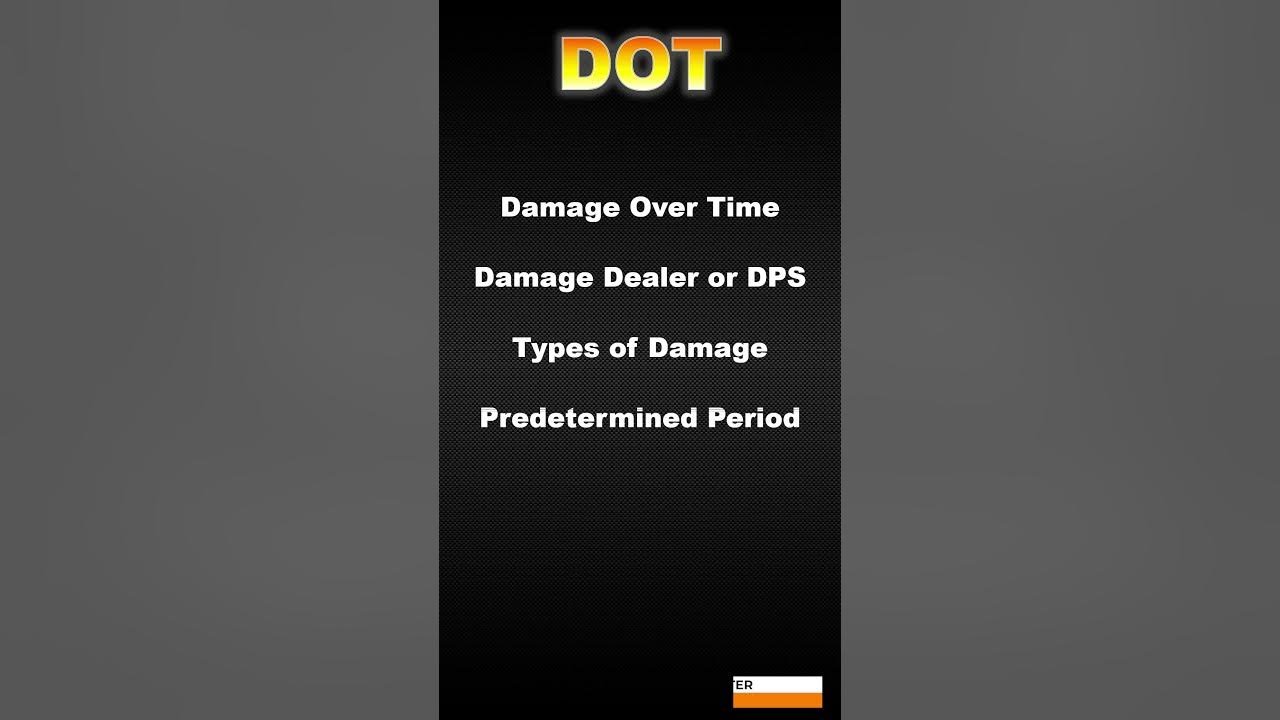
In games, “dot” typically refers to damage over time, where a character or enemy receives small amounts of damage continuously for a set period.
Ever been playing a game and watched your health slowly tick down even after the initial attack? You might be wondering, what does dot mean in games? That lingering damage is frequently the result of a “dot” effect.
It’s a common mechanic, and it makes combat more interesting. These persistent effects can come from poisons, burns, or other similar types of attacks.

What Does DOT Mean in Games?
Have you ever been playing your favorite video game and heard someone say “Watch out for that DOT!” or maybe seen a number ticking down next to your character’s health bar that just won’t go away? If so, you’ve likely encountered a “DOT.” But what exactly does that mean? Don’t worry, it’s not some super-secret gamer code! DOT stands for Damage Over Time, and it’s a really common game mechanic. Let’s explore this important aspect of game design and see how it works. Get ready to dive into the world of lasting damage!
The Basics of Damage Over Time
Damage over time, or DOT, is a type of effect in video games that causes harm to a player or non-player character (NPC) gradually over a set period. Instead of a big hit that takes away a chunk of health all at once, DOT damage is like a continuous sting. Imagine getting a small cut – it hurts immediately, but it might keep hurting for a while. That’s kind of like a DOT effect. The damage stacks or ticks down over time, it doesn’t apply instantly like a standard attack.
Think of it like this: if a sword attack is a single powerful punch, a DOT effect is like a small, annoying mosquito bite that keeps itching. The mosquito bite isn’t instantly deadly, but it can be really bothersome, especially if you get bitten multiple times. DOT damage might seem small at first but it can really add up if you don’t stop it or heal quickly.
Why Developers Use DOT Effects
Game developers include DOT effects for a few cool reasons. First, it makes combat more interesting and requires players to think carefully about how they approach fights. A boss might have a fire attack that applies a burning DOT that will make you think about how to approach the boss instead of just blindly attacking. Second, DOT effects add to the strategic element. Instead of just focusing on burst damage, players have to think about long-term consequences. You might need to decide whether it’s more important to remove the DOT effect or to keep dealing damage. Third, it can create more realistic feeling scenarios. In a game with a poison mechanic, the poison damage should not be instantaneous; instead, it will harm gradually, and a DOT effect simulates this.
Here are a few key reasons why game developers include DOT effects:
- Adding Strategy: DOT effects force players to think about more than just direct damage. They encourage smart play and planning.
- Increasing Challenge: They make fights more difficult because players can’t just heal up after a single hit; the damage keeps coming.
- Variety: DOT effects are a change of pace from basic attacks and can make game mechanics more varied and engaging.
- Creating Realism: Some DOT effects simulate real-life things, like poison or bleeding, making games more believable.
Common Types of DOT Effects
DOT effects come in many different flavors, each with unique properties. Here are some of the most common types you’ll see in games:
Poison
Poison is a very common type of DOT. It often comes from attacks made by animals, plants, or sometimes even from special items. Imagine getting bit by a snake in a game – the poison might make your health tick down slowly. It’s a gradual, steady form of damage, but that damage adds up as time goes on and can be really dangerous if left untreated.
Burning
Burning is another frequent type of DOT, usually caused by fire or lava. When you’re burning, it’s like the poison effect, but it is usually more harmful. The damage from burning is not only over time, but it might also cause different kinds of status effects. For example, you might get slowed down, or you might have a harder time seeing. Think of a fire spell that leaves you ablaze – you’ll be taking damage as long as those flames are around you. That is the burning effect, and is often shown by fire and flame animations.
Bleeding
Bleeding effects simulate wounds that cause ongoing damage. This effect is commonly seen in games with melee combat, where attacks like sword slashes or claw attacks can cause it. Unlike burning, it is often less intense, but it does apply damage over time. Think of it as a cut that keeps dripping blood and making you weaker. The bleeding effect is a very common way of making combat more engaging, making you consider different things in combat.
Frostbite
Frostbite is a cold damage effect that can appear in cold environments or from ice-based attacks. It is not as common as the other effects; however, it will still make you experience damage over time. It can cause slowing effects and can even freeze you for a little while, making you more susceptible to attacks. Think of this effect as freezing your opponent, dealing damage as the effect goes on, but also making them vulnerable to your next attack.
Disease
Disease effects are like poison, but can sometimes cause different negative status effects. These status effects may include reducing the player’s speed or attack, or causing them to see things strangely. Diseases can be very annoying because they can affect your entire gameplay, not just your health. You might get it from interacting with infected creatures or dangerous areas, and your character’s health will slowly decrease over time and your stats could suffer, making them one of the more challenging DOT effects.
How DOT Effects are Applied
DOT effects can be applied to your character in various ways. The most common way is through an enemy’s attack, whether it’s a poison dart, a burning spell, or a bite from a monster. Sometimes, you can even apply DOT effects to enemies through your own skills and attacks! This adds to the strategy, where you can apply these effects to weaken enemies over time. Certain environmental hazards, like lava pools or toxic gas, can also inflict DOT effects if you come into contact with them. Lastly, sometimes, a special item may apply a DOT effect on either you or the enemy, depending on what it is.
Examples of DOT Application
- Enemy Attacks: A poisonous spider bites you, inflicting a poison DOT.
- Player Skills: A fire mage uses a spell that leaves enemies burning.
- Environmental Hazards: You walk through a pool of lava, taking fire damage over time.
- Items and Equipment: A poisoned dagger that applies poison to enemies when you strike them.
Understanding DOT Mechanics
When you have an effect on your character, you’ll often see a little icon or symbol near your health bar, and sometimes a number next to it showing the damage that’s being dealt. The number might count down, showing how long the effect will last. Sometimes, this number shows the amount of damage the DOT is dealing to your character every single tick. Each ‘tick’ is the amount of damage dealt each instance of the damage over time effect. The amount of damage a DOT effect causes is sometimes a fixed number, but usually, it can scale up with the ability or player level. So, the more powerful you get, the more damage your DOT effects might deal.
Key Factors of DOT Mechanics
- Duration: How long the DOT effect lasts.
- Tick Rate: How often the damage is applied (e.g., every second).
- Damage per Tick: How much damage is dealt each time the effect ticks.
- Stacking: Whether multiple instances of the same DOT can increase its intensity or duration.
The Importance of Countering DOT Effects
Dealing with DOT effects is just as important as applying them. Because DOT effects continuously apply damage over time, if they are not dealt with quickly, it can cause a significant issue. This is why it is so important to counter them! You can use different healing spells or healing items to help you recover from DOT effects. Some characters might have skills that can remove DOT effects altogether. Sometimes, simply running away from the source of the effect is enough. If you were standing on fire, simply running away will make that burning effect stop.
Strategies to Counter DOT
- Healing: Use potions, spells, or skills that restore your health.
- Cleansing: Use abilities that remove DOT effects, usually called cleansing abilities.
- Avoiding: Move out of areas or situations that cause DOT damage.
- Damage Reduction: Reduce the overall damage that you receive to reduce the impact of a DOT.
DOT Effects in Different Game Genres
You’ll find DOT effects in pretty much every game genre, but they’re used in slightly different ways. For example, in role-playing games (RPGs), they might be part of a character’s class abilities, like a rogue applying poison to their blades, or a mage using fire magic. In action games, DOTs can be used by enemies to make fights more challenging, like a spider applying poison to the player. In fighting games, a character might have a move that causes a burning effect on their opponent. DOTs are a really flexible mechanic, and developers use them in lots of creative ways.
DOTs Across Game Types
- RPGs: DOTs are often tied to character classes and abilities, adding a layer of strategy.
- Action Games: DOTs create challenging battles and make players think on their feet.
- Fighting Games: DOTs provide additional depth to combat and can be a source of unique gameplay.
- Strategy Games: DOTs can be used to weaken enemies over time, making each move important.
So, that’s the basic idea of what DOT means in games. It is damage over time, which is a very common game mechanic that makes combats and gameplay in general more interesting. From poisonous bites to burning flames, DOTs add a strategic element that makes players think about the situation they are in. Whether you’re trying to avoid a poisonous spider’s attack or applying a burning effect to a powerful boss, understanding DOT effects is a key aspect of being a skilled player. Hopefully, now the next time you hear about a DOT effect, you’ll know exactly what it means!
What does D.O.T. mean? 🤔 | Gaming Acronyms
Final Thoughts
In gaming, “dot” signifies damage over time. This effect applies incremental harm to a character or enemy over a set period. These effects are often caused by spells, abilities, or environmental hazards.
Typically, the damage happens consistently until the effect wears off or gets removed. Therefore, what does dot mean in games? It clearly means this type of sustained damage is a crucial gameplay element to understand for any player.

