
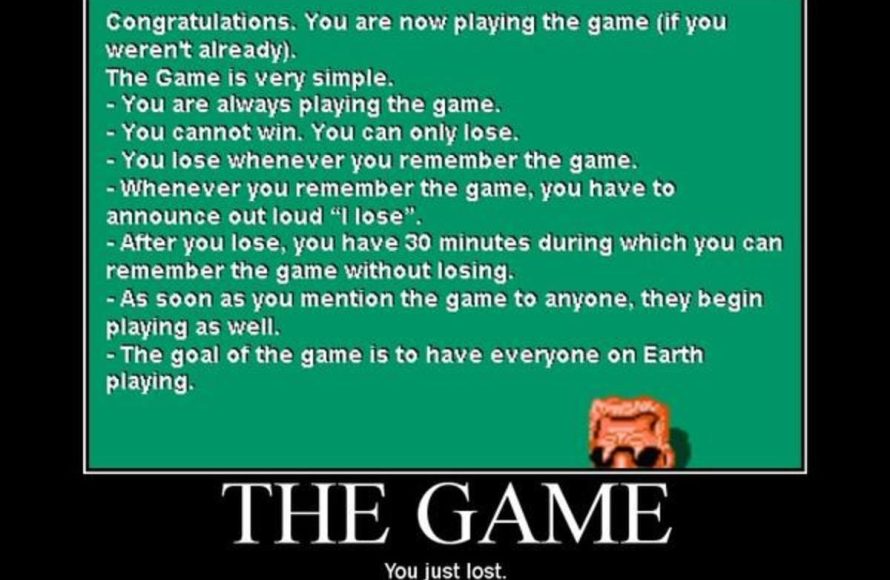
The phrase “you lost the game” signifies that someone has remembered the existence of the mental game “The Game,” which, by its rules, causes the person to lose.
Have you ever heard someone randomly say “you lost the game” and felt a pang of confusion? It’s a strange, almost silly phrase, but it actually refers to a very particular and surprisingly widespread game. Understanding exactly what does you lost the game mean requires a bit of explanation about the rules of this unusual mental game.
The core concept is simple: The Game is a mental game that you automatically play simply by knowing about it. The sole rule? If you think about The Game, you lose. There are no winners, only a constant state of losing, making the experience both frustrating and somewhat humorous.

What Does “You Lost the Game” Mean?
Okay, let’s dive into this weird little internet thing called “The Game.” It’s not a video game, and it’s not about winning or losing in the usual way. “You lost the game” is something you might hear someone say out of the blue, and it can be very confusing if you’ve never encountered it before. But don’t worry; we’re going to break it all down so you understand exactly what’s going on.
The Basic Rules of The Game
The Game has very simple, almost silly rules, but that’s part of what makes it so fascinating and, let’s be honest, a little annoying. Here’s the core idea:
- The Goal (Sort Of): The main goal of the game is actually not to think about The Game. Yes, that’s right, the whole point is to avoid thinking about it.
- How You “Lose”: The moment you become aware of The Game, whether you remember it, hear someone say it, or even see it written down, you have “lost.”
- The Losing Notification: When someone loses, they usually have to say “I lost The Game.” This is like admitting you thought about it and therefore, you’ve failed at the not-thinking goal.
- Starting Over: There isn’t really an “end” to The Game. You just keep playing (or rather, not thinking) until you lose again. Once you acknowledge your loss, you start fresh, trying not to think about it again.
Think of it like trying not to think about a pink elephant. The moment you consciously tell yourself not to think about it, you’re thinking about it! That’s very similar to how the “game” works. It is designed to be self-referential; the very act of engaging with it is often a “loss.”
The History of The Game
The exact origins of The Game are a bit murky, but it is generally believed to have started around the early 2000s, with many pointing towards forums, chatrooms, and perhaps even schoolyards. There isn’t one single founder, and its spread seems to be more organic, like a silly idea catching fire.
Early Online Mentions
As the internet became more popular, The Game started to appear in online communities. People would write it in forum posts, comments, or even just in chat rooms, and then wait for others to say they had lost. This gave The Game a way to spread quickly. You would be going along with your day, reading things on the internet, and then BAM, you’ve lost because someone mentioned it! It relied on people encountering the word, or the phrase, completely unexpectedly.
The Spread of Awareness
The Game really took off in the mid-2000s, gaining more and more popularity. It became something of an internet meme, a thing that just existed and spread through random interactions. It moved from the online sphere into real-world situations. People started saying it to their friends in school, at work, or even to family members. The seemingly arbitrary nature of the “game” made it hard to avoid and easy to share – often with the goal of causing others to also lose.
Why is The Game So Popular?
It’s a very interesting question: why did something so silly get so popular? There are a few reasons that might help explain why people enjoy playing it (or rather, trying not to play it):
- Simplicity: It is incredibly simple to understand, making it accessible to pretty much everyone. You don’t need any special skills, equipment, or even a good memory; just an awareness of the existence of this “game.”
- Randomness and Surprise: The unpredictable nature of The Game is a big part of the fun. It can pop up at any time, anywhere, which can be both amusing and frustrating for those who are involved.
- A Shared Experience: Knowing about and experiencing The Game creates a kind of connection among people. It’s an in-joke that anyone can participate in, which contributes to a feeling of community.
- Mild Annoyance: Let’s be honest, some of its appeal lies in the fact that it can be slightly annoying. The feeling of “losing” can be a bit jarring, and that’s part of the charm (for some, at least). Many people enjoy causing others to lose as much as they enjoy playing.
- Mental Challenge: Trying not to think about something, as simple as it sounds, is difficult! It makes you very aware of your own thoughts, and it becomes a kind of strange mental exercise.
Strategies for Dealing With “The Game”
There’s no way to win, but there are a few ways people try to cope with this unique “game”. Here are some common strategies:
Acceptance
This is the most common and probably the most sensible approach. Understand that you will lose. Accept the fact that it’s not something you can control, and that you will come across someone referencing it. When you inevitably do encounter it, admit it, start again, and try not to think about it… for the next few seconds.
Mindfulness
Some people have tried to use mindfulness techniques to deal with The Game. If you are concentrating on the present moment, it might be harder to have a thought about “the game” pop into your head. It is essentially trying to control the direction of your thoughts and, by extension, your consciousness. While this can be helpful, it is not an exact science and the idea of the “game” is still pretty prominent in pop culture.
Avoiding Triggers
This one is very hard, but some people might actively try to avoid situations or people who they believe might mention The Game. This could be ignoring specific conversations, muting certain people online, or even avoiding entire social groups. This can be an ineffective strategy in the long run and may not even be possible with the broad spread of the concept. However, for some, it may be an effective (although ultimately unnecessary) tactic.
Reverse Psychology
Some people try to use reverse psychology, attempting to think about The Game so much that it becomes a normal, non-triggering thought. The goal is to “overdose” on it and, therefore, dilute its power. The effectiveness of this method is a bit questionable, but it is still a common approach among the community.
Playing It Yourself
Another strategy is to become one of those who causes others to lose. If you can’t avoid thinking about it, you may as well spread the word and make sure others are also suffering in the same way. This is very common and may be the reason for its sustained presence in culture. By making the concept of “the game” more prominent, you also ensure the next person you encounter will encounter and think about “the game”.
Is “The Game” Harmful?
The short answer is: no, not really. It is mostly harmless and just a silly thing people do for fun (or annoyance). Here are a few reasons why it is considered harmless:
- No Real Stakes: There are no real consequences for losing “The Game.” You don’t lose money, reputation, or anything that is of true importance. The only thing you lose is the ability to not think about it.
- A Lighthearted Distraction: For some, it is a harmless distraction from everyday life. It’s a moment of absurdity and silliness in an otherwise serious world.
- Mental Exercise: In a weird way, it is a mental workout, forcing you to think about your thoughts and how aware you are of the things you are thinking about.
Of course, it can be a little frustrating when someone “makes” you lose, especially if they do it often, but it’s not something that causes any real issues.
“The Game” in Popular Culture
As we’ve already seen, the game is a part of internet culture, and it even exists beyond the internet. It appears in popular culture in a few places. Here are some examples of its cultural footprint:
- Memes: It’s been the subject of countless memes, spreading its awareness even further on various platforms.
- Online Communities: It’s a common joke and a shared understanding on forums, social media platforms, and many online groups.
- Real Life: People reference it in person, both casually with friends or in public.
Its presence in various areas shows that it has become a widespread and somewhat ingrained part of popular culture. It’s a part of online culture, and it will probably persist into the future.
Why “You Lost The Game” is So Annoying
While it can be amusing, many people find it annoying. There are a few key reasons why the game can be frustrating for those involved:
Unavoidable
The fact that it can pop up anytime, anywhere, makes it unavoidable, especially in our digital age where you might encounter it on social media, in an email, or just by random chance. Because its spread is so uncontrolled, it’s very difficult to avoid and, as such, difficult to forget.
Repetitive
Because of the nature of the game, many people have heard the phrase “I lost The Game” over and over. After a while, it can become tedious and predictable. It’s a novelty that wears off rather quickly.
Disruptive
Sometimes, people will say it to intentionally disrupt a conversation or a train of thought. While usually harmless, it can interrupt focus and make it hard to complete tasks. This disruption is often one of the intentions of those who are bringing up the game, though.
No End in Sight
The fact that there’s no real way to win, just an endless loop of losing, can be grating to some. There’s no way to resolve the game, or end the cycle, which can be irksome to some people.
The Enduring Legacy of The Game
Despite its simplicity and, at times, annoyance, The Game has shown remarkable staying power. It’s been around for a while now, and it doesn’t look like it’s going away anytime soon. What can we make of its legacy?
- A Case Study in Internet Culture: The Game demonstrates how a simple, silly idea can spread through the internet and become a lasting part of popular culture. It highlights how a seemingly arbitrary concept can gain traction through shared experience and mild amusement.
- A Reminder of the Power of Ideas: It’s a reminder that an idea, even something as seemingly insignificant as “The Game,” can become a part of our shared language and understanding. It shows how much power our own minds can be, especially within the context of shared culture.
- A Shared Experience: Despite the frustration it can cause, it provides a shared experience. It’s something that a lot of people know, which creates a strange and unique connection.
The Game is a strange phenomenon, to be sure. It’s silly, it’s annoying, it’s pretty pointless, and yet, it’s still around, impacting millions of people across the world on a daily basis. It highlights the strange and wonderful things that can emerge from shared digital culture and serves as a reminder of the strange and wonderful things that human beings can create and enjoy.
So there you have it, a comprehensive look at what “you lost The Game” means. It’s a mental exercise, an internet in-joke, and a unique part of our modern culture. And with that, you’ve probably lost The Game again. Sorry about that. It’s also worth noting that it is completely fine to simply ignore The Game. It has no meaning or power beyond the one you give it. It’s just a phrase, after all. Try not to let it disrupt your day!
You just lost THE GAME!
Final Thoughts
The game refers to a mental exercise; if you think about the game, you lose. This thought process then forces you to acknowledge your loss. Thinking about it, you must not forget you now know you lost.
Essentially, ‘what does you lost the game mean’ is you were made to think about it. This acknowledgment instantly results in defeat. The simple act of thinking about it leads to this strange mental gotcha moment.

