
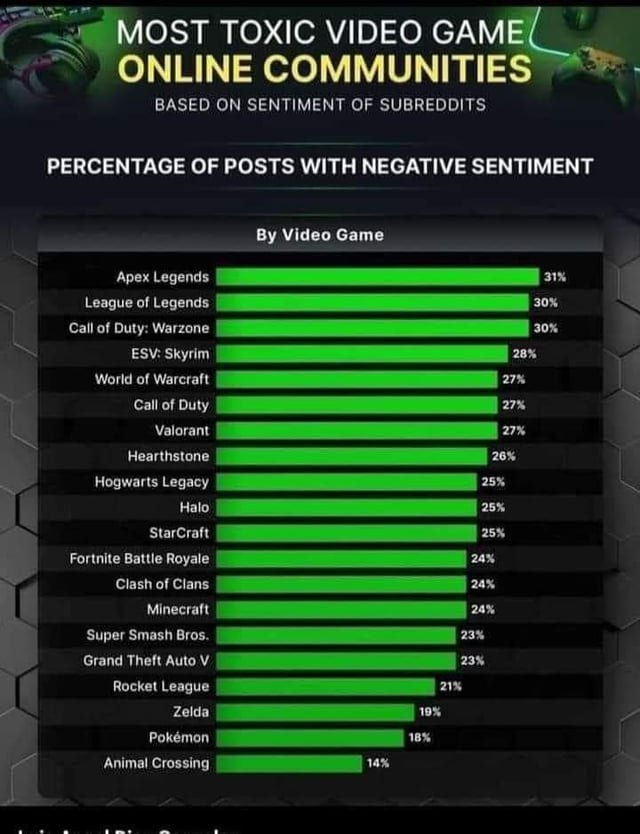
Many consider League of Legends to have the most toxic community.
We’ve all been there, haven’t we? That online gaming moment where a fellow player’s actions makes you question humanity. This often leads to asking the big question: what game has the most toxic community? It’s a debate as old as online multiplayer itself, and it seems each title has its own unique flavor of negativity.
Some games seem to attract more unsportsmanlike conduct than others. The intensity of competition, the anonymity of online interactions, and sometimes even the game mechanics can contribute to a less than ideal environment. So, let’s dive into why some games stand out in the realm of bad behavior.

What Game Has the Most Toxic Community?
Okay, let’s talk about something that can make even the most fun games feel…not so fun: toxic communities. We all love games, right? They’re a great way to relax, have fun with friends, and even make new ones. But sometimes, the people we play with can be, well, less than awesome. The question isn’t if toxicity exists, but which game has the most of it. This is a hard question because different people experience games and their communities differently. What might be annoying to one person could be hurtful to another. It’s also something that shifts and changes over time.
Why Do Toxic Communities Form?
Before we start naming names, it’s good to understand why some game communities can become toxic in the first place. It’s not like everyone wakes up wanting to be mean. There are many things that can add up:
- Anonymity: Being online and not face-to-face can make people feel like they can say things they wouldn’t normally. When you’re behind a screen, it’s easier to be rude or disrespectful because you don’t have to see the person’s reaction.
- Competition: Games that are highly competitive can bring out the worst in people. Everyone wants to win, and when things don’t go their way, some players might lash out at others instead of focusing on their own game.
- Lack of Moderation: If a game doesn’t have active moderators or reporting systems, toxic behavior can get out of hand quickly. If there are no consequences for being mean, some players will keep doing it.
- Group Mentality: Sometimes, people do things because they see others doing them. When a few people start being toxic, it can spread through the group and it starts to feel normal. It’s like when one person starts laughing, and then everyone else starts laughing too.
- Frustration: When a game is difficult or buggy, players can get frustrated. This frustration can sometimes turn into anger that is directed towards other players.
Identifying Toxic Behaviors
Let’s break down the kind of actions we’re talking about when we say a community is toxic. Here are some common examples:
- Verbal Abuse: This includes things like name-calling, insults, and hateful language. It’s using words to hurt someone else.
- Harassment: Repeatedly targeting a player with mean messages, or deliberately annoying or disrupting their game. It’s not just a one-time insult, but going out of the way to bother someone again and again.
- Griefing: Intentionally doing things to ruin other players’ experience, like stealing their items, destroying their builds, or blocking them from progress. These people are actively trying to make other player’s gameplay worse.
- Racism, Sexism, Homophobia: Using hateful words and actions based on someone’s race, gender, or who they love. This is very serious and has no place in any community.
- Spamming: Flooding chat channels with meaningless messages to annoy or disrupt other players. It’s a way of making it hard for others to communicate properly.
- Cheating and Hacking: Using unfair tools or programs to gain an advantage and ruin fair play for everyone else. This takes away the sense of fair play for every other player.
These behaviors make the game less fun for everyone and can even drive people away from the game entirely.
Contenders for Most Toxic Community
Now for the big question: which games tend to have the most toxic communities? It’s tough to give a single answer, as experiences vary wildly. However, certain games are frequently brought up in discussions about toxic communities. Let’s take a look at some of these contenders:
League of Legends
League of Legends (LoL) is a popular multiplayer online battle arena (MOBA) game. It is known for its complex strategies and competitive gameplay. But, it’s also frequently cited as having one of the most toxic communities. The game’s competitive nature and the importance of teamwork can sometimes make players lash out at each other when things go wrong.
- Reasons for Toxicity: The game’s intricate systems and team-dependent nature can make it a breeding ground for frustration. Players often feel that their teammates are the reason they lose, leading to blame and insults. There is a lot of pressure to perform well and that can cause people to be overly critical.
- Common Toxic Behaviors: Flaming (insulting teammates), verbal abuse, and rage-quitting are common in LoL. Players often use the in-game chat to vent their frustrations, sometimes going overboard with insults and name-calling.
- Community Response: Riot Games, the developers of LoL, have tried to combat toxicity with various reporting systems and punishments. But, the sheer size of the community makes it difficult to control completely.
Dota 2
Dota 2, another MOBA, often ends up in the same conversation as League of Legends when it comes to toxic communities. It’s also a team-based game that requires good communication and coordination. When teamwork falls apart, the community can become very toxic.
- Reasons for Toxicity: Similar to LoL, Dota 2’s complexity and the need for teamwork can cause friction between players. The steep learning curve of the game can also lead to frustration among newer players who might be the target of more experienced players. The game has a very competitive environment.
- Common Toxic Behaviors: Players in Dota 2 are known to engage in verbal abuse, blaming teammates, and making racist or sexist comments. Sometimes players will throw the game intentionally if they get mad at the other members of their team.
- Community Response: Valve, the company that made Dota 2, tries to moderate the community with its reporting system. However, it’s still not enough to stop all the toxic behavior.
Counter-Strike: Global Offensive (CS:GO) / Counter-Strike 2 (CS2)
Counter-Strike is a classic first-person shooter (FPS) game with a very competitive scene. The fast-paced action and the need for quick reflexes can make players very tense, which can lead to toxic interactions.
- Reasons for Toxicity: CS:GO and CS2 have a very high skill ceiling, meaning there’s a big difference between a beginner and a very good player. This can cause the more skilled players to be very harsh to those who aren’t as good. The game requires constant communication which can easily break down and lead to people insulting each other.
- Common Toxic Behaviors: Trash-talking, verbal abuse, and even cheating are common in CS:GO and CS2. Players often berate teammates who make mistakes or engage in racist and sexist commentary. Many players have an overly aggressive style of talking.
- Community Response: Valve tries to keep the community in check by penalizing players who engage in unfair play and using reporting systems, but it is still common to run into toxic players.
Overwatch 2
Overwatch 2, a team-based FPS game, is known for its unique heroes and fun, fast gameplay. It can be super fun but it does have its moments of toxicity.
- Reasons for Toxicity: Just like other team-based games, the need for cooperation can be a source of conflict. Players often blame each other for losses. The pressure to perform well and fill a team role can lead to frustration.
- Common Toxic Behaviors: Verbal abuse, blaming teammates, and deliberate sabotage are things that players might do. Also, players often use the chat to hurl insults at each other.
- Community Response: Blizzard, the company that created Overwatch, has tried to manage the toxic community with a reporting system and penalties. However, these measures don’t always stop the toxic behavior.
Rocket League
Rocket League combines soccer with cars, which sounds crazy and fun. And it is fun, but sometimes the people who play it aren’t.
- Reasons for Toxicity: Even though the game looks simple, it’s very competitive. The pressure of needing to play well with others can cause people to get stressed and to treat their teammates badly. Players can get angry if they feel they are the reason for a loss.
- Common Toxic Behaviors: Quick chat spamming (“What a save!” sarcastically), verbal abuse, and quitting matches when losing are very common. Players will often try to make fun of each other or will get extremely angry when things don’t go their way.
- Community Response: Psyonix, the developers of the game, have tried to tackle toxicity by using reporting systems. But, it continues to be a problem in the game.
Call of Duty Series
The Call of Duty (CoD) franchise is known for its fast-paced action and competitive multiplayer. But with this comes a community where some players can behave in very bad ways.
- Reasons for Toxicity: The competitive nature of the game can make players very aggressive, and there’s a lot of trash talking involved. There are often high stakes matches where players want to win no matter what.
- Common Toxic Behaviors: Trash-talking, verbal abuse, and cheating are common. Players often throw out insults and slurs in game. Sometimes, players also try to cheat to get an edge on other players.
- Community Response: Activision, the company that publishes CoD, has tried to reduce bad behavior, but the toxicity still lingers in online matches. They have added reporting features and punishment systems but it has not solved the issue completely.
Grand Theft Auto Online
Grand Theft Auto Online is a vast open-world game with all types of players. Because it’s an open-world game, it can easily lead to situations where toxic behavior flourishes.
- Reasons for Toxicity: The game’s open-ended nature allows players to interact with each other in ways that might not be very good. Some players enjoy griefing others just to cause trouble, and because the game has a lot of different ways to play, it can create conflict between different playstyles.
- Common Toxic Behaviors: Griefing other players by destroying their property, constant harassment, and making hateful comments are things that players do in GTA Online. Players also tend to spam their kill streaks and make other player’s experience bad.
- Community Response: Rockstar Games, the company that made the game, have tried to stop bad behavior by banning players or giving punishments. But, the scale of the game makes it hard to completely control.
It’s Not Just About Specific Games
While certain games often get a bad rep for their toxic communities, it’s important to remember that toxicity can happen in almost any game. The games listed above simply tend to be more prone to this issue, but it is present in all the communities. It’s more about the specific situations, the people you’re playing with, and the overall game design. For example, games that are very competitive can bring out toxicity but this can happen in every game. Sometimes games that are new have a friendlier atmosphere because everyone is still learning and it is not so competitive.
What Can Be Done About Toxic Communities?
Toxicity in gaming communities is a big problem, and there isn’t an easy fix. But there are things that developers and players can do to make things better:
- Improved Moderation: Games need better tools to detect and punish toxic behavior. This could mean having more active moderators, implementing stronger reporting systems, and even using AI to identify bad language and behavior.
- Positive Reinforcement: Games should reward positive behavior just as much as they punish bad behavior. For example, giving players extra points for helping teammates or giving good comments.
- Strong Community Guidelines: Setting clear rules about acceptable behavior and making sure everyone knows them can help shape a positive community. This can also help in providing structure and making everyone responsible for their actions.
- Promote Sportsmanship: Games and players should promote sportsmanship. This means teaching players how to be gracious in victory or defeat, how to respect their opponents and teammates, and how to keep the gameplay fair.
- Player Responsibility: At the end of the day, it’s up to players to be respectful and kind. Everyone needs to be part of making the gaming experience enjoyable for everyone. We all need to help each other to create a healthy community.
It is a job for both the people who make the game and the people who play the game to create a healthy gaming environment. It’s about being responsible for our actions and treating people well, just as we’d want to be treated.
In the end, identifying the single most toxic game community is a challenging task, as toxicity manifests differently in various gaming spaces and shifts over time. While some games consistently appear in discussions about problematic communities due to their competitive nature and community structure, it’s important to remember that toxicity can occur in any online game. The key lies in promoting positive behavior and holding those accountable who fail to do so. By implementing moderation, providing positive reinforcement, setting clear community rules and guidelines, encouraging sportsmanship, and promoting individual responsibility, we can strive to create a gaming environment that is fun and welcoming to all.
Top 5 Most TOXIC Gaming Communities 🤬 #shorts
Final Thoughts
Determining definitively what game has the most toxic community is challenging. Player experiences vary greatly, and different platforms foster distinct environments. However, popular online multiplayer titles often bear the brunt of toxic behavior.
Many discussions point to competitive games, where the pressure to win sometimes fuels negativity. Some popular games often have reports of harassment and negative interactions within their community. Ultimately, what game has the most toxic community is subjective and depends on individual encounters.

