
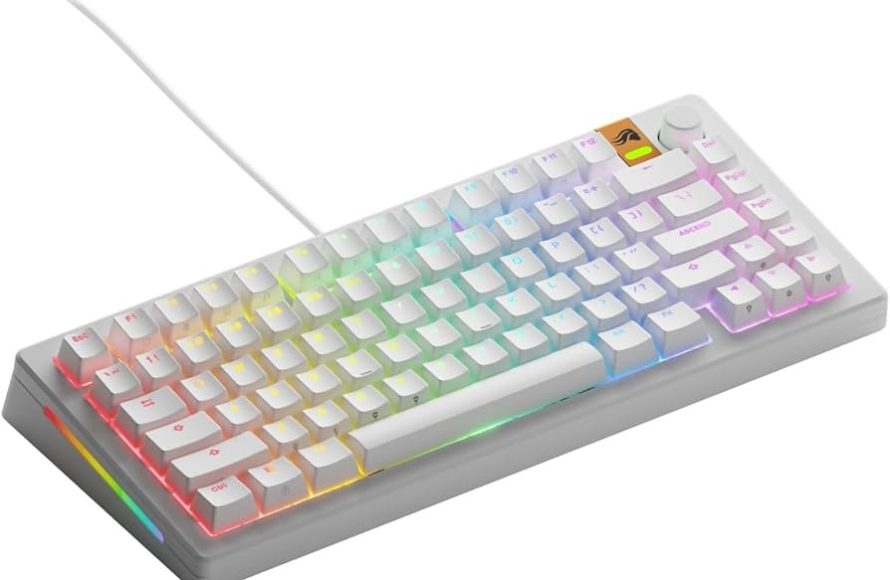
Currently, most games do not explicitly support 8k polling rates, though some newer titles may benefit from it.
You’ve probably heard about the latest and greatest peripherals boasting impressive 8k polling rates. It’s natural to then ask: what games support 8k polling rate? The truth is, very few titles are optimized to fully use these high refresh rates. This is because most games are not designed to process input at such speeds.
While an 8k polling rate might provide slight input latency improvements, you may not find a drastic, noticeable difference across all games. Performance gains are also going to be dependent on your entire system configuration.

What Games Support 8k Polling Rate?
Okay, so you’ve got your shiny new mouse boasting an 8k polling rate, and you’re probably wondering: “Will this actually make a difference in my games?” It’s a good question! The term “8k polling rate” refers to how often your mouse sends information to your computer – 8,000 times per second. A standard mouse might only send information 1,000 times a second (1k polling rate). That’s a big jump! But does it translate to better gameplay in all games? Let’s dive in and find out which games can really take advantage of this speedy technology.
Understanding Polling Rates and Their Impact
Before we get into specific game titles, let’s break down what polling rate actually means. Imagine your mouse is like a tiny messenger, constantly running back and forth, telling your computer where it is and what buttons you’re pressing. A higher polling rate means that messenger makes more trips every second. So, an 8k polling rate means your computer is getting mouse updates 8,000 times every second compared to 1,000 times a second with a 1k polling rate. This, in theory, reduces input lag – the time between you moving your mouse and that movement being shown on screen.
The Benefit of Higher Polling Rates
The biggest potential benefit of a high polling rate like 8k is reduced input lag. That can translate to quicker reactions in games. Think about a fast-paced shooter where every millisecond matters. If your mouse has a faster polling rate, you could theoretically have a small advantage by reacting just a bit quicker than someone with a slower mouse. However, it’s not always that clear-cut. The impact you’ll notice will depend on your monitor’s refresh rate and the game itself.
The Catch: CPU Load
There’s a price for all that extra data being sent by the mouse, and it’s paid by your computer’s CPU (Central Processing Unit). A higher polling rate requires more processing power. While modern CPUs are capable of handling 8k polling rates, older or lower-end systems might struggle. This can lead to frame drops or stuttering in your game. So it’s important to consider if your system is really ready for an 8k polling rate.
Games That Benefit from 8k Polling Rates
Now, let’s get to the good stuff: which games actually feel better with an 8k polling rate? It’s not a magic solution, and there isn’t a definitive list of “games that support 8k.” The benefit you perceive can be subjective and is tied to personal experience. However, there are some types of games where the faster data transmission is more noticeable.
Fast-Paced Competitive Shooters
First-person shooters (FPS) and other competitive titles are often cited as the best candidates for 8k polling rates. These games often demand rapid reflexes and quick movements. Here are some examples:
- Valorant: This tactical shooter is all about precise aiming and fast reactions. An 8k polling rate could give you a slight edge when aiming and quickly adjusting to opponents.
- Counter-Strike 2: Similar to Valorant, CS2 has lots of tense situations where every millisecond counts. Reduced input lag can help with those crucial flicks and headshots.
- Apex Legends: With its fast movement and gunplay, Apex can benefit from the responsiveness of 8k polling. Tracking opponents and hitting those quick shots can feel slightly smoother.
- Overwatch 2: This hero-based shooter also involves quick reactions, precise aiming and constant movement. An 8k polling rate can contribute to an improved and smoother experience.
- Call of Duty Series (Modern Warfare III, Warzone): These popular games often involve rapid engagements. The lowered input lag can help with those close-quarter battles.
- Rainbow Six Siege: Tactical gameplay requires precision and quick reactions. An 8k polling rate can help in those intense moments where a split-second difference can mean the game.
Competitive Fighting Games
Fighting games rely on very precise timing of inputs. So the lower input lag of an 8k polling rate is another area where the mouse can make a difference.
- Street Fighter 6: Timing your attacks and blocks is very important. An 8k polling rate might contribute to the response of your mouse being a bit more accurate.
- Tekken 8: Another competitive fighter where precise timing is key. An 8k polling rate might feel slightly more beneficial in these action packed, very fast fighting games.
Rhythm Games
These games rely on a person’s ability to sync their movements with the music playing. They tend to be very dependent on timing. Here are some examples:
- Osu!: This is a popular rhythm game where precision is very important. An 8k polling rate might feel slightly smoother when clicking to the beat.
- Friday Night Funkin’: Another rhythm game, this requires you to time your button presses to the music. The faster input from an 8k polling rate can help keep time with the beat.
Other Types of Games
While the above genres are where most players will notice any real benefits of an 8k polling rate, some other titles can also show benefits. Here are a few examples:
- Competitive Racing Games: Games like iRacing and other simulator racing titles might show slightly better control with 8k polling rate. This is because these games are usually dependent on small, controlled movements.
- Some Fast-Paced Platformers: Games like Celeste or other platformers that require very precise movements might feel a little smoother with the lower input delay from an 8k polling rate.
Games Where 8k Polling Rate May Not Be Noticeable
Not every game is going to show a massive improvement with an 8k polling rate. In some cases, the difference will be very small or even not noticeable. Here’s a look at some game types where an 8k polling rate won’t make much difference:
Strategy and Turn-Based Games
Games like Civilization, or other turn-based strategy games, where you’re not constantly moving the mouse quickly or making fast inputs, won’t benefit much. Input lag is not a big problem in this genre since everything is more deliberate and methodical.
Role-Playing Games (RPGs) and MMORPGs
While an 8k polling rate may technically improve responsiveness, many players will not notice the difference in these slower-paced games. RPGs often involve a lot of exploration and dialogue. Therefore, the extra polling rate does not provide any significant advantage. The benefits of 8k polling rates are minimal in these kind of slower-paced games. For example, a game like The Witcher 3, would not feel drastically better on an 8k polling rate compared to the standard 1k.
Adventure Games
Games like Uncharted or Tomb Raider are very story based, these games usually do not benefit as much from a higher polling rate due to the more focus on story instead of requiring very fast inputs. Also, the main emphasis is usually on exploring environments, solving puzzles, and progressing through the narrative.
Other Slower Paced Games
Many casual games or slower-paced titles aren’t really affected by polling rates at all, because they don’t require the quick inputs that the 8k polling rate would otherwise benefit.
Testing and Experimenting
The best way to know if an 8k polling rate makes a difference for you is to try it out! Many modern gaming mice allow you to adjust the polling rate within their software. This allows you to test the difference between 1k and 8k polling rates directly in your favorite games.
How to Test:
- Set Up Your Mouse: Install any necessary software for your 8k mouse, and change the polling rate to 1k.
- Play Your Game: Play for a while, and note how it feels, paying special attention to responsiveness.
- Switch to 8k: Change the polling rate to 8k in the mouse software.
- Play Again: Play the same game, under the same conditions and note if there are any changes that you notice, mainly in responsiveness.
- Compare and Decide: Is there a noticeable improvement? If not, then maybe keep it at 1k to lower CPU usage.
Don’t rely solely on numbers and graphs. If you don’t feel a difference, then it might not be worth the extra CPU usage. Always experiment to determine the best setting for you.
Consider Your Hardware
Even if a game can benefit from 8k polling, your hardware matters. Here are some things to consider:
Your CPU
As we mentioned before, an 8k polling rate uses more CPU. So, if you have an older or lower-end CPU, it might struggle to keep up with processing all the extra data from your mouse, which will end up causing frame drops or stuttering. Check your CPU usage while playing with 8k polling enabled. If it’s consistently very high, it might be best to lower the polling rate or upgrade your hardware.
Your Monitor
Your monitor’s refresh rate plays a big role in how much the mouse’s higher polling rate will show. If you have a standard 60Hz monitor, the benefit of 8k polling will not be as noticeable as it would be on a 144Hz or a 240Hz monitor. The higher the refresh rate on the monitor, the more data from your mouse can be displayed.
The Game’s Optimization
Some games are just better optimized than others. This means the game runs smoother. If a game is poorly optimized, a high polling rate might not help with that. Optimizations on the game side are required in order for the game to take full advantage of these technologies.
Is 8k Polling Rate Worth It?
The big question, is 8k polling worth it? For some, it’s a small but noticeable improvement, especially for very fast-paced competitive gamers who have the hardware to keep up. For most other players, the difference might not be as noticeable. It’s important to test it for yourself, and always consider the potential performance impact that it may have on your computer system. If your PC is struggling to process the 8k polling rate, then it is best to drop the polling rate to something lower.
In the end, the best setup is the one that works best for you. It’s all about finding a comfortable middle ground that benefits your gaming experience without causing any issues. If the higher polling rate provides improved results and does not hinder your system’s capabilities, then it may be the correct choice. However, if the higher polling rate does not give you better results and also hinders your system’s performance, then a lower polling rate would be the better option.
8kHz and 4kHz Polling Rate Mice Are a Bit of a Scam
Final Thoughts
Currently, very few games fully utilize 8k polling rate. Many titles see minimal to no difference compared to 1000Hz. Some esports games may show very slight improvements with high refresh rate monitors and powerful PCs.
Realistically, the benefits of 8k polling rate are often limited by game engine limitations and system processing. “what games support 8k polling rate” is a question without a lot of exciting answers at this point. Testing is always recommended to see if your favored titles receive any benefit.

