
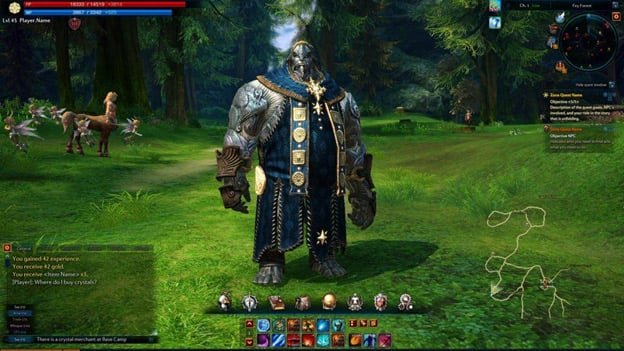
A MMORTS game is a massively multiplayer online real-time strategy game where thousands of players interact simultaneously in a persistent world, building, battling, and forming alliances.
Ever wondered what is a mmorts game? These expansive worlds blend the strategic depth of real-time strategy with the social interaction of massive online multiplayer games. Players manage resources, construct bases, and engage in conflicts against others, all happening in real-time.
These games can span vast landscapes with huge populations. They often involve long-term progression and complex alliances and feuds between player factions. If you enjoy strategic planning and interacting with tons of other players, then a mmorts might be your kind of game.

What is a MMORTS Game?
Okay, let’s dive into the exciting world of MMORTS games! You might be wondering, “What exactly is an MMORTS game?” Well, it’s a cool combination of a few different types of games you might already know. Think of it like mixing the fun of building a LEGO castle with the strategy of a chess match, but on a massive scale with tons of other players! Let’s break it down step-by-step.
MMORTS: Breaking Down the Name
The name “MMORTS” itself gives us a big clue. It stands for Massively Multiplayer Online Real-Time Strategy. Let’s unpack each part:
Massively Multiplayer Online (MMO)
This means that lots and lots of people can play at the same time, all within the same game world. Instead of just playing with your friends in your living room, you’re playing with people from all over the world! Think of it as a giant playground where everyone gets to build and play.
Real-Time Strategy (RTS)
Real-time strategy is a game where you make decisions and take actions as the game is happening, not in turns like a board game. It’s like being a general in a war, constantly deciding where to send your troops, what to build, and how to outsmart your opponents, all in the moment.
How MMORTS Games Work
So, putting it all together, an MMORTS game is a game where lots of people are building, battling, and strategizing in real-time within the same shared world. Think about games where you have to manage resources, construct buildings, create armies, and conquer territories. That’s the basic idea behind an MMORTS game.
Here’s a little more about the usual gameplay:
- Building Your Base: Most MMORTS games start with you having a small base or settlement. You’ll need to gather resources like wood, food, or stone to start building important buildings.
- Resource Management: You need to keep track of your resources! They’re like the fuel for your growing empire. You’ll need to build farms, mines, and other resource-generating structures.
- Research and Upgrades: As you play, you can often research new technologies or upgrades for your buildings and units. This lets you make your troops stronger, your buildings more efficient, and unlock all sorts of cool abilities.
- Creating Armies: Once you have your resources, you can start training troops. You’ll have different types of units, like soldiers, archers, or siege weapons. Each unit has its own strengths and weaknesses, so choosing the right mix is important!
- Conquering Territory: A big part of many MMORTS games involves expanding your territory. You might need to battle other players or computer-controlled opponents to claim land and resources.
- Forming Alliances: You can join forces with other players to create powerful alliances. Being part of an alliance means you can help each other out and fight larger battles.
Key Elements of a Good MMORTS Game
Not all MMORTS games are created equal. Some elements really make these games enjoyable. Here are some of those aspects:
Strategic Depth
A good MMORTS game should offer more than just clicking on buildings and making troops. There should be different ways to play and many strategies to try. This might mean mastering specific unit combinations or finding unique ways to use the game’s environment.
Consider these strategic considerations:
- Unit Counters: Some units are naturally stronger against others. A player needs to learn these relationships to be victorious in battle.
- Economic Planning: A strong economy is key to any successful empire in these games. Knowing how to balance resource production with military expenses is crucial.
- Diplomacy: Forming and maintaining alliances can give a player a significant advantage. The art of negotiation and strategic partnerships matters.
Social Interaction
Since these are massively multiplayer games, interacting with other players is a big part of the fun. A good MMORTS game gives you plenty of ways to communicate and cooperate with others.
Here are some ways players can interact:
- Alliances and Guilds: Joining a team lets you coordinate with others, share resources, and plan combined attacks.
- Trading: Some games let you trade resources with other players, which can be very helpful in the right situations.
- Chat and Communication: You should be able to easily talk to other players, whether it’s with your alliance or in a general chat channel.
A Persistent World
A cool feature of many MMORTS games is that they have a persistent world. This means that your actions and progress are saved, even when you’re not actively playing. You can log out and come back to your empire, and it will still be there – hopefully not conquered by another player!
Regular Updates
Many great MMORTS games receive regular updates that add new content, features, or units. This keeps the game fresh and exciting. Some updates might change game balance, add new challenges, or introduce new technologies to experiment with.
Variety of Gameplay
Beyond the core of building and battling, many MMORTS offer different ways to play.
- Story-Driven Quests: Some games include single-player quests or stories that let you explore the game’s lore.
- Special Events: Many MMORTS games have special events with unique rewards and challenges.
- Different Game Modes: There might be different game modes like small-scale skirmishes or large-scale alliance wars.
The Appeal of MMORTS Games
So, why are MMORTS games so popular? What makes them so fun to play?
Sense of Progression
Building up a powerful base and watching your army grow gives you a sense of accomplishment. Seeing your settlement develop from a small camp to a mighty fortress feels pretty awesome. You witness the results of your planning and work.
Strategic Thinking
MMORTS games make you think and plan ahead. You can’t just rush in blindly; you have to consider your options, evaluate your resources, and adapt to changing situations. For people who enjoy thinking and strategy, these games are a good fit.
Competitive Play
For some people, the challenge of battling other players and seeing their strategy succeed against other people is the most fun part. The competition can be very engaging and rewarding.
Social Interaction
Making friends and working together with other players can be a great experience. Building alliances and strategizing with other people makes these games feel more alive and enjoyable.
Long-Term Engagement
MMORTS games often have very long lifespans, meaning you can play for weeks, months, or even years. There’s often so much to do and so many goals to pursue that you can always find new challenges and ways to improve your gameplay.
Examples of Popular MMORTS Games
To give you a better idea, here are some examples of well-known MMORTS games you might have heard of:
- Clash of Clans: A very popular mobile MMORTS game where you build your village and battle other players.
- Rise of Nations: A historical RTS where you guide a civilization from ancient times to the modern era.
- Tribal Wars: A medieval-themed strategy game where you manage your village and try to conquer other villages.
- Star Trek Fleet Command: Build your starbase and command iconic ships from the Star Trek Universe.
- Age of Empires Online: A historical strategy game where you develop your civilization and battle opponents, although the game is no longer supported by Microsoft.
Are MMORTS Games for You?
If you enjoy strategy, building, and working with other people, an MMORTS game might be right for you. They can provide countless hours of fun and challenge. However, they can also be quite involved and require dedication. If you are someone who enjoys a game you can play casually on your mobile phone for 15 minutes, this might not be the genre for you.
Consider this before diving in:
- Time Commitment: MMORTS games often require a lot of time to become successful. You need to dedicate time to building, managing resources, and engaging with other players.
- Learning Curve: It can take time to learn all the different game mechanics and strategies. Be prepared for some trial and error.
- Social Interaction: Being able to work well with others is key in many MMORTS games. If you enjoy cooperation, then you will have fun in this area.
- Patience: Progress in MMORTS games can often be slow. It takes time to build a strong base and a powerful army.
If all this sounds exciting, then it might be time for you to give MMORTS games a try!
In closing, an MMORTS game offers a captivating blend of strategic depth and social interaction. They invite players to create empires, forge alliances, and participate in epic battles within a shared online world. Whether it’s the satisfaction of building your own kingdom, the thrill of competition, or the sense of community found within alliances, these games offer diverse and long-lasting entertainment. They stand as an excellent choice for those who enjoy planning, working with others, and seeing their progress grow over time.
Gaming Terms: MMO, RPG, MMORPG.
Final Thoughts
A massively multiplayer online real-time strategy game, or MMORTS, blends real-time strategy gameplay with a persistent online world and many players. Players manage armies, build bases, and compete with each other. These games often involve complex resource management and strategic alliances.
Therefore, what is a mmorts game? It’s a large-scale strategy experience. Many players influence a single, persistent world through their actions. These games emphasize planning and cooperation alongside individual skill.

