
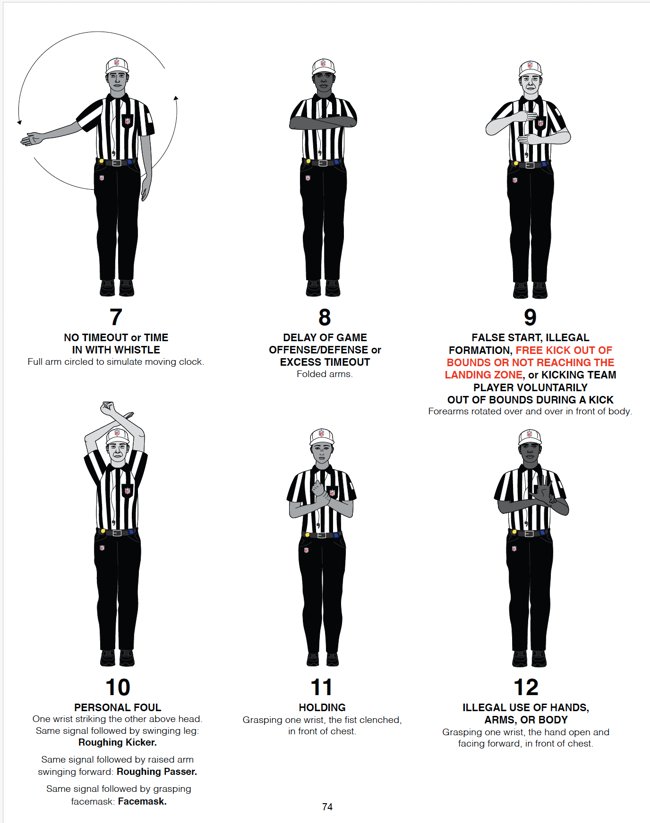
A defensive delay of game occurs when the defense commits an action specifically to delay the start of play, often to gain a strategic advantage.
Ever find yourself puzzled by some of the more obscure football penalties? It’s easy to get lost in the jargon, especially when a flag flies for something seemingly subtle. You’ve probably heard it mentioned before, but what exactly is defensive delay of game? It’s not always as straightforward as it sounds, and the reasons behind this penalty can be nuanced.
The rule exists to prevent the defense from deliberately stalling the game. This penalty can be called when a player on defense clearly takes an action to prevent the ball from being snapped on time. It’s not always about slowing things down; sometimes it’s about disrupting the flow of the offense.

What is Defensive Delay of Game?
Okay, let’s talk about something that can sometimes be a little confusing in sports, especially football: the defensive delay of game penalty. It’s not something that happens all the time, but it’s important to understand what it is and why it exists. Think of it like this: sports are supposed to be fair, right? Well, the defensive delay of game penalty is one way that the rules try to keep things even. It stops the defense from trying to get an unfair advantage by slowing the game down on purpose. Let’s dive deep into what that means.
The Basic Idea: Slowing Down on Purpose
At its heart, a defensive delay of game penalty happens when the defensive team does something to purposely hold up the start of the next play. It’s like when a kid tries to avoid finishing their chores by dragging their feet. In football, this penalty is designed to ensure a game moves forward at a reasonable pace and that one team doesn’t gain an unfair benefit by stalling.
How is it different from offensive delay of game?
You might be thinking, “Wait, isn’t there also a delay of game penalty for the offense?” You’re absolutely right! However, the key difference lies in who is causing the delay. An offensive delay of game occurs when the offense fails to start the play within the allotted time (usually the play clock runs out). A defensive delay of game happens when the defense takes actions to slow down or prevent the next play from starting on time. The offenses are usually penalized when they don’t have their formations set within a certain time limit. The defense are penalized when they try to manipulate things to gain an advantage. It’s like the offense is penalized for being too slow, while the defense is penalized for being too sneaky.
Specific Actions that Lead to a Penalty
So, how exactly does the defense try to slow things down on purpose? Here are some common ways that the defensive team can get flagged for a defensive delay of game:
- Hitting or Moving the Ball After the Whistle: If the whistle has blown to stop play (like after a tackle) and the defense intentionally kicks, nudges, or moves the ball away from where it needs to be placed for the next snap, that’s a penalty. It’s their way of trying to force the offense to waste time retrieving the ball.
- Entering the Neutral Zone: A neutral zone is an imaginary line at the line of scrimmage where the ball is placed. When the ball is about to be snapped, and defense players go beyond that neutral zone before the ball is snapped, they can get penalized. If they jump or move into that zone to interfere with the offensive snap or make it a bit harder for them to start, they can be penalized.
Why do they do it?
It is simple, to disrupt the flow of the offense. By slowing them down, the defense aims to make them spend more time setting up, which could lead to a mistake, reduce the available time for them to make a play, or even to try and throw the offensive team off their rhythm, and try to get them to commit an error. Imagine trying to do a tricky dance move, but someone keeps bumping into you – it’d be much harder to do it right, and the chances of messing up would increase. The defense will try and create that kind of awkwardness for the offense using these delaying tactics.
The Rules and the Time Clock
You might be thinking that rules are always complicated, and that is kinda true sometimes, however, this rule isn’t super-complex. The basic rule is that the ball should be available for the next snap in a timely manner. After a play is over and the referee gives the indication that the next play is coming, the defense has to get themselves ready, and not do anything to delay the start of the next play. And they have to do it within the time allocated. This time is usually controlled by a play clock, which is usually 40 seconds long in many leagues.
What is the Penalty?
When a defensive delay of game penalty occurs, the offensive team usually gets awarded 5 yards and continues with the play. It might not seem like a huge amount of yards, but sometimes a few yards is all it takes for a team to get in a better position to score or convert for a first down. The penalty is like giving a small advantage to the offense as a consequence for the defense trying to be sneaky. Moreover, if the team is close to a goal line, those few yards might be very important, because that might help the team score a touchdown.
Examples in a Game
Let’s try to imagine some scenarios. Consider a situation where the offensive team is using a no-huddle strategy. This means they are trying to go quickly between plays to keep the defensive team tired. If a defensive player, after the whistle, kicks the ball away so that the offensive team has to move and get the ball before they can set up for the next play, that is a defensive delay of game penalty. Another instance may involve a defensive player purposefully jumping offside right before the snap, hoping it might cause the offensive team to be a little bit confused and make a mistake. This can also be called a defensive delay of game, depending on the referee’s judgment.
Why the Penalty is Important for Fair Play
You might be wondering why is this rule is in place? well, that is a great question! The defensive delay of game penalty is extremely important to maintain fair play in a game. Without this penalty, a defensive team could simply try to delay the game to their advantage, potentially making it unfair for the offensive team. Here’s why it’s important:
- Keeps the Game Moving: It prevents the defense from purposely slowing down the game, ensuring that games progress at a decent pace. This helps the game be entertaining to watch.
- Prevents Unfair Advantage: It stops the defense from using delaying tactics to disrupt the offense. This ensures both teams get a fair chance to execute their strategies. It will keep a balance of play for both teams.
- Promotes Fair Competition: By enforcing a rule against delaying tactics, the game of football remains a fair contest of skill and athleticism. This makes sure that winning is based on who plays better and not who is better at delaying.
Understanding the Referee’s Role
The referees are the ones that have to watch carefully to see if a defensive delay of game penalty is happening. They use their experience and judgment to determine if a defensive player’s actions were intentional or if they were simply a part of the normal play. It is not always a straightforward decision and the referee has to understand the intention behind the move. They need to make quick and fair decisions to uphold the rules of the game.
Defensive Delay of Game vs. Other Penalties
Sometimes, a defensive delay of game can get confused with other penalties, but there are differences.
Offsides
Offsides is a penalty when a defensive player is on the other side of the line of scrimmage when the ball is snapped. This is different from a defensive delay of game because the main intention of going offsides is to stop the play and get a sack. It’s not necessarily about delaying, and can be the result of bad timing or quick movement by the offensive team.
Encroachment
Encroachment is similar to offsides, but the difference is when the player makes contact with the offensive team before the snap. This penalty is similar to offsides, but the intent is not to delay but to make contact. It is not used as a delaying tactic.
Unsportsmanlike Conduct
Unsportsmanlike conduct covers different types of actions. It usually means the players are showing poor sportsmanship. While a defensive player can get flagged for unsportsmanlike conduct if their actions are excessively delaying the game, the focus here is on the attitude and not always on the delay itself. These are different penalties as well.
Common Misconceptions
There are a few common misunderstandings people have about defensive delay of game:
- It’s Always Intentional: Not all actions that might look like a delay of game are actually intentional. Referees will try to figure out if it was an honest mistake or an attempt to get an unfair advantage, this is something that might be hard to determine.
- Just About Any Slowing Down: The penalty is not simply about any slow action. The rules try to target intentional actions with the purpose of delaying the start of the next play.
- Only Happens at the End of Games: While teams might be more tempted to use these tactics when time is running out, the defensive delay of game penalty can happen anytime during the game. It’s always against the rules.
The Impact on Strategy
Even though it is a small penalty (only 5 yards), defensive delay of game can have a big impact on the flow of the game. Defensive coaches are constantly trying to make it hard for the offensive teams to execute their plays. However, a smart offensive team might be able to take advantage of this penalty as well. For example, they might try to lure the defense into this penalty and get an extra 5 yards to move forward. In this way, even a penalty can become part of the strategies used by both teams.
Learning More
If you want to know more about other football rules, there are a lot of great resources available. The NFL rulebook is available online, and there are many YouTube channels that explain the rules in an easy-to-understand way. Many sports websites provide comprehensive information as well, and it is never a bad idea to consult an official source to get information on all the game related rules, regulations and penalties. Understanding these rules will make watching games even more enjoyable and will increase your awareness about the game and how it is played.
Defensive delay of game might seem like a small and minor rule, but it is crucial for ensuring fair play, keeping the pace of the game, and preventing teams from gaining an unfair advantage. It helps to ensure that the games are decided by players skill and tactics, rather than by crafty tactics to delay the game.
Defensive delay of game? | NYJ-TEN 2024.02
Final Thoughts
Defensive delay of game occurs when the defense commits actions to intentionally waste time. This includes actions like knocking the ball away after a play, or deliberately falling to the ground. Officials penalize these actions with yardage penalties.
It’s a strategy used to slow down the opponent’s momentum. Teams often use it when they are leading or in disadvantageous position. The purpose of ‘what is defensive delay of game’ is to disrupt the flow.

