
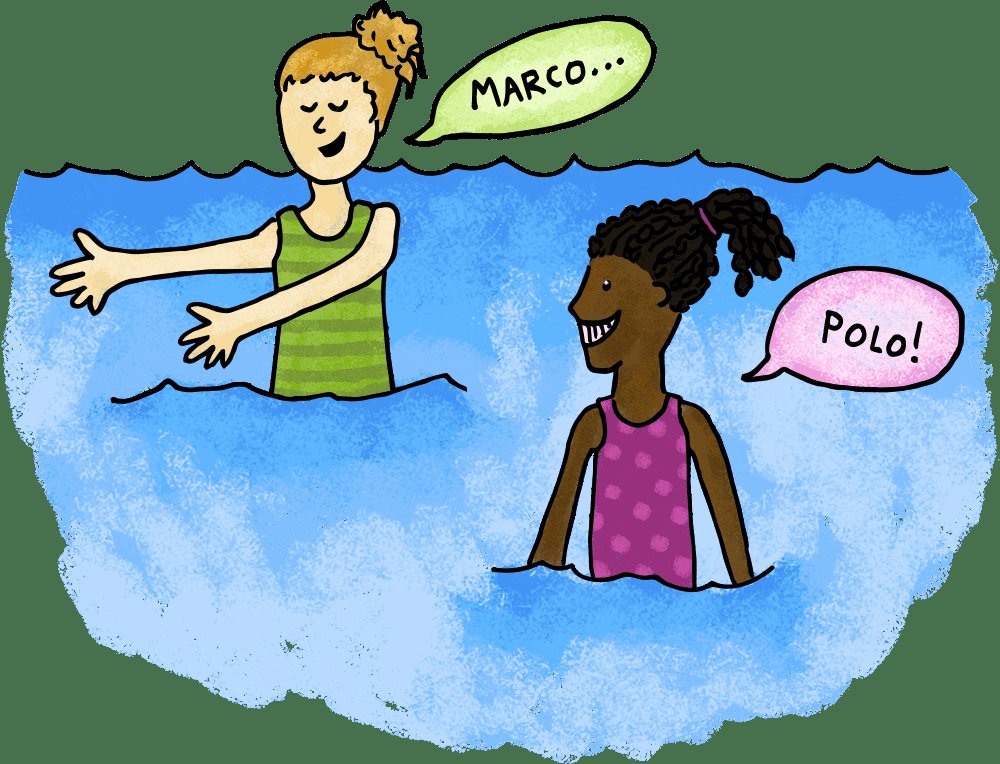
‘Marco Polo’ is a game where one person, “it,” closes their eyes and tries to tag other players by calling out “Marco,” to which others must respond with “Polo.”
Ever splashed around a pool on a hot summer day yelling a name? You might have played what is game marco polo without even realizing it. This simple yet fun activity involves one person designated as “it” trying to tag the others, all while using only their voice as a guide.
The “it” person closes their eyes, calls out “Marco” and others yell back “Polo”. They try to find the others based only on the sound. It is a great and popular game for kids and also adults too.

What is Game Marco Polo?
Have you ever played a game where you had to close your eyes and try to find your friends by just listening to their voices? If you have, then you’ve probably played Marco Polo! It’s a super fun and simple game that kids (and even some grown-ups!) have been enjoying for ages. But exactly what is the game Marco Polo, how do you play, and where did this silly name even come from? Let’s dive in and explore this popular game!
The Basics of Marco Polo
At its heart, Marco Polo is a tag-like game played in water (like a swimming pool) or sometimes even on land. The main idea is that one person is “it” and has to find the other players while their eyes are closed. Sounds tricky, right? It is, but that’s what makes it so much fun! The “it” person has to use their ears to figure out where everyone is.
How to Play Marco Polo: Step-by-Step
Here’s how you get started with a game of Marco Polo:
- Choose “It”: Someone is picked to be “it.” This can be done by drawing straws, flipping a coin, or any way that’s fair.
- Close Your Eyes: The person who is “it” has to close their eyes tightly. No peeking allowed!
- Shout “Marco”: The person who is “it” shouts out “Marco!”.
- Reply “Polo”: The other players must immediately respond by shouting “Polo!”.
- Listen and Find: The person who is “it” then tries to tag one of the other players using only the sounds of their voices. They must continue to say “Marco” to get the other players to say “Polo”.
- The Tag: If the person who is “it” tags another player, that tagged person becomes “it”, and the game begins again.
Simple, isn’t it? The game continues with each round having a new “it” player. The beauty of Marco Polo lies in its simplicity – it’s easy to learn, and it’s fun no matter your age!
Where Can You Play Marco Polo?
Marco Polo is incredibly versatile, and can be enjoyed in various environments. Let’s explore some typical places where this game thrives:
Swimming Pools
The most common setting for Marco Polo is a swimming pool. The water adds a fun challenge, since it muffles sounds and can make it harder to move around. The echo in a pool area also helps the “it” person figure out where others are. Playing in a pool also introduces the risk of accidental splashes and collisions, which make the game even more lively and entertaining.
Shallow Water Areas
Beaches or other shallow water areas are also suitable for Marco Polo. The rules are the same, but the uneven ground and the possibility of waves add another level of difficulty. This can make for a really unpredictable and exciting game.
Playgrounds and Open Spaces
Even if you don’t have access to a pool or beach, you can still enjoy Marco Polo on land. A playground, a park, or even a backyard can work. Playing on land can be less noisy compared to water, so you have to be even better at listening! It makes for a good game on a rainy day if you are indoors.
Indoor Spaces
On rainy days, Marco Polo can be played indoors as well, in open areas like your living room or a gymnasium. You’ll need to make sure to remove any breakable items and have enough space so that running around is safe. The echoes indoors might sound different from those in water or outside, making the game a bit different, but still very fun.
The Skills You Use While Playing
Marco Polo might seem like just running around with your eyes closed, but you are actually using a lot of different skills to play the game well. Here are some skills kids use when playing:
- Listening Skills: The biggest skill you need for Marco Polo is great listening! You have to pay close attention to where the sounds are coming from to figure out where your friends are hiding.
- Spatial Awareness: You also need to develop a good sense of where you are and where the other people are, even when you can’t see them. This is called spatial awareness.
- Coordination: Running or moving around with your eyes closed can be a little tricky. You have to be coordinated so you don’t bump into things or fall.
- Problem-Solving: When you’re “it,” you have to figure out the best way to find everyone. This can be a fun problem to work through.
- Social Skills: The game encourages you to interact with others. You have to call out “Marco” and respond with “Polo,” which encourages communication with others.
Why is it Called “Marco Polo”?
This is a really interesting part of the game! The name “Marco Polo” actually comes from a famous Italian explorer from history. Marco Polo was a merchant and explorer who traveled the world in the 13th century. But how did his name get attached to this game? No one knows the exact reason for sure! There are a few possible stories. Let’s explore them.
The Story of the Explorer
Marco Polo’s travels were very famous in his time. People all over the world knew about him. His story is one of adventure and traveling to new places, often alone. Maybe the game was named after him because when the person who is “it” is trying to find everyone else, it’s like they are going on a journey, like Marco Polo did. Just like he explored unknown places, the person who is “it” is trying to navigate without their sight.
The “Lost” Feeling
Some people think that when you play Marco Polo, the person who is “it” feels a little lost, like the explorer Marco Polo may have sometimes felt in his travels. They are trying to find others in a kind of unknown, blind space. It’s like the “it” player is navigating their own little world without being able to see, using sound as their only guide, similar to how Marco Polo had to rely on his wits and knowledge to navigate the world.
A Fun Association
It’s also possible that the name just stuck because it was fun and catchy. “Marco Polo” is easy for kids to say, and the game has a bit of a mysterious feel, which fits the name of the world explorer. Sometimes, these things are just part of how we name things, and not always a big historical reason.
Variations of the Game
While the classic game is the most popular, there are also some fun variations of Marco Polo, which add twists to the traditional game. Here are some ideas to mix it up a bit:
Silent Marco Polo
In this version, the “it” player still closes their eyes, but instead of shouting “Marco,” they move around silently and try to tag others by listening for the sounds of their movements or breathing. The other players also have to move very quietly. This can be a fun challenge, especially if it’s played indoors.
Marco Polo with Obstacles
If you’re playing in a pool or a yard, you can add objects for players to avoid, like floating noodles in the water or toys in a yard. This can add an extra level of difficulty and make the game more challenging.
Color Marco Polo
In this variation, you play normally, but when someone is tagged, they must call out a certain color. If they call out a color that has already been used, then they are free again. However, if they pick a color that is not used yet then that person is “it”. This version adds an element of strategy, where kids have to think quickly and remember which colors they have used.
Safety Tips for Playing Marco Polo
While Marco Polo is a lot of fun, it’s essential to play safely. Here are a few important tips to keep in mind:
- Play in a Safe Area: When playing in the pool, make sure the water isn’t too deep, and there aren’t any obstacles on the bottom or around the pool edges. On land, make sure the playing area is free from any hazards and that there is no danger of falls.
- Don’t Run Wild: When “it” has their eyes closed, remind them to move carefully, so they don’t trip or run into things.
- Listen and Move Carefully: People playing should pay attention to where they are and be mindful of others in their path.
- Have a Spotter: If you are playing with younger children, it is a good idea to have an adult watch the game to make sure everyone is safe.
- Avoid Dangerous Areas: Never play near roads, sharp objects, or other dangerous places.
Why Marco Polo is a Great Game
Marco Polo is more than just a fun game to play. It has many other benefits as well, such as:
- Easy to Learn: It’s a simple game, and the rules are very easy for almost anyone to learn and enjoy.
- Great Exercise: It’s active and gets kids moving, which is fantastic for their health.
- Fun for All: Kids of different ages can play together, which makes it a great game for families.
- Builds Skills: It improves listening skills, spatial awareness, and coordination.
- No Special Equipment Needed: You don’t need any special toys or equipment to play. Just some space and some friends.
- Teamwork: While the person who is “it” is technically on their own, they are interacting with a team. They have to listen to people, and those people have to respond.
In conclusion, Marco Polo is more than just a game; it’s an experience that blends fun, physical activity, and skill-building. Whether in a pool, a backyard, or even indoors, it offers a simple yet engaging way for everyone to have a good time. So next time you’re looking for something fun and easy to play with your friends, remember Marco Polo – it is an all-time classic, and it’s bound to be a blast.
How to Play Marco Polo
Final Thoughts
Marco Polo is a simple pool game where one player closes their eyes and shouts “Marco!”. The other players respond with “Polo!” The blindfolded player tries to tag someone using only sound. It is a classic children’s game.
The key lies in auditory awareness. Participants must listen carefully to the “Polo” responses. This helps the tagged player become “it.” What is game marco polo? It’s a fun, active game for groups.

