
Game tree complexity represents the total number of possible games that can be played in a game, considering all possible moves from start to finish.
Ever wondered how many different ways a game could unfold? That’s where the concept of ‘what is game tree complexity’ comes in. It’s a measurement that helps us grasp the scale of possibilities within a game. It shows just how many different paths the game could take, from the beginning to its end. This also includes all the branches and variations that make games so interesting.

What is Game Tree Complexity?
Have you ever played a game like checkers, chess, or even tic-tac-toe and wondered how many different ways the game could go? It might seem like a silly question, but this idea is at the heart of something called game tree complexity. Don’t worry, it’s not as scary as it sounds! Game tree complexity is basically a way to measure how big and complicated a game can get. Think of it like counting all the possible paths you could take through a giant maze. The bigger the maze, the more paths there are, and the more complex it is. In a game, each path represents a different way the game can unfold, from the first move to the very end.
Understanding the Basics of Game Trees
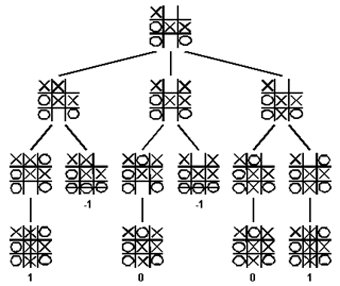
Before we jump into complexity, let’s picture what a game tree actually looks like. Imagine a real tree, with a trunk and many branches. In a game tree, the “trunk” is the starting position of the game. The “branches” are all the possible moves a player could make from that starting point. And each of those branches splits into even more branches representing the next player’s possible moves and so on. This branching continues with each turn until the game ends (someone wins, or it’s a draw).
Let’s use tic-tac-toe as a simple example.
- The “trunk” is an empty tic-tac-toe grid.
- The first player has 9 choices for where to place their “X”. Each of those choices forms a branch.
- From each of these 9 positions, the second player has 8 remaining places to put their “O,” creating more branches.
- This branching continues with each move in the game, until we get to win, lose or draw conditions in the game.
So, you can see how quickly even a simple game can grow into a large tree with lots of options. The game tree gives a visual representation for understanding every possible sequence of actions and their subsequent results in the game. Each “node” of the tree represents a state of the game and the branches are the moves to the next state.
Nodes and Branches
Let’s break down the components of the game tree further:
- Nodes: Each node in the tree represents a specific state of the game. It’s like a snapshot of the game at that point. For example, in chess, a node could show the position of all the pieces on the board. The very first node, the one at the beginning, is called the root node.
- Branches: These are the lines connecting the nodes. They represent the moves a player can make to get from one game state to another. Each branch is labeled with the move that was made.
- Terminal Nodes (or Leaf Nodes): These are the nodes at the very bottom of the tree. They represent the end of the game. They have a final result – someone won, someone lost, or it was a draw.
Why is Game Tree Complexity Important?
You might be thinking, “Okay, that’s a lot of tree talk, but why does it matter?” Well, game tree complexity helps us understand how difficult a game is to solve. The larger the game tree, the harder it is to figure out the best move every time. Here’s why it’s significant:
- Predicting Difficulty: Knowing the complexity can help estimate how hard it is for a computer to play a game perfectly, or how challenging it is for human players to strategize. Games with high complexity, such as chess or go, present considerable challenges even to the best computer programs and require high level planning for humans.
- Designing Games: Understanding complexity helps game developers create games that are just the right level of challenging and fun, because they can have a good idea of the possible game plays in the designing stage.
- Algorithm development: Many game playing algorithms, like minimax or alpha-beta pruning, depend on game tree analysis.
- Artificial Intelligence Research: Studying the game tree complexity is very important for AI research in areas like computer game playing, which helps scientists develop stronger algorithms that can handle complicated decision making.
Different Types of Game Tree Complexity
There are a few different ways to think about how complex a game tree can be. It’s not just about the total number of branches, but also about how the tree grows:
State-Space Complexity
This is a measure of the total number of possible positions, or states, that can occur in a game. It is like the total number of different snapshots the game can take. The higher the number of possible states, the higher the state-space complexity.
- For example, tic-tac-toe has a relatively low state-space complexity, while a game like chess has an extremely large state space complexity, because the pieces and their locations on the board change significantly during the course of the game, leading to so many possible different states on the board.
Game-Tree Size Complexity
This is a more specific measure that considers the size of the entire game tree. It’s not just counting the states, but also the whole tree including moves and branches. This is a more complete way to look at complexity, taking into account every possible move throughout the game.
- The game tree size of a game like tic-tac-toe can be calculated to give you a number of different moves. This is easier for simpler games but more complex games make it practically impossible to find a number for the whole game tree, as it becomes too enormous.
Decision Complexity
This is about how difficult it is to make the best decision at each step of the game. Games can have a large game tree but still not be very difficult to play at a high level, because the decisions a player makes are not very complicated. Decision complexity measures the amount of computation required to figure out the best move.
- Some games have very high decision complexity, like Go, where the number of possible moves is incredibly large, and deciding the best move requires long term planning and a lot of deep thinking and calculating the possible outcomes.
Factors Influencing Game Tree Complexity
Several things affect how complex a game tree becomes. Here are some key factors:
- Number of Choices per Move (Branching Factor): The more options a player has each turn, the faster the game tree will grow. Think of it like how many branches are growing from the trunk and other branches. If you have more branches from each node, that will greatly impact the game’s complexity.
- Game Length: The longer a game can last, the bigger the game tree. Each additional turn adds more layers of branches.
- Board Size and Pieces: Games with larger boards and more pieces often have higher complexity. Think of the vast difference between a small tic tac toe board vs the complexity of a full sized chess board and pieces.
- Rules of the Game: Complex rules that allow many possibilities can result in higher complexity.
- Possibility of Reversibility of Actions: If the moves made in the game are reversible, there are chances of a loop or more variations.
Examples of Game Tree Complexity in Action
Tic-Tac-Toe
This simple game has relatively low game tree complexity. Even though it can seem like there are a lot of moves at first, in reality there are only a few distinct paths through the game, and the game ends relatively quickly. The branching factor and length of the game contribute to lower complexity.
Checkers
Checkers has moderate game tree complexity. The game board isn’t too big and each player doesn’t have too many pieces at the beginning. The game can take time to reach a conclusive point, but it has some complexity as there are multiple moves each turn and requires planning ahead, even more when a player gets promoted to a King.
Chess
Chess has very high game tree complexity. The board is larger, there are many different kinds of pieces, and games can go for a lot of moves. A human mind cannot calculate and predict every possible outcome due to the numerous choices a player has per turn and the different positions of the board every time a player makes a move. Because of this high complexity, even the best computer chess programs use smart strategies to play.
Go
Go is considered one of the most complex games in the world. The large board and simple rules hide an incredible amount of complexity. The number of moves possible each turn, especially in the beginning, is vast which is what makes the game tree so big. It surpasses chess with the highest decision complexity, since the number of legal moves is huge.
Let’s summarize this in a table:
| Game | Game Tree Complexity | Reason |
|---|---|---|
| Tic-Tac-Toe | Low | Small board, few possible moves. |
| Checkers | Moderate | Larger board, more moves and possibilities than tic-tac-toe |
| Chess | High | Large board, many piece types, long games. |
| Go | Extremely High | Large board, vast number of possible moves. |
The Challenge of Calculating Game Tree Complexity
Calculating the exact game tree complexity is actually very hard, sometimes even impossible, for complicated games. Because of the exponential growth, where branches explode rapidly, the number of moves and possibilities increases greatly as the game goes on. In very complex games like Chess and Go, estimating is the best you can do, as the tree is too large to compute and fully explore. Instead, scientists make estimates of the complexity by using algorithms and computer simulations.
For these complex games, computers use special strategies, like Minimax with Alpha-Beta pruning, to explore the tree efficiently, rather than checking out every single path. This is how computer programs can play these complicated games at human levels.
Game Tree Complexity and AI
Understanding game tree complexity is very important in artificial intelligence (AI) research. The development of AI that can beat humans at complex games has greatly progressed by using knowledge about game trees. Machine learning algorithms are also used with the help of game trees, to help the computer learn strategies from game results and past experiences.
The game tree can be the basis of designing algorithms that can handle complex situations and make decisions similar to a human player. Therefore studying game tree complexity is essential to make computers smarter and more capable of learning and making decisions.
Game tree complexity helps us understand the deepness of a game, and the many different ways a game can be played and how much planning and thinking is needed. It’s a key concept for game designers, AI researchers, and anyone who wants to know how hard a game is and that is how game tree complexity adds more depth to understanding games and making the game play more enjoyable.
Games and their complexity
Final Thoughts
Game tree complexity is a measure of the possible game states in a complete game tree. It indicates how many different paths a game could take. This metric greatly influences a game’s difficulty.
Understanding what is game tree complexity helps appreciate the scale of computational challenges. Games with higher complexity often require sophisticated algorithms to play well. Consequently, these games present more research and development opportunities.

