
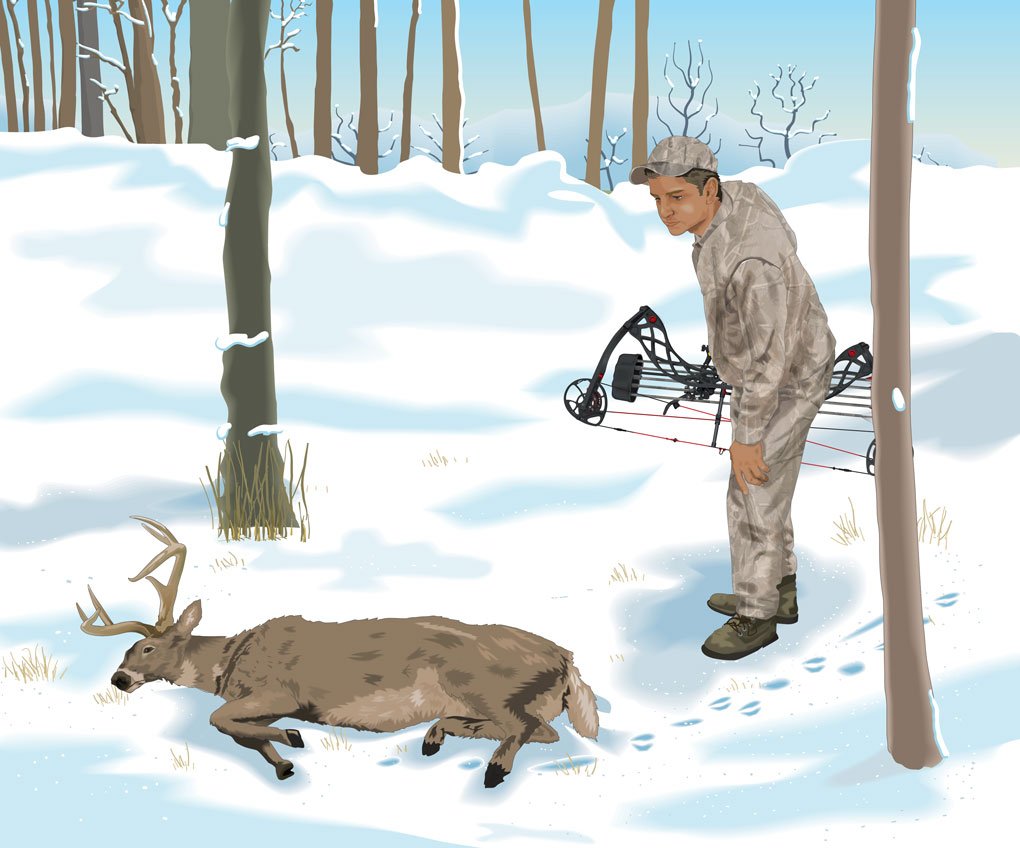
The best way to approach downed game is to do so cautiously, observe the animal for any signs of life, and then ensure a safe and humane harvest.
It’s a moment every hunter prepares for, that instant after the shot when the game goes down. But what happens next is crucial. So many questions race through a hunter’s mind. What is the best way to approach downed game and how does one ensure safety and respect in that critical time?
Careful consideration of your approach is vital. A hurried or careless action might cause harm to you or the animal. Observing the animal before proceeding is necessary.

What is the Best Way to Approach Downed Game?
Approaching downed game is a critical part of hunting. It’s not just about the shot; it’s about what happens after the shot. It’s when your ethical responsibility truly kicks in. The way you approach a downed animal not only ensures a humane outcome, but also plays a role in preserving the quality of the meat, and your personal safety. So, what does the “best” way look like? It’s a mix of careful observation, patience, and a deep respect for the animal. Let’s break it down into crucial steps.
Observe First, Approach Second
The first thing you need to do after you’ve taken a shot is not to run straight to the animal. Instead, take a moment to observe it. This is where being a good hunter really shines. Don’t just assume it’s down for good. A quick look can tell you a lot.
Watch for Movement
Check for breathing: Is the animal’s chest still rising and falling? If it is, the animal might not be down for the count.
Look for leg movement: Are its legs still twitching or kicking? This might mean the animal is still alive. Sometimes, animals that have been fatally hit may still have some reflex actions.
Eye movement: Watch their eyes. Are they still open and alert, or closed? Sometimes you see the animals eyes moving or blinking which means the animal is still alive and not yet expired.
Assess the Situation from a Distance
Check for signs of life: Even if the animal appears down, give it a moment. If you see any life in the animal, then give some time to that animal, and don’t directly go to that animal.
Safety First: Be aware of your surroundings before rushing in. Are you in an area where there could be other dangers, like thick brush, a steep drop-off, or other animals? The animal itself, even if it seems down, can pose a threat if startled. Also, you should make sure that your surrounding is safe to approach the animal.
The Proper Approach
Once you’ve carefully observed the animal from a distance and you are sure that it is okay to approach, you can begin to get closer. This approach needs to be thoughtful and done with caution.
Slow and Steady Wins the Race
Move slowly and deliberately: Avoid running or making sudden movements. Fast movements can startle the animal if it’s not yet expired, causing it to react.
Approach from an angle: Don’t approach directly from the front or back. Instead, come in from the side, giving yourself an opportunity to react quickly if it moves. This also allows you a good view of the animal’s position.
Prepare for a Follow-Up Shot
Reload your weapon: Make sure that your weapon is ready to use. If you have a rifle, you should be reloaded and ready in case the animal is not expired or wounded. Same goes for bow hunters.
Have an ethical shot in mind: If the animal is still alive, be ready to deliver a quick, ethical follow-up shot to ensure it’s put down humanely.
Confirming the Animal is Down
Reaching the animal requires another step. You are near the animal now, so proceed with care and caution.
The Final Check
Observe closely: Once you are within a safe distance, take another good look. Are there any signs of life?
The eye test: Use your weapon if needed, but do not point it at the animal until you are going to shoot the animal. If the eyes are open, tap the eye and confirm the reflex. If there is a reflex, it will blink. If not, the animal is down.
Use a long stick or an arrow to push the eye, to make sure there is no blinking: This step should be taken when you are unsure if the animal is down. You can use a stick to poke the animal, and if there is no response, then it’s safe to assume the animal is down.
Approach the animal from the side: It is recommended to approach the animal from the side, because the hunter doesn’t have to worry about the animal jumping at them.
Approach and touch the eye: When you are sure there is no life in the animal, and the animal is expired then you can finally touch the eye.
Safety Always
Stay alert: Even after confirming the animal is down, be cautious. Always treat your weapon with respect, and don’t become complacent.
Never assume: Always double check and never be in a hurry.
Field Dressing and Meat Care
Once you’ve confirmed the animal is deceased, the next step is field dressing. This is when you prepare the animal for transport by removing its organs and cleaning the body cavity.
Hygiene is Key
Wear gloves: Protect yourself from bacteria and disease. This is always a smart move.
Use clean tools: Make sure your knives are sharp and clean. Dull blades will just make the job harder.
Field Dressing Process
Gutting: Start by making an incision along the animal’s belly, taking care not to puncture any internal organs.
Removing organs: Carefully remove the organs, working your way from the back to the front. This usually means cutting away the diaphragm, or the lining that separates the chest and belly. Be sure to remove all of the internal organs.
Clean the cavity: Once the organs are removed, you need to clean the inside with clean water, if available. Otherwise, wipe the cavity with a clean cloth.
Cooling the carcass: Quick cooling helps to preserve the meat. If the weather is warm, try to get the carcass into the shade, or elevate the animal. You should not leave the animal on the ground for a long period.
Preventing Meat Spoilage
Avoid contamination: Be careful not to spill any of the internal fluids on the meat. The meat can easily get contaminated, and you might lose it.
Keep it clean: Keep the meat protected from dirt, insects, and debris.
Get it cold: This means to get the meat either in refrigerator or in the freezer as fast as possible. This is extremely important.
Tools and Techniques
Having the right tools can make the entire process easier and safer.
Essential Gear
Sharp Knife: A good, sharp hunting knife is one of the most important tools.
Gloves: Protecting your hands is a must. A good quality of hand gloves must be kept in the hunting bag.
Saw or Hatchet: For splitting the breast bone or cutting through the pelvis.
Rope or Drag: To make it easier to move the animal.
First aid kit: For you, in case of injury.
Water and cloth: To clean the carcass after field dressing.
Game bags: This is a must to keep the meat safe and sound.
A good backpack: To carry all the essential gear in an organized way.
Useful Techniques
Practice Makes Perfect: Field dressing is a skill that improves with practice. Don’t be afraid to practice on smaller game before taking on larger animals.
Learn from Others: If you have an opportunity to learn from an experienced hunter, take it. They can give you invaluable tips.
Use a gambrel: When it is possible, use a gambrel to hang the animal for easier and convenient cleaning.
Ethical Considerations
Above all, remember that hunting is an ethical pursuit. Approaching downed game the right way is about respect for the animal and the environment.
Respect the Animal
Human Treatment: Every effort must be made to ensure the animal’s death is as quick and painless as possible.
Full Use of the Animal: Avoid waste. Utilize as much of the animal as you can. This shows respect for the animal.
Respect the Environment
Leave No Trace: Carry out everything you carry in, and do not leave any trash behind.
Avoid Damage: Avoid unnecessary trampling of the habitat.
Different Game, Different Approaches
While the core principles remain the same, there might be slight variations in approach based on the type of game.
Small Game
Quick Approach: For small game such as rabbits and squirrels, you can approach a bit more quickly. However, still practice safety.
Careful Handling: Be careful when handling small game, as they can still have reflexes after death.
Proper dressing: Make sure you dress the small game properly for consumption.
Large Game
Slower Approach: For larger animals like deer, elk, or bear, a slower, more deliberate approach is crucial.
Extra Caution: The size and strength of the animal means you need to exercise extra caution.
Extra Help: You might need help to drag or field dress larger game animals.
Birds
Immediate Retrieval: For birds, retrieve them as quickly as possible to prevent loss to predators.
Gentle Handling: Be gentle so as not to damage the feathers.
Check for bands: If you find bands, it is important to report them to the appropriate authorities.
Learning and Improving
The more you hunt, the better you will become at approaching downed game.
Continuous Learning
Reflect on Each Hunt: Take time after each hunt to think about what you did well and what you can improve.
Seek Feedback: If you have a mentor or hunting buddy, ask for their feedback.
Stay Updated: Keep learning about new techniques and best practices.
Share Knowledge
Help Others: Once you have mastered these skills, share your knowledge with others, especially young hunters.
Promote Ethical Hunting: Together, we can all help promote ethical and responsible hunting practices.
Approaching downed game is about being responsible, respectful, and prepared. By following these steps and always prioritizing safety, you ensure not only a successful hunt but an ethical one as well. It is the most crucial part of a hunt, and you should give maximum attention to this process. This will help you make sure your meat is safe for consumption.
Unconventional approach… #callofduty #warzone #warzonefails #cod #gamingfails #codmw2 #gamer #downed
Final Thoughts
Approach downed game cautiously, always. Observe the animal for any signs of life from a safe distance. Reload your weapon if needed and plan your next move carefully.
Confirm the animal is deceased before approaching. Then, approach from behind, being ready for any sudden movement. What is the best way to approach downed game involves safety first. Handle the animal respectfully, it’s a must.

