
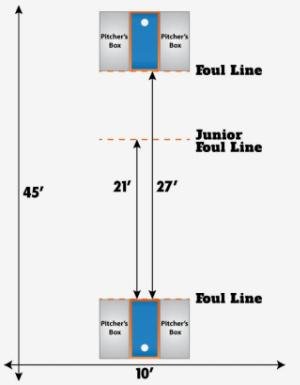
The official distance for a corn hole game is 27 feet between the front edges of the boards.
Ever wondered about the perfect setup for your backyard corn hole games? What is the distance for corn hole game, you might ask? It’s a common question among beginners and even seasoned players. Getting this measurement right is key to fair and fun competition.
The correct spacing ensures a challenging yet enjoyable experience for everyone. It also impacts the trajectory and difficulty level of the toss. So grab your measuring tape and let’s get ready to play the right way.

What is the Distance for Cornhole Game?
Let’s dive into the specifics of cornhole, focusing on the crucial aspect of distance. Knowing the right distance is super important for playing a fair and fun game. It’s like knowing the size of the court in basketball or the length of the field in soccer. Without the correct measurements, the game just won’t work right. So, whether you’re setting up for a backyard bash, a serious tournament, or just a casual game with friends, getting the distance right is key. Let’s learn all about it!
Official Cornhole Distance: The Standard
When we talk about the “official” distance for cornhole, we’re usually referring to the guidelines set by the American Cornhole League (ACL). This is the organization that governs competitive cornhole. These measurements are used in tournaments and are generally accepted as the standard for serious cornhole play. The distance isn’t just randomly chosen, it is carefully decided to balance challenge and fun. For the official cornhole set up, the distance is 27 feet from the front edge of one cornhole board to the front edge of the other board.
Why 27 Feet?
Why exactly 27 feet? It’s a distance that has been tested and refined over time. This length allows for a good challenge, making players accurately throw their bean bags with the correct amount of power. Shorter distances might be too easy, while longer distances might make the game too difficult. The 27-foot mark is where strategy, skill and a bit of luck meet, making for exciting matches.
- For Adults: The standard 27-foot distance is what you’ll see in most adult competitions and casual games.
- Accuracy Matters: At 27 feet, players need to develop good throwing techniques to consistently land their bean bags on the board or even in the hole.
- Consistent Challenge: This distance gives a consistent level of challenge across games and player skills.
Shorter Distances for Kids and Casual Play
While 27 feet is the official length, sometimes you need something a little different. Maybe you’re setting up for younger players, or just want a more relaxed game for fun. In that case, adjusting the distance can make the game more suitable for everyone. Here’s what to keep in mind:
Recommended Distances for Younger Players
For kids, the official 27-foot distance may be too hard, even frustrating. So, what distances are more suitable for the younger ones? Often, a 15-foot or 20-foot distance is recommended. These distances allow kids to enjoy the game without being overly challenged by the throw itself. It’s all about having fun and building those early cornhole skills!
- 15 feet: This is a good starting point for young children, generally around the age of 8 or below.
- 20 feet: This distance is more suited to older kids, generally pre-teens and early teenagers.
- Adjust as needed: You might have to experiment a bit. If it’s still too difficult, reduce the distance. If they’re nailing every shot, try moving the boards back a little.
Casual Cornhole Distances
For a relaxed setting, like a family gathering or a picnic, you can also adjust the distance. You do not need to be stuck with the official 27 feet in backyard fun. The idea is to make it easy and enjoyable for everyone involved.
- Adjust to Your Space: If your backyard is smaller, you can make the distance shorter for your convenience.
- Keep it Fun: The goal for casual games is enjoyment, not perfect, so feel free to adapt the distance so everyone can participate without much stress.
- Experiment: See what distance works for your group. You might find that some people are naturally good at longer distances, while others prefer shorter distances.
Measuring Your Cornhole Distance
Now that you know the distance to use for your game, you need to make sure you are measuring it right. It’s a simple step, but doing it correctly is really important.
Tools You’ll Need
You don’t need a lot of fancy gadgets to measure your cornhole distance. A simple tape measure is all you really need. You can also use a measuring wheel for a quick measure if your playing on grass or sand.
- Tape Measure: A tape measure is the most common way to measure.
- Measuring Wheel: This tool makes measuring long distances much easier and quicker, especially on uneven surfaces.
Steps to Measure Correctly
Here’s a step-by-step guide on how to make sure you measure the distance correctly for cornhole.
- Place Your Boards: Put your two cornhole boards where you want to play, facing each other.
- Locate the Front Edge: Find the very front edge of one of the cornhole boards, the side which is closest to the other board.
- Stretch the Tape Measure: Unroll the tape measure from the front edge of the first board to the front edge of the second board.
- Read the Measurement: Make sure that the measure stretches straight and then read the measurement on your tape measure.
- Adjust if Needed: If the measurement is not what you want, adjust the boards as needed to achieve your correct distance.
Important Measurement Notes
Here are some important things to remember when measuring the distance:
- Front Edge to Front Edge: Always measure from the front edge of one board to the front edge of the other board.
- Straight Line: Ensure the tape measure is stretched in a straight line between the two boards, not a slanted one.
- Level Ground: If possible, try to position the boards on a flat and level surface so your measurements are correct.
Cornhole Board Dimensions: A Quick Look
While this article focuses primarily on the distance between the boards, it is also important to note some information about the boards themselves. Understanding board dimensions helps you understand why the distance is measured the way it is.
Standard Cornhole Board Size
Cornhole boards aren’t just randomly sized, they have standard dimensions that are generally accepted. Here’s the key measurements:
- Length: A standard cornhole board is 48 inches (4 feet) long.
- Width: It is also 24 inches (2 feet) wide.
The Cornhole Hole
The hole on the board is also in a specific location, which makes the game fun and challenging. These are the standard dimension that you will find on most cornhole boards.
- Diameter: The hole on a cornhole board should have a diameter of 6 inches.
- Placement: The center of the hole is 9 inches from the top edge of the board and 12 inches from each side.
Why Standard Size Matters
The standardized size and placement of the hole and the board itself are very important. It ensures that the game is played under standard conditions, making it easier to compare scores, develop skills, and organize tournaments.
Impact of Distance on Gameplay
Changing the distance significantly impacts the way the game is played. The distance changes how players need to throw, what kind of strategies they can use, and how the game feels. Let’s explore how distance changes the game.
Shorter Distances
Shorter distances make the game more accessible and easier for beginners, and children. It reduces the pressure to put the beanbag with force and more on control. Here are a few changes you might notice with a shorter distance:
- Easier to Land Bags: Shorter distances make it simpler to get your bean bags onto the board.
- More Accurate Shots: Players might find it easier to aim with more precision when the distance is less.
- Faster Games: Because it’s easier to score, games at shorter distances often play much quicker.
Longer Distances
When the distance increases to official distance and even beyond, it changes the game in several ways. It brings a new set of challenges that you need to overcome to improve.
- Harder to Land Bags: Longer distances mean the players need to throw with more power, but with accuracy.
- Strategic Play: Longer distances make it important to use strategies such as blocking your opponent, and aiming for the hole.
- More Challenging: The game has more challenge, requiring more skill and experience to throw accurately.
Practicing Your Throw at Different Distances
Practice is how we get better, so we need to practice our cornhole throw with different distances. Here are some tips on how you can practice at multiple distances to improve your skills at cornhole.
Vary Your Practice Distances
Don’t always practice at the same distance. Mix it up and practice at the official distance of 27 feet, shorter distances, and longer distances to challenge your skills, this way you can adapt to any situation and any game distance you are confronted with.
- Start Short: Begin with shorter distances, and then start to work your way out with the longer distances.
- Focus on Technique: No matter the distance, always focus on the correct throwing technique.
- Consistency: Consistency is very important, so practice at different distances to build your control and strength.
Tips to Improve at Any Distance
Here are some tips to use no matter what distance you are playing at. These are helpful tips to improve your cornhole game.
- Consistent Release: A steady release of the bag helps with aim.
- Use Your Legs: Use your legs while throwing to get the extra power and reduce strain.
- Aim Correctly: Always pick a specific point where you want the bag to land and aim at that.
Setting Up Your Cornhole Game Anywhere
Whether you’re at a park, a beach, or your own backyard, setting up your cornhole game is easy. You need to pick the right spot and follow a few simple steps. Here’s what you need to keep in mind.
Choosing the Right Location
Picking the right location is really important for a good game. You’ll want a place that’s level and free of obstructions.
- Level Surface: A flat surface is very important so that the boards sit still and the throws are not hampered by an uneven surface.
- Adequate Space: Make sure you have enough space for the boards and for players to stand and throw at the correct distance.
- Avoid Obstacles: Stay away from trees, fences, rocks or anything that can get in the way of your playing area or might interfere with your throws.
How to Set Up Your Boards
After choosing a good spot, you have to set up your boards.
- Place the Boards: Place the two boards facing each other at your chosen distance.
- Measure the Distance: Use a tape measure or a measuring wheel to ensure that the boards are placed at the correct distance.
- Check for Stability: Make sure the boards are stable and don’t wobble while playing.
Beyond the Basics: Advanced Cornhole Tips
Once you understand the standard distance, you can begin to learn advanced techniques. This includes things like strategy and advanced throws. These tips can give you an edge in your game.
Advanced Throw Techniques
There’s more to cornhole than just a basic toss. Learning advanced techniques can improve your game and give you an edge. These can include different throwing styles:
- The Arc Throw: This throw uses a high arc to make the beanbag drop straight down.
- The Flat Throw: The bag is thrown flat and straight.
- The Spin Throw: This throw gives spin to the bag to control its path while throwing.
Strategic Cornhole Play
Cornhole is not just about how well you throw, it’s also about strategy. It is all about how you position your beanbags and how you play against your opponents. Here are some strategies to keep in mind:
- Blocking: Place bean bags in front of the hole, making it harder for your opponent to score.
- Pushing: Push your bean bag or your opponents bean bag into the hole with your throw.
- Defensive Play: Don’t just focus on scoring, consider what the opponents could do if you give them the opportunity.
Understanding the correct distance for cornhole is more than just knowing the numbers. It affects how you play, how you improve, and how much fun you have. Always remember that the official distance is 27 feet, but you should always change the distance to best fit the skill level of those involved and the environment you are in. Practice different distances, and focus on the techniques and strategies that help you to get better with each game. By doing all this, you will be on the path to becoming a cornhole champion!
How to Play Cornhole | Official Cornhole Rules | American Cornhole Association
Final Thoughts
The standard distance for corn hole game is 27 feet between the front edges of the boards. This measurement is for regulation play. However, players often adjust for casual games.
Shorter distances make the game easier, particularly for kids. You can also customize the distance based on available space. Ultimately, what is the distance for corn hole game comes down to preference.
The goal is to have fun and adapt the setup to fit your needs. A proper measurement makes the game fair and challenging.

