
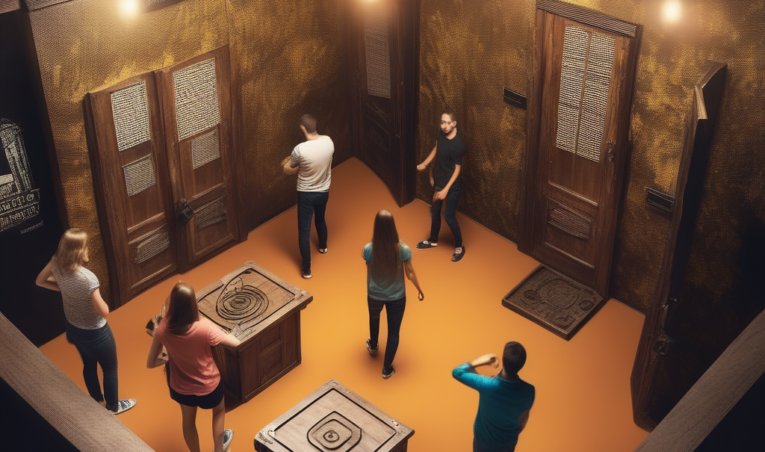
An escape room game is a physical adventure where players solve puzzles and complete challenges within a themed room to “escape” before time runs out.
Ever wondered what is the escape room game all about? It’s not just about finding keys. These immersive experiences place you and your team inside a story.
You need to work together, using your wits and observation to solve riddles and find clues. The goal? To “escape” the room before the clock hits zero.

What is the Escape Room Game?
Have you ever wondered what it’s like to be a detective solving a big mystery? Or maybe an adventurer exploring a hidden tomb? That’s kind of what an escape room is all about! It’s a real-life game where you and your friends (or family!) get locked in a specially themed room, and your goal is to get out before time runs out. You do this by finding clues, solving puzzles, and working together as a team.
The Basic Idea: Trapped, but Not Really!
Imagine a room filled with strange objects, codes on the walls, and maybe even a hidden key. This isn’t just a regular room; it’s a carefully created puzzle. When you enter, the door closes, and the clock starts ticking. You are “trapped”, but of course it’s a game, and there’s always a way out if you’re clever enough. This escape room concept is very popular and a great way to have fun.
The Goal: Escape Before Time Runs Out
The main objective of an escape room game is to escape the room within a specific time limit, usually 60 minutes. The time limit adds a sense of urgency and excitement to the game. Some escape rooms are designed for beginner level and some are designed for advanced players. The type of game is different from venue to venue.
How Escape Rooms Work: A Step-by-Step Guide
Let’s look at the typical process for an escape room experience:
- Booking: First, you choose a theme and book your time slot online or by phone.
- Arrival and Briefing: When you arrive at the escape room location, a game master will explain the rules and the story of your chosen theme.
- The Lock-in: You enter the room, the door closes, and the adventure begins.
- Exploration: You’ll start looking around for clues, which may be hidden in plain sight or cleverly tucked away.
- Puzzles and Challenges: You will solve a variety of riddles, codes, and physical tasks to move through the game.
- Teamwork: Communication and teamwork are extremely important, as different people might notice different things or have different puzzle-solving strengths.
- The Escape (Hopefully!): With enough hard work and smart thinking, you will figure out how to “escape” by solving the final puzzle or finding the key.
- Debriefing: After you finish, the game master might show you the parts you got stuck on and review the overall experience.
Types of Puzzles You Might Encounter
Escape rooms are famous for having a variety of puzzles, so be prepared for anything. These puzzles can be designed with both logical reasoning and creative thinking. Here are a few common types:
- Logic Puzzles: These often involve using sequences, patterns, or deductive reasoning. Think Sudoku or number sequences.
- Word Puzzles: Anagrams, riddles, or clues written in codes that you need to decipher.
- Number Codes: Combinations that need to be entered into a lock, requiring you to find the correct numbers in the right order.
- Physical Puzzles: These puzzles require physical actions like moving items, fitting things together, or using tools to manipulate objects.
- Hidden Objects: Sometimes, just finding the right object is the key to the next step. Be sure to look everywhere carefully.
- Pattern Recognition: Identifying repeating designs or color patterns to find the correct key or order of actions.
The Role of the Game Master
A game master is always around (though usually not in the room with you) to help when needed. They can give you hints and nudge you in the right direction if you are stuck, ensuring that the game is both challenging and fun. It is their responsibility to keep the game going smoothly. They usually monitor the game through cameras.
Thematic Adventures: More Than Just a Room
One of the best parts of escape rooms is the variety of themes. You’re not just in a random room, you’re in a story! Here are a few popular themes:
- Mystery/Detective: Solve a crime, find the culprit, or figure out a strange disappearance. This involves finding clues, examining items and using deduction skills to come to a logical conclusion.
- Adventure: Explore ancient temples, find lost treasures, or go on an archeological dig. These rooms often have detailed props and a feeling of being transported to a different time or place.
- Horror/Thriller: Escape a haunted house, stop a mad scientist, or survive a zombie apocalypse. These rooms use scary effects and jump scares for added excitement.
- Sci-Fi/Fantasy: Explore a spaceship, travel to another planet, or complete a magic mission. These themes will often include high tech gadgets and futuristic props to create an immersive experience.
- Historical: Dive into the past by visiting an old castle, a Victorian study, or even the Wild West. Historical theme-based rooms add an educational experience while having fun.
- Pop Culture: Rooms themed around popular books, movies, and TV shows. This allows players to step into the shoes of their favourite characters.
Why These Themes Matter?
The themes matter a lot as they greatly influence the puzzles, props, and overall story. A well-designed themed room can make you forget that you are in a game and really believe that you are part of the story. This immersive experience is what makes escape rooms so engaging and memorable.
Why People Love Escape Rooms
So, why is this form of entertainment so popular? It’s more than just a game; it’s an experience that brings people together.
- Teamwork: Escape rooms require collaboration. You have to talk to each other, share your ideas, and work together to solve the puzzles.
- Problem Solving: It’s a great way to use your brain and improve your problem-solving skills.
- Entertainment: Escape rooms are exciting and fun and a wonderful way to socialize and create unforgettable memories.
- Challenge: The time limit and challenging puzzles give you a great sense of accomplishment when you escape.
- Immersion: The well-designed themes and puzzles will make you feel like you are part of a story.
- Variety: With so many different themes and puzzle styles, every escape room is a new adventure.
- Great for Everyone: They’re good for families, friends, coworkers, and even solo adventurers who might join a team.
Tips for Your First Escape Room
Ready to try an escape room? Here are a few tips to help you:
- Listen Carefully: Pay close attention to the game master’s briefing. They give important information and rules.
- Look Everywhere: Clues can be hidden in the most unexpected places. Check under, behind, and inside everything.
- Communicate: Talk to your teammates! Share what you find and listen to their ideas.
- Be Organized: Keep track of the clues you have found and the puzzles you’ve already solved.
- Don’t Overthink: Sometimes the solution is more straightforward than you expect.
- Ask for Hints: If you’re stuck, don’t be afraid to ask the game master for help.
- Have Fun: Remember, it’s a game! Enjoy the process of solving puzzles and having fun with your team.
Escape Rooms: More Than Just Fun
Escape rooms offer benefits beyond just entertainment. They provide a unique experience that can improve your skills and build connections with others.
Improving Critical Thinking
Escape rooms provide a fun and engaging way to exercise your critical thinking skills. You’re encouraged to observe details, analyze information and form strategies, all essential to solving each puzzle. The process will help you become a sharper thinker.
Enhancing Communication and Collaboration
Escape rooms promote active communication and teamwork. You need to share your ideas, listen to others, and come to a collective decision in order to succeed. This not only strengthens relationships but also improves your ability to collaborate in group situations.
Boosting Problem-Solving Skills
The puzzles in escape rooms are designed to test your problem-solving skills. You will face various challenges like number codes, word riddles and physical tasks which encourage players to come up with inventive solutions. This will make you a more creative and effective problem solver.
Team Building
Escape rooms are fantastic team building exercises that help individuals bond while sharing laughter and fun. Because it’s a great experience to work together towards a common goal, this game is a fantastic tool for fostering relationships between friends, families and colleagues.
A Break From the Ordinary
In our busy day to day lives, escape rooms provide a welcome escape into another world. This is a fun, unique way to disconnect from screens and stress by engaging in an activity that is both mentally stimulating and entertaining. The immersive nature of the games also creates a memorable experience.
What Makes a Great Escape Room?
Not all escape rooms are created equal. A great escape room has a perfect mix of creative design, immersive storytelling and challenging puzzles.
- Good Storytelling: A captivating theme and narrative make the game more engaging and enjoyable. Players feel more invested when there is a compelling storyline behind the puzzles.
- Clever Puzzles: Puzzles should be logical, fun, and relevant to the theme of the room. There should be a good balance of puzzle types, to make sure everyone in the group can contribute.
- High-Quality Design: A well-designed room with detailed props, realistic decor and atmospheric lighting adds to the immersion. The design should make the players feel like they are truly in the story.
- Smooth Gameplay: Puzzles should flow logically into each other, and the game should progress at a smooth pace. The difficulty level should be appropriate and allow for a feeling of accomplishment.
- Helpful Game Masters: Game masters should be attentive and provide hints when needed, but they shouldn’t give too much away. They should also be able to give a detailed post game review for the players.
Finding the Right Escape Room for You
With so many options available, choosing the right escape room can be difficult. Here’s how to find the best game for you.
- Check Reviews: Read online reviews to see what other players say about the room, level of difficulty, theme and overall experience.
- Consider the Theme: Choose a theme that you and your team will enjoy. If you’re not sure, go with something popular or an easily relatable story.
- Look at the Difficulty Level: Beginner rooms are a good choice for first time players, while experienced players might opt for more challenging rooms. Choose one that fits the skill level of your team.
- Consider the Group Size: Most escape rooms have a recommended group size, so make sure you have enough members for optimal gameplay.
- Book in Advance: Popular escape rooms can get booked quickly, so it’s always a good idea to book your slot in advance to avoid missing out.
Escape rooms are more than just a game; they are an exciting adventure that brings people together through teamwork, puzzle-solving, and immersive storytelling. Whether you are a beginner or an experienced player, there is an escape room out there waiting for you. So, gather your team, book your adventure, and get ready to challenge your mind and have a great time!
What is an Escape Room? – Escape the Room
Final Thoughts
An escape room game is a physical adventure. Participants solve puzzles and find clues within a themed space. The goal is to complete the objective, usually escaping, within a set time.
This interactive experience tests problem-solving skills and teamwork. Participants must think critically and communicate effectively to succeed. What is the escape room game? It’s a fun and immersive challenge.

