
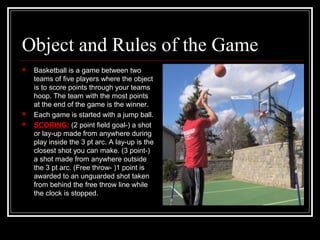
The object in any game of basketball is to score more points than the opposing team by successfully shooting the ball through the hoop.
Ever wondered what truly drives the excitement on a basketball court? It all boils down to one core principle. Many ask, what is the object in any game of basketball, and it’s a simple yet competitive goal. It’s about outscoring your opponent.
Each team strives to put the ball through the basket more often than the other. This action earns them points. The team with the highest total of points at the end wins. It is that simple.

What is the Object in Any Game of Basketball?
So, you’re curious about basketball? That’s great! It’s a really fun and exciting sport. But before we dive into all the fancy moves and cool dunks, let’s talk about the most important thing: What are players trying to do in a basketball game? What’s the point of it all? The main objective of a basketball game is quite simple: to score more points than the other team. But, like many things, there are layers to it. It’s not just about tossing a ball and hoping it goes in. Let’s break it down and explore all the fun ways players try to win.
Scoring Points: The Heart of the Game
At its core, basketball is a scoring game. The team that puts more points on the board at the end of the game wins. There are two main ways to score points in basketball:
Field Goals: Putting the Ball Through the Hoop
A field goal is when a player successfully shoots the basketball through the hoop, which is also called a basket. Depending on where the shot is taken, field goals are worth either two or three points. These are called:
- Two-Point Field Goals: These are shots made from inside the three-point arc. This includes layups, jump shots, and any other shot inside that line.
- Three-Point Field Goals: As the name implies, these shots are made from beyond the three-point line, a semi-circle marked on the court a certain distance from the basket.
Getting the ball into the hoop seems easy, right? But it takes skill! Players need to learn how to dribble, pass, and shoot accurately. They spend hours practicing to make sure they can make those shots during a game. Players have different roles and positions such as a point guard, shooting guard, small forward, power forward, and center and each of them contribute differently during the game to ensure they score points.
Free Throws: A Chance from the Free Throw Line
Sometimes, players get fouled by the other team when they’re trying to shoot. When this happens, they get to take a free throw. A free throw is a shot taken from the free throw line, without any defenders trying to block it. Each successful free throw counts as one point.
The number of free throws a player gets depends on where the foul happened and the type of foul. For example, a player fouled while shooting a three-pointer gets three free throws. Fouls add an element of strategy to the game, and players need to be good at making free throws, as these points can be crucial for winning a game.
The Importance of Teamwork
While scoring is the main objective, basketball is more than just a collection of individual shots. Teamwork is absolutely essential. A team that works together has a much better chance of winning. Here are some important parts of basketball teamwork:
Passing: Sharing the Ball
Passing is a key part of basketball. It’s how players move the ball around and get it to teammates who are in a good position to score. Good passing helps a team move quickly and creates open shots. Players need to learn different types of passes such as a chest pass, bounce pass, overhead pass to pass effectively in a basketball game.
Setting Screens: Creating Space for Teammates
A screen is when a player stands next to a teammate’s defender to block that defender, giving the teammate space to make a shot or drive to the basket. This is an important part of basketball strategy. Setting screens is important because players get open shots which can turn into score for the team.
Rebounding: Grabbing Missed Shots
When a shot is missed, the players try to grab the ball before it hits the ground. This is called rebounding. Rebounding is important because it gives a team another chance to score. Good rebounding teams can control the game and get more possessions.
Defense: Preventing the Other Team from Scoring
Defense is just as important as offense in basketball. It’s the effort a team makes to stop the other team from scoring. Good defense involves blocking shots, stealing the ball, and preventing the other team from getting into good scoring positions. Here are key parts of good defense in basketball:
- Stealing the ball: A steal is when a player takes the ball from the other team while they are dribbling or passing.
- Blocking Shots: A block is when a player prevents the other team from scoring by deflecting their shot while it is in the air.
- Defensive positioning: Players must position themselves in ways that make it difficult for the other team to score.
Winning the Game: More Than Just Scoring
While scoring points is the primary way to win a basketball game, there are other elements that help a team win. Here are some of them:
Possession: Controlling the Ball
Possession is basically, who has the ball. The team that has the ball has the chance to score. Controlling the ball is important in basketball. Teams try to hold onto the ball for as long as possible so that they get more opportunities to score.
Time Management
Basketball games are timed, and effective time management is needed to win. This includes knowing how much time to keep possession of the ball, when to shoot, and when to slow the game down.
Game Plan: Strategy in Action
Every basketball team needs a game plan. This includes knowing who should do what, when to press on defense, and how to run on offense. The game plan can change throughout the game based on how the other team is playing. It is an essential part of achieving success in a basketball game.
Penalties and Game Play
Basketball games have rules, and when players break them it can have an impact on the game. Here are two types of violations that can occur:
- Fouls: Fouls occur when players make illegal contact with other players during the game. Depending on the foul, the player who was fouled may be awarded free throws. Too many fouls can even lead to players being disqualified from the game, so players must play cautiously.
- Violations: There are different violations that players should try to avoid, for example, travelling and carrying the ball.
- Travelling: This is when a player with the ball moves their feet without dribbling.
- Carrying the Ball: This is when a player holds the ball while dribbling, instead of dribbling the ball with their fingertips.
Beyond the Basics: The Real Object
So, we have talked about scoring points, teamwork, and the rules, but what is the real object? While winning is the goal, basketball is also about:
- Teamwork: Learning how to work together to achieve a common goal
- Sportsmanship: Playing fair and respecting the rules, opponents, and officials.
- Personal Growth: Learning valuable life skills like discipline, perseverance, and resilience.
- Entertainment: Having fun while playing or watching a game.
Basketball is not just about putting the ball in the hoop. It’s about the competition, the strategy, the excitement, and the connections you make with your teammates. It’s a sport that’s full of energy, learning, and fun for players and fans alike!
In the end, the object of a basketball game can be simple: score more points than your opponent to win. However, the actual act of playing is much more complex. It involves teamwork, defense, a strong understanding of the rules, and a lot of practice. It’s a game that teaches important life lessons while being entertaining to watch, making it an amazing sport loved all over the world.
What object was used as a ball in the first game of basketball? #shorts
Final Thoughts
The core purpose revolves around scoring points. Teams achieve this by successfully shooting the ball through the opponent’s hoop. The team with more points at the final buzzer wins the match.
The object is not just about individual skill, but teamwork. Players must pass, dribble, and defend effectively to gain scoring opportunities. Ultimately, what is the object in any game of basketball? It’s to outscore the rival team.

