Creating Riot Games official K/DA music group involved a cross-functional team developing character concepts, collaborating with musicians and artists to create music and visuals, and then integrating these elements into League of Legends and related promotional content.
Ever wondered how K/DA, the virtual pop group from League of Legends, came to life? It’s more than just throwing some characters together. We’re diving into the heart of Riot Games to explore the magic behind this global sensation.
So, what is the process behind creating Riot Games official K/DA music group? Get ready to find out how Riot Games crafts these virtual music icons.

What is the Process Behind Creating Riot Games Official K/DA Music Group?
Creating K/DA wasn’t just a matter of picking some champions and giving them songs. It was a meticulously planned and executed project that blended gaming, music, and marketing. Riot Games aimed to bridge the gap between the virtual world of League of Legends and the real world of pop music.
The goal was to appeal to both existing League of Legends players and a broader audience unfamiliar with the game. This required careful consideration of music genres, artist selection, and character development.
Conceptualization and Vision
The initial concept for K/DA emerged from a desire to showcase League of Legends characters in a new light. Riot Games wanted to create something that resonated with their audience beyond the game itself.
The idea was to form a virtual pop group featuring popular champions. This concept capitalized on the existing fanbase and provided a fresh, exciting perspective on the characters they already loved.
Champion Selection and Roles
Choosing the right champions was a critical first step. They needed visually appealing characters with distinct personalities.
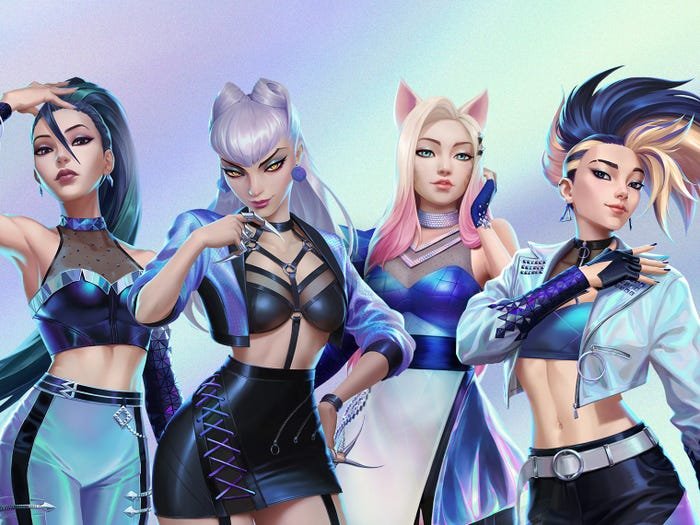
Akali, Ahri, Evelynn, and Kai’Sa were selected. Each champion was assigned a role within the group.
Ahri: The leader and main vocalist, representing charm and elegance.
Kai’Sa: The main dancer, embodying power and precision.
Evelynn: The lead vocalist with a powerful presence, representing allure and confidence.
Akali: The rapper and songwriter, adding a rebellious edge.
Musical Direction and Genre
Riot Games opted for a K-pop inspired sound with elements of pop and electronic music. They aimed to create music that was catchy, upbeat, and appealing to a global audience.
The choice of K-pop was strategic. It aligned with the existing aesthetic of some League of Legends characters and tapped into the global popularity of the genre.
Artist Collaboration and Vocal Performance
Finding the right artists to bring the characters to life was essential. Riot Games collaborated with talented singers and songwriters.
(G)I-DLE’s Miyeon and Soyeon voiced Ahri and Akali, respectively, in “POP/STARS.” Madison Beer and Jaira Burns provided the voices for Evelynn and Kai’Sa.
The vocalists were chosen for their distinct voices and ability to capture the essence of the characters. This collaboration ensured that the music felt authentic and true to the K/DA concept.
“POP/STARS” Production and Release
The production of “POP/STARS” involved a team of talented musicians, producers, and animators. They worked together to create a visually stunning and sonically captivating experience.
The song was released in conjunction with the 2018 League of Legends World Championship. This strategic timing maximized its exposure to a global audience.
The music video was a key element of the release. It featured animated versions of the K/DA members performing the song.
Visual Design and Animation
The visual design of K/DA was crucial to their appeal. Riot Games created distinct looks for each member.
Each champion received new in-game skins. These skins reflected their K-pop star personas.
The animation in the “POP/STARS” music video was groundbreaking. It blended 2D and 3D animation styles to create a unique visual experience.
Marketing and Promotion
Riot Games employed a comprehensive marketing strategy to promote K/DA. This included social media campaigns, partnerships with influencers, and in-game events.
They leveraged the existing League of Legends community. They also targeted broader music fans.
The strategic use of social media platforms such as Twitter, Instagram, and YouTube was essential. It helped generate buzz and excitement around K/DA.
“ALL OUT” Era: Expansion and Evolution
Following the success of “POP/STARS,” K/DA returned in 2020 with their “ALL OUT” EP. This marked an evolution in their music and visual style.
The “ALL OUT” era introduced new collaborations and explored different musical genres. This demonstrated Riot’s commitment to expanding the K/DA universe.
New Collaborations and Featured Artists
“ALL OUT” featured collaborations with a diverse range of artists. This included Bea Miller, Wolftyla, and Kim Petras.
These collaborations brought fresh perspectives to K/DA’s music. They also broadened their appeal to different audiences.
Evolution of Music Style
The music style in “ALL OUT” evolved beyond the initial K-pop influences. It incorporated elements of pop, R&B, and electronic music.
This evolution reflected Riot Games’ desire to experiment and push creative boundaries. It allowed K/DA to explore new sonic landscapes.
Visual Transformation and Concept
The visual design of K/DA also underwent a transformation during the “ALL OUT” era. The champions received new in-game skins and a refreshed aesthetic.
The new concept explored themes of confidence, empowerment, and artistic expression. This resonated with fans.
“THE BADDEST” and “MORE” Singles
The release of singles such as “THE BADDEST” and “MORE” preceded the “ALL OUT” EP. They built anticipation and generated excitement for the upcoming project.
These singles showcased the different sides of K/DA. They offered a glimpse into the evolution of their sound and visual style.
Impact on League of Legends and Beyond
K/DA’s success had a significant impact on League of Legends and the broader entertainment industry. It demonstrated the potential for blending gaming and music.
The virtual pop group has inspired countless fan creations and cosplays. It has solidified its place in pop culture.
Positive Reception and Community Engagement
K/DA received overwhelmingly positive reception from both League of Legends players and music fans. Their music topped charts and garnered millions of views online.
Riot Games actively engaged with the community through social media and in-game events. This fostered a strong connection between K/DA and their fans.
Challenges and Obstacles
Despite their success, the creation of K/DA was not without its challenges. Balancing the needs of the League of Legends community with broader musical appeal required careful consideration.
Ensuring that the music and visuals resonated with a diverse audience was also a key challenge. Riot Games had to navigate cultural differences and preferences.
Maintaining Authenticity
Maintaining authenticity was crucial to K/DA’s success. Riot Games wanted to create something that felt genuine and true to the characters.
This required careful attention to detail in every aspect of the project, from music production to visual design. Authenticity was key.
Evolving the Brand
Evolving the K/DA brand while staying true to its core identity is an ongoing challenge. Riot Games continues to explore new ways to innovate and expand the K/DA universe.
This includes experimenting with new music genres, collaborations, and visual styles. The goal is to keep K/DA fresh and exciting for fans.
The Future of K/DA
The future of K/DA remains bright. Riot Games has demonstrated a commitment to supporting and expanding the virtual pop group.
Fans can expect to see more music, visuals, and in-game events in the years to come. The K/DA journey is far from over.
Lessons Learned and Future Applications
The success of K/DA has provided valuable lessons for Riot Games and the broader entertainment industry. It has demonstrated the power of blending gaming and music.
These lessons can be applied to future projects. This includes the creation of new virtual artists and entertainment experiences.
Creating Engaging Narrative Arcs
K/DA benefits from having champion backstories within League of Legends. This built-in narrative creates engaging character arcs.
The music videos often allude to in-game lore or create alternate universes. This provides depth for fans.
Strategic In-Game Integrations
The release of K/DA content is often accompanied by in-game events in League of Legends. This incentivizes players to engage with both the game and the music.
These integrations include limited-time game modes, quests, and rewards. This enhances the overall experience.
Leveraging Fan-Generated Content
Riot Games actively supports and encourages fan-generated content related to K/DA. This includes fan art, cosplay, and music covers.
This not only promotes K/DA but also fosters a sense of community among fans. This is a win-win situation.
Expanding into Other Media
While primarily focused on music and in-game integrations, K/DA has the potential to expand into other media. This could include animated series, comics, or even a feature film.
This expansion would further solidify K/DA’s place in pop culture. It also allows exploration into new narrative possibilities.
Maintaining a Consistent Aesthetic
Maintaining a consistent aesthetic across all K/DA content is important for brand recognition. This includes the music, visuals, and character designs.
This cohesive aesthetic helps to create a distinct K/DA identity. It resonates with fans.
Adapting to Trends
While maintaining a consistent aesthetic is important, K/DA also needs to adapt to current trends. This includes incorporating popular music genres, visual styles, and social media platforms.
This adaptability ensures that K/DA remains relevant and appealing to a wide audience. Remaining relevant is a key aspect of long-term success.
The Importance of Strong Vocals
The success of K/DA relies heavily on the strong vocals of the collaborating artists. The singers must be able to capture the essence of the characters and deliver powerful performances.
The vocal performances are a key element of what makes K/DA’s music so engaging. Vocals truly make the music what it is.
The Role of Producers and Songwriters
Behind every great song are talented producers and songwriters. They play a crucial role in shaping the sound of K/DA and crafting catchy, memorable melodies.
The producers and songwriters work closely with Riot Games to create music that aligns with the K/DA brand. Producers are important for the sound.
The Power of Visuals
The visuals are just as important as the music when it comes to K/DA. The music videos, in-game skins, and promotional materials all contribute to the overall aesthetic.
The visuals help to bring the characters to life and create a visually stunning experience for fans. Visually appealing designs are a large part of K/DA’s appeal.
Building a Lasting Legacy
Riot Games’ goal with K/DA is to build a lasting legacy. They want to create something that resonates with fans for years to come.
This requires a long-term vision and a commitment to constantly innovating and evolving the brand. Consistency and innovation are a large aspect.
Balancing Game Lore and Music
Successfully blending the lore of League of Legends with K-Pop themes is crucial for the brand. Fans appreciate nods to existing character relationships and stories.
Incorporating game-specific elements into the music videos or lyrics excites the fanbase. Maintaining the balance is key.
Creating Universal Appeal
While staying true to League of Legends, K/DA aims for broad appeal. The music is intentionally designed to resonate with listeners who are unfamiliar with the game.
This involves catchy hooks, relatable themes, and a polished production value. Universal appeal is highly important for K/DA’s success.
The Future of Virtual Music Groups
K/DA has proven the viability and potential of virtual music groups. The future likely holds more innovation in this space.
Technology like AI and advanced animation will enable even more realistic and immersive experiences. This creates more opportunities.
Financial Investment and Resources
Riot Games invests significant financial resources into the K/DA project. This includes music production, animation, marketing, and artist collaborations.
This investment reflects their belief in the long-term potential of the K/DA brand. Financial investment helps push the vision.
Dev Doodles: K/DA | League of Legends
Final Thoughts
What is the process behind creating Riot Games official K/DA music group? Riot selects talented vocalists to embody each champion’s persona.
Then, they work with music producers and songwriters to craft songs reflecting K/DA’s style. The team incorporates lore and visuals to enhance the immersive experience, ensuring it connects to the game.