
The correct order to read the Hunger Games books is: The Hunger Games, followed by Catching Fire, then Mockingjay, and lastly The Ballad of Songbirds and Snakes.
Want to dive into Panem? You might be wondering what order do you read the hunger games books? It’s a common question for new fans eager to experience Suzanne Collins’ captivating world. Starting in the right place ensures the story unfolds as intended.
Begin with The Hunger Games, where Katniss Everdeen volunteers as tribute. Then progress to Catching Fire, where the rebellion begins to spark. Finally, finish with Mockingjay, the epic conclusion to the trilogy. Once complete, The Ballad of Songbirds and Snakes can be read as a prequel.

What Order Do You Read The Hunger Games Books?
Okay, so you’re ready to dive into the world of Panem, a place full of bravery, rebellion, and…well, the Hunger Games! That’s awesome! Before you start, you might be wondering, “What’s the right order to read these books?” It’s a great question because reading them in the correct sequence will make the whole experience much more exciting and easier to understand. Trust me; you don’t want to miss out on crucial plot points or get confused by the timeline. So let’s get started! There are five books in Suzanne Collins’s Hunger Games universe that you need to know about. We’ll cover the main trilogy and the prequel, explaining why reading them in a specific way is so important.
The Core Trilogy: Starting with the Hunger Games
The main story of The Hunger Games is told through three incredible books. These are the foundation of the entire series, and they should definitely be read in the order they were published. Think of it like building a house; you need a strong base before you start adding the walls and roof.
The Hunger Games (Book 1)
This is where it all begins. The Hunger Games introduces us to Katniss Everdeen, a brave young girl from District 12 who volunteers as tribute to save her younger sister, Prim. We’re thrown right into the brutal world of the Hunger Games, where kids from different districts are forced to fight to the death as a form of entertainment for the Capitol. This book sets the stage, introducing key characters, locations, and the major conflict. You’ll witness Katniss’s skills and her growing defiance against the Capitol. It’s essential to start here because it lays the groundwork for everything that comes later.
Key Themes: Survival, injustice, sacrifice
Key Characters Introduced: Katniss Everdeen, Peeta Mellark, Gale Hawthorne, Haymitch Abernathy, President Snow
Major Plot Points: The reaping, the Games, Katniss’s alliance with Peeta, the use of “star-crossed lovers” as a survival tactic.
Catching Fire (Book 2)
After surviving the Hunger Games, Katniss and Peeta return home, but they find themselves in an even more dangerous situation. Catching Fire sees them thrust back into the spotlight as the Capitol begins to see them as a symbol of rebellion. The Quarter Quell, a special version of the Hunger Games, presents new challenges and enemies. This book deepens the political intrigue and shows the growing unrest in Panem. The scale of the rebellion starts to become more clear. This part of the story shows how Katniss’s small act of rebellion in the first book is starting to spread like a fire, which is why the title, Catching Fire, is so perfect!
Key Themes: Rebellion, propaganda, resistance, power
Key Characters Developed: Katniss, Peeta, Haymitch, Finnick Odair, Johanna Mason
Major Plot Points: The Victory Tour, the Quarter Quell, the alliance with other tributes, the growing rebellion.
Mockingjay (Book 3)
The final book in the original trilogy, Mockingjay, throws Katniss into the heart of the revolution. This book is all about the uprising against the Capitol, with Katniss taking on the role of the Mockingjay, a symbol of hope for the rebellion. The battles are bigger, the stakes are higher, and the emotional impact is truly intense. This book brings the original series to a satisfying conclusion, tying up loose ends. You will see the different side of war and the challenges to create a new world, it’s not always a simple thing to do and this book shows it well.
Key Themes: War, revolution, sacrifice, propaganda
Key Characters Focus: Katniss, Gale, Peeta, President Coin
Major Plot Points: The full-scale rebellion, the fall of the Capitol, the cost of war, Katniss’s role in the new Panem.
The Prequel: A Different Side of Panem
Now, let’s talk about the prequel. The prequel is The Ballad of Songbirds & Snakes. This book takes us far back in time, long before Katniss Everdeen was even born, to a time when the Hunger Games were quite new.
The Ballad of Songbirds & Snakes (Prequel)
This book tells the story of a young Coriolanus Snow, the future President of Panem we all know and fear. The Ballad of Songbirds & Snakes takes place decades before The Hunger Games, during the tenth Hunger Games. We get to see a very different side of Snow, as well as learn about how the Hunger Games evolved from a barbaric punishment to the televised spectacle we see in the original trilogy. It is a story about ambition, choices and the dark side of human nature. It’s fascinating to see how Snow becomes the ruthless leader. If you are someone who is interested in the origin story of antagonist, then you’ll love this book.
Key Themes: Power, ambition, manipulation, origins of the Hunger Games
Key Characters Introduced: Coriolanus Snow, Lucy Gray Baird, Sejanus Plinth, Dr. Gaul.
Major Plot Points: Snow’s role as a mentor in the tenth Hunger Games, his complex relationship with Lucy Gray, the evolution of the games, his descent into darkness.
Why the Reading Order Matters
It might be tempting to jump around or start with the prequel, but it is much better if you read in the specific order. Here’s why:
Story Progression: The original trilogy follows a very specific story arc. The events in each book directly build upon those in the previous one. Starting with Catching Fire or Mockingjay would not only spoil some of the most important twists and turns, but you also won’t understand the context fully, this might confuse you and can take the joy out of reading.
Character Development: We see characters like Katniss, Peeta, and Haymitch grow and change throughout the trilogy. Reading the books in order allows you to fully appreciate the journeys these characters go on and how their relationships evolve over time. If you start with book 2, for instance, you will miss out on seeing their relationship in book one, and it might not make sense for you.
World-Building: Suzanne Collins slowly reveals the world of Panem through the trilogy. We learn about the districts, the Capitol, and the history of the rebellion as we progress in the story. Starting in the middle can mean you miss important world-building details.
Prequel Spoilers: While The Ballad of Songbirds & Snakes is a prequel, it does offer some details about characters that are in the original trilogy. Reading the prequel before the main series can spoil a few elements of the other story. You’d recognize certain elements, but it’s much more enjoyable to see how the puzzle fits together by reading the trilogy first.
So, What’s the Final Reading Order?
Okay, so let’s make it super clear. Here is the perfect order to read The Hunger Games books:
- The Hunger Games
- Catching Fire
- Mockingjay
- The Ballad of Songbirds & Snakes
This is the order that will give you the best understanding of the story and appreciate the world of Panem to its fullest.
Should You Read the Prequel First?
Some people wonder if reading The Ballad of Songbirds & Snakes first would give them a deeper understanding of the main series. While it can be fun to delve into Snow’s history, it’s really better to read the original trilogy first. The prequel is written with the assumption that you already know the world of Panem and are familiar with the events of the original series. Reading it first could lessen the impact of some of the big reveals in the original books. Also, the prequel’s plot does refer to events in the original trilogy, so if you read it first, you might find yourself getting confused about what those references mean.
Thematic Exploration: Depth of Story
Each book in the Hunger Games series also has its own focus that gets built upon in the next book. Think of it as a series of interconnected ideas.
Book 1: Survival in the Face of Oppression. The Hunger Games is all about individual survival. It’s about Katniss’s struggle to stay alive and the cruel reality of the system. This book introduces the problem.
Book 2: The Growing Resistance. Catching Fire expands the themes by turning the focus from survival to rebellion. The book shows how Katniss’s act of defiance in the first Games has sparked a wider movement.
Book 3: The Consequences of War. Mockingjay explores the grim reality of war and what is necessary to achieve a free world. It’s about what happens after a rebellion succeeds. This book also explores the psychological impact of war and how the line between good and evil is not always so clear.
The prequel, The Ballad of Songbirds & Snakes, adds a different dimension by examining the seeds of the oppression. It shows the evolution of the Hunger Games.
Character Arcs: Understanding the Heroes and Villains
The Hunger Games series has incredible characters, each with unique paths.
Katniss Everdeen: She starts as a survivor, becomes a rebel, and ultimately has to find her peace after a devastating war. Watching Katniss’s transformation is the heart of the series.
Peeta Mellark: He goes from the gentle baker’s boy to a pawn of the Capitol and a complicated partner to Katniss. He is a reminder of empathy in the darkest of times.
Gale Hawthorne: He becomes a military leader in the rebellion, his path shows the difficult choices that are faced during war.
Haymitch Abernathy: We see the broken, cynical mentor transform into someone who cares deeply.
Coriolanus Snow: We see his descent from a young man with a thirst for power to the calculating and ruthless President we all know.
A Note on Re-Reading
Many Hunger Games fans re-read the series multiple times, and each time they notice something new. If you are planning on revisiting Panem, here are a few ideas:
Focus on specific characters: Dive deep into the motivations and actions of your favourite characters.
Analyse the themes: Reflect on the ideas of rebellion, oppression, and the cost of war.
Consider the symbolism: Pay closer attention to details such as the mockingjay symbol, the use of fire, and other symbolic elements that are scattered through the books.
Compare and contrast: See how different the characters and story have changed as you get into the next book. For example, try to look into how the Capitol’s strategy changes from book to book.
Read them out loud with a group: Discuss the story and make some great memories with your friends and family, that will help you to see it from different perspectives.
Reading the series again is like visiting an old friend. You will notice the small details you might have missed the first time, and you will also see the world through different lenses.
Reading the Hunger Games series is an amazing journey, no matter how many times you’ve read the books!
The original trilogy shows the impact of oppression and the power of resistance, while the prequel gives you the origin of the villain and some insight into his past. Following the suggested reading order will ensure you have the best understanding and enjoy the story to its maximum potential.
Happy reading, and may the odds be ever in your favor!
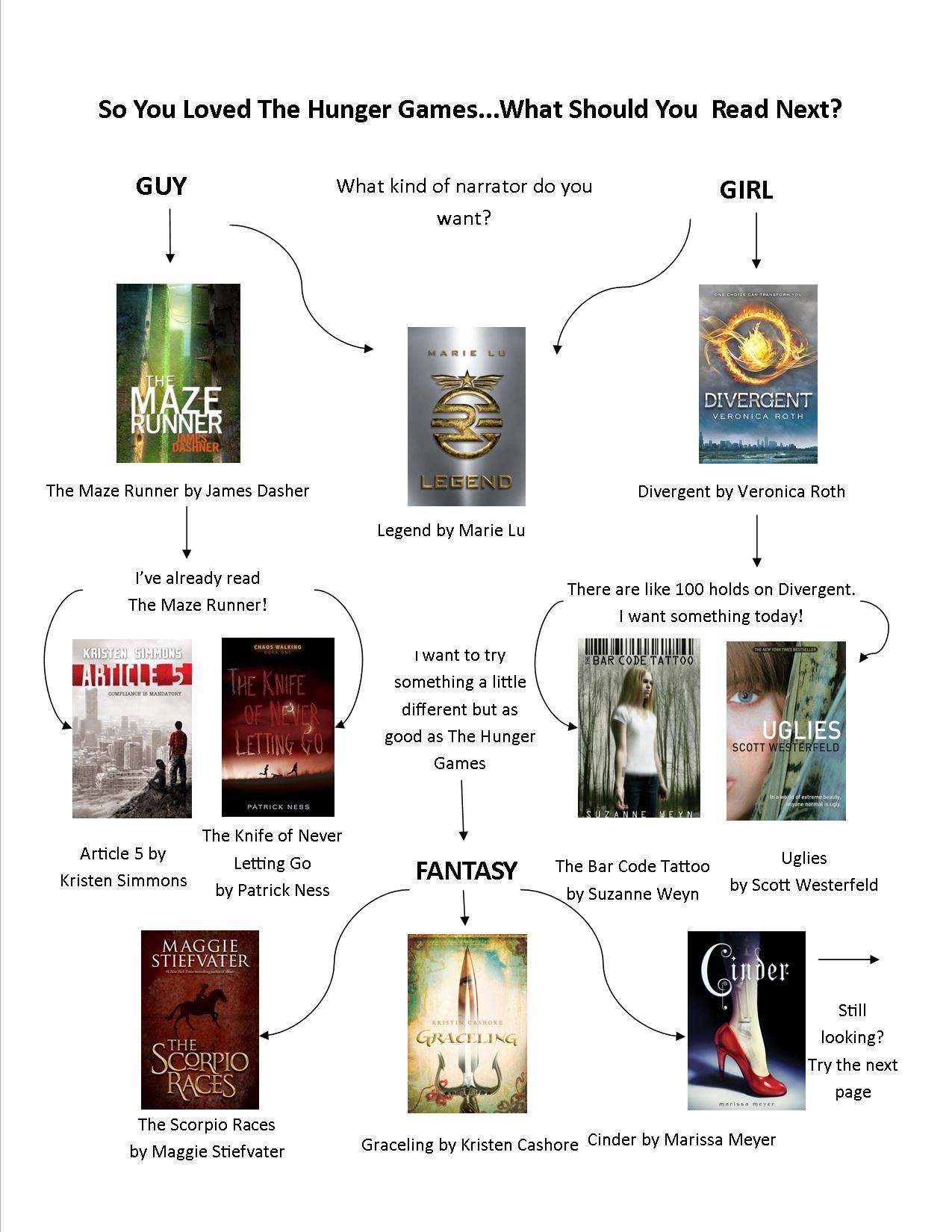
Books to read if you loved the hunger games
Final Thoughts
The must reading order is: The Hunger Games, Catching Fire, and Mockingjay. This chronological sequence ensures you experience the story’s progression as intended.
Follow this order; it lets the narratives build correctly. Skipping or changing the sequence will confuse the plot. You should follow this order for the best experience.
So, to answer, ‘what order do you read the hunger games books’ it is the publication order. Start with The Hunger Games.

