
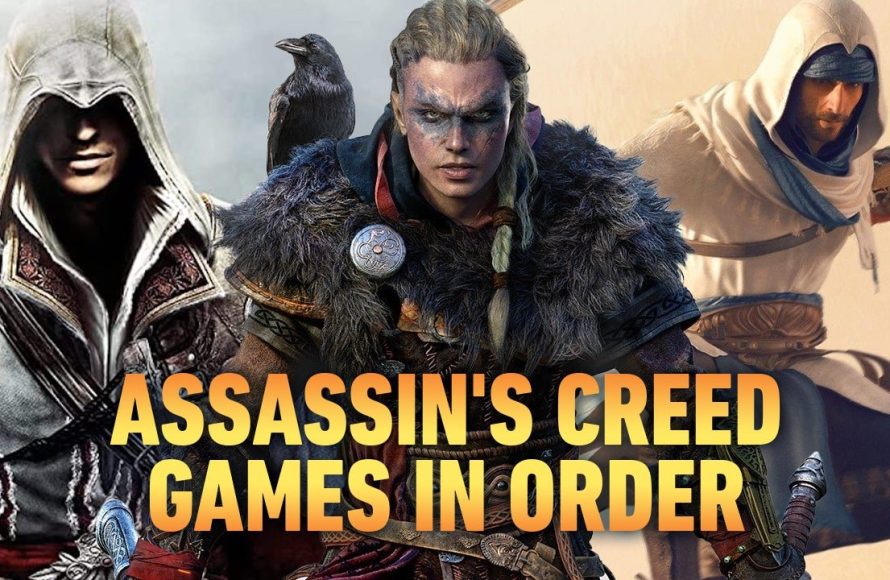
The best order to play Assassin’s Creed games is generally by release date to follow the overarching narrative, but you can also choose by the in-game chronological story order.
So you’re diving into the world of Templars and Assassins, but you’re not quite sure where to begin? It’s a common question, especially with so many titles spanning different eras. Figuring out what order to play Assassin’s Creed games can feel like a quest itself!
Should you start with the very first game or jump straight into the Viking age? The sheer number of games can be daunting, but don’t worry, we’ll break down the options for you.

What Order to Play Assassin’s Creed Games
Okay, so you’re ready to jump into the world of Assassin’s Creed! That’s awesome! But with so many games in the series, knowing where to start can feel like a puzzle. Don’t worry, we’re going to make it easy. There are a few ways you can tackle the games, and we will walk you through each. We’ll look at playing by release date, playing by the story timeline, and even suggest how you can jump in if you want to start with a more recent game.
Playing by Release Date: The Classic Approach
The most straightforward way to play the Assassin’s Creed games is in the order they came out. This way, you experience the improvements in gameplay, graphics, and storytelling as they were developed by the people who made the games. It’s like watching a movie series from beginning to end – you see how everything changes over time. This is the order most fans originally played, and it can be a really fun journey. You start with the original Assassin’s Creed, and then go on to the next and the next. You see the story progress through the modern-day segments and the development of the gameplay mechanics.
The Main Games in Release Order:
Here is a list of the main Assassin’s Creed games in order of release:
- Assassin’s Creed (2007)
- Assassin’s Creed II (2009)
- Assassin’s Creed: Brotherhood (2010)
- Assassin’s Creed: Revelations (2011)
- Assassin’s Creed III (2012)
- Assassin’s Creed IV: Black Flag (2013)
- Assassin’s Creed Rogue (2014)
- Assassin’s Creed Unity (2014)
- Assassin’s Creed Syndicate (2015)
- Assassin’s Creed Origins (2017)
- Assassin’s Creed Odyssey (2018)
- Assassin’s Creed Valhalla (2020)
- Assassin’s Creed Mirage (2023)
Why play in release order?
- You get to see the graphics and controls improve step by step.
- The overall story, especially in the modern day, makes the most sense this way.
- You’ll appreciate the newer features in later games, since you’ll have seen how they came from the older versions.
Things to Consider:
- The first game may feel a bit dated in terms of gameplay compared to later entries.
- The modern-day story can get a bit complicated if you are not following it from the start.
Playing by Story Timeline: For the Chronological Explorer
If you’re someone who likes to keep things in order, especially when it comes to the historical events, playing by the game’s internal timeline is a cool way to go. The games jump around in history. Playing by story means you experience the events of the past in the actual order they happened within the Assassin’s Creed world. This is really fun if you want to see the whole history of the Assassins and the Templars unfold smoothly. You’ll go from ancient Egypt to the Viking age and beyond, all while keeping the time period in a proper order.
The Main Games in Story Order:
Here’s how the games line up based on their historical settings:
- Assassin’s Creed Odyssey (Ancient Greece, 431-422 BCE)
- Assassin’s Creed Origins (Ancient Egypt, 49-44 BCE)
- Assassin’s Creed Mirage (Baghdad, 861-876 CE)
- Assassin’s Creed Valhalla (Viking Age England, 872-878 CE)
- Assassin’s Creed (Third Crusade, 1191 CE)
- Assassin’s Creed II (Renaissance Italy, 1476-1499 CE)
- Assassin’s Creed: Brotherhood (Renaissance Italy, 1499-1507 CE)
- Assassin’s Creed: Revelations (Ottoman Empire, 1511-1512 CE)
- Assassin’s Creed IV: Black Flag (Golden Age of Piracy, 1715-1722 CE)
- Assassin’s Creed Rogue (Seven Years’ War, 1752-1760 CE)
- Assassin’s Creed III (American Revolution, 1754-1783 CE)
- Assassin’s Creed Unity (French Revolution, 1789-1794 CE)
- Assassin’s Creed Syndicate (Industrial Revolution London, 1868 CE)
Why Play in Story Order?
- You get a better understanding of how the Assassins and Templars developed over time.
- The historical context is easier to follow.
- It’s like watching a historical documentary where you get to play a part.
Things to Consider:
- You might miss out on some of the gameplay and graphical improvements that come with playing in release order.
- The modern-day story will be a bit jumbled, as you will see parts of the future before you see the past, so keep that in mind.
Starting with a More Recent Game: A Modern Entry Point
Maybe you’ve heard great things about the newer games like Origins, Odyssey, or Valhalla, and you want to jump straight in. That’s totally fine! These games are designed to be relatively standalone, making them easy for newcomers. The main storylines of the historical portions of the games are not strictly connected, so you can enjoy each one individually.
Which Modern Game to Choose?
Here is what makes each of the newer titles a good starting point:
- Assassin’s Creed Origins: Set in ancient Egypt, it completely changed the way the games are played, and provides the foundation for the following two games, with a focus on RPG elements. It’s a beautiful and engaging world that’s perfect for new players. It shows you the start of the Assassin’s Brotherhood.
- Assassin’s Creed Odyssey: This is set in ancient Greece. It takes the RPG elements from Origins even further and adds a lot more choices that impact your story. Its setting is vast and very inviting to newer players, and the story works as a standalone.
- Assassin’s Creed Valhalla: This game brings you to the Viking Age in England. You build and grow your settlement while raiding and exploring. Like the other modern games, it stands well on its own and provides lots of exploration and character building.
- Assassin’s Creed Mirage:This title is a return to the series roots, with a focus on stealth, parkour, and the traditional Assassin’s Creed gameplay that veterans of the franchise are used to, making it a good entry point if you want to see what it is like to play a classic Assassin’s Creed game.
Why Start Here?
- You get to experience the newest game mechanics, improved graphics, and more engaging stories right away.
- The worlds are massive and open, offering lots to explore.
- You can learn the basics of the series while playing a really fun, modern game.
Things to Consider:
- You might not fully grasp the older connections of the overall story if you don’t play the older games, but the stories are self-contained enough to still enjoy.
- You could be a little confused about references in the modern-day portions to prior events, but you are not required to know about them.
The Order of Spin-Offs and Side Games
The core Assassin’s Creed games aren’t the only adventures you can experience! There are also spin-offs and side games that add extra stories to the universe. These games aren’t required to understand the main story, but they offer nice bits of extra lore and different gameplay types.
Notable Spin-Off Titles
Here are some of the side games worth checking out if you want even more Assassin’s Creed:
- Assassin’s Creed: Bloodlines (PSP): A direct sequel to the first Assassin’s Creed, bridging into Assassin’s Creed 2.
- Assassin’s Creed II: Discovery (DS): A side story during Ezio’s adventures.
- Assassin’s Creed: Liberation (PS Vita/PS3/Xbox 360/PC): An Assassin’s Creed game set in the same time as Assassin’s Creed 3, focused on the character of Aveline.
- Assassin’s Creed Chronicles Trilogy (PC/PS4/Xbox One): 2D side scrollers that follow different assassins in China, India, and Russia.
- Assassin’s Creed Identity (Mobile): An early version of the open world style gameplay on mobile, featuring a customizable Assassin.
Should You Play the Spin-Offs?
It really depends on what you want. If you are deeply invested in the lore, these games will add to that. If you are just in it for the fun, you could easily skip them. They do provide fun side experiences, but are not required to enjoy the overall narrative.
So there you have it! Whether you go in order of release, in order of the story timeline, or start with a newer game, there is no wrong way to play these games. Each way has its own perks and each way will let you see the many adventures across the centuries that these games offer. Pick the path that excites you most, and get ready to dive into the historical fun. Happy gaming!
All ASSASSIN’S CREED Games in Chronological Order ⌛️ #assassinscreed
Final Thoughts
Ultimately, playing the games in release order is best for understanding the story. It allows you to experience the improvements in gameplay naturally. This also avoids any spoilers that can occur with playing out of order.
Chronological order is an option but can sometimes feel disjointed with mechanics. Consider this after the main series, it provides a different way to replay. Figuring out what order to play assassins creed games hinges on your goals as a player.

