
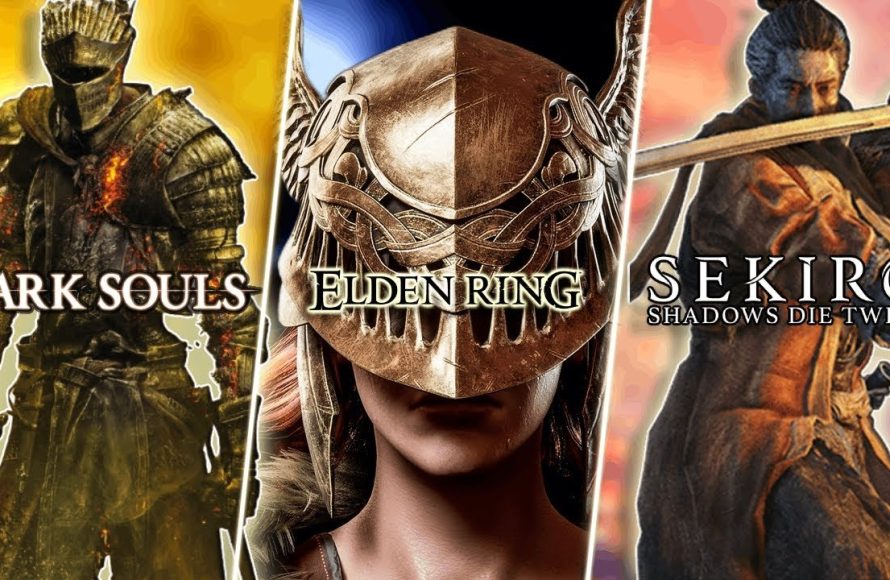
The general consensus among players is that Dark Souls III presents the hardest challenge due to its aggressive enemies and fast-paced combat.
Figuring out which whats the hardest dark souls game is can spark a lot of debate among fans. Each title in the series has its own unique challenges and difficulty spikes. Some people struggle more with the clunky movement of the first game, others find the relentless enemies in the third game much tougher to manage.
Different playstyles and skill levels heavily influence the perception of difficulty. Personal experience often shapes which game players consider to be the most punishing. So, it’s more of a subjective question than an objective fact.

What’s the Hardest Dark Souls Game?
So, you’re brave enough to ask the big question: Which Dark Souls game is the toughest? It’s a question that sparks heated debates among fans, and honestly, there’s no single right answer. Difficulty in Dark Souls is a tricky thing, it’s not just about how many times you die, but also about how the game makes you feel while you’re trying to survive. Let’s dive deep into what makes each game challenging and see if we can figure out which one truly wears the crown for being the most difficult.
The Contenders: A Look at Each Dark Souls Game
Before we get into the nitty-gritty, let’s meet our contenders! We’ll be looking at the core Dark Souls trilogy, as they’re most often compared when we talk about difficulty.
Dark Souls: The Beginning of the Nightmare
The original Dark Souls is where it all began. It’s known for its interconnected world, where every path can loop back on itself. It teaches you harsh lessons early on, and it doesn’t hold your hand. The bosses can be unforgiving, and the areas are full of traps and tricky enemies. Some might find its clunkier movement or lack of quality-of-life improvements harder than the sequels. It’s definitely a tough experience, and because it was the first of its kind, it caught many players off-guard.
- Strengths: Interconnected world design; unpredictable enemy placement; a sense of constant danger
- Weaknesses: Clunkier movement and combat; lacks certain modern conveniences
- Key Bosses to Fear: Ornstein & Smough, the Capra Demon, the Four Kings
Dark Souls II: The Different Kind of Challenge
Dark Souls II is often seen as the black sheep of the family. It takes a different approach to difficulty, sometimes feeling more unfair than challenging. It introduces mechanics like Adaptability, which directly affects your ability to dodge attacks. The world is less interconnected and more like a series of areas connected by linear paths. Many players feel that the enemy placement is more about overwhelming the player with numbers rather than clever encounters. This game frequently employs multiple enemies at once, making it a different kind of uphill battle. Dark Souls II also has the Scholar of the First Sin edition, which changed enemy locations, offering a different take on the difficulty, but it doesn’t fundamentally change the core experiences.
- Strengths: Wide variety of build options; unique power stance system; large number of areas to explore
- Weaknesses: Unfair enemy placement; less connected world design; the Adaptability stat can feel punishing
- Key Bosses to Fear: The Fume Knight, the Looking Glass Knight, the Ruin Sentinels
Dark Souls III: The Polished and Fast-Paced Finish
Dark Souls III feels like the most refined of the trilogy. It has faster combat, more visually impressive environments, and some of the most iconic bosses in the series. It still maintains the unforgiving nature of the series, but feels more polished and fair. The boss fights are faster and have more complex attack patterns, testing the player’s reflexes and ability to learn. It also does a good job of making the player learn and be cautious by using strong enemies that can be surprising.
- Strengths: Fast and fluid combat; visually stunning environments; epic and challenging boss encounters
- Weaknesses: Perhaps lacks the world interconnectedness of Dark Souls 1; can feel less novel due to established formula
- Key Bosses to Fear: The Nameless King, the Soul of Cinder, Pontiff Sulyvahn
Delving into the Difficulty Factors
It’s not just about how many times you die. The feeling of difficulty comes from many different things. Let’s look at some of the key factors that make a Dark Souls game feel hard.
Enemy Placement and Ganking
How a game places enemies can make a big difference. In the first Dark Souls, enemies were often placed thoughtfully, to challenge the player’s sense of exploration and awareness. In Dark Souls II, you often face multiple enemies, or ‘ganks’, which can feel very overwhelming. Dark Souls III generally has a more balanced approach, though it still provides challenges through well-placed strong enemies and occasional ambushes. When discussing what makes Dark Souls difficult, the placement of enemies and their numbers is very relevant.
- Thoughtful Placement: Encourages strategic thinking.
- Ganking: Can feel unfair and overwhelming
Boss Design and Difficulty
Boss fights are some of the most memorable and challenging parts of the Dark Souls games. Each boss has unique attack patterns, strengths, and weaknesses. Some bosses, like Ornstein and Smough in Dark Souls 1, are considered a classic test of player skill because of their fast, aggressive nature and teamwork, others, like The Fume Knight in Dark Souls II, are challenging due to their fast attacks and changing fight phases. The Nameless King in Dark Souls III is infamous for its two phases that force the player to adjust their strategy completely. The design of the bosses are a major part of how the player experiences the game, and many players rate the games by how difficult they found the bosses.
Level Design and Navigation
The way levels are designed and how easy or difficult they are to move through can add to the game’s difficulty. The first Dark Souls is famous for its intricate, interconnected world, where you can often find shortcuts to past areas. This made the game challenging because you have to learn the level to know where to go. Dark Souls II has a less interconnected world, which can make navigating areas more linear. Dark Souls III has beautifully designed levels, but they’re not as connected as in the first Dark Souls, which some players may view as a negative. Level design plays a major role in how hard a game feels to play, even though most people don’t think of it.
Combat Mechanics and Player Controls
The combat systems in each Dark Souls game feel a little different. The first Dark Souls has a more deliberate pace, while the combat in Dark Souls III feels faster and more responsive. The addition of the Adaptability stat in Dark Souls II can make the game more challenging, as it directly affects the player’s ability to dodge. The controls can feel a little clunky or stiff to some players who are used to the responsiveness of games today. The combat mechanics are one of the main reasons why it is seen as difficult.
Learning Curve and Accessibility
The learning curve in Dark Souls is steep. The games don’t offer tutorials or explain their mechanics clearly. They often throw you into the deep end and expect you to figure things out by trial and error, which can be frustrating for new players. The lack of hand-holding and the constant threat of death is a major part of what makes the games challenging. The games do not have an easy mode, and so, that means that there are some players who may never be able to complete a game. Even with the help of tutorials, a player will likely still find the games to be very difficult.
- Trial and Error: You will die, a lot.
- No Hand-Holding: You need to figure things out yourself.
Comparing the Games: Specific Challenges
Let’s look at some of the unique challenges each game presents:
Dark Souls 1: The Intricacy of the World and the Unpredictability
The biggest challenges in Dark Souls 1 come from the game’s design, which encourages you to explore carefully and pay attention. The interconnected world means that you’re always potentially one wrong turn away from facing a difficult new area. The lack of fast travel early on also forces players to learn their way around and be cautious about how they move around the world. Some of the bosses are very difficult, especially for a new player. The game has a lot of complex systems and stats, and it can be very confusing to someone who has never played a game like it before.
- The Maze-Like World: You need to learn where you are going.
- Clunkier Combat: Takes some getting used to.
- Classic Boss Fights: That require patience and skill.
Dark Souls II: The Test of Patience and Endurance
Dark Souls II often challenges players in ways that don’t feel fair, or in ways that make it more difficult than intended. The gank squads can be very frustrating, forcing you to use every advantage you have to make it through them. The Adaptability stat can be confusing, and it can punish you if you don’t understand it. The areas often have less of a coherent design, which makes the game feel less engaging than the others. The bosses in Dark Souls II can feel like a slog. Some of them are hard, but in different ways than the other games in the series, and it can feel more cheap than hard.
- The Ganks and Ambushes: Overwhelming numbers of enemies
- Adaptability Stat: Complicates dodging
- More Linear Design: Makes it feel less open
Dark Souls III: The Test of Reflexes and Skill
Dark Souls III tests your reflexes and ability to learn patterns. The boss fights are faster and more complex, and some of them feel very difficult to beat. The game focuses on refined combat mechanics and making each encounter feel challenging, but fair. It focuses more on player skill than overcoming other game aspects. The speed of combat requires players to be quick and learn patterns fast.
- Fast and Fluid Combat: Demands precise timing and quick reflexes.
- Challenging Bosses: Forces you to learn complex patterns.
- More Polished Experience: Making it easier for some to learn but it is still hard to complete.
Beyond the Main Games: Other FromSoftware Titles
While we’ve been focusing on the core Dark Souls trilogy, it’s worth noting that FromSoftware has created other notoriously challenging games.
Demon’s Souls: The Original Soulslike
Demon’s Souls, the predecessor to Dark Souls, is still considered very difficult by many. It has a unique level structure and some of the most punishing boss fights in the whole series. Its world, Boletaria, has a dark and oppressive feeling that can be very difficult to deal with. It has similar mechanics to Dark Souls, but it has not been updated over the years.
Bloodborne: The Hunter’s Nightmare
Bloodborne takes a more aggressive approach with faster combat and a focus on dodging. Its gothic atmosphere and unique gameplay mechanics make it a very tough but rewarding experience. It does not have the same feel as Dark Souls, but it has its own challenges that make it difficult for new players. The lack of shields means that players will need to adapt to a new combat style that requires a lot of skill to avoid the enemy attacks.
Sekiro: Shadows Die Twice: A New Style of Challenge
Sekiro deviates from the Dark Souls formula with its focus on parrying, and it has very fast and complex boss fights. It is seen as very difficult due to its unique combat mechanics and heavy reliance on deflecting attacks rather than dodging. Players must learn its rhythm and tempo in order to survive. It is not usually seen as a Dark Souls game, but it is still very difficult.
So, Which is the Hardest?
Ultimately, the “hardest” Dark Souls game is very subjective, and it varies on player preference and experience. If you like a connected world and intricate design, then Dark Souls 1 may be harder. If you find unfair encounters frustrating, then Dark Souls II might be harder for you. If you prefer fast paced combat and polished boss fights, then Dark Souls III may be the toughest. It all depends on what you find challenging in games.
Many would argue that Dark Souls II is the hardest due to the clunky gameplay mechanics, gank squads, and some boss designs that feel more frustrating than challenging. Others would point to Dark Souls 1 for its unforgiving world design and lack of tutorials or hand-holding. Some might argue that Dark Souls III is harder because of the speed and complexity of the combat. At the end of the day, all games are difficult, but it depends on player preference.
No matter which game you choose to play, you’re in for a challenging and rewarding experience. The sense of accomplishment you feel after overcoming a tough boss or beating an area is unparalleled. Each game offers a unique type of difficulty that will test your skills and your patience. So, whether you’re a seasoned veteran or a new player, try them all and see which one you find the most difficult for yourself.
Ranking EVERY Souls Game From Easiest To Hardest #shorts
Final Thoughts
Ultimately, opinions vary, but many players find Dark Souls II the most difficult due to its enemy placement and gank squads. The slower movement and clunkier combat can also be quite frustrating. Dark Souls III presents faster combat and strong bosses, pushing player reflexes.
Some argue the original Dark Souls is brutally unforgiving due to its lack of fast travel early on. Therefore, deciding whats the hardest dark souls game depends on each individual’s preferences and playstyle.

