
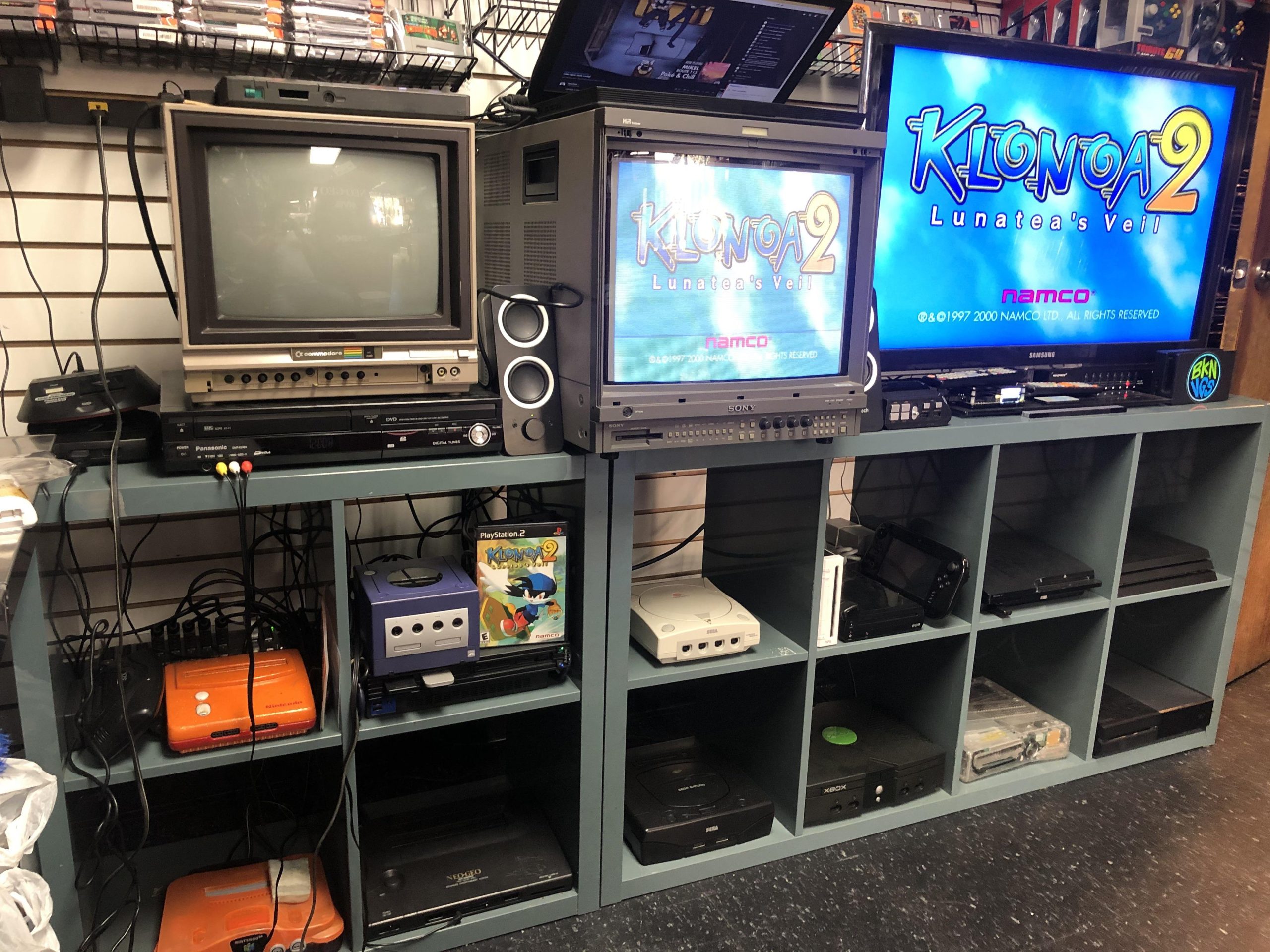
I prefer gaming on a CRT for its responsiveness and retro aesthetic.
The pixelated charm of older games just hits different on a CRT, doesn’t it? The debate about which you prefer to game on flatscreen or crt continues to spark passionate discussions among gamers. It really boils down to a preference on what type of visual experience each provides for the individual.
Flatscreens offer clarity and large display sizes that some people find amazing. Conversely, CRTs present motion in a unique way which some people also appreciate, and it is this difference in technology that leads people to favor one over the other.

Which do you prefer to game on flatscreen or CRT?
Alright, gamers! Let’s talk about something that’s been sparking debates for ages: which is better for gaming, a flatscreen or a CRT (that’s a Cathode Ray Tube, for those who might not know)? It’s like choosing between pizza and ice cream – both are awesome, but they’re awesome in different ways. Today, we’re diving deep into the nitty-gritty of both types of displays to help you figure out which one might be your perfect gaming partner.
The CRT Comeback: Why Retro Gamers Still Love Them
Let’s start with the classic: the CRT. If you grew up in the 80s, 90s, or even the early 2000s, you probably spent countless hours glued to a CRT television or monitor. These big, bulky screens were the only way to experience video games, and for many, they still hold a special place in their hearts. So, why are CRTs still popular today, especially among retro gaming enthusiasts?
The Magic of Low Input Lag
One of the biggest reasons is input lag. Imagine pressing a button on your controller and seeing the action happen instantly on screen. That’s what a CRT offers. Input lag is the delay between your action and the reaction on screen. CRTs have almost zero input lag. This responsiveness makes gameplay feel very direct and snappy, which is essential for games that require precise timing, like fighting games or platformers. This lack of lag is due to how CRTs create images using electron beams directly hitting the screen – there’s very little processing going on, meaning the response is almost instantaneous.
With a flatscreen, especially older ones, the image goes through digital processing that can cause a small delay, making fast-paced action feel sluggish. This is noticable by many veteran gamers.
Motion Clarity: Seeing Everything Sharp
Another strength of CRTs is motion clarity. Think about watching a car race on an old CRT TV versus a new flatscreen. On the CRT, the car might blur a bit, but the motion itself will be clear. You can follow it and everything around it very well. With a flatscreen, especially with fast-moving objects, you might see artifacts and sometimes ghosting effect due to the way pixels change. This gives a sharper, more fluid feel to the motion on CRTs that can be beneficial for fast paced action games, and for tracking enemies or objects quickly.
The Nostalgia Factor
It’s hard to ignore the nostalgia that comes with CRTs. Many gamers associate them with their fondest gaming memories. The way they display older games with their specific scanlines and colors create a certain look and feel that is unmatched. When you see a game like Super Mario World on a CRT, it just looks “right,” the way it was meant to be. This emotional connection adds to the experience and makes CRT gaming not just about performance but about a specific aesthetic and feeling. The warm, curved display and distinctive hum of a CRT bring a special charm. CRT’s are not just a display; it is a time machine for many players.
CRT Downsides: Why They’re Not for Everyone
Of course, CRTs aren’t perfect. They have some drawbacks. First, they’re huge and heavy. Moving a CRT from one place to another is like a weightlifting session. They also take up a lot of space. Finding a space for a decent CRT setup can be tough, and for many people, it is just not a practical option. Also, CRTs produce some heat and they consume more power than flatscreen displays.
Flatscreen Displays: The Modern Gaming Standard
Now, let’s talk about flatscreen displays. These sleek, slim monitors and TVs have become the standard for gaming for many good reasons. They offer crisp images, bright colors, and a wide range of features that appeal to modern gamers. Let’s explore their strengths:
High Resolution and Sharpness
One of the biggest advantages of flatscreen displays is their ability to display high resolutions. With modern flatscreen monitors, you can game at 1080p (Full HD), 1440p (QHD), or even 4K resolutions. This means that games look incredibly detailed and sharp. Everything from the texture of the character’s clothes to the distant landscapes looks much clearer. A higher pixel density leads to a clearer, more defined image, immersing you further in the gaming experience. This is especially beneficial for complex games that have very detailed graphics.
Vibrant Colors and HDR
Flatscreens have made great strides in color reproduction and high dynamic range (HDR). They can display colors that are much more vibrant and lifelike than CRTs, which tend to have a slightly muted palette. Modern flatscreens with HDR capability can offer a wider range of contrast between bright and dark areas. This added depth and richness can greatly enhance the visuals of games, making them feel more immersive and realistic. Imagine exploring a lush, colorful forest in a game, and every plant and leaf has its own distinct shade of color, that is what modern flatscreen monitors deliver.
Screen Size and Convenience
Flatscreens come in many different shapes and sizes. From small desktop monitors to huge wall-mounted TVs, you have many choices for your setup. They’re also much lighter and more convenient to move around than CRTs. You can easily mount them on your wall or desk, saving you space and making your setup look clean. In addition, the thinner profile of a flatscreen adds to a modern look.
Variable Refresh Rate (VRR)
Another huge benefit of many modern flatscreens is Variable Refresh Rate (VRR) technologies such as G-Sync and FreeSync. These technologies reduce screen tearing and stuttering by dynamically adjusting the refresh rate of the display to match the frame rate of the game. This results in a smoother, more consistent image, particularly in games with fluctuating frame rates. VRR ensures that every frame is displayed properly, which helps reduce distractions during your gameplay.
CRT vs. Flatscreen: A Head-to-Head Comparison
So, which is better? Let’s break it down using specific game types:
Retro Gaming
For classic 8-bit, 16-bit, and older 3D games, CRTs offer a more authentic experience. The low input lag, motion clarity, and original aesthetic just can’t be replicated by most modern displays. However, getting a good quality CRT setup can be harder than buying a flatscreen due to their age and availability. Modern emulation software and scalers can make older games look decent on flatscreen, but will never be exactly like what they look like on CRT displays.
- Best Choice: CRT
- Why: Low input lag, original aesthetic, motion clarity
Modern Fast-Paced Games
For high-octane first person shooters, racing games, and any title that requires fast reactions, modern flatscreens with low input lag and high refresh rates are usually preferred. They can handle the fast-paced action and complex visuals much better than older CRT displays. Especially those who prefer to play competitive games online would find flatscreen monitors to provide the features they need to keep up with the fast paced online gaming. Also, modern gaming has mostly developed for the widescreen aspect ratio, so it looks better on flatscreens with the same aspect ratio.
- Best Choice: Modern Flatscreen
- Why: High refresh rate, low input lag, high resolution, widescreen support
Modern Story-Driven and Single-Player Games
Games with complex graphics, story, and atmosphere are enhanced by flatscreens’ vibrant colors, high resolution, and HDR. The visual fidelity and depth they offer create a much more immersive experience. For these types of games, flatscreen with modern features are the better choice, allowing you to appreciate the art and design of the games at the most superior level.
- Best Choice: Modern Flatscreen
- Why: Vibrant colors, high resolution, HDR support, better image quality
Casual Gaming
For casual gaming, either type of screen can do the job. You need to choose based on your space, budget and preference. Flatscreens are very convenient and can come at different price points for all kinds of users. If you want to enjoy older games, CRT might provide a better experience but might require more work to get one, and it is not ideal if you are short of space at home.
- Best Choice: Either CRT or Flatscreen
- Why: Depends on personal preference, budget, and game type
Input Lag: The Crucial Factor
We’ve talked about input lag, but it’s worth diving a bit deeper. Input lag is the delay between when you press a button on your controller and when that action registers on the screen. Even a few milliseconds of delay can make a huge difference in games that require timing.
CRT’s Advantage with Input Lag
CRTs have a massive advantage here. Because of how they work, they have very little input lag, often referred to as “zero” or “near-zero” input lag. This means what you do on your controller happens on screen pretty much instantaneously, making gameplay very responsive.
Modern Flatscreens and Input Lag
Modern flatscreen displays have significantly improved in this area, and some high end monitors now offer very low input lag. Many gaming monitors now advertise low single-digit response times, and this is noticable with fast paced action games. Look for monitors that advertise “1ms response time” if input lag is your concern.
Refresh Rate: The Secret to Smooth Gameplay
Refresh rate is another critical factor to consider when selecting a gaming display. This is how many times per second your display updates the image on the screen, and it is measured in hertz (Hz).
CRT and Refresh Rate
CRTs generally run at 60Hz or less depending on the model and the input signal. Though in some special cases, some CRT monitors can achieve higher refresh rates.
Flatscreens and Refresh Rate
Modern flatscreens are available with a wide variety of refresh rates, such as 60Hz, 75Hz, 144Hz, 240Hz, and more. A higher refresh rate means that your monitor displays new images more times each second, so it results in a smoother visual experience, especially for fast paced motion or action. High refresh rate monitors like 144Hz or 240Hz will allow you to react faster to your enemies during gaming, and enjoy smoother gameplay in general.
The Visual Aesthetic: Scanlines and Sharp Pixels
Another key difference between CRTs and flatscreens comes down to how they display images. CRTs use an electron beam that scans across the screen to illuminate tiny phosphors. This results in a slightly blurry but unique look with visible horizontal lines called scanlines. For some players, this “scanline” is essential for older games, because that’s how these games are originally designed to look like.
Flatscreen displays have individual pixels for each color. This makes the images look sharp and clean, but it is lacking the blurry look that CRTs provide. Both offer different advantages depending on how you want to see the game.
Practical Considerations: Space and Setup
When you are choosing between a flatscreen and CRT, you should also think about the space and setup requirements. CRTs are very bulky and heavy, making them difficult to move and setup. If you want to set up a CRT display, make sure you have enough space, or the setup process can be tricky. Flatscreens are sleek, light, and come in different sizes, and easy to mount on the wall or setup on the desk.
Cost Comparison: Budget Matters
The cost of the display is also something to consider. In general, a brand new flatscreen gaming monitor can be pricey, especially if it offers high resolution, high refresh rate, and other high-end features. A used CRT can be cheaper, but getting a good quality CRT might require more research and sometimes cost more because of the limited availability. So, in this category, the cost can go either way depending on what model and features you need.
Ultimately, the choice between gaming on a flatscreen or CRT depends on what you value most. For an authentic retro experience and low input lag, CRTs are the best choice. If you are a fan of modern games, with a higher visual fidelity, high refresh rate, and a convenient design, flatscreen displays are the clear choice. There is no right or wrong choice, what matters is what works for you.
When Worse Graphics Are Actually BETTER
Final Thoughts
Ultimately, preference dictates the gaming experience. Flatscreens offer crisp visuals and larger sizes, while CRTs boast incredible motion clarity and input response. Each has its advantages based on game and personal taste.
For retro gaming, the CRT’s scanlines and authentic feel are hard to beat. Modern games often benefit from the sharp images on flatscreen displays.
So, which do you prefer to game on flatscreen or crt? The answer truly depends on your priorities and what specific type of gaming you enjoy most.

