
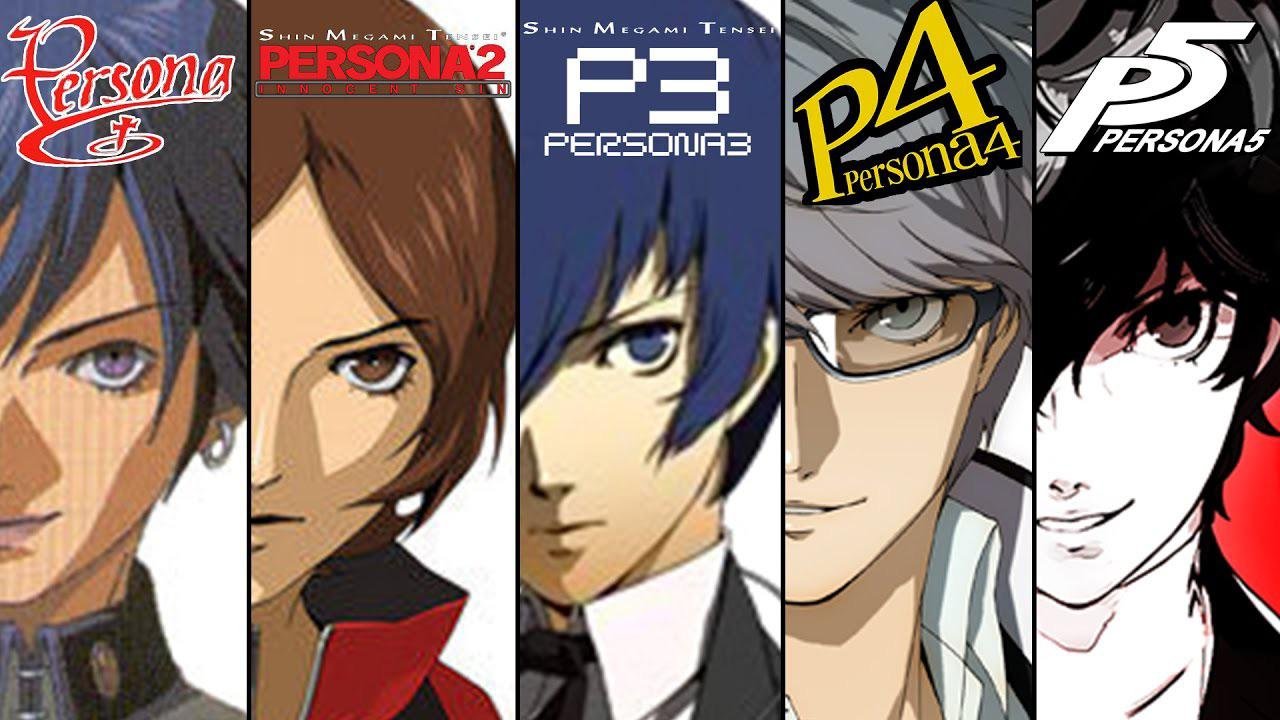
Yes, all Persona games share the same universe, though they feature different protagonists and cities, with recurring elements linking them.
The question, “are all persona games in the same universe,” is something many fans ponder. While each entry has its own distinct story and cast of characters, these games often hint at connections. These connections suggest a shared reality, creating an interesting tapestry. The Velvet Room, a recurring place in each Persona game, acts as one of these binding threads across these different narratives. Fans speculate about more hidden connections.

Are All Persona Games in the Same Universe?
That’s a question that sparks a lot of lively discussions among Persona fans! The short answer is… it’s complicated! While the Persona games share a lot of common elements and themes, whether they all exist within the same, single universe is a bit of a puzzle, and not one with a simple “yes” or “no” answer. It’s more like a tapestry with many interwoven threads. Let’s dive deep into this fascinating topic and see what clues we can find.
The Common Threads: What Connects the Persona Games
Before we tackle the question of a shared universe, let’s look at what makes the Persona games feel so connected. These common elements act like the glue holding the series together, even if they don’t all reside on the exact same planet. Think of them as recurring themes and motifs that echo throughout the different games.
The Velvet Room
One of the most significant connections is the presence of the Velvet Room. This mysterious place, often appearing as a limousine, an elevator, or a room in a dream, is a recurring location across most Persona games. Its purpose is to aid the protagonists, usually through the use of Persona fusion.
The Velvet Room is always presided over by Igor, a long-nosed man with a creepy smile. He’s a constant figure who guides the protagonists. His assistants, who change from game to game (like Elizabeth, Theodore, Margaret, and Lavenza), add another layer of consistency. They often have their own unique personalities and stories, which are also interesting. This shared element creates a strong link between games. This place feels like it’s a place outside of normal time and space, connecting the different protagonists who visit it.
Personas
The concept of Personas itself is another major connection. Personas are physical manifestations of a person’s inner self, usually based on mythological figures, gods, and demons. The act of summoning and controlling Personas through the use of a special tool (often called an “evoker”) is a common mechanic. Each game has its own variations on Personas, but the core concept remains the same. The way characters use personas also connects the games, because they are all accessing a similar source.
The idea that Personas are tied to one’s psyche and the way characters grow and develop their Personas also is important. The Personas can change based on their user’s experience and emotions. This is a central element of character growth in all the games. Whether it’s a high-school student or a special agent, all are connected to this unique power.
Social Links/Confidants
Building relationships is a core element of the Persona experience. The Social Links (or Confidants in Persona 5) represent the bonds between the protagonist and other characters. These relationships not only help characters grow, they provide benefits during battle and Persona creation. Forming these connections is key to progressing through the game and learning more about the world around them. It is another major link because every game has a very similar system for building strong relationship with other characters in the game.
The themes explored through Social Links often involve dealing with difficult issues that characters face in their lives. The stories are often touching, sad, and even funny, which makes them feel very important. Every time, you see a Social Link event, you know, you are not just becoming more powerful, but also developing relationships.
Recurring Themes and Motifs
Beyond the mechanics, certain thematic elements appear throughout the games. For example, themes like the struggle against societal pressures, the power of human connections, and the search for one’s true self are common across all the Persona titles. There are always elements of confronting inner demons and finding the strength to fight for what’s right.
The games often touch on psychological concepts, such as Carl Jung’s theories, which add depth to the narratives and the characters’ development. These shared elements allow us to see similarities between games, even when the characters and settings are different.
Divergences and Discrepancies: Where the Universes Seem to Split
While many things connect the Persona games, there are also some significant differences. These differences can make you question whether the games take place in one shared universe or not. Let’s explore some of the bigger discrepancies that make the “same universe” theory tricky.
Timeline and Setting
The Persona games are not set in a strict, chronological timeline. Each game has its own unique setting, usually a different city in Japan. The timeline doesn’t always follow a straight line and the years may not always correspond in the real world.
For example, Persona 3 takes place in 2009-2010, while Persona 4 is set in 2011-2012. Persona 5 is set even later. However, there isn’t a clear continuity that directly links these time periods, unlike most series that share the same universe. Although characters might appear in a spin-off, they may appear as just a cameo or fan service, instead of having a direct link with the main series. This is why it may not be possible to consider them in the same universe.
The Nature of the “Otherworld”
While all the games have a world beyond the normal, the nature of that place and how it works varies in each game. In Persona 3, it’s the Dark Hour, a hidden time between days when Shadows appear. In Persona 4, it’s the Midnight Channel, a world accessed through television sets. Persona 5 has the Metaverse, where people’s desires and distorted thoughts manifest.
While each of these concepts involves accessing an alternate dimension, the rules are quite different in each. For example, the Dark Hour causes time to stop for regular people. In the Midnight Channel, the world transforms with each character and the Metaverse is formed by the desires of people. These differences suggest each world operates on different rules, pointing away from a shared universe.
Character Appearances
There are a few instances where characters from previous games make a cameo appearance, but this isn’t consistent across all the games. For example, some characters are seen in spinoff titles, and they often don’t play a significant role or are just fan service. These appearances are not usually plot-driven and do not add any new information about a shared world. While they provide a fun nod to previous games, they often raise more questions than answers. It’s difficult to say whether they actually exist in same time or not.
The Different Rules of the Game
There are also differences in gameplay and mechanics. While they share similarities, such as Personas, Social Links, and dungeon crawling, how these systems work is often different. Some mechanics are added, while some mechanics are dropped from previous games, showing us that they are not from a single universe. Different rules indicate that they are not in the same world. For example, Persona 5 added new game mechanics, such as negotiation, which was not present in any other mainline games.
The Multiverse Theory: A Possible Explanation
So, if a single universe doesn’t quite fit, how can we reconcile the connections with the differences? One popular theory among fans is that the Persona games exist within a multiverse. In a multiverse, different universes exist with some similarities but are ultimately distinct and different from each other.
Parallel Dimensions
The idea of parallel dimensions could explain how the different “Otherworlds” exist. The Dark Hour, the Midnight Channel, and the Metaverse could be different parallel dimensions that resonate with human consciousness in different ways. They could have been created through similar ways but due to different circumstances, they are separate from each other. This explains how they may feel different even with similar power sources.
Similar Souls, Different Paths
The idea of a multiverse also explains how certain elements, like Personas and the Velvet Room, appear across different games. Perhaps the power of Personas is not unique to one world but a fundamental aspect of the human psyche that can manifest in different ways across parallel dimensions. Similarly, Igor and his assistants might exist in different forms, versions, or similar roles, in each of these universes. They might be playing a similar role, even if they are different, in each dimension. It’s like different versions of the same soul trying to guide a person.
Spinoffs and Non-Canon Material
Spinoff titles and non-canon material can muddy the waters even further. While some crossover titles hint at connections, these are often done for fan enjoyment and are usually not designed to fit a strict canon. The creators often make it clear that these spin-offs or crossovers do not affect the main games and are just for fan-service purposes. So they do not help with the theory of whether the mainline games are in the same universe. But what if, the different stories in spin-offs are also different dimensions of the multiverse?
The Ambiguity of It All
Ultimately, the question of whether all Persona games exist in the same universe remains intentionally ambiguous. The creators have never given a definitive answer, leaving fans to speculate and debate. This ambiguity adds to the allure and mystery of the series. It allows each game to have its own unique story without having to follow strict rules. It lets fans enjoy both the connections and differences between different games.
The lack of a clear answer means you can enjoy both sides of the argument. You can appreciate the links between all games and believe that they are all different stories of the same universe. Or, you can consider them to be separate in a multiverse. The important thing is that both are plausible given the information that’s provided.
There isn’t any right or wrong answer here. You can connect the games and enjoy the shared elements or enjoy each story as a separate entity. The choice is yours.
It’s important to remember that the developers and storytellers may leave some ambiguity for storytelling purposes, letting fans enjoy the debate and make their own conclusions.
In conclusion, the question of whether all Persona games are in the same universe is complex. The series is tied together by the Velvet Room, Personas, and themes of social relationships, which makes it feel like they’re in the same world. However, the differences in timelines, how the “Otherworlds” work, and other details suggest they might exist in a multiverse, a theory that has gained a lot of fan support. The ambiguity surrounding this question lets fans appreciate each game for its own story while still finding connections throughout the series. So, whether you think they are all one big story or different tales within a multiverse, the Persona games are always fun and engaging.
Persona's Shared Universe Timeline (feat. @Macca) | A Line Through Time
Final Thoughts
The evidence strongly suggests the Persona games exist within a shared, interconnected world. Subtle references and recurring character appearances point toward a singular continuity. However, different locations and casts are a constant for the series.
While not explicitly stated, the consistent thematic elements and mythical beings hint at a unified reality. So, are all persona games in the same universe? Most players believe the answer is yes, despite the occasional ambiguity. The overarching narrative must be inferred rather than directly explained.

