
Only Dragon Age: Inquisition features an open-world design.
Ever wondered which dragon age games are open world? It’s a common question for fans eager to explore the lands of Thedas. Many picture vast landscapes and freedom to roam.
The series has varied approaches to world design. Some entries offer more linear paths, while others open up considerably. Knowing the differences impacts how you plan your playtime.
So, if you prefer freely exploring, one game stands apart. You will experience large areas to travel through.

Which Dragon Age Games Are Open World?
Alright, let’s dive into the world of Thedas and figure out which Dragon Age games let you roam free and which ones keep you on a more guided path. When people talk about “open world” games, they usually mean a game where you can wander around a huge map, going where you want, when you want, without too many restrictions. Think about games like “The Legend of Zelda: Breath of the Wild” or “Grand Theft Auto V”. You can go almost anywhere, anytime you feel like it. But how does Dragon Age fit into this idea? It’s a super popular series, but not all the games are built the same way.
Dragon Age: Origins – A More Focused Experience
Let’s start with the game that started it all: Dragon Age: Origins. This game is awesome! It’s a classic, with a deep story and lots of choices to make. However, it’s definitely not an open world game. Instead of letting you wander across a huge map, Origins uses a world map. You select a location on the map, like Lothering or the Brecilian Forest, and then you move into that area to play. The locations are big and detailed, but they are not all connected. You can’t just walk from one area to another without going back to the world map first.
Key Features of Dragon Age: Origins’ World Structure:
- World Map Travel: You select locations on a map and travel to them individually.
- Individual Areas: Each location is a separate, detailed area to explore.
- Story Driven Progression: The main story pushes you through the areas in a logical order.
- Limited Exploration: While areas offer side quests and hidden things, they aren’t freely connected.
Think of Origins like having different rooms in a house. Each room is cool and has things to do, but you can’t just walk through walls into the next room. You have to go back to the main hall (the world map) and pick which room you want to visit next. This focused structure lets the game tell a great story, but it doesn’t give you total freedom to roam.
Dragon Age II – Continuing the Trend
Next up, we have Dragon Age II. This game takes place mainly in the city of Kirkwall. While you spend a lot of time exploring the city and its surroundings, it is still not what most people consider open world. Like Origins, Dragon Age II uses a world map for traveling outside of Kirkwall. You pick a location on the map, like the Wounded Coast or the Bone Pit, and then go into the game area. Kirkwall itself is a hub that feels larger than areas in Origins, but you cannot just travel in any direction without boundaries.
Key Features of Dragon Age II’s World Structure:
- Kirkwall as a Hub: Most of the game takes place in and around Kirkwall.
- World Map for Travel: Locations outside of Kirkwall are accessed through a world map.
- Story-focused Progression: The story dictates where you go and when.
- Instances areas: You enter different areas but don’t have the freedom to traverse everywhere as you want.
Dragon Age II is similar to Origins when it comes to the world layout. The game’s story and locations are well-written, but they’re not connected in a way that allows you to explore the world with complete freedom. The game focuses on the changes and events that happen inside Kirkwall through the span of many years. You can revisit areas, but you are choosing to revisit them not spontaneously traveling everywhere. The focus remains on a linear story rather than a complete free world.
Dragon Age: Inquisition – Stepping into Open World Territory
Now we arrive at Dragon Age: Inquisition, and this is where things change! Inquisition is much closer to being an open-world game than the previous two. Instead of a world map with unconnected areas, Inquisition features large, interconnected maps you can explore. These maps, like the Hinterlands, the Storm Coast, and the Emerald Graves, are huge and filled with things to do. You can ride your horse across these areas, gathering resources, battling enemies, and completing side quests.
Key Features of Dragon Age: Inquisition’s World Structure:
- Large, Interconnected Maps: Regions like the Hinterlands can be explored freely.
- Open World Elements: You can travel and explore almost all of the map.
- Mount System: Use a mount to travel faster across large maps.
- Side Quests and Activities: There is a lot of side content to engage with.
- Fast Travel Points: To get around easier in the map.
- Regional Progression: You unlock and explore more regions as you progress.
Inquisition gives you a feeling of actually being able to travel across Thedas. You can spend hours just exploring the different areas. You are not forced to always follow the main story line and have more freedom. While the game still uses certain types of loading screens between areas, the game is structured so that the map feels big and continuous. The maps are quite big and connected to one another, unlike Origins and Dragon Age II. With this game BioWare has made an attempt to provide open world experience to its players.
Not Entirely Open World: Understanding the Limits of Inquisition’s Map
While Inquisition is much closer to an open-world game, it isn’t a completely seamless experience like some of the true open-world games. There are some things that still make it distinct from titles like “The Witcher 3”. Here’s what to keep in mind:
- Regional Loading: Although large, maps are still regions separated by loading screens. This is different from true open-world games which try to hide or eliminate all the loading screens.
- Story Progression and Map Unlocks: You don’t have access to all of Thedas at once. Story progression unlocks more regions for you to visit. This is unlike games where you might have access to almost all the map right from the beginning.
- Some Areas are More Linear: Certain areas, especially those related to main quests, may be more guided and less open compared to side areas.
Despite the limitations, Inquisition provides far more freedom than its predecessors. It’s a big leap from the limited world exploration of Origins and II. Players can easily find hours of fun by just wandering and completing side activities.
Comparing the World Structures: A Quick Overview
To make it clearer, here’s a simple table that compares the world structures of each of the main Dragon Age games:
| Game | World Structure | Open World Elements |
|---|---|---|
| Dragon Age: Origins | World map with individual, separate areas | Very limited |
| Dragon Age II | World map with Kirkwall as a main hub, individual areas outside Kirkwall | Limited |
| Dragon Age: Inquisition | Large, interconnected regions to explore | Significant, but with loading screens between regions |
As you can see, Dragon Age: Inquisition really pushes the series in the direction of an open-world. However, the world exploration differs a lot from the other two titles of the series.
Why the Difference? Design Choices and Story Focus
So why did the Dragon Age games change so much in how they handle the world? It’s mostly due to different design choices and the stories the developers wanted to tell. In Origins and Dragon Age II, the focus was more on a specific story in a smaller space. It allowed for more intense and focused storytelling, with less to distract you from the main plot points. The more linear structure helped to control the pace and tone of the story.
With Dragon Age: Inquisition, they shifted focus. They wanted a game where you felt like you were leading a huge organization, and you could explore more of Thedas. The open world allowed them to present the scope of a large war and also gave the players a lot of side quests to do, giving a sense of purpose. The size of the world and freedom to travel made your actions feel more meaningful in the bigger picture. This change had a cost in term of complexity, but the advantages and freedom in gameplay were also significant.
The Future of Dragon Age: What to Expect?
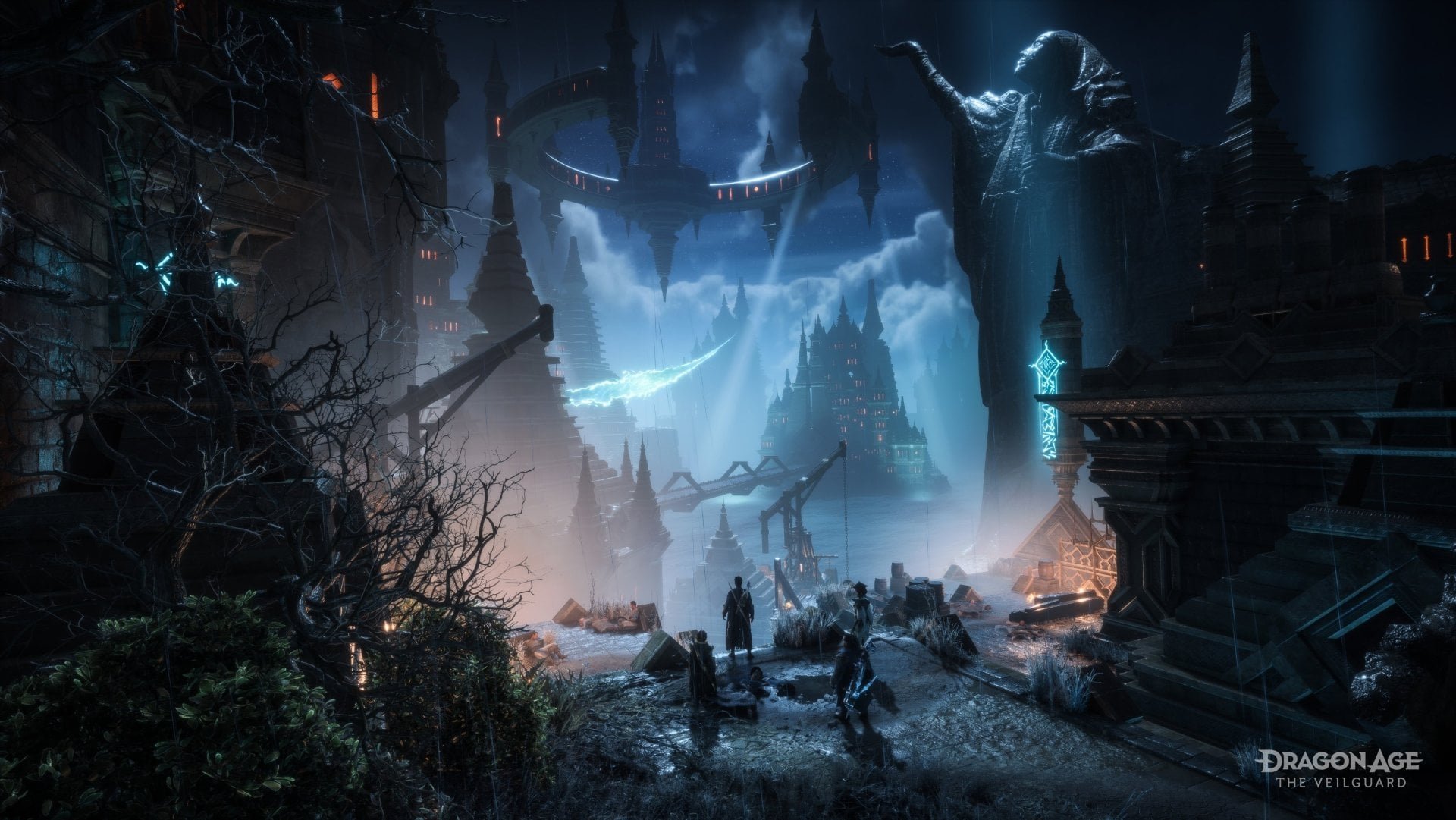
Fans are always curious about what the next Dragon Age game, Dragon Age: The Veilguard, will offer. Based on the trailers and previews, it seems like the developers are trying to blend the best parts of both styles of exploration. It looks like we might get a more focused story within large areas to explore.
It’s unlikely to be a seamless open world like “Elder Scrolls”, but it will probably have elements of both Origins and Inquisition, which will create unique game experience that fans will love. The developers of the franchise are expected to keep on enhancing the experience and make the game more fun for the players.
Ultimately, the best Dragon Age game for you depends on what type of experience you’re looking for. If you like a deep and more linear story, Origins or Dragon Age II might be your favorite. But if you enjoy exploring large areas with many side quests, then you might prefer Inquisition. It will be exciting to see what the future brings to Dragon Age.
Each title in the series offers a unique adventure and you are sure to find a great experience that you like. The series has evolved a lot through the years, and the open-world elements are something that the developers are trying to improve with time.
So there you have it! Hopefully, this helps clarify which Dragon Age games are more open world and which ones are more linear. Each of the games has its charm and special features, that makes each of them a unique experience for the players. Remember, not every great game needs to be open world to be enjoyable. It really depends on what the developers were trying to accomplish with the specific title.
Dragon Age: The Veilguard – Before You Buy
Final Thoughts
Only Dragon Age: Inquisition presents a truly open world experience. Players can freely explore vast areas. This freedom allows for varied gameplay approaches.
The other games in the series, Origins and Dragon Age II, utilize a more structured, level-based system. These games focus on story in smaller connected locations. So, to be clear, ‘which dragon age games are open world’, Inquisition is the only one.

