
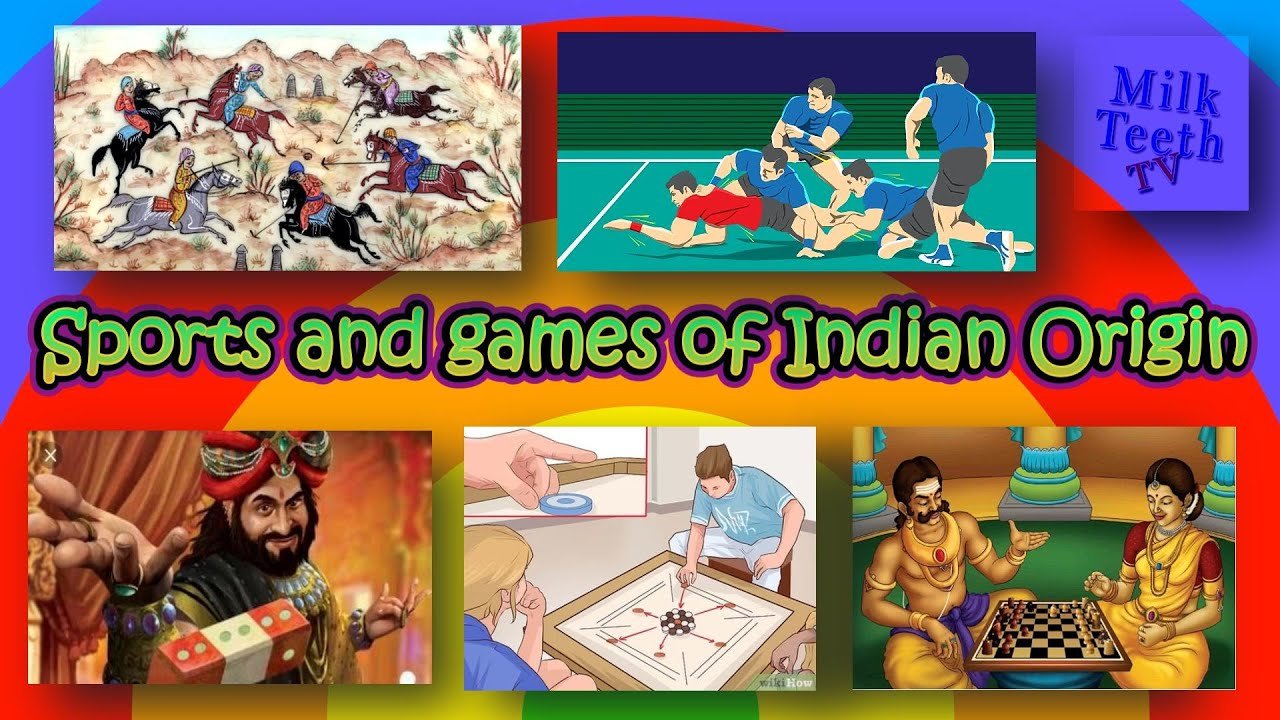
The game of chess was invented in India.
Ever wondered about the origins of some of our favorite pastimes? It’s fascinating to trace back their roots. The question of which game was invented in india often comes up, prompting a journey into the history of global entertainment.
Many cultures have contributed to the games we play today. However, one game’s lineage leads directly to the ancient land of India. It is a game of strategy and skill, enjoyed across the world.

Which Game Was Invented in India? Unveiling the Ancient Origins of Play
India, a land of vibrant culture, rich history, and ancient traditions, is not just known for its spices and Bollywood. It’s also the birthplace of several popular games that have captivated people for centuries. When we ask, “which game was invented in India,” the answer might surprise you. While many might instantly think of cricket, a game brought over by the British, the truth is, several strategy-based, exciting games originated right here. Let’s delve into the fascinating world of Indian games and explore their history, how they are played and why they’ve stood the test of time.
The Reign of Chess: Shatranj, the King of Strategy
One of the most significant contributions from India to the world of games is undoubtedly chess. But it wasn’t always the chess we know today. Its precursor, a game called Shatranj, emerged in India around the 6th century AD. Think of Shatranj as the ancient ancestor of modern chess.
The Origins of Shatranj
The name Shatranj comes from the Persian word chatrang, which itself is likely derived from the Sanskrit word chaturanga, meaning ‘four divisions’. This ‘four divisions’ refers to the four key elements of an ancient Indian army: infantry, cavalry, elephants, and chariots, each represented by different pieces on the game board.
- Timeframe: Developed during the Gupta Empire era, around the 6th century CE.
- Early Purpose: Not just a game, but also a military strategy simulation and a way to teach kings and nobles about warfare.
- Piece Movement: While similar to modern chess, some of the piece movements were quite different. For instance, the “fers” (Queen) was much weaker and could only move one square diagonally, and the elephant (Bishop) could leap two squares diagonally, rather than any number of squares.
- The Board: The game was played on a similar 8×8 checkered board, but it’s interesting to note, that these boards were often made from cloth or wood.
How Shatranj Was Played
The basic goal of Shatranj is the same as chess—to checkmate your opponent’s king. However, the game had its unique elements:
- The Pieces: The pieces included the Shah (King), Fers (Advisor/Queen), Fil (Elephant/Bishop), Asp (Horse/Knight), and Piyade (Pawn).
- The Opening: There were no pre-set opening moves, so strategic thinking from the very start of the game was vital.
- Winning: Unlike modern chess, Stalemate was a victory condition, but it was also sometimes regarded as a draw, depending on where the game was being played.
The Journey of Shatranj to Modern Chess
From India, Shatranj traveled along the Silk Road to Persia and eventually made its way to Europe through the Arab world. Over time, the game underwent several significant changes. The most notable was the evolution of the fers into the powerful queen of the modern game, and the fil transforming into the bishop with its far reaching diagonal moves. These changes helped the game to gain popularity globally. So, if you play chess today, you are, in a way, playing a game born in India. Shatranj’s influence is undeniable, and it is the most widely played of all the strategy games originating from India.
Pachisi: The Game of Chance and Strategy
Another game with deep roots in India is Pachisi, also known as Parcheesi or Ludo. This game, popular for generations, is a classic example of a game that blends chance with strategy.
The Ancient History of Pachisi
Pachisi’s history can be traced back to ancient India, with some evidence suggesting that its early forms were being played as far back as the 4th century AD. The game became extremely popular during the Mughal era, and is even depicted in famous artwork and literature from that time.
- Early Names: Known by several names throughout history, including Chausar and Chopat.
- Royal Connections: Played by emperors, kings and noble families and even today you can see variations of the board in many Indian palaces.
- The Game Board: Traditionally played on a cross-shaped board, with each arm divided into three columns.
- Gameplay: Players move their pieces around the board based on the throw of cowrie shells or dice.
Playing Pachisi
Let’s get into the actual game of Pachisi. Here’s how it is played:
- The Objective: To move all your pieces from the start to the central square of the board called the “home”.
- The Dice: Instead of using six-sided dice, six or seven cowrie shells are usually used. The number of shells that fall with the opening facing upward determines how many steps a player can move.
- Piece Movement: Each player has 4 pieces and the players need to land on an opponent’s piece to eliminate it from the board. Strategic planning is essential to make your pieces reach the home safely.
- Safety Zones: The board has certain safety zones, where the pieces cannot be captured. This adds another layer of complexity and strategic thought to the game.
Evolution of Pachisi
Pachisi has spread around the globe and has been adapted to fit the culture of different regions, resulting in different variations and names including Ludo. The basic concept of the game—moving pieces around a board based on dice rolls—remains the same. It is a game that appeals to people of all ages, and it continues to be a favored pastime in India and many parts of the world. It’s also a fantastic way to learn numbers, strategy and develop patience.
Snakes and Ladders: From Spiritual Lessons to Family Fun
While the origins of Snakes and Ladders are a bit different than Chess and Pachisi, the game is another example of an Indian game that has captivated people of all ages worldwide. Originally known as Moksha Patam, it was more than just a game; it was designed to teach moral values.
The Origins of Moksha Patam
Moksha Patam was created as a way to learn about life lessons. The ladders in the game represented virtues, while the snakes represented vices. The game was, therefore, a simplified map of the journey of life, and it aimed to help players to understand that good deeds move you forward, while bad ones cause you to take steps back. The game was very prevalent, but some believed that the game was invented by the Hindu saint Gyanadev in the 13th century.
- Spiritual Significance: It was used as a tool to help understand the concepts of karma, dharma, and moksha.
- Symbolism: Ladders symbolized virtues like honesty, hard work, and kindness, while snakes represented vices such as greed, laziness, and anger.
- Ancient Boards: Early boards often had many more snakes and ladders than the modern version, making the game very challenging.
Playing Snakes and Ladders
Snakes and Ladders is incredibly simple, and this is a big part of its enduring appeal. Here’s how to play:
- Objective: The aim of the game is to be the first to reach the final square (usually number 100) on the board.
- How to Play: Players take turns to roll a die, and move their pieces accordingly on the board. If a piece lands on a square where a ladder begins, they move up to the top of the ladder. If they land on the head of a snake, they slide down to the bottom of the snake.
- Adaptations: While the original game was designed to be a spiritual teaching aid, the modern game is now seen as a fun and entertaining game for people of all ages.
The Global Spread of Snakes and Ladders
Like chess and Pachisi, Snakes and Ladders also traveled beyond India and has been embraced by cultures all over the world. It has been modified to fit different regions and its various modern iterations are enjoyed by many children around the world, but it still retains the basic principles from its original Indian version. It serves as a great tool to teach young children to count and is often a fun game for family and friends.
Kabaddi: A Game of Strength and Strategy
Beyond the games of board and dice, India also boasts a rich heritage of physical sports. Among these, Kabaddi stands out as a game that is both exciting and very physically demanding. The game is believed to have originated in Tamil Nadu (Ancient Tamilakam), the southern region of India.
Kabaddi: The Game of Breath Control
The game Kabaddi has existed for thousands of years. It is referenced in ancient Indian epics like the Mahabharata and Puranas, but these are very old stories and it is almost impossible to pinpoint exactly when the game was officially invented. Although the exact timelines are not certain, we know it has a very long history within the Indian subcontinent.
- Team Based: Kabaddi is a team-based contact sport, typically involving two teams of seven players each.
- Rules: The basic rule is that one player (the “raider”) from a team enters the other team’s half of the court while continuously chanting “Kabaddi, Kabaddi”. The raider’s objective is to tag as many opponents as possible and then return to their half before taking a breath.
- Ancient Roots: The game was developed as a way for the community to train physically and to help develop strength, agility and coordination.
How Kabaddi is Played
Kabaddi is a mix of tag, wrestling, and a fast paced team sport, and here’s a look into how it’s played:
- The Raid: A player, called the raider, enters the opposing team’s half of the court, chanting ‘kabaddi, kabaddi’ continuously.
- The Defense: The opposing team tries to catch the raider and prevent them from going back to their side.
- Scoring: Points are awarded when a raider successfully touches the opposing players, or if the opposing team tackles the raider successfully.
- Teamwork: Teamwork, agility, and stamina are essential for success in Kabaddi.
Kabaddi Today
Today, Kabaddi is not just a local pastime in India, but a popular competitive sport. The game is played at national and international levels, with professional leagues in India and across the globe. The Pro Kabaddi League in India has been a big force in bringing the sport to the public eye. Kabaddi’s journey from the mud grounds of India to international arenas is a testament to the game’s enduring appeal.
Other Notable Games from India
While chess, Pachisi, Snakes and Ladders, and Kabaddi are perhaps the best known games from India, there are many other traditional games that are equally important to the country’s cultural heritage. Here are a few other notable games that originated from India:
Gilli Danda
Gilli Danda is a game played with two sticks: a small one, called the gilli, and a larger one called the danda. The game is similar to cricket or baseball, and is a popular outdoor game for children in India.
Kho Kho
Kho Kho is a tag game which is played in teams with one team chasing members of the other. The game is also called ‘Run Chase’, and is a great sport for the development of fitness and teamwork. It is one of the most popular traditional tag games in India.
Lattoo (Spinning Tops)
Playing with tops is a much-loved pastime of Indian kids. The lattoo (top) is spun using a string, and the game is a good way to develop dexterity and hand-eye coordination. Different tricks can also be performed with tops to make it a great and engaging game.
Kancha (Marbles)
Playing with marbles is popular all over the world, but India has some of its own variations of the game. Kancha, as it is often called, involves shooting marbles from the hand in an attempt to hit a target marble. This is a very popular game for kids to play in India.
The diverse range of games that India has given to the world is a reflection of its rich and varied culture. From strategic board games to engaging physical sports, these games show the creativity, ingenuity, and skill of people in India. The next time you play a game of chess, or have fun with snakes and ladders, remember that you are actually playing games that have their roots deep in Indian history.
These games not only provide entertainment but also helped develop life skills, logical thinking, and physical fitness. As we trace their evolution and influence, we celebrate India’s gift to the world of games.
Top Games Invented in India🇮🇳🇮🇳🇮🇳
Final Thoughts
Chess, a globally popular board game, originated in India. The ancient Indian game of chaturanga is considered its direct ancestor. This game evolved over centuries and spread across the world.
Many believe that snakes and ladders also has Indian roots, with variations appearing in the country during ancient times. The game taught about virtue and vice. Its modern adaptation remains a childhood staple.
Therefore, regarding which game was invented in india, Chess is a clear answer. This game’s rich history and global influence underscores India’s contribution to the world of games.

