
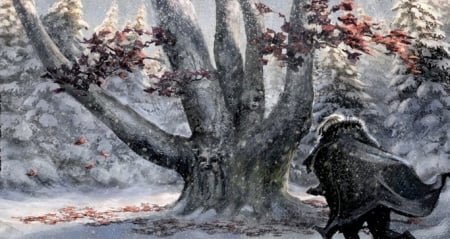
The old gods in Game of Thrones are nameless deities of nature, worshipped primarily in the North and by the Children of the Forest. They are connected to the trees, particularly the weirwoods with their carved faces.
The mystical world of Westeros holds many secrets, one of the most intriguing being the spiritual landscape. We often hear about the Faith of the Seven, but who are the old gods in Game of Thrones? This question leads us to a more ancient belief system, deeply rooted in the land itself, particularly the northern regions. These gods are unlike the anthropomorphic deities of the south.
These mysterious forces are not represented by statues or temples, but by the natural world. The old gods are an intrinsic part of the forests and the very soil of the North. They emphasize a spiritual connection with nature and represent a stark contrast to the more structured religions of the south.

Who are the Old Gods in Game of Thrones?
The Old Gods are a very important part of the world of Game of Thrones, even though they don’t have priests or written rules like some other religions. They’re like the silent, watchful spirits of nature, deeply connected to the land, trees, and especially the weirwood trees. If you’ve ever seen the creepy white trees with red leaves and faces carved into them, those are weirwoods, and they are super important to the Old Gods.
The Nature of the Old Gods
Unlike religions that focus on gods with names and stories, the Old Gods are more like a force of nature. They’re not like people with personalities or plans. They’re just there, in the rocks, the rivers, the wind, and most importantly, in the trees. People who believe in the Old Gods feel a strong connection to the natural world. They think the spirits of the Old Gods live in the places they love, like forests and mountains.
No Names, Just Nature
The followers of the Old Gods don’t call their gods by specific names. They don’t pray to a “God of the Mountains” or a “Goddess of the Forest.” They believe the power of the gods is in the places themselves. They feel that when they’re near a weirwood, they’re close to the Old Gods. This makes their faith less like following rules and more like feeling a connection to the world.
The Weirwoods: The Heart of the Faith
Weirwood trees are not just any trees. They are special because they are believed to be the home of the Old Gods. The carved faces on the trees are thought to be watching, listening, and remembering the things that happen around them. When someone prays to the Old Gods, they often do it in front of a weirwood, feeling that the tree carries their thoughts to the gods.
Followers of the Old Gods
The people who follow the Old Gods are mostly from the North of Westeros. This is very different from the southern parts of the country, where most people believe in the Faith of the Seven, which has its own gods, priests, and fancy churches. Here are some key groups who follow the Old Gods:
The Northerners
The people of the North, like the Starks, the Umbers, and the Mormonts, are the main believers in the Old Gods. Their way of life is connected to the land. They think that being true to their word and family is more important than worshipping gods in temples. They pass on their traditions and beliefs from parent to child, all without written scripture. They hold a deep reverence for their ancestors and the natural world around them.
The Children of the Forest
Long before the first men came to Westeros, there were the Children of the Forest, the original inhabitants. They were small beings who lived in the forests and were deeply connected to nature. They worshipped the Old Gods in their own way and used magic connected to the land. They even carved the faces into the weirwoods. Sadly, they have become very rare. But their legacy lives on through the Old Gods and the weirwoods they left behind.
The Greenseers
Greenseers are people who have the gift of seeing things that are happening far away, or even in the past or future, through the weirwood trees. They are often thought to have a special connection to the Old Gods. Characters like Bran Stark are shown to be greenseers, and they learn to use this power in important ways. The Three-Eyed Raven was a very powerful greenseer, who showed Bran how to use his abilities.
Key Practices of the Old Gods
The Old Gods’ faith is not very formal. They don’t have special robes, grand temples, or religious leaders. It’s more about a way of life. Here are some of the key ways they show their faith:
Prayer and Meditation
Instead of chanting prayers in a big temple, followers of the Old Gods often find a quiet place, perhaps near a weirwood, to think about their place in the world and the power of nature. They might pray for guidance, strength, or help, but they do it in a way that feels personal and close to the natural world. They feel the connection within the quiet of the woods, the flowing river and the rustling leaves.
Oaths and Hospitality
Northerners take their oaths very seriously, especially when they swear by the Old Gods. They feel that the spirits of the land will punish them if they break their promises. They also strongly believe in the guest right, a tradition of showing hospitality to visitors. Breaking the guest right is considered a terrible crime and is seen as an offense against the Old Gods.
Funerals and Remembrance
When someone who follows the Old Gods passes away, the rituals are tied to nature. They might bury their loved ones in the earth, often in sight of a weirwood. They believe that the spirits of those who have died remain with the land, becoming part of the cycle of life. These actions are not just about remembering the dead but about acknowledging the power of the natural world.
The Role of the Old Gods in the Story
The Old Gods are more than just a background detail; they’re a powerful force in the world of Westeros and the story of Game of Thrones. They’re often seen as being in contrast to the newer, more organized religions. They embody a different type of magic and a deep connection to the land itself.
A Connection to the Land
The Old Gods represent a deeper connection to Westeros and the history of the world. The weirwoods are considered to be living records of the past. They witnessed the events of history and are very important in understanding the past and the present. The belief in the Old Gods is seen as the original way of faith, representing a time before human kingdoms and conflicts.
Magic and Power
The magic that’s connected to the Old Gods is very different from the magic used by characters like Melisandre. It’s not about fire or light, but about nature, visions, and connections through the weirwood network. This magic, sometimes called green sight, is often mysterious and unpredictable, and it gives certain characters the ability to see beyond the present, into both the past and the future.
Conflict With The Faith of The Seven
The tension between the followers of the Old Gods and the Faith of the Seven represents a larger conflict in Westeros, especially since many southern nobles have adopted the Faith of the Seven. This disagreement can be a big source of conflict, showcasing how religion shapes the world of Game of Thrones. Some characters think that the Old Gods are simply old stories from the past and not as powerful as the Seven. Others feel the Old Gods are more authentic.
The Weirwood Network
The weirwood trees, connected by a huge network of roots and branches, are vital to the Old Gods’ magic. Through these trees, greenseers can access visions, communicate across distances, and even affect events happening in the world. The weirwood network is not just a connection between trees, but it’s seen as a way to understand the history, secrets, and even the future of Westeros.
The Old Gods vs The Faith of the Seven: A Comparison
Here’s a simple table that shows some of the key differences between the Old Gods and the Faith of the Seven:
| Feature | The Old Gods | The Faith of the Seven |
|---|---|---|
| Gods/Deities | No specific names, spirits of nature | Seven distinct gods (Father, Mother, Maiden, Crone, Warrior, Smith, Stranger) |
| Worship Places | Weirwood groves, nature | Septs (temples), shrines |
| Religious Leaders | None | Septons, septas (priests/priestesses) |
| Writings/Scriptures | None, based on oral traditions | Holy book, The Seven-Pointed Star |
| Main Beliefs | Connection to nature, ancestor reverence | Morality, faith, prayer |
| Magic/Power | Nature-based, green sight, visions through weirwoods | Miracles through faith (though rarely shown directly) |
| Geographic Location | Primarily in the North | Primarily in the South |
In summary, the Old Gods are not just about beliefs but are also about the relationship between people and the natural world. They show how different beliefs can create a large and complex world with lots of different characters and stories.
The Old Gods add depth and mystery to the world of Game of Thrones. They represent an older, more primal form of spirituality that is deeply intertwined with the land and the magic of Westeros. They’re a reminder that there’s more to the world than what can be seen and understood easily. So, next time you see a weirwood tree with its carved face, remember that it’s watching and remembering the secrets of the Old Gods.
The Old Gods Explained ASOIAF Lore
Final Thoughts
The Old Gods are the nameless, formless deities of nature worshipped by the First Men and their descendants. They reside in the heart of nature, in weirwood trees with carved faces. These gods have no priests or temples, only believers and sacred places.
Therefore, who are the old gods in game of thrones? They are the ancient, mysterious forces tied to the land, not deities with specific forms or demands like the Faith of the Seven. They represent the older ways, a connection to nature and the past.

