
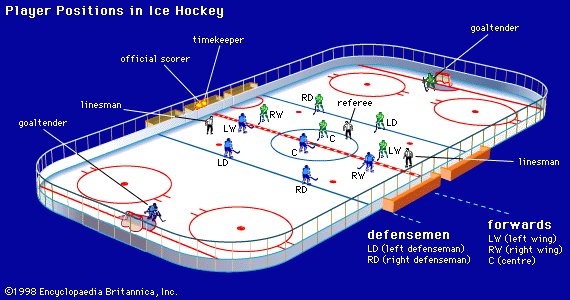
There are six players on the ice for each team during a standard hockey game.
Ever wonder about the constant motion on the ice during a hockey match? It’s a fast-paced game, and understanding the team setup is key to enjoying the action. Knowing how many players in hockey game are on the ice is essential for following the play and rules. Each team carefully positions its skaters to gain an advantage.
This strategic deployment contributes to the thrilling nature of the sport. Typically, each team will have six players out on the ice.

How Many Players in a Hockey Game?
Ever watched a hockey game and wondered just how many people are skating around out there? It can look like a whirlwind of players, sticks, and pucks! Well, you’re not alone. Knowing the number of players on the ice is important for understanding the game. It’s not just about a bunch of people randomly skating; there’s a specific structure to it all. So, let’s break down the answer to the big question: how many players are in a hockey game?
The Standard Hockey Roster: More Than Just Who’s on the Ice
When we talk about “how many players in a hockey game,” we actually need to look at two things: the total roster and who’s actually on the ice at any given time. A full hockey team roster, meaning all the players dressed and available to play, usually consists of around 20 players. This includes both forwards (the goal scorers), defensemen (the protectors), and goaltenders (the net minders). The exact number can vary slightly depending on the league, but you’ll generally see somewhere between 20 and 23 players listed on the team sheet.
It’s good to think of the roster as the whole pool of players that a coach can choose from for a game. Some players might not play at all in a specific game, while others will see lots of ice time. Also, some players might be injured or sick and can’t play at all. The coach decides who plays, and how much, based on his game plan and how each player is doing.
Breaking Down a Standard Hockey Roster
Let’s get more specific about those 20-23 players. A typical NHL roster, for instance, usually breaks down like this:
- Forwards: Around 12 to 14 forwards. These are the players who primarily try to score goals. They are often divided into “lines,” with three forwards on the ice at a time – a center and two wingers.
- Defensemen: Around 6 to 8 defensemen. These are the players who primarily try to stop the other team from scoring. They also work in pairs to help control the puck.
- Goalies: Usually, two goalies on the roster. One is the starting goalie, and the other is the backup. In case the main goalie gets injured, the backup can jump in.
While these numbers are typical, there might be minor differences depending on league and team strategy. Some teams might carry an extra forward or defenseman instead of a second backup goalie, for example. But this division usually works as a foundation.
On-Ice Players: The Real Action
Now, let’s talk about who’s actually on the ice during the game. This is where the core answer to “how many players in a hockey game” really lies. At any given moment in a standard game, there are six players from each team on the ice. This is the most crucial number to understand the game.
These six players are comprised of:
- Three forwards: Usually, these are a left winger, a center, and a right winger. These players work together to get the puck and try to score.
- Two defensemen: These players work together to keep the puck out of their own net and help start plays.
- One goaltender: This person is like the last line of defense. They are the one who is trying to stop the puck going into the net.
The Importance of Line Changes
But hold on! You might be thinking, “Wait, I’ve seen different players on the ice at different times!” You’re absolutely right. Players change frequently during a hockey game, a strategy known as “line changes.” This is because hockey is very fast-paced and tiring. Players can’t skate at top speed for the entire game. So, they hop on and off the ice, rotating with their teammates. These changes happen quickly and frequently. This keeps the players fresh and helps them perform at their best.
Line changes are essential for:
- Maintaining Energy: Hockey is a very physically demanding sport. Frequent shifts help players avoid exhaustion.
- Tactical Advantage: Coaches can change lines to try and get different player combinations on the ice to create scoring chances or disrupt the opposing team.
- Avoiding Penalties: Tired players are more likely to make mistakes, potentially leading to penalties. Line changes help to prevent this.
What About Penalties? The Power Play and Penalty Kill
Things get even more interesting when penalties are involved. When a player does something against the rules, they are sent to the penalty box. This takes that player off the ice for a short time and creates a special situation on the ice called a ‘power play’ or a ‘penalty kill’.
The Power Play
When one team gets a penalty, the other team goes on the power play. During a power play, the team with the penalty usually has one less player on the ice, often for two minutes. This gives the other team, the one on the power play, a chance to score a goal against a team that is short-handed, since that team has less players.
For instance, if one team takes a penalty, that team will only have five skaters on the ice (two defensemen and three forwards), while the other team will still have six players on the ice (three forwards, two defensemen, and one goalie), creating a power play. The team on the power play has a better chance of scoring because they have more players. This situation requires skill and good strategy.
The Penalty Kill
The team that is short-handed while they are on the penalty kill, they have fewer players on the ice because one of their players is in the penalty box. They need to play extra hard on defense to prevent the other team from scoring while they are on the power play. The penalty kill means that the team must defend well and try to clear the puck from their end of the ice. This requires team effort and a good defensive strategy.
It’s important to remember that even during a penalty, there will still always be a goalie on the ice for both teams. The power play and penalty kill are important parts of hockey because they change how the game is played and create good scoring chances.
Variations: Different Leagues and Levels
The rules we’ve discussed here are mostly applicable to the highest levels of professional hockey, like the NHL. However, the number of players can vary slightly in other leagues and at different age levels.
Youth Hockey
In youth hockey leagues, the rules may be modified for younger players to make the game safer and more suitable for their skill level. Sometimes, smaller ice surfaces are used, which can change the number of players on the ice. Also, at younger ages, there could be more frequent breaks or shorter shifts, to give the players more time to rest.
International Hockey
International hockey, like the Olympics or World Championships, generally follows the same rules as the NHL in terms of player numbers. There might be some small variations in other aspects of the rules, but the core structure of six players per team on the ice remains constant.
Other Professional Leagues
Other professional leagues around the world, like the KHL in Russia or European leagues, typically follow rules that are very similar to the NHL regarding how many players are on the ice. The number of players on the roster could vary based on different league regulations but during game play, it’s still six skaters and a goalie on each team.
The Goalie’s Special Role
Let’s talk about the goalie a little more closely. The goalie is a unique position, and there is usually only one goalie on the ice at a time. The goalie’s job is to prevent the other team from scoring. They wear special gear, like a mask, pads, and a glove, to protect themselves from hard shots. They use the gear along with their skill and agility to catch or deflect the puck away from the net.
It is very important that goalies have quick reflexes and great hand-eye coordination. They need to be able to react quickly to shots and move around the net to make sure the puck doesn’t get past them. In most situations, coaches play their starting goalie for the entire game unless there is an injury or other reason why they can’t play anymore. Having a reliable goalie is important to the team’s success because a good goalie makes it much harder for the other team to score.
The Importance of Teamwork in Hockey
Ultimately, the game of hockey is all about teamwork. Even though there are specific numbers of players, everyone needs to work together to succeed. Forwards must work together to score, defensemen must work together to protect their zone, and the goalie needs everyone to work together to prevent the puck from entering the net.
Whether there are six players on the ice, or five due to a penalty, everyone has a specific role to play. They must work together and communicate to execute team strategy. This coordination is what makes hockey such an exciting and dynamic game. Understanding how the different positions work together, and how the players rotate into the game, makes watching hockey much more enjoyable.
Quick Summary
Let’s sum up the main points for clarity. Here’s a table that breaks it down:
| Concept | Number |
|---|---|
| Standard Roster Size | Around 20-23 players |
| Players on the ice (per team) | 6 (5 Skaters and 1 Goalie) |
| Forwards on the ice (per team) | 3 |
| Defensemen on the ice (per team) | 2 |
| Goalies on the ice (per team) | 1 |
Understanding how many players are in a hockey game and how they work together is important to be able to watch the game. With the right amount of players on the ice, they must work together with their teammates to be able to achieve the team goal. Now, when you watch a hockey game, you can appreciate all that is happening on the ice and why, thanks to the rules that decide how many players play for each team.
#realzone #4amanm #fact How many players in hockey? 🏑
Final Thoughts
A hockey team fields six players on the ice at a time. This includes five skaters and one goalie. Penalties can reduce this number temporarily.
Knowing exactly how many players in hockey game is essential for understanding the flow and strategy. Substitutions happen frequently, keeping players fresh.
Teams continuously change their active lineup of skaters throughout a game. This helps maintain intensity. Therefore, how many players in hockey game remain a key element to the game.

