
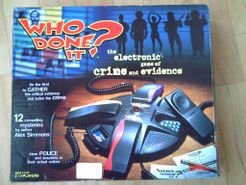
The “who done it board game” typically involves players working to identify a culprit, method, and location of a crime.
Ever felt like a detective, piecing together clues? A who done it board game provides that experience right on your tabletop. These games offer immersive mysteries where you and your friends become investigators.
Players analyze evidence, interrogate suspects, and try to deduce the solution. Each game presents a different scenario and challenge. The thrill of solving the case is definitely why they are so popular.

Unraveling the Mystery: The World of Who Done It Board Games
Let’s dive deep into the fascinating world of “who done it” board games! These aren’t your average roll-the-dice-and-move games. Instead, they are thrilling puzzles where you become the detective, piecing together clues to solve a crime. They challenge your brain, spark your imagination, and provide hours of fun with family and friends. These games, often called mystery board games or deduction games, are all about figuring out whodunit! So, grab your magnifying glass (okay, maybe just your thinking cap) and get ready to explore all things mystery!
The Core of a “Who Done It” Game: Deduction and Investigation
At the heart of every great “who done it” board game is the element of deduction. What exactly is deduction? It’s like being a detective. You don’t know the answer right away; instead, you look at clues, rule out the possibilities, and use your logic to figure out the truth. You’ll probably see some common elements in these games, regardless of the particular theme or storyline.
How the Deduction Process Works
Gathering Clues: The first step to solving any mystery is finding the clues. These might be cards, tokens, or information hidden somewhere on the game board. You need to carefully look at each one because every clue might be the missing piece of your puzzle.
Asking Questions: It’s crucial to ask the right questions. This might be directly asking other players about what they know or carefully considering every piece of information you see.
Eliminating Suspects: Once you start finding clues, you can begin to rule out suspects. If you have found that the murder weapon was a candlestick and you are certain that Mrs. Peacock was nowhere near the location that included this weapon, you can remove her from the suspect pool and focus on the remaining suspects.
Making Accusations: Based on your deductions, you will eventually get to a point where you feel you know the answer. This is where you can make your accusation. Remember, you want to be sure of your deduction because an incorrect accusation may cost you the game!
Popular Types of “Who Done It” Games
Mystery board games come in a whole range of styles and themes. There are classic mysteries, more modern settings, and even fantasy themed deduction adventures! Let’s look at some of the popular types you may come across in your search for your next mystery game.
Classic Murder Mystery Games
These are the games that most likely come to mind when someone says, “Who done it?”. They often have a classic setting such as a large mansion, and feature a cast of interesting characters each with their own backgrounds and motives. Clue is one of the most famous examples of this type of game.
Clue (or Cluedo in some countries): This is a household classic. You’ll investigate the murder of Mr. Boddy in his mansion, figuring out who did it, where it happened, and what weapon was used. It uses a process of traveling to rooms, making accusations, and collecting information from the other players to help you figure out what cards are in the “secret” envelope.
Mysterium: This is a bit different from Clue, as it uses cooperative play. Players work together as mediums to communicate with the ghost of a murder victim. It uses unique visual communication using cards with various strange images to portray what the ghost was trying to explain.
13 Dead End Drive: A classic game where you’ll try to eliminate the other players and inherit the wealth of Aunt Agatha. It’s a combination of mystery with a bit of quirky and physical gameplay elements.
Modern and Thematic Mysteries
These games use modern themes and settings or expand beyond classic mystery elements.
Detective: A Modern Crime Board Game: This is a more complex mystery board game, as players step into the roles of police detectives. They will examine evidence, interview suspects, and try to solve the case. The game also features real-world research elements to give a more realistic experience.
Sherlock Holmes Consulting Detective: This cooperative game lets you work together as a team of detectives to solve a series of cases that are inspired by the popular detective, Sherlock Holmes. The game often gives a lot of written information, which you must carefully examine.
T.I.M.E. Stories: This series of games uses time travel, along with mystery, to provide a unique and interesting approach. You will travel through different time periods and scenarios, trying to figure out the truth.
Cooperative vs. Competitive “Who Done It” Games
When choosing a mystery board game, you need to also think about whether you want to play competitively or cooperatively.
Competitive Games: In these games, you are trying to solve the mystery before everyone else. It’s like a race against the clock and other players. The best player will be the one that figures out the answer, and the person who gets it right, wins the game. Clue, 13 Dead End Drive, and many others are in this category.
Cooperative Games: In these games, you all work together as a team to solve the mystery together. Instead of being each other’s rivals, you rely on communication and teamwork. Mysterium, Detective: A Modern Crime Board Game and Sherlock Holmes Consulting Detective are great examples of this.
Key Elements That Make a Great “Who Done It” Game
Many components come together to create an enjoyable mystery game. Here are some things that make a great one!
Engaging Storylines and Themes
A great story is the backbone of a good “who done it” game. The best games have engaging stories that pull you in. If the story and theme are interesting, it will make you care about the case. This will make the deduction process feel much more fun.
Intriguing Suspects
Each suspect should have their own background, alibi, and possible motives for committing the crime. This helps keep things interesting and introduces a variety of possibilities. This is what makes it really fun to go through the process of eliminating the suspects.
Varied Clues and Evidence
The clues should not just be the same thing over and over again. If the game is good, it will provide a range of clues that you have to carefully examine. This may be location clues, item clues, suspect clues, etc.
A Good Balance of Complexity
A mystery should be challenging enough to be interesting, but not so hard that you give up. The best games will strike the right balance between complexity and clarity. This helps keep players of different skill levels involved and engaged in the game.
Replayability
A good “who done it” game can be played more than once. Some games achieve this through different character roles, different solutions, or the ability to create custom scenarios. Replayability is especially important because you don’t want a game that loses its mystery after the first time.
Tips for Becoming a Master “Who Done It” Gamer
So, you want to become a super-sleuth? Here are a few tips to get you started!
Pay Close Attention to Details
Sometimes, the smallest detail can be the most important! Be sure to take careful note of every card, token, or piece of information that comes your way. A misplaced item or a suspicious comment can be a significant clue.
Take Notes and Organize Information
As you find out more, take notes so that you don’t forget what you already discovered. This will help you keep track of the clues, suspects, and your deductions. This will prevent you from getting confused or forgetting vital information.
Ask Strategic Questions
Don’t just ask random questions. Think about what information you are trying to find out and make your questions specific and purposeful. This will help you get more specific information and find out exactly what you need to know.
Collaborate and Communicate Effectively (For Cooperative Games)
If you’re playing a cooperative game, teamwork is key. Share what you know, and listen carefully to your teammates’ ideas. Everyone on the team must contribute to achieve the common goal.
Don’t Be Afraid to Make Mistakes
Everyone makes mistakes when they’re learning. Don’t get frustrated if you get a case wrong. Each mistake will teach you something new that you can use in the next game.
Why “Who Done It” Games Are Great for Everyone
“Who done it” board games are much more than just fun; they offer many awesome benefits for people of all ages.
Boosting Critical Thinking Skills
These games help you practice and use your critical thinking skills. You must analyze clues, make deductions, and solve problems. This is a great way to exercise your brain in a fun way!
Enhancing Problem Solving Skills
You have to take all the pieces of the puzzle and fit them together to solve the case. It requires patience, planning, and strategy. Problem solving skills are useful in a large variety of situations in life.
Improving Memory and Focus
You have to remember important clues and keep track of various details throughout the course of the game. This will help you keep your memory and focus in top shape!
Promoting Social Interaction and Communication
These games are great at getting people together. They encourage communication, cooperation (if playing a cooperative game), and friendly competition (if playing a competitive game). It will be fun to get together with your friends and family to solve a great mystery.
Providing a Fun and Engaging Way to Learn
Even though it may not seem like it, you’re still learning when you’re playing! Learning should be enjoyable, and board games offer a great opportunity to learn while you’re having fun.
Choosing the Right “Who Done It” Game for You
With so many different games available, how do you choose the right one for you? Think about some of these things to help you decide.
Consider Your Experience Level
Are you new to these kinds of games, or are you an experienced detective? It can be best to start with simpler games if you are a beginner. You can gradually move into more complex games after you gain more experience.
Think About the Number of Players
Some games are best played with just two people, while others are better with larger groups. Be sure that you choose a game that is suitable for your group.
Match the Game to Your Interests
Think about the types of themes or stories you enjoy. Some people love classic mysteries and others like sci-fi themed games. Find the games that interest you, and it will be much more fun for you to play.
Check Reviews and Recommendations
Look online at other people’s reviews of the game you’re interested in. This can help you determine if it’s the right game for you. This will give you an idea of if it’s too complicated or not interesting enough.
Here’s a small table with some recommendations based on player experience:
| Experience Level | Game Recommendation | Why it’s a Good Choice |
|---|---|---|
| Beginner | Clue | Simple rules, easy to learn, classic mystery theme. |
| Intermediate | Mysterium | Unique gameplay, cooperative, and still beginner friendly. |
| Advanced | Detective: A Modern Crime Board Game | Complex scenarios, detailed evidence, real-world research involved. |
| Any Level (Cooperative) | Sherlock Holmes Consulting Detective | Engaging stories, requires teamwork and deduction, can be scaled to difficulty by case. |
These games provide a great experience for individuals, families, and groups of friends. They will help you think and make solving a mystery an unforgettable experience. With a little practice, you too can become an expert detective!
These games offer a blend of fun, learning, and social engagement. It’s a hobby that will bring many people together, and will sharpen your mind at the same time. Pick your next game, and get ready to solve the mystery!
Who Did it? Review – with Tom Vasel
Final Thoughts
In short, the ‘who done it board game’ provides engaging, puzzling fun. Deduction, strategy, and a bit of luck play key parts. Each playthrough offers a unique experience, making it endlessly replayable.
The game’s charm lies in its social interaction and the thrill of piecing clues together. It’s a must for those who love a good mystery. Gathering friends or family to solve the case creates lasting memories.

