
Sir John Suckling invented the game of cribbage.
The clatter of cards, the satisfying peg move on the board – cribbage has captivated players for centuries. But have you ever paused to wonder who invented the game of cribbage? It is a question that sparks interest for many game lovers.
This beloved pastime, with its unique scoring system, actually has a traceable origin. It wasn’t some anonymous invention; a specific person brought this card game to life.
So, who invented the game of cribbage? The answer might surprise you, and we are going to tell you about it now.

Who Invented the Game of Cribbage?
The question of who invented cribbage has a pretty straightforward answer, though understanding the story behind it is quite interesting! The game of cribbage, beloved by card players for centuries, is widely credited to Sir John Suckling, an English courtier, poet, and, as it turns out, a bit of a game inventor. He is the person we should thank for all those enjoyable hours spent pegging along a cribbage board. But let’s dive deeper into the life of Sir John and the historical context around his creation to understand the full story.
Sir John Suckling: The Creator of Cribbage
Sir John Suckling lived in England during the 17th century (1609-1642), a time of great change and artistic expression. He wasn’t just some random guy; he was a prominent figure in the court of King Charles I. Imagine him, not just writing poems and involved in court life, but also sitting down and creating a new card game that would last for hundreds of years.
A Renaissance Man of Many Talents
Suckling was what we might call a “Renaissance man”. He was good at many things. Besides being a talented poet and a courtier, he was known for his love of gambling, and games. This passion for games seems to be the very thing that motivated him to come up with Cribbage. It’s said that he wanted to develop a card game that was more strategic than the games played at the time. He wanted a game that required skill, not just luck. It’s like he wanted to make a game that really made you think!
The Year of Invention and The Context
The general consensus is that Sir John Suckling invented cribbage around 1630. Think about this – that’s almost 400 years ago! This was a time before the internet, before TV, even before the widespread use of printing presses. Card games were a popular pastime, and creating a new one would have certainly been something new and special.
What Inspired Cribbage?
So, what might have given Sir John Suckling the idea for cribbage? While we don’t have his personal diary entries describing the exact moment of inspiration, we can look at some influences that may have shaped his thinking:
Existing Card Games: Card games were already popular, and Suckling, being a gamer, would have known many of them. It’s likely he took elements he enjoyed and improved or combined them to make cribbage.
His Love of Gambling: He was known for gambling, and probably desired a game that rewarded skill as much as, or perhaps even more than, random luck. Cribbage blends elements of strategy and luck effectively, making it engaging for players seeking a more balanced gaming experience.
A Need for Social Interaction: Games in the 17th century were a big part of social gatherings. He likely aimed to create a game that would bring people together. Cribbage, with its two-person (or even three- or four-person) setup, was perfect for friends, family, or even nobles to enjoy.
The desire for complexity: Existing games might have seemed too simple for Suckling’s strategic thinking. He might have desired a game that had a unique scoring system and a mix of hand management and combinations.
The Unique Features of Cribbage
Cribbage is not just any card game. It has some special features that make it stand out:
The Crib: The most unique feature of cribbage is, well, the crib! Each player gives some cards to form a separate hand, called the crib. The dealer gets to count the points in the crib in addition to their own hand. This adds a layer of strategy: should you give good cards to the crib, hoping for something better, or try to keep them for yourself?
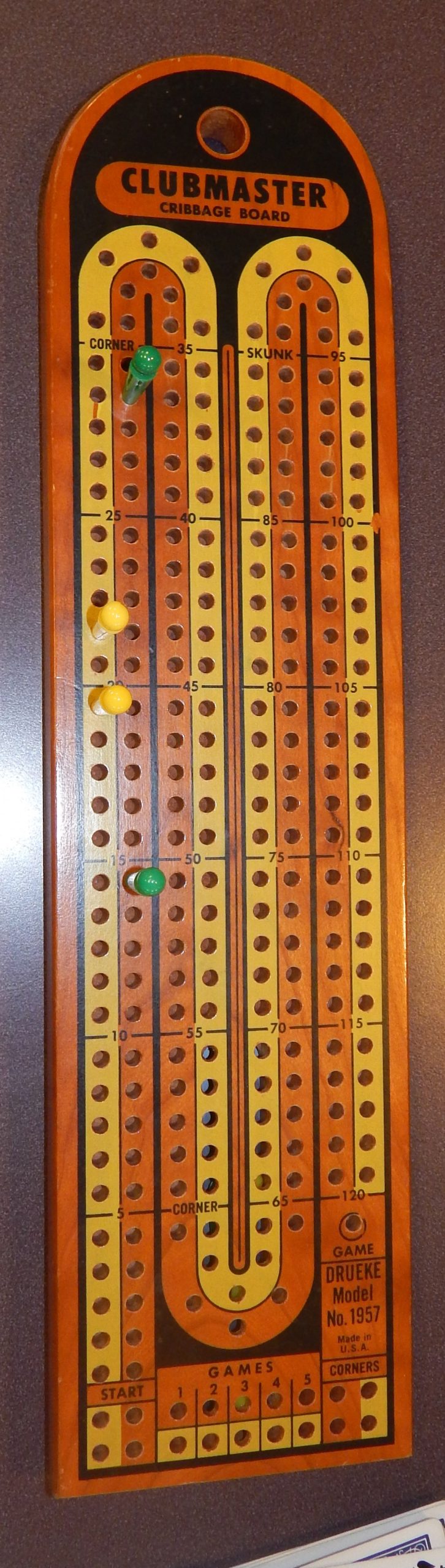
The Peg Board: Instead of keeping score with paper and pencil, players use a peg board. This is not only a fun and tactile way to keep score, but it also serves to show how close each player is to winning. It adds a visual element to the game and makes it more exciting.
Counting Combinations: In cribbage, it’s not just about the face value of the cards. It’s also about combinations. Points are scored for pairs, runs of cards, combinations totaling 15, and flushes. This combination counting system makes the game more intricate.
The Starter Card (Cut Card): A card is cut from the deck after the hands are dealt, which is called the cut card or the starter card, and it is used by both players to make up their scoring hands and the crib. This adds an extra element of chance and strategy.
The 29-point Hand: The perfect hand in cribbage is not easy to achieve. It’s called a 29-point hand, and it is something every player dreams of. The probability of getting this hand is extremely low, making it a very sought-after and memorable moment when it happens.
How Did Cribbage Become Popular?
It’s interesting to think about how a game invented in the 17th century became so popular that people all over the world still play it today. Here are some of the reasons:
Social Appeal: As mentioned earlier, Cribbage is excellent for socializing. Its two-player structure makes it perfect for couples, friends, or even family to play. It is a game that fosters connections.
The Right Level of Challenge: Cribbage is neither too simple nor too complicated. It requires a mix of luck and skill, which makes it engaging for both casual and more serious players. You need to think about your own hand, the crib, and what the other player might have.
Easy to Learn, Difficult to Master: The basic rules are not too hard to grasp, but becoming a really good cribbage player takes time and practice. This makes it fun for players of all levels.
Word of Mouth: Back then, it spread simply through people playing it and sharing it with others.
Travel and Migration: As people traveled and migrated, they took their favorite games with them. This likely helped spread the game to new places.
The Military: Some evidence suggests that Cribbage was quite popular amongst soldiers. It’s easy to understand why: it doesn’t require a lot of equipment and can provide entertainment and a mental challenge during downtime.
Cribbage’s Enduring Legacy
Cribbage has a rich history, and that is why this game still resonates with people. It has become more than just a card game. Here are some ways it has made a mark:
A Family Tradition: For many families, playing cribbage is a special tradition. It is passed down from generation to generation.
A Community Game: There are many cribbage leagues, clubs, and tournaments all around the world. This shows how it brings people together.
A Piece of Culture: Cribbage has appeared in books, TV shows, and even movies. It is part of the culture for many people.
A Test of Skill: Many players see cribbage as a game that tests their mind and strategy. They enjoy the challenge of trying to figure out the best moves to score points.
A Timeless Classic: Some games are popular for a short time and then fade away. Cribbage, however, has endured for centuries. It continues to be a beloved pastime for all ages.
Digital adaptations: Cribbage is also widely available in digital formats (video games, mobile apps), which has allowed new players to access the game and play it anytime, anywhere.
The Timeline of Cribbage
It is fun to review the history in a quick timeline:
Around 1630: Sir John Suckling invents the game of cribbage in England.
17th – 18th Centuries: The game gains popularity in England and spreads through social circles.
19th Century: Cribbage migrates to other parts of the world, including North America.
20th – 21st Centuries: Cribbage remains a popular game and is enjoyed all over the world, with various leagues and tournaments. Digital versions emerge, further expanding its reach.
Debunking Myths About Cribbage’s Origin
Although it’s generally accepted that Sir John Suckling created Cribbage, there are sometimes little whispers of myths and misunderstandings. Let’s set the record straight about some common misconceptions:
It was not an adaptation of an older game: While Suckling may have been inspired by other card games of his time, Cribbage is considered a unique creation, not just a tweaked version of something existing.
It wasn’t developed as a purely luck-based game: Suckling was thought to have designed the game to be more strategic than luck-based, it was not an accident or a game purely based on chances. The combination of hand management, the crib, and the cut card make it more skill-driven.
It wasn’t created in the 18th century: While some may think it emerged later due to its spread, the majority of historical references point towards the 17th century as the time of its origin, by Suckling.
It isn’t a game with a totally unknown creator: While there may have been other games played back then, Sir John Suckling is recognized as the creator of Cribbage. There is no significant historical evidence to suggest someone else made it first.
Cribbage is a game that has captured the hearts and minds of many across generations, and continues to be enjoyed by people everywhere. The next time you’re playing a game of cribbage, you can remember the story of Sir John Suckling.
The story of cribbage’s origin is quite simple: Sir John Suckling invented it. His love for games and his strategic mind led him to create a game that is still played and loved by many, centuries later. It’s a testament to his ingenuity and a reminder that even the simplest things, like a card game, can have a lasting impact.
The History of Cribbage Card Game
Final Thoughts
Sir John Suckling invented cribbage in the early 17th century. He created it as a modification of an earlier game called ‘noddy’. Cribbage quickly gained popularity, becoming a favorite pastime.
Therefore, when asking “who invented the game of cribbage”, the answer is undeniably Sir John Suckling. This 17th-century poet and courtier gave us the game that many still enjoy today. He remains the key figure in the history of cribbage.

