
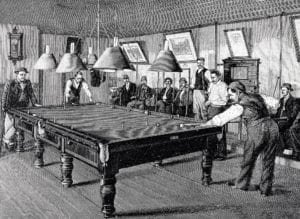
No single person invented the game of pool; it evolved from earlier lawn games and indoor billiards.
Have you ever wondered who invented the game of pool? It’s a question that often pops up when you’re racking the balls, or perhaps watching a skilled player. The truth is, pinpointing one inventor is tricky because pool’s history is a bit more complex than that.
It didn’t simply appear overnight. Pool developed over time, emerging from older games played on lawns and then inside with tables. This gradual evolution is fascinating and helps understand the beloved game we enjoy today.

Who Invented the Game of Pool?
Okay, let’s dive into the super cool mystery of who actually invented the game of pool! It’s not as simple as one person shouting, “I made it!” and everyone agreeing. The truth is, pool has a long and interesting history, with lots of different games that came before it. It’s kind of like how many different types of cars led to the ones we see today – each one building on what came before. We need to think about these earlier games that were like pool’s grandparents and great-grandparents to really get the picture.
The Early Days: Games that Paved the Way
Before the sleek tables and colorful balls we know today, there were other games that used sticks and balls on a ground, not a table. These were played outside, and they were super important in shaping how pool eventually came to be. Think of them as the practice runs for the game we know and love.
Ground Billiards: The Ancestor of Pool
One of the earliest games we can point to is called “ground billiards.” Imagine a game of croquet, but maybe a bit more chaotic. People would use sticks, sometimes curved, to hit balls and try to get them to a certain spot or through a hoop. This game was very popular in Europe, especially in France. It was played on the ground, usually on a grassy area, with simple equipment. Ground billiards wasn’t just a random pastime; it was the starting point for the idea of using sticks to move balls, something that is very important to pool.
Even though this game was outside and didn’t have the smooth playing surface of modern pool, it taught people important skills like aiming and controlling the force of their hits. These skills would become essential in all the games that followed, especially the ones played on tables.
Table Billiards: Bringing the Game Indoors
The next big step in the evolution of pool was moving the game from the ground onto a table. This happened sometime in the 15th century, and it was a major change! Instead of playing on a grassy field, people started playing on a table with a raised edge or rail, sometimes made from wood or even stone. This new setting changed the game a lot. With the table, the balls moved more predictably, allowing for more precise aiming and strategy.
- The Change of Surface: The change from grass to a table with a smoother surface had big impact on gameplay. The table surface allowed for more accuracy and control.
- Raised Rails: The raised edge of the table, or the rail, helped to keep the balls from falling off and made it possible to bounce balls off the sides, an element that added more strategic options to gameplay.
- New Sticks: The sticks used to strike the balls also evolved, becoming more like the cues we know today. These cues improved players’ ability to aim and strike the balls more effectively.
This new game, often called “table billiards” marked a move towards a more refined and organized version of the game. The basic elements of what we know as pool – the table, balls, and cues – were starting to come together.
The Development of Modern Pool
Table billiards continued to evolve over the centuries, with different variations popping up in different places. It was during the 18th and 19th centuries that pool started to really resemble the game we play today. Various nations and inventors added their own touch to the evolution of this game of strategy and skill.
France: The Early Hotspot of Billiard Development
France remained a key spot in the evolution of billiards, including pool. Many believe that the idea of table billiards was invented in France and that it was first known as “balle” which means “ball” in french. French game play was popular among royalty which encouraged the refinement of table construction and playing techniques. Over time, various rules and games appeared in France, including games with different numbers of balls and objectives, and they added to the game’s ongoing growth.
French table billiards developed further by the addition of elements like side pockets in the table, which brought new levels of complexity. The French were really keen on making the game better, and their contributions were essential in shaping the game as we know it.
England: Adding Rules and Variations
Across the English Channel, England also took a liking to table billiards. English players developed their own rules and variations of the game. They did this partly because the tables and equipment were not exactly the same as those used in France. As a result, different playing methods evolved. These new variations included carom billiards, which focuses on hitting specific balls in particular sequences, as well as different pocket games.
English players introduced innovations like more durable table surfaces and improved cues, enhancing gameplay for all players. Their contribution shows how the game evolved differently across geographical boundaries and cultures. The combination of French and English contributions helped the game mature into something recognizable as pool.
The Influence of the American Game
When billiards arrived in America, it took on another dimension. Americans took existing billiard games and started adding their own twists and turns, leading to the development of games like 8-ball and 9-ball, which are very popular today. The game of pool became very popular among American soldiers during the Civil War, leading to a quick spread of pool halls across the country. The American billiards scene was instrumental in popularizing pool as a widespread sport.
American companies also began to produce billiard tables and equipment. They focused on making these products available to a wider market. This approach led to more people playing the game and further solidifying pool as a main activity in American culture. With their contributions, the Americans helped to establish the game as a mainstream pastime.
The Issue of a Single Inventor
So, who exactly invented pool? As you can see, it’s not possible to name just one person. There isn’t an ‘official inventor’ who came up with the game all at once. Instead, pool is the product of many people over a long period of time. We can think of the evolution of pool as a collection of ideas from many different places. It began with ground games in Europe, moved to tables, and then grew with rules and variations added by the French, English and Americans.
Trying to find one inventor of pool is like trying to find out who invented language; it was a long, gradual process with lots of people adding their own touches. The development of pool was a collaborative, global effort.
Key Figures in Billiards History
Even though there isn’t a single inventor of pool, certain individuals were important in its progress. Let’s take a look at some of the key figures who contributed to billiards through innovation and improvement of the game:
- Henri de Devigne: While not the inventor of the first table, Henri de Devigne is often given credit for constructing the first known billiards table, which was an important step in the evolution of the game.
- John Carr: As a table maker from London, John Carr was influential in the English adaptation of the game with his focus on constructing and supplying tables. His contribution ensured the availability of equipment that helped the game grow in popularity.
- Michael Phelan: He is sometimes referred as ‘the father of American billiards’. Phelan was instrumental in both manufacturing and establishing standards of play in the U.S. His advancements in table design and promotion of the game were vital in American billiards.
- Rudolf Walter Wanderone Jr. (Minnesota Fats): While not an inventor, “Minnesota Fats” helped to popularize pool through his unique personality and skills, which had a notable impact on the game’s image and popularity.
These individuals, along with countless others, contributed in various ways to pool’s development. It’s important to recognize their role in the game’s ongoing journey. Their efforts paved the way for the pool we know today.
The Evolution of Pool Equipment
Let’s not forget about the equipment! The pool table, the cues, and the balls we use now are very different from the ones used in earlier times. They changed over the years and these changes had a direct impact on how the game was played.
The Pool Table
Early pool tables were simple and often made of wood. They weren’t very smooth, which made it hard to control the balls. As time went by, tables started to be made with materials like slate, which is much smoother and flatter, making for more predictable gameplay. The size and the height of the pool table has been standardized for both home and professional play. The changes in table design are a big part of the story of pool’s development.
- Early tables: Made from wood, these tables were prone to imperfections that affected gameplay.
- Slate tables: The introduction of slate revolutionized table design, providing a flat and smooth surface for a more consistent game.
- Table Rails: The material and design of the rails also evolved, enhancing the bounce of the balls and affecting game strategy.
The Pool Cues
The sticks we use to play pool, called cues, also went through a transformation. At first, they were basic sticks, but they became more refined with tips made from leather and designed for more precision. The length and weight of the cue has also been standardized to improve accuracy.
- Early Cues: Simple wooden sticks with little refinement
- Leather Tips: The addition of leather tips significantly improved control and accuracy
- Modern cues: Made from composite materials and carefully balanced for the best possible performance.
The Pool Balls
The balls used to play pool have also changed. Originally made of wood or ivory, they are now made of special plastics that are more durable and consistent in weight and size. The material of the balls affects how they roll and react when they hit each other.
- Early balls: Wood or ivory balls which were not uniform and tended to wear out quickly
- Celluloid: The first plastic material used for balls, an improvement over wood or ivory, but prone to cracking and explosions.
- Modern Balls: Made of phenolic resin, which is hard and durable, offering a consistent weight, size, and reaction to other balls.
All of these changes in equipment showed how the game continued to improve as materials and manufacturing became better.
Pool Today
Today, pool is enjoyed by people all over the world as a fun game and a serious competition. Pool halls, family game rooms, and even friendly gatherings see players of all ages and skill levels enjoying the game. From local tournaments to professional events, pool has established a place in the sport and entertainment world.
The game’s popularity speaks to its timeless appeal. The combination of skill, strategy, and a bit of luck makes pool very attractive to a wide range of people. Whether playing for fun or competing at a high level, pool is a game that continues to bring people together. It is a great example of how a game can grow and change, while still keeping the things that make it so special.
So, next time you pick up a cue and aim at a ball, remember the long and interesting history of pool. You’re participating in a game that has evolved over hundreds of years, thanks to the contributions of many different people and cultures. It’s a story of progress, innovation, and the love of a good game.
Pool is more than just hitting balls around a table. It’s a blend of history, skill, and tradition. The journey from ground billiards to the modern game of pool is amazing. It reminds us that games evolve and change over time, shaped by the people who play them and the places they’re played.
history of pool
Final Thoughts
The exact inventor of pool remains unclear, with varied accounts. While some believe it evolved from lawn games, no single person definitively invented pool. Several people played a role in its development.
The history of billiards is complex, with different styles and variations. Many contributed to pool’s evolution. We know the game changed over centuries and it became the game we recognize today.
So, attributing pool’s creation to a single individual is not accurate. Therefore, pinpointing ‘who invented the game of pool’ is simply impossible.

