
The precise origin of the rock paper scissors game remains unclear, with no single inventor definitively credited.
Have you ever wondered about the simple yet strangely satisfying game of rock paper scissors? It’s a game played by kids and adults alike, but the question of who invented the rock paper scissors game often surfaces. This seemingly straightforward pastime actually has a history that’s not quite so clear-cut.
Tracing its roots is challenging, because no one person is usually considered the sole originator of rock paper scissors. Instead, it developed over time with various versions existing across different cultures. The game’s simplicity, however, has made it a timeless choice for quick decisions and friendly competitions.

Who Invented the Rock Paper Scissors Game?
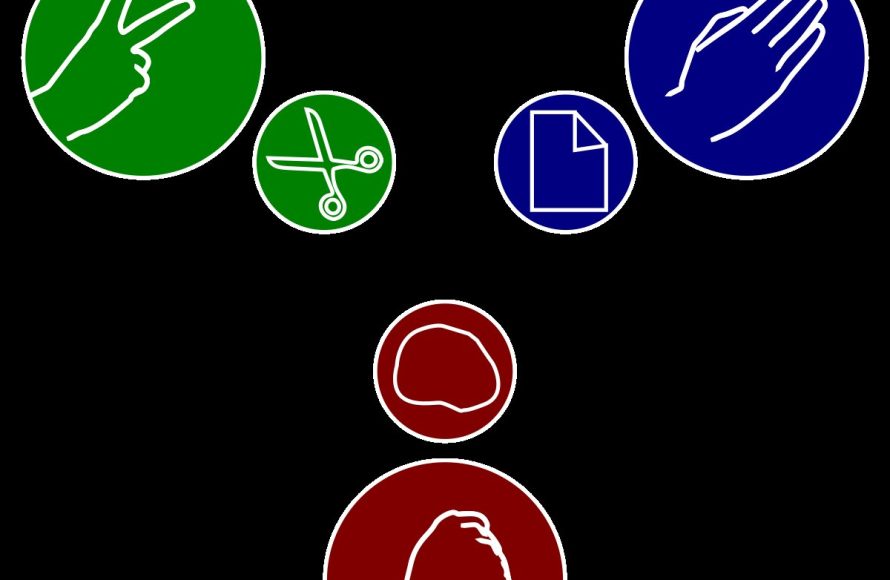
Have you ever played rock, paper, scissors? It’s a simple game, right? You and a friend make a fist (that’s rock!), flatten your hand (that’s paper!), or make a scissor shape with your fingers (that’s, well, scissors!). Then, you compare shapes, and someone wins. But where did this fun game come from? Who thought it up first? That’s a question that takes us on a really cool journey!
The Long and Winding History of Janken
While we call it rock, paper, scissors in English, the game has different names around the world. In Japan, it’s known as “Janken” (じゃんけん). And this is where our story really begins. It turns out the game isn’t something invented recently. The early forms of this game has a history that goes back hundreds of years. It’s not a modern idea cooked up on a playground! Imagine that, a game that’s been around for centuries.
Ancient Roots in China
Believe it or not, the game we play today probably started way back in China. Historians think that games similar to rock, paper, scissors existed during the time of the Han Dynasty. That’s a super long time ago – think around 200 BC to 220 AD! Instead of rock, paper, and scissors, these early games used different hand gestures, like a frog, a slug, and a snake. The rules were pretty similar: one sign beats another, kind of like how paper covers rock. These early games were a way to settle arguments or just have fun. Think of it as an old version of a board game or card game that kids played.
The Spread to Japan
Over many years, these hand-gesture games traveled from China to Japan, along with other ideas and customs. In Japan, the game slowly changed. It became “sansukumi-ken” (三竦み拳) – this means “three-way deadlock fist game”. This means, none of the three things are the best. Think about it: rock is good against scissors, but paper covers rock, and scissors cut paper. A perfect triangle! This version of the game used different symbols. Sometimes they were a fox, a hunter, and a village head. The important thing was, the idea of three elements with a circular pattern of wins was there.
The Emergence of Rock, Paper, Scissors
It took some more time before we got the rock, paper, scissors game we know today. Around the 17th century, we see records mentioning “Janken” with the rock, paper, and scissors shapes. So, the familiar symbols we use had already emerged by that time in Japan. Even though it took many centuries to arrive here, it’s fascinating that kids and adults play the same basic game we do today.
How Did it Get to the West?
So how did this Japanese game find its way to America and Europe? It wasn’t like there was a special game delivery service back then. The game spread through trade, travel, and cultural exchange. As people from the West visited Japan, they saw the game being played. It was often seen as a quirky or interesting part of the culture. When they came back home, they brought the game back with them and taught it to others. This happened a lot in the late 19th century and early 20th century. Slowly but surely, rock, paper, scissors became popular in Europe and the United States. By the 1920s, there were even newspaper articles that mentioned it!
Different Names and Variations Around the World
What’s cool is that even though the core idea is the same, the game has different names and sometimes slightly different rules in different places. Take a look at a few examples:
- In English: It’s rock, paper, scissors, of course! Sometimes people say “Rochambeau” too, though that’s a bit old-fashioned now.
- In Japanese: It’s called Janken, as we’ve talked about.
- In Spanish: You might hear “Piedra, papel o tijera”. This translates directly to rock, paper, or scissors.
- In French: “Chifoumi” is a very common name in French-speaking places.
- In German: It is called “Schere, Stein, Papier” which is German for scissors, rock, paper.
Isn’t it interesting how one simple game can have so many different names across the globe? It just shows how culture shapes how we play, even when we are all doing the same thing.
Why is Rock, Paper, Scissors So Popular?
There are lots of reasons why this simple game is so widely played, even now! Let’s look at some.
- Simple Rules: It’s easy to understand. You don’t need to read a long rule book or have any special equipment. It’s so easy, even very small children can pick it up pretty quickly.
- No Special Equipment Needed: You just need your hands! No boards, cards, or game pieces required. You can play it anywhere, anytime. This makes it incredibly accessible and perfect for a spontaneous game.
- Fair and Random: It’s based on chance, so it’s considered a fair way to make a quick decision between two people. This is why people might use it to decide who goes first in a game or who gets the last cookie!
- Fun for Everyone: Kids love it, and adults enjoy it too. It’s a fun, quick way to pass the time or settle something playfully.
- A Social Connection: It’s a great way to connect with friends, family, or even strangers. It’s a playful way to interact, even if you don’t speak the same language.
Strategic Thinking (Even if it Seems Simple)
While rock, paper, scissors appears to be completely random, many people try to find patterns and strategies to increase their chance of winning. Some players will try to predict the next move based on what their opponent played before. For example, if someone usually goes with “rock” a lot, a player might change their own strategy to “paper” to try and beat them. There are even tournaments where people compete in rock paper scissors. These competitive players might analyze each other’s playing styles, just like in a complicated board game.
Rock, Paper, Scissors Today
Rock, paper, scissors is more than just a simple game these days. It’s used in a lot of different ways. Here are some of them:
- Decision Making: As we mentioned before, it is a quick and fair way to settle who goes first or to make a simple choice between two options.
- Teaching Tool: It’s also a common way for teachers to pick who answers a question first.
- Entertainment: It can also be used in a game show, where it’s a fun, visual way to do a quick contest.
- Competitive Game: There are even some professional players who compete in tournaments. These people have strategies and techniques that help them improve their chances of winning!
- Pop Culture: Rock, paper, scissors has even appeared in movies, television shows, and video games, which speaks to its widespread popularity in daily life.
The Simple Game That Traveled the World
So, while we can’t point to one single person and say, “They invented rock, paper, scissors!” we can see how the game developed over hundreds of years, starting in China, moving to Japan, and then spreading across the world. The history of this game, now played so simply and quickly, is quite complex. This popular game has a history that spans centuries and crosses many borders. It shows us how ideas and games can travel and evolve over time. Each time you play a round, you are taking part in a tradition that stretches back a long, long time. It’s amazing how a game with such a simple setup can bring so much joy and playful competition to people across the globe.
The next time you play rock, paper, scissors, remember you’re not just playing a game, you’re continuing a tradition that has traveled through time and across continents. Pretty cool, right?
How Rock Paper Scissors Was Invented
Final Thoughts
The game’s origins trace back to the Han Dynasty in China. It then spread across Asia, taking different forms. The game eventually reached the West, becoming the rock paper scissors game we know today.
Determining definitively who invented the rock paper scissors game is challenging. No single individual is credited with its creation. The game developed gradually over time through cultural exchange.

