
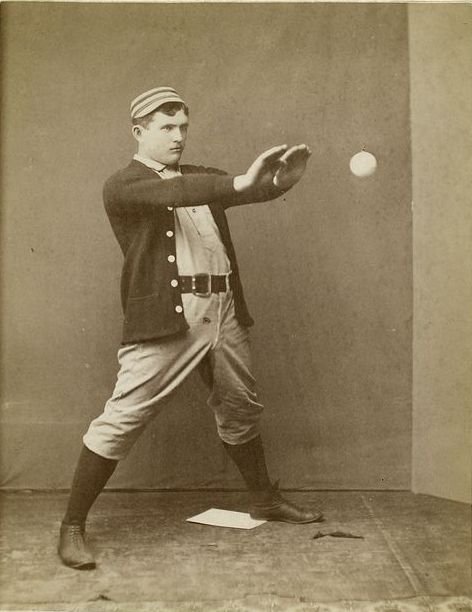
No single person made the game of baseball; it evolved from earlier bat-and-ball games in England and North America.
The question of who made the game of baseball often arises, sparking curiosity about its origins. It’s a common misconception that one individual created the sport from scratch. The truth reveals a more gradual and fascinating history.
Instead of a singular inventor, baseball emerged from a variety of earlier games. These games, played in England and North America, contributed to its development.

Who Made the Game of Baseball?
The question of who invented baseball is a bit like trying to find the very first drop of water in a big river. It’s not a simple answer, and many people played a part in shaping the game we know and love today. While there isn’t one single “inventor,” let’s explore the different threads that weave together the history of baseball.
Early Games and Influences
Before baseball had its official rules and bases, many stick-and-ball games were popular. These games, played in different countries, laid some of the groundwork for what would become baseball. Think of it like mixing ingredients to make a cake – these early games were like the flour, sugar, and eggs.
Rounders: A British Connection
One of the most talked-about ancestors of baseball is a game called rounders. Played in England, rounders involved a bat, a ball, and running around a series of bases. Imagine a group of kids hitting a ball and trying to make it all the way around! Rounders didn’t have set rules like baseball does now, but it did provide the basic structure of hitting a ball, running bases, and scoring. Many historians believe that early versions of baseball directly evolved from rounders as it was played by immigrants coming to America.
Cricket: Another Piece of the Puzzle
Cricket is a popular bat-and-ball game played in many parts of the world, especially in England and its former colonies. While very different from baseball in many ways, cricket did contribute to some of the early ideas around hitting and fielding. For example, the concepts of an “out” or a “strike” can be seen in early cricket games. It’s like seeing a familiar shape in a clay sculpture that will later be molded into something new. Cricket’s impact, while not as direct as rounders, is undeniable in the evolution of bat-and-ball sports.
Other Stick-and-Ball Games
Across different cultures, variations of stick-and-ball games have been played for centuries. Games with similar principles can be found in Native American traditions, European folk games, and even ancient civilizations. All these various games helped spread the idea of hitting a ball with a stick and having some sort of base-running involved. Each of these games contributed to the overall idea that ultimately blossomed into baseball.
The Development of Modern Baseball in America
While earlier games set the stage, baseball’s modern version really took shape in the United States during the 19th century. Several people were key figures in this evolution. Let’s dive into the roles these individuals played in shaping the game.
The Knickerbocker Base Ball Club and the New York Rules
The Knickerbocker Base Ball Club, formed in New York City in the 1840s, was a group of baseball enthusiasts who wanted a more organized version of the game. They weren’t the first to play ball, but they were the first to create written rules. They also played using a diamond-shaped field, which is how baseball fields are made today. The rules they came up with became known as the “Knickerbocker Rules.” They made important changes to things like the number of players and the distance between bases. These were like the building blocks that the later game was constructed upon.
- They formalized the nine-player rule per team.
- They set the base distance at 90 feet.
- They established the out by catching a fly ball.
Alexander Cartwright: The “Father of Modern Baseball”
Alexander Cartwright, a member of the Knickerbocker Club, is often called the “Father of Modern Baseball.” Why? Because he’s the one who is generally credited with formalizing many of the rules that are still in place today. He was instrumental in codifying the Knickerbocker Rules. He and his teammates moved from the chaotic, unorganized play into something that more resembles today’s game. He wrote down the rules that people began to use in games. His work helped spread these rules throughout the country, and he contributed to standardization.
Here are a few key contributions from Alexander Cartwright:
- He was instrumental in establishing the 90-foot distance between bases.
- He helped solidify the diamond-shaped field.
- He played a part in the establishment of nine players per team.
Abner Doubleday: The Myth of the Sole Inventor
For a long time, there was a popular myth that Abner Doubleday invented baseball in Cooperstown, New York, in 1839. However, this is a myth, because historical evidence does not support this story. Doubleday was actually a military officer during the American Civil War and wasn’t involved with the early development of baseball. This story originated many years after the game was established, and it’s important to understand that it’s more of a legend than a historical fact. The “Doubleday Myth” became popular as a way to create a clear origin story, but the reality is that baseball evolved over time, through a collaborative process.
Henry Chadwick: The Statistician and Promoter
While Henry Chadwick didn’t create the physical rules of the game, he was incredibly important in baseball’s rise to popularity. A sports journalist, Chadwick wrote extensively about baseball, helping to increase public awareness and interest in the sport. He created baseball statistics, such as batting averages and earned run averages (ERAs). He developed the box score, an organized way to display game details. These innovations made baseball more engaging for fans and helped build its following. His work is a testament to the idea that the impact on a sport can come from people outside of the field, too.
The Spread and Evolution of Baseball
Once the basic rules were in place, baseball began to spread rapidly across the United States. It became a popular pastime, especially during the Civil War, where it was played by soldiers in their camps. After the Civil War, baseball became even more organized, with the formation of professional leagues. This era saw the rise of star players and the further refining of game rules. These changes were important in making baseball the game we watch today. Let’s see how it moved across the country and became the popular sport it is today.
The Professional Leagues
The formation of the National League in 1876 marked a big step for baseball. It helped standardize play even more and also attracted a larger audience. Other leagues were formed and baseball moved into its golden age. This era led to more organized competition and a greater focus on strategy. The professional leagues helped establish baseball as a major spectator sport.
Early leagues had:
- Standardized game rules.
- Formalized contracts for players.
- Established rivalries between teams.
Baseball Across the Country
From being an urban game, baseball gradually spread all over the country. It was not just played in cities but was picked up in small towns and rural communities as well. Communities all across the US began to form their own teams and leagues, leading to it becoming a national pastime. This helped the sport grow and develop its unique American character. The love for the game was shared by many people from many different backgrounds, which gave baseball its status as a truly American game.
The Ongoing Evolution
Even today, baseball is still changing. Rules are adjusted to keep the game exciting and to ensure fair play. Technology has also played a big part, allowing for new kinds of analysis and review of plays. The evolution of baseball is ongoing, and even minor changes can have a big impact on the game. It’s important to remember that the game is always changing and adapting.
Some areas of ongoing change include:
- Rule modifications.
- Use of technology for analysis and review
- Evolution of player training and strategy
Key Figures Summarized
Let’s recap some of the most important figures and their roles in the development of baseball.
| Person | Role in Baseball History |
|---|---|
| Alexander Cartwright | Formalized the Knickerbocker Rules, often called the “Father of Modern Baseball” |
| The Knickerbocker Base Ball Club | Developed some of the first written rules for baseball |
| Henry Chadwick | Promoted baseball through his writing and developed key statistics |
| Abner Doubleday | Associated with a myth of inventing baseball, but not directly involved in its early development. |
The Importance of Many Contributors
Ultimately, the creation of baseball wasn’t the work of a single person. It was a group effort that evolved over many years. The game we know today is a result of the changes and innovations made by many people throughout history. This is an important part of understanding the history of baseball. By recognizing many different contributors, we gain a richer appreciation for the game.
In conclusion, the story of who made the game of baseball is a long and interesting one. It’s not a simple answer. Many people contributed in different ways, but their combined actions developed into what we now know as baseball. From early stick-and-ball games to formal rules and professional leagues, it’s a story of constant change and adaptation. Recognizing many different contributors, we gain a richer appreciation for the game and its place in American culture.
When did baseball become baseball?
Final Thoughts
The true answer to “who made the game of baseball” remains complex. Many individuals contributed to baseball’s evolution, not a single inventor. Abner Doubleday is often mistakenly credited, but historical evidence proves otherwise.
Early forms of bat-and-ball games existed before him. The modern rules gradually came from various clubs and players. The sport’s roots lie in earlier pastimes.
Therefore, it’s more accurate to say baseball developed over time. “Who made the game of baseball” is not about one person, rather a collective evolution of the game.

