
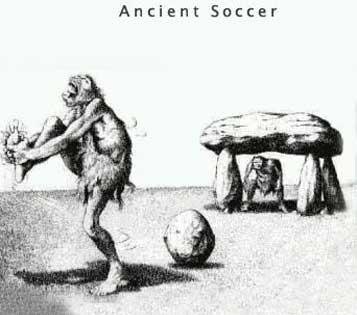
The game soccer doesn’t have a single creator; it evolved from various football-like games over centuries.
Ever wondered about the origins of the world’s most popular sport? It’s a question many ponder, specifically, who made the game soccer? The answer isn’t straightforward, and it involves a fascinating journey through history, exploring different cultures and their versions of football.
Many different forms of football existed across the globe long before the game we now know. These various iterations eventually converged, evolving and solidifying into soccer as we recognize it today.

Who Made the Game Soccer?
That’s a fantastic question! When we think about soccer, or football as many people around the world call it, it’s easy to imagine it has always existed. But like all amazing things, soccer has a history, and that history includes lots of different people and places. It’s not like one single person suddenly invented it one day. Instead, the game we know and love today is the result of a long process of evolution, with many contributions from different cultures and times. Let’s take a trip back in time to see how it all happened!
Ancient Kicks: Early Forms of the Game
Believe it or not, kicking a ball around for fun has been happening for thousands of years. We find evidence of games that look a little like soccer in ancient civilizations. These weren’t quite the soccer we see on TV, but they involved moving a ball with your feet, which is a big part of what makes soccer soccer.
Ancient China: Cuju
One of the earliest forms of football-like games was played in China, as far back as the 2nd and 3rd centuries BC. This game was called Cuju, and it involved kicking a leather ball filled with feathers or hair. Players had to kick the ball through a small opening in a net. Sometimes, they would also play with smaller goals. Cuju wasn’t just a fun pastime; it was also used to train soldiers, making them strong and agile. Imagine training for battle by kicking a ball – pretty cool, right? Cuju shows that the idea of kicking a ball around has deep roots in history and isn’t a brand new thing.
Ancient Greece and Rome: Episkyros and Harpastum
The ancient Greeks also had their versions of ball games using their feet. One of those was called Episkyros. While the details of how they played are not very clear to us today, historians know that it was played by two teams and involved kicking a ball. This game had some similarities to a game called Harpastum, played by the ancient Romans. Harpastum was a more intense version, and it involved a smaller ball that could be carried and passed as well as kicked. Sometimes the game was a bit chaotic, with some players getting very physical, which also made it popular with soldiers to prepare themselves for war. These games suggest that the idea of playing football with your feet was widespread in different cultures, showing that the love of the game has been around for a very long time.
Medieval Football: A Bit More Chaotic
As time moved forward, these ancient games evolved into something a bit more like the modern soccer we know. During medieval times in Europe, many communities played local versions of football. These games were often very different from what we see today, but they still contributed to the growth of the game.
Folk Football: Mob Rules
Imagine a game with no set rules, lots of people, and a whole lot of energy. That’s what “folk football” was like. These games involved entire villages, with hundreds of people trying to get a ball (usually inflated animal bladder) to a goal – often a place on the other side of town. There were no official referees, so things could get pretty rough and chaotic, and different communities had different sets of rules and the game looked different from town to town. These games were less about skill and more about brute force and stamina. Even though these kinds of football don’t look like the professional games today, they played a very important role in bringing the game to where it is today, and they showed the passion people had for kicking a ball around.
The Need for Rules: Trying to Organize the Chaos
Because folk football was so chaotic and sometimes led to injuries, people realized they needed to put some rules into the game. Over time, people tried to make some rules, which helped to create order. These early attempts at formalizing the game laid the groundwork for the modern game that we now know as soccer.
The Birth of Modern Soccer: Codification and the FA
The real shift from folk football to what we know today happened in England in the 19th century. This is when the game was formalized with a proper set of rules.
The Football Association (FA): The First Rulebook
In 1863, a key moment happened. Representatives from several football clubs in England met in London to discuss the game. They wanted to agree on a set of rules that everyone could follow. This gathering resulted in the creation of the Football Association (FA) and the first official set of rules for football, which were different from the rules of rugby (another popular game at the time). These rules included things like not being able to carry the ball with your hands and setting the size of the field. This was a huge turning point as it separated soccer from other forms of football. The FA set down the foundation for what would become modern soccer, and created a structure that helped the game become very popular in England and then around the world.
The Cambridge Rules: A Foundation
Before the FA rules, some schools like Cambridge had their own sets of rules for the game. These “Cambridge Rules,” played a big role in the creation of FA rules. Many ideas from Cambridge Rules were later used to form the FA’s rules. This means schools played a very important role in helping the game become more structured. All of these different parts of the history, from ancient games to rules created in schools, help us understand why the sport is the way it is today. These rules gave the game a structure that made it fairer and safer to play, which helped it grow in popularity.
Spreading Around the World: Soccer’s Global Journey
After the creation of the FA, the game spread to many parts of the world, and many people started playing and forming clubs. Different countries adapted and changed the game slightly, but they all followed the basic rules of the game that came from the FA in England.
British Influence: Global Export
British sailors, traders, and soldiers helped spread soccer around the world. As they travelled to different countries, they brought the game with them. In the late 1800s, many countries started forming their own clubs and competitions and the game quickly took root. This helped the game travel across the globe and it led to it becoming the world’s most popular sport. By the beginning of the 20th century, people were playing football in most of the continents of the world.
Local Adaptations: Unique Styles
While the core rules of soccer stayed the same, different regions developed their own unique styles. For example, South America became known for its creative, dribbling style. Countries like Brazil and Argentina developed a unique culture of soccer, where players became known as talented artists with the ball. In Europe, teams focused on a very organized style of play. The different styles of play enriched the game and made it more exciting to watch, also showing that soccer is a game that can connect people from different cultures and background.
Key Milestones in Soccer’s Development
As soccer became more popular, many important things happened that helped to shape it into the sport we see today. Here are a few examples:
The FIFA World Cup: International Competition
One of the biggest things that happened for the game was the creation of the FIFA World Cup. The first FIFA World Cup was in 1930. This tournament brings teams from all around the world to compete against each other and has become one of the most watched sporting events on the planet. The FIFA World Cup plays a huge role in growing soccer all around the world, and it showcases the amazing skills and talents of players from different countries.
The Champions League and Other Tournaments
Besides the World Cup, there are a lot of big soccer leagues and tournaments all over the world. The UEFA Champions League in Europe is one very famous tournament, where top teams from different European countries compete against each other. These big competitions made soccer more exciting and more popular, and also created lots of fans all over the world.
Advancements in Technology and Training
In addition to major leagues and tournaments, advancements in training and technology has also changed the way players develop their skills. With better training methods, better sports science, and more access to video analysis, soccer players today are more prepared than ever. This has raised the quality and the intensity of the game, which also means that the game is more interesting and fun to watch. These improvements show the evolution and development of the game both on and off the field.
Soccer: A Game for Everyone
The journey of soccer is a story about many people and many places coming together to build the game that we love today. While no single person made soccer, it’s very clear that people from different civilizations, countries, and eras have all helped in shaping the beautiful game. The game’s history is rich with ancient roots, medieval chaos, and a modern sense of organization, that made it the world’s most loved and popular sport.
It’s a game that people of all ages, genders, and backgrounds can play and enjoy. From kids playing in the park to professionals competing in front of millions of people, the passion for soccer is what binds everyone. It’s not just a game, but a culture and a symbol of togetherness. So, when you’re watching a soccer match, remember that you are watching a result of a long history that has brought the game to this amazing place.
Here are some key takeaways from the information we discussed above:
- Soccer doesn’t have one inventor; it developed over time.
- Ancient games like Cuju in China and Episkyros in Greece laid the groundwork.
- Medieval folk football was a chaotic, but important stage.
- The Football Association (FA) in 1863 formalized the rules.
- British influence spread the game globally.
- Local cultures adapted the game, creating unique styles.
- Events like the FIFA World Cup have helped spread its popularity.
Who Can Play Soccer?
One of the great things about soccer is that almost anyone can play! It doesn’t matter your age, your gender, or your skill level, there’s usually a way for you to get involved in playing or enjoying soccer. Here’s how soccer welcomes everyone:
Kids and Soccer
Many kids start playing soccer at a very young age, sometimes as early as preschool or kindergarten. Soccer is a great game to introduce kids to team sports because it helps them develop their physical skills, learn about teamwork, and have fun. There are many different kid soccer programs in all around the world that make it easy for young children to learn the basics and start enjoying the game.
Teens and Soccer
As kids grow into teenagers, many continue to play soccer either for their school teams or in local leagues. Soccer can be a big part of the high school experience, it provides an environment where teens learn leadership, dedication and discipline. They can also form strong bonds with their teammates and friends. Some very talented teenagers have even been able to become professional soccer players.
Adults and Soccer
Adults also find lots of ways to get involved in soccer. Many adults play for recreational leagues where it is all about fun and exercise. There are also very competitive leagues for those who have higher skill levels. Whether it is a friendly game or more serious competition, soccer provides an outlet for adults to stay active and socialize with others. Plus, there are always lots of opportunities to enjoy watching the games as a fan.
Professional Players
At the top level, the game is dominated by professional soccer players. These are highly skilled individuals who have practiced and honed their craft over many years. They often play in big leagues around the world and entertain millions of fans who watch them on tv and in stadiums. Their skill, athleticism, and dedication inspire many young soccer players, making professional soccer the peak of the sport.
People of All Abilities
Soccer is also an inclusive game that welcomes individuals with different abilities. There are adapted forms of soccer, including soccer for the blind and wheelchair soccer, that allow people to participate and enjoy the game. These adaptions mean that everyone has the opportunity to play and enjoy it, showing that this sport really is for everyone.
Soccer Fans
Even if you don’t play, there are still many ways to be a part of the soccer community. Millions of people around the world love watching the game, whether it is watching their local team or watching huge events like the World Cup. Being a fan can mean gathering with friends to watch the games, supporting your favorite team, and learning all about the amazing players. The passion and community of the fans makes the sport that much more interesting.
Key Soccer Terms to Know
To understand the game of soccer a little bit better, there are few simple terms you need to know. Here are few very basic terms:
- Goal: This is when the ball goes into the net, giving a team a point.
- Forward: These players are very close to the other teams goal and it is their job to score the goals for their team.
- Midfielder: These players work between their team’s forwards and their team’s defenders, helping both with scoring and also stopping goals.
- Defender: These players are close to their own team’s goal and their job is to stop the other team from scoring.
- Goalkeeper: This is a special player who stays in front of the goal and their job is to keep the other team from scoring.
- Foul: When a player breaks a rule of the game, it’s called a foul.
- Corner kick: This is when the ball goes out of bounds off of the defending team and the other team gets to kick the ball from the corner of the field.
- Penalty kick: This is a free kick at the goal when the defending team commits a foul inside the goal area.
- Offside: This is a rule that says a player can’t be too close to the other team’s goal when the ball is passed forward to them
These are just a few basic terms, but learning the game doesn’t have to be hard and the more you watch soccer, the easier it will become. Whether you play, watch, or just read about it, there’s a lot to appreciate about the sport of soccer.
Football: when and who invented football?
Final Thoughts
Determining who made the game soccer has no single easy answer. Many cultures played ball games. The modern version we know emerged in England.
They codified rules and established leagues. Football Association played a crucial role. So, the answer to ‘who made the game soccer’ is not one person, but a collaborative process.

