
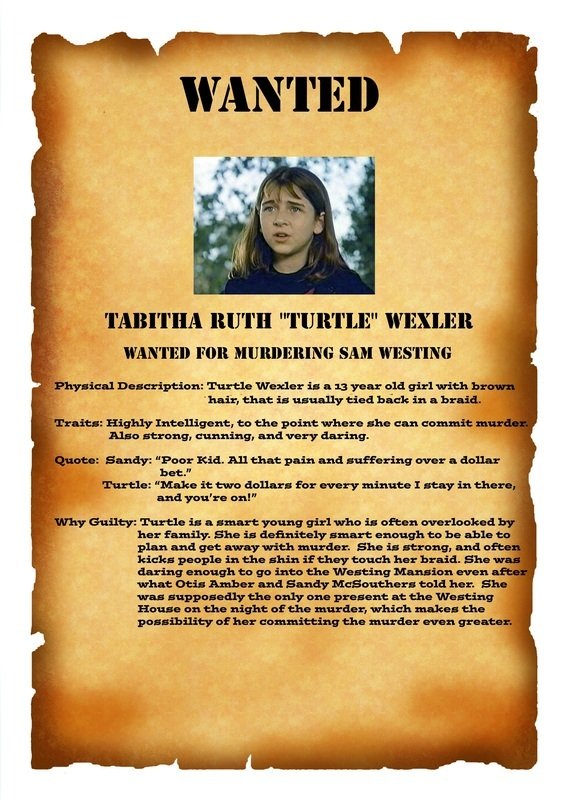
The answer is there was no real murderer in The Westing Game. Sam Westing faked his own death and orchestrated the game himself.
The twists and turns within The Westing Game keep readers guessing, doesn’t it? The central question of who was the murderer in the westing game hangs heavy in the air. Everyone within Sunset Towers becomes a suspect, each with their own secrets.
The game pushes each character to their limits. It keeps them searching for clues and making assumptions about each other. The truth is far more complex than they imagine, leading to a surprise revelation.
Ultimately, the mystery is not about finding a killer but understanding Sam Westing’s intentions. He created a puzzle, a game, designed to bring together a group of people in a unique way.

Who Was the Murderer in The Westing Game?
The mystery of The Westing Game by Ellen Raskin isn’t just about who inherited Sam Westing’s fortune; it’s a thrilling puzzle of who committed the supposed murder. While the story leads us to believe there’s a killer among the sixteen chosen heirs, the truth is far more complicated. The book uses clever misdirection, red herrings, and the personalities of the quirky characters to keep us guessing until the very end. So, who really was the “murderer?” Let’s take a closer look at this intriguing question.
The Illusion of Murder
First, we need to understand that the idea of a murder is a deception created by Sam Westing himself. He didn’t actually get murdered. Instead, he faked his own death as a way to play one final game. He was a master of disguise and manipulation. This clever trickery is central to the entire plot, making us question what we think we know.
Sam Westing’s staged murder was designed to set up a game of inheritance. He wanted to entertain himself, and perhaps to make a change in his “heirs’” lives. He carefully selected those people, making sure that each had a connection to him or his life in some way. This connection became a clue to what his real purpose was.
The Suspects: A Cast of Characters
Let’s look at the many characters and the reasons they could be considered a suspect in the ‘murder’ mystery of the Westing Game:
The Heirs: Potential Killers?
The book throws many suspicious characters our way, each with a motive, means, or opportunity to be involved in the “crime.” This is all part of the game. Let’s dive into some of the main suspects.
- Grace Wexler: She’s very interested in money and social status, and her ambition could make her a prime suspect. However, her actions are more often driven by vanity and a desire for acceptance than malice.
- Jake Wexler: He’s a podiatrist and more interested in sports betting than in Sam Westing. Though he has his secrets, he’s not someone who would likely plan a murder.
- Angela Wexler: She seems sweet and mild but carries the weight of her mother’s expectations. While we see her with a bomb later on, her actions come from distress, not a thirst for power or wealth.
- Turtle Wexler: This young girl is clever and resourceful. She is one of the most astute players in the Westing Game, but she is more of an investigator than a criminal.
- Flora Baumbach: A sweet dressmaker who seems very gentle, but she does have some secrets related to a past. Her gentle nature makes her an unlikely culprit.
- Chris Theodorakis: He is an intelligent, keen observer who uses a wheelchair. He’s more likely to be an observer and seeker of truths than an instigator of violent acts.
- Denton Deere: A young doctor, who is engaged to Angela. He’s somewhat arrogant and logical. While not likable, he seems more interested in solving the puzzle than commiting violence.
- Crow (Berthe Erica Crow): She’s a very sad, lonely woman who is also a devout Christian. Her past connections with Sam Westing and her later confession of the “crime” make her seem very suspicious.
- Sandy McSouthers: A doorman and the first of the sixteen heirs to die in the game. His apparent death becomes part of Westing’s grand plan.
- Judge Ford (J.J. Ford): She seems very professional and sophisticated. As a judge with a background in law, her behavior can seem calculating, but it is her pursuit of the truth.
- Theo Theodorakis: He is a high-school student with a great mind for writing stories. He is more interested in solving the case, and has little interest in money.
- Doug Hoo: He is a track star and son of the owner of Hoo’s Chinese Restaurant. He is mostly interested in sports, and not a likely suspect for murder.
- Madame Hoo (Sun Lin Hoo): She’s a young, quiet woman who doesn’t speak much English. Her behavior seems suspicious, but she is merely adjusting to a new country.
- James Shin Hoo: The owner of a Chinese restaurant, he has a history of losing a lawsuit to Sam Westing. While he had a reason for anger, he never takes part in the violent act.
- Otis Amber: A delivery boy, who also works as a private investigator. He is not who he appears. He seems strange, but not a murderer.
The Real “Perpetrator”: Sam Westing
The real key to solving the mystery lies in understanding that the “murder” didn’t happen. The victim himself was the one who orchestrated the entire game. Westing is a master of disguise, a game player, and a keen observer of human behavior. He is the true “perpetrator,” not in a literal sense, but in setting up the entire charade.
Westing’s Many Identities
What makes this mystery so clever is that Sam Westing is also:
- Barney Northrup: The real estate agent who sets up the apartments for the chosen players.
- Sandy McSouthers: The doorman who is “killed” in the game, another of Westing’s clever disguises.
Westing’s disguise as Sandy McSouthers was important, as it allowed him to be close to the other players. This also allowed him to observe their behavior and manipulate the game behind the scenes. This aspect shows how deep the deception really was.
Westing’s Motives
Why would Sam Westing go to such elaborate lengths? He wanted to accomplish a number of things:
- Entertainment: Sam Westing had a playful spirit, and he loved games. He wanted to see how the “heirs” would react when presented with such a strange situation.
- Justice: Westing felt that he was not just. He thought people had wronged him in life, and he wanted to find out if they were truly terrible, or if they could grow. This idea is particularly clear in his choice of heirs.
- Change: He hoped that some of the people he had selected would have their lives changed for the better because of the game. This was the idea behind giving the heirs such strange clues.
By faking his own death and creating the game, Sam Westing sought to achieve all of these goals simultaneously. He didn’t aim to punish or harm; he wanted to stir up something new in his heirs.
The Importance of the Game
The Westing Game is not just a whodunit mystery; it’s a character study. The true point of the game isn’t finding a murderer, it’s about the growth and changes the sixteen “heirs” undergo. Each character has a unique story and a unique set of traits, and the game makes them all reflect on who they are.
The Characters’ Growth
The game forces them to:
- Work Together: Characters who previously disliked each other learn to cooperate.
- Face Truths: Many characters are faced with aspects of their pasts or their personalities they have been avoiding.
- Value Relationships: Some characters, who were lonely, learn the importance of friendship and family.
The game is actually more about creating a family from seemingly random connections. The real treasure is not the money but the transformation of the characters.
The Clues and Red Herrings
The clues in The Westing Game are far from straightforward. They are designed to be interpreted in multiple ways, leading the heirs (and the readers) on a merry chase. Some of these false leads and misdirections include:
False Suspects
- Crow’s Confession: Crow confesses that she committed the “crime,” but this confession is clearly false. She’s covering for Sam Westing, whom she loves.
- The Letter Bombs: The explosions at the Wexler’s house are designed to bring tension and point suspicion at Angela, but these are not the actions of a true murderer.
These clues are just some of the tactics that Westing uses to make the game as complicated as possible. It’s like a complex maze, where each turn can be misleading or might lead to a dead end.
The Meaning of the Clues
The clues are often fragments of familiar phrases or songs that have significance to Sam Westing’s life, linking him to the players. These clues are not meant to be taken literally but symbolically. The true “prize” of the game is the understanding the players gain about each other, and about themselves. The game was not designed to trick people but to reveal the truth of what is important in life.
The Resolution: A Game Well Played
The final revelation is that Sam Westing had been living as Sandy McSouthers. He had been present during the entire game, observing the players, enjoying his final game. The game ends with the players finding not a murderer, but that everyone had been playing a role.
Westing’s Legacy
Sam Westing’s ultimate goal was to create a sense of community and personal growth within the group. His legacy is one of cleverness, transformation, and generosity. In a strange way, this game helped some characters heal from old wounds, and start their lives fresh.
The “murderer” wasn’t a villain among the heirs, but instead a clever orchestrator who wanted to change his life through a final game. The true answer is that there was never a murder to begin with. The real mystery of the Westing Game is how people can grow and learn when presented with the unexpected.
The true “murderer” in The Westing Game is not a person but a concept: Sam Westing’s elaborate game. The focus is not on finding a criminal but on uncovering how this game changes the lives of everyone involved. Each of the sixteen heirs goes on a journey of self-discovery and learns valuable lessons about the world, and this is what the book truly has to offer.
Book Review: The Westing Game
Final Thoughts
Ultimately, the “who was the murderer in the westing game” question has a twist. It wasn’t a murder at all; Samuel Westing faked his death. He manipulated the game for his own purposes.
Westing must have orchestrated everything. He chose the heirs and created the clues. He sought connection and a bit of fun before his time ended.

